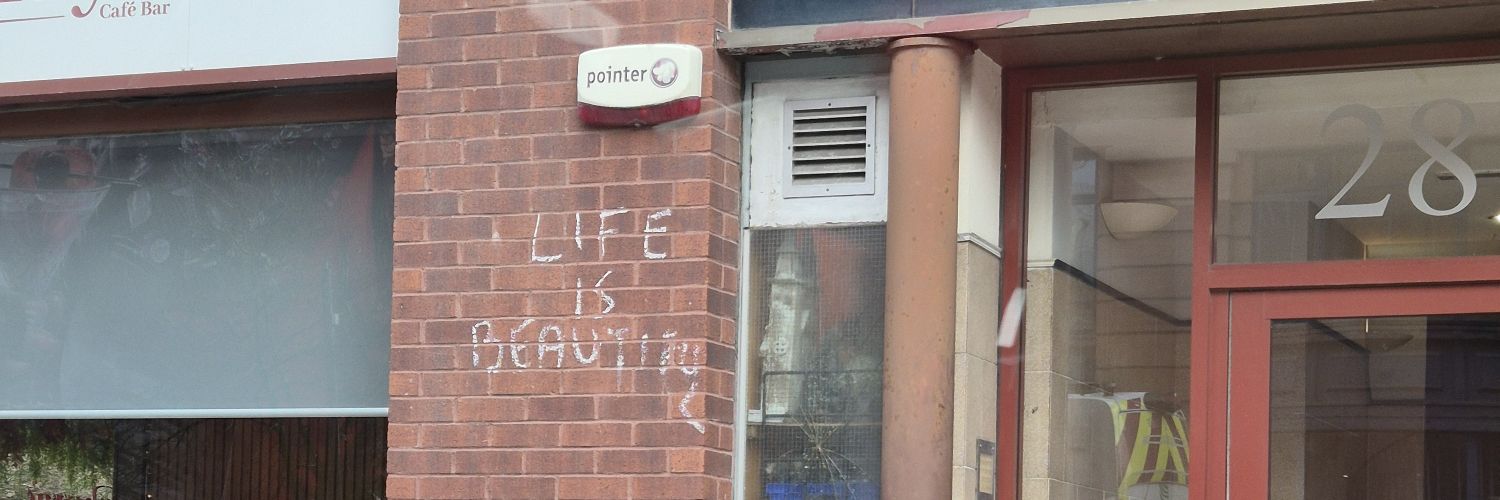
Microsoft want to build three massive AI data centres in Leeds. It’ll drain thousands of litres from the River Aire and become the city's biggest carbon emitter.
There's still time to stop the final council sign-off. Please add your name: https://t.co/E5YM8nLkEh via @38degrees
Fed up?
Heat getting to you?
Dreading work tomorrow?
Then grab a drink, take a seat, relax and watch 10 minutes of nothing special, just the life of a precious little family safe and content, growing and learning.
I guarantee you will feel better. ❤️
Love this Mother's Pride Scottie by the Clyde in Govan. Part of the Maggie's Scotties in the City Art Trail, it was created by Steele McTurk and is sponsored by SSAFA.
#glasgow#govan#motherspride#publicart#scottiesinthecity
Lovely weather, isn't it?🌞
Unless you're a nocturnal animal who has to sleep all through the hot day, and wake at night to find no water. No puddles.
No kind dishes.
Unseen.
Unthought of.
Just the tantalising smell of water from a pond you may drown in, or a drain you may get trapped in.
Or a stagnant, dirty old birdbath you may get fatal fluke from.
Hedgehogs need to drink a lot of water to stay healthy.
Please provide clean, fresh, safe, ground level water each evening for our precious nocturnal wildlife.
Tap water is best.
Pop a dish or two out tonight.
Front and back.
Keep it clean.
Keep it full.
Keep it saving lives.❤️🩹
Dear @EnvAgency.
In February this year, after 4 years of asking you to look after the Aldersbrook, I led a team of volunteers to do your job for you & clean out tonnes of silt & leaves, as well as hundreds of bags of rubbish. Through the effort of community volunteers & donations, & at zero cost to the taxpayer, we turned a forgotten silted up ditch back into a river again.
Last nights intense rain storm showed why our actions are the very definition of “strengthening water resilience”. A huge amount of rain fell in a short time, but the restored section of the Aldersbrook has been able to hold 100’s of thousands of litres more water, stopping this water running into the Roding, & thereby *reducing* local flood risk. The first photograph below is of the Aldersbrook after the rains this morning- a big contrast to the area before we did the work.
Perhaps more importantly, this water, instead of running straight off into the Roding & hence the sea is now being held in the Aldersbrook & gradually released so it can be used by nature. It is feeding marshes, trees & wildlife, topping up groundwater & helping to reduce our flood/drought cycle. If you want to strengthen water resilience, we need thousands more projects like the Aldersbrook around the country.
So the question I ask you, Environment Agency, is why you are threatening me with two years imprisonment, rather than offering to meet & discuss how we can work together to restore the Roding & its tributaries, which could become a blueprint for you cooperating with local river guardians nationwide?
I'm joining The Parent Strike on 27 August 2026 ✊ Parents are downing tools to demand proper paternity leave and real flexible working rights.
Join your nearest strike here: https://t.co/5EdMjUqTTX
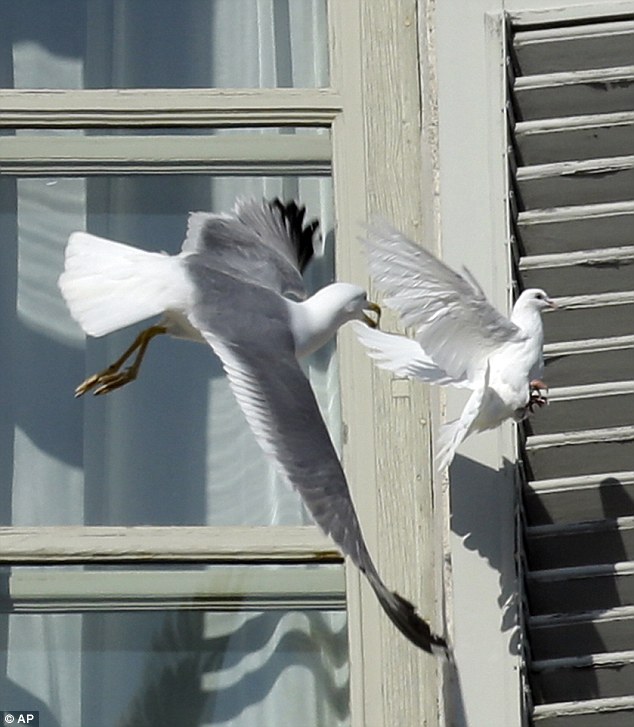
A "dove release" at a wedding or funeral is a death sentence for the birds.
The white "doves" sold for releases aren't doves. They're domestic white pigeons bred to be small and pretty, with no survival skills outside a coop.
The cheaper DIY versions (Ringneck Doves, King Pigeons) can't even find their way home. Nearly all of them die within days.
Even professional releases with trained homing pigeons lose birds every time. Hawks take them in the air. Cars hit them when they land exhausted. They collide with windows. There are lots of ways it can go sideways for them.
Rehabbers pull them in with broken wings, raging trichomoniasis, and bodies so emaciated they can't stand. One described a release pigeon whose throat infection had hardened so completely it distorted the shape of his skull.
There is no version of this where the birds "fly away and live happily ever after." That's the marketing. The reality is a domestic animal traumatized or killed for a 15-second photo.
A bricklayer in East Yorkshire has spent 35 years putting up barn owl nest boxes on weekends. This year, the region saw 308 owlets hatch.
His name is Robert Salter. He's 56 and does bricklaying full time. In 1990, he saw a piece on the news about a man in Lincolnshire installing barn owl boxes, and decided he'd do the same. He started with five.
He now has more than 350 boxes scattered across fields, farms, outbuildings, and trees in East Yorkshire. Every June, he takes four weeks off from bricklaying and visits them with his wife Sue. Scrambling up ladders, ringing chicks, cleaning boxes, repairing the ones the weather got to. He's a licensed bird ringer for the British Trust for Ornithology.
In 2024, the region ringed 95 owlets. In 2025, the count was 308. The Barn Owl Trust says that nationally, this year was "pretty poor" for barn owl breeding, but east Yorkshire is the exception, and it's the exception because of one man with a ladder.
The barn owl population in the UK was estimated at 4,000 pairs in the mid-2000s and crashed to roughly 1,000 by the early 2010s. The species is still recovering.
Most of conservation is one person who refuses to give up.
This is what entitlement looks like! 🤬
There are nesting waterbirds on this pond on Hampstead Heath... there are also big 'No Swimming' signs, all being totally ignored! 🤬
Pure selfishness... 😒🤬🤬
(Shared from Instagr*m with permission from 'swansofhampsteadheath')
Need a fence? What you really need is a deadhedge.
It's a barrier made of dead branches stacked between two rows of posts. You feed it with branches, fallen limbs, and woody yard debris. Over a season it becomes denser than most commercial fencing. Over years, the bottom layers compost down and the top gets refilled with whatever you trim that week.
Wrens, robins, and ground-foraging birds nest in the structure. Hedgehogs, field mice, frogs, and toads shelter in the base. Solitary bees, ladybirds, and beetles overwinter in the cavities.
Germany has been planting deadhedges as wildlife corridors since the 1990s. The UK uses them for riverbank restoration.
A wood fence costs thousands of dollars and supports no wildlife. A deadhedge costs nothing, gets denser every year, and provides habitat for dozens of species you want in your yard anyway.
This post is mainly to help other rescues, but I know a lot of you will be interested as well.
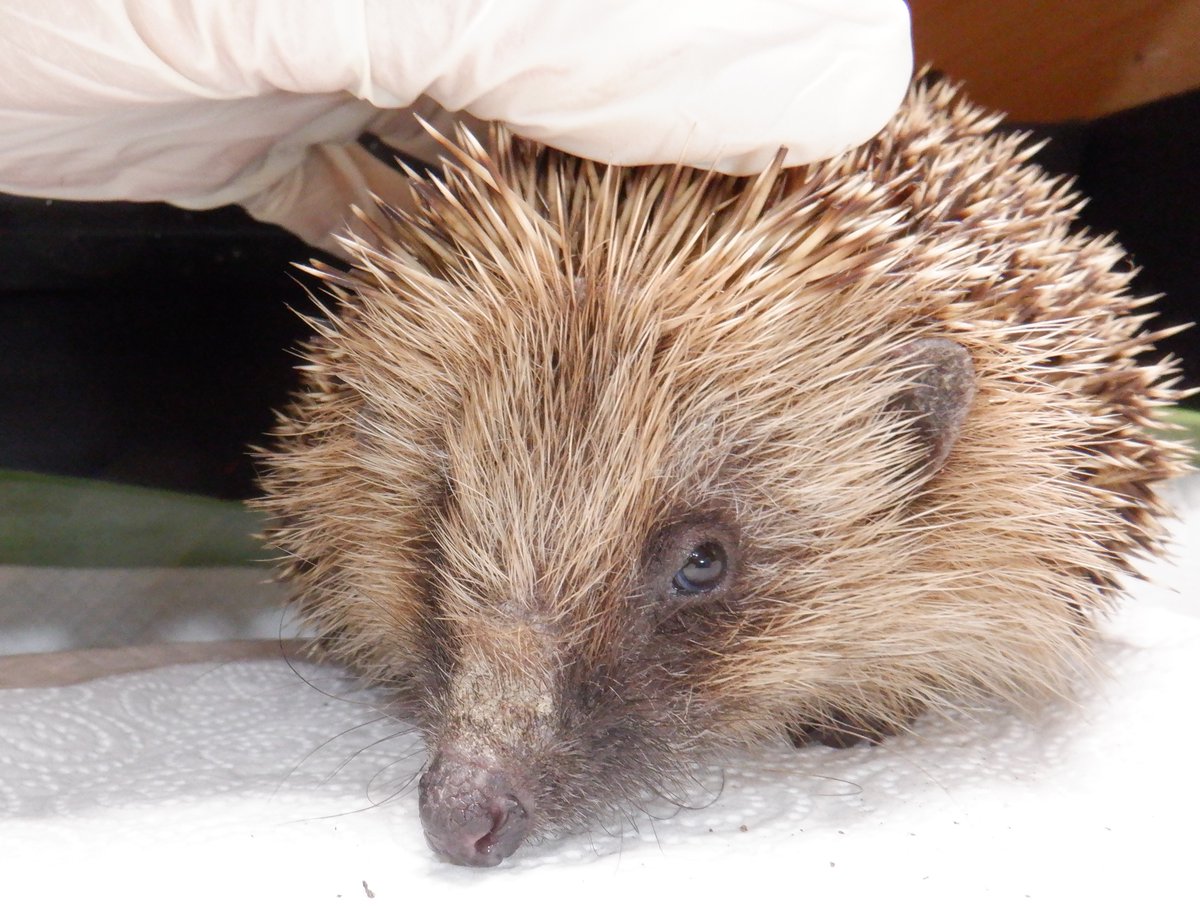
This sweet boy is Merlin.
Merlin self admitted, but aside from his scabby nose from a bit of ringworm, he appeared fine.
But I knew by his behaviour that he was sick.
Healthy hedgehogs don't self admit to a hospital pen. Especially boys at this time of year - they are out chasing girls.🥰
I tested his poo in the lodge, where he booked himself into an open pen, and it was clear.
I admitted him into hospital where he stayed overnight and left me 6 lovely poo samples.
Every single one was clear.
And yet his behaviour, his aggitation, the way he dug the corners of the pen, even his smell, told me through years of experience that he was sick.
So I started treatment anyway.
And as his condition improved, as he became hydrated and nourished, and the first antiparasitic administered, just like magic the confirmation appeared!
A diagnosis needs to be made on observed behaviour and history (either your own or of the finders); the poo sample is *confirmation of the diagnosis*.
So a hedgehog making unhealthy breathing sounds but producing clear poo samples is still unhealthy.
You can't always rely on a sick hedgehog to produce parasite larvae or eggs in their poo sample, for several reasons, but the main reason is:
Parasites, like all living organisms, have to preserve energy in order to stay alive and thrive.
So when they find themselves in a hostile environment - a host who has become starving and dehydrated - they reduce their energy expenditure by temporarily shutting down systems that are not neccessary for life, like reproduction.
They stop laying eggs and go into a sort of stasis, until conditions become welcoming again.
Also of course, parasites don't constantly churn out eggs. They have a reproduction cycle. So not every sample will contain eggs.
It's so frustrating when people contact me saying they have been sent home with a hedgehog who is clearly in audible respiratory distress, because the poo sample the rescue took was clear.
As for sweet Merlin - at first it was a trickle; his poo showed just a few parasites, so microscope samples had to be very carefully scrutinised.
But very quickly it became apparent that this poor boy was in fact full of deadly fluke, lungworm, and roundworm.
He's only on day 3 of his treatment, so is still very sick, but clever Merlin got himself the help he needed just in time.