@Ed_Miliband Which specific part of energy security—dispatchable baseload, grid stability, or winter heating—does intermittent clean power uniquely solve better than gas or nuclear?
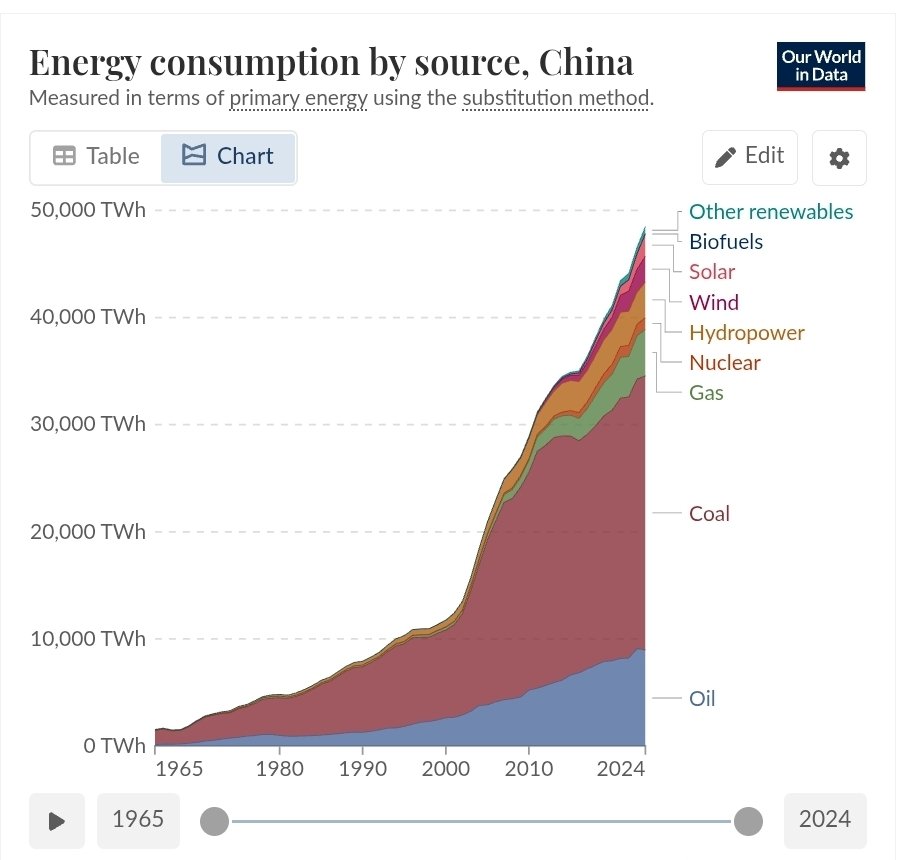
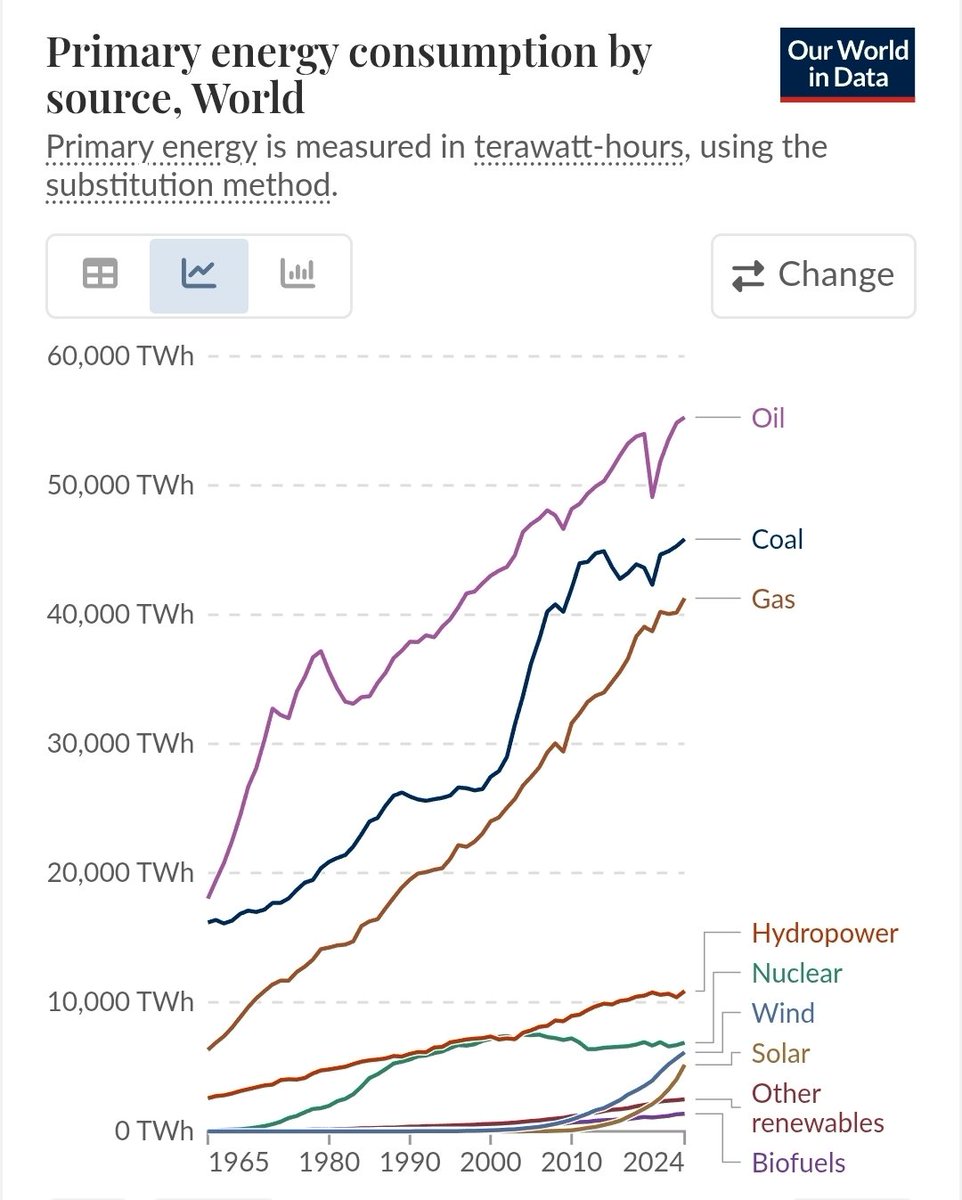
They just repeat "China is a green superpower" like a mantra, but don't understand what the words mean. China runs on hydrocarbons, with some token intermittent renewables so useful idiots have something to point at.
The correct response to the current energy shock is essentially to double down on Energiewende policies according to @avilewis.
Europe dug itself out of the 1970s oil shocks with 54 nuclear reactors built in 20 years in France, the North Sea offshore oil and gas developments of the UK and Norway and Russia’s pipeline diplomacy Ost-Politik with the Soviet Union.
These policies created near energy self-sufficiency by the 1990s.
Cheap energy made Germany an industrial powerhouse that even largely weathered the China shock of de-industrialization of the early 2000s.
However this bounty led to a soft generation of leadership swimming in luxury beliefs.
In the meantime, these decadent leaders divorced from physics, production and the factory floor, allowed and even encouraged these energetic foundations to wither on the vine.
The nuclear phaseouts were perhaps the most egregious example of this phenomenon.
Now Europe consumes 38EJ of hydrocarbons but only produces 6EJ and it needs a whole lot of gas to power through its weeklong periods of wind drought (Dunkelflaute) and its dark winters.
Energy illiteracy was survivable for a political class living blindly off the bounty of the infrastructure our grand parents built in response to the 1970’s oil shocks.
It will not serve champagne socialists like @avilewis in our current energy shock.
Philip K. Dick wrote 44 novels, 121 short stories, and 14 short story collections.
This is one of his last speeches given in Metz, France, 1977.
It is fascinating.
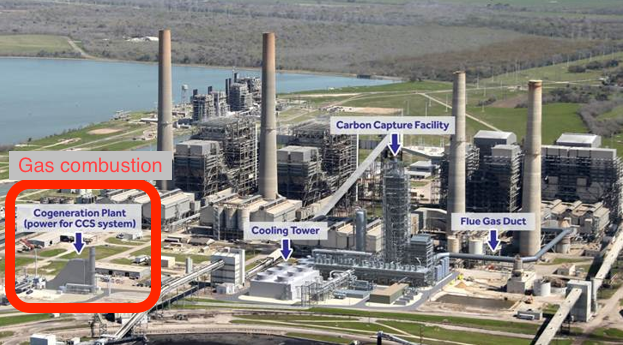
Petra Nova & Kemper are peak CCS absurdity
Petra Nova (coal post-combustion) burned gas on site to capture CO2 from burning coal. It captured 92.5% of a diverted stream of just 1/3 of Unit 8's flue gas. It still vented ~2/3 of coal emissions
BREAKING: QatarEnergy just declared Force Majeure.
Three words that mean: we cannot deliver, and legally, we do not have to.
This is no longer a supply disruption. This is a contract collapse.
Force Majeure is not a precaution. It is a formal legal declaration that an unforeseeable event beyond QatarEnergy’s control has made fulfillment impossible. Every affected buyer just had their contract voided. The gas they were counting on is gone, and they have no legal recourse to get it back.
82% of Qatar’s LNG goes to Asia.
China relies on Qatar for 30% of its LNG imports. India 42 to 52%. South Korea 14 to 19%. Taiwan 25%. Japan is already rationing to spot markets.
Asian benchmark prices jumped 39% the day production stopped.
Force Majeure just made that permanent until further notice.
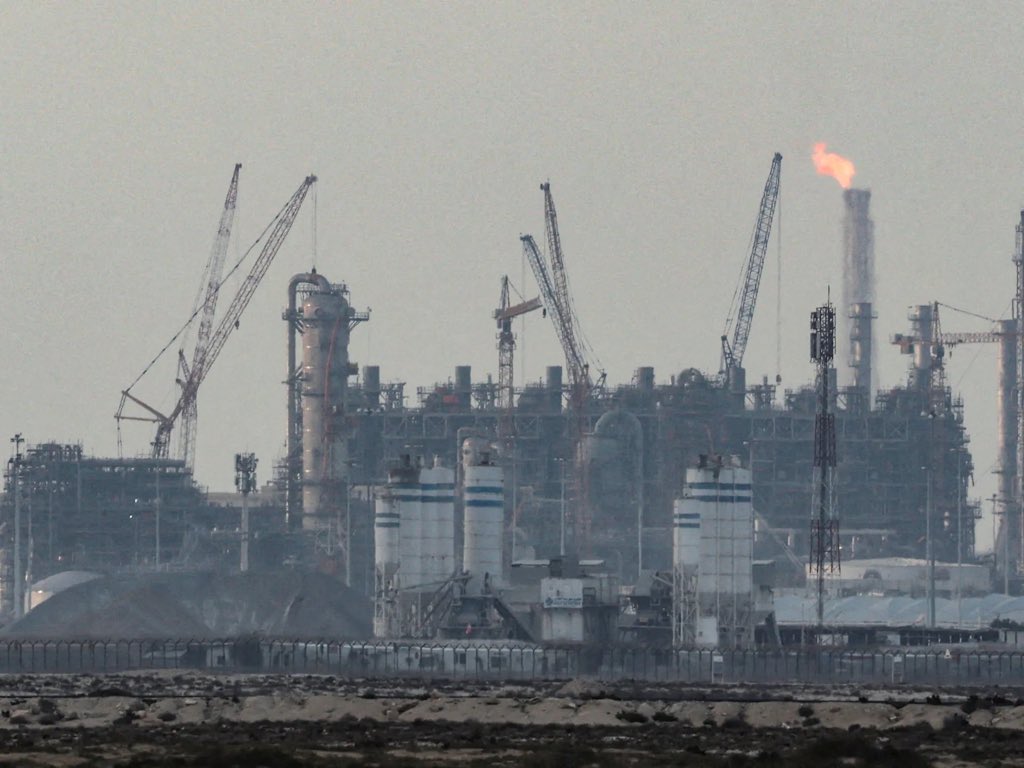
Indian companies have already cut gas supplies to industry by 10 to 30%. That is not a market adjustment. That is factories running at reduced capacity today, across the world’s most populous continent, because Iran sent drones into Ras Laffan.
Here is the number the market still has not fully absorbed.
Two weeks to restart a liquefaction train after a full cold shutdown. Then two more weeks to reach full capacity. That is a minimum of four weeks at zero, assuming no further strikes, no security complications, no inspection delays.
The war is still running.
There is no security guarantee. There is no restart timeline. There is no floor.
Every LNG contract in Asia just became a spot market problem. Every spot market problem just became an inflation problem. Every inflation problem just became a central bank problem.
This started as a war in the Middle East.
It is now inside every factory, every power plant, and every gas bill across Asia.
Price that chain.
https://t.co/ULBgEzZ3A8
Nuclear Fuel Is The Swiss Watch of Energy and The Most Sophisticated Industrial Product You've Never Heard About.
Buckle up for a mega-🧵
There is a peculiarity at the heart of nuclear energy that rarely gets the attention it deserves. Every other thermal power plant in history destroys its fuel.
Coal goes in as a black rock and comes out as CO2, water vapor, and ash. Natural gas barely leaves a trace at all, just heat and gaseous combustion products dispersed into the atmosphere.
The fuel is gone, irreversibly transformed, its chemical identity obliterated in the furnace.
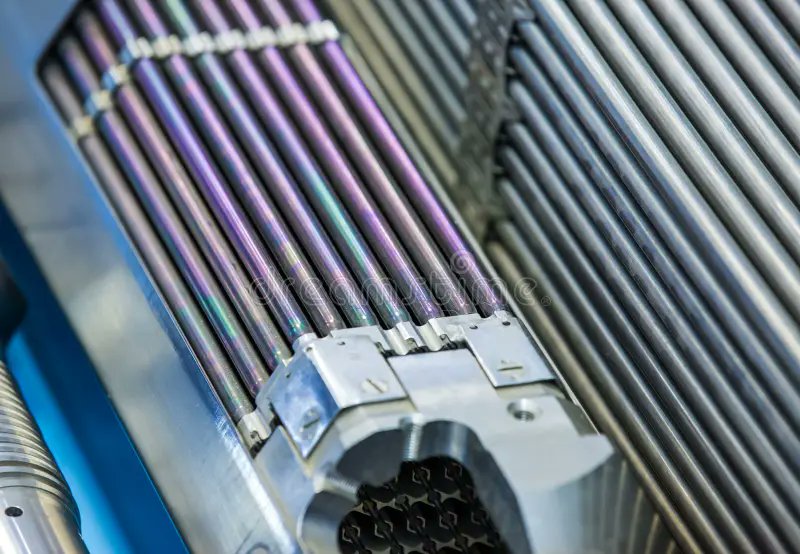
Nuclear fuel does almost none of that. The fuel elements that go into a reactor and the fuel elements that come out are, to a first approximation, the same material in the same geometry, sitting in the same place.
A spent fuel assembly pulled from a reactor after six years of operation looks nearly identical to the fresh one that went in.
The mass has changed by a tiny fraction of a percent, nuclear alchemy has occurred in which half the periodic table has been generated in the form of fission products within the ceramic pellets but the volume and geometry is essentially identical.
This one fact, that nuclear fuel must be preserved rather than destroyed, that the job of every layer of every system surrounding the core is to maintain the integrity of a material through years of radiation bombardment and extreme temperature gradients, shapes much of nuclear engineering.
It explains the cladding materials, the obsessive quality control in fabrication facilities, and the decades of slow, painstaking improvement that have transformed a fleet that routinely operated with failed fuel elements into one where a single leaker triggers a formal investigation.
I spent a long conversation with Michael Seely, the @AtomicBlenderYT, a nuclear enginner with a focus on fuel, going through what nuclear fuel actually is, how it is made, why it fails, and how the industry learned to prevent those failures.
What follows is my attempt to synthesize that conversation into something useful for anyone who wants to understand nuclear from the inside out.
Activist: “If the dinosaurs had nuclear energy it would still be dangerous…”
Paleontologist: (in a polar bear suit) “Actually I’m a paleontologist, the dinosaurs died 66 million years ago, so no nuclear waste would not be a problem”
The Monty python moment of nuclear advocacy
🇷🇺 Russian city of Arkhangelsk has a pedestrian crossing on a sea road where ice breakers cross.
It’s crazy to think that this is normal for other people on their way to work.