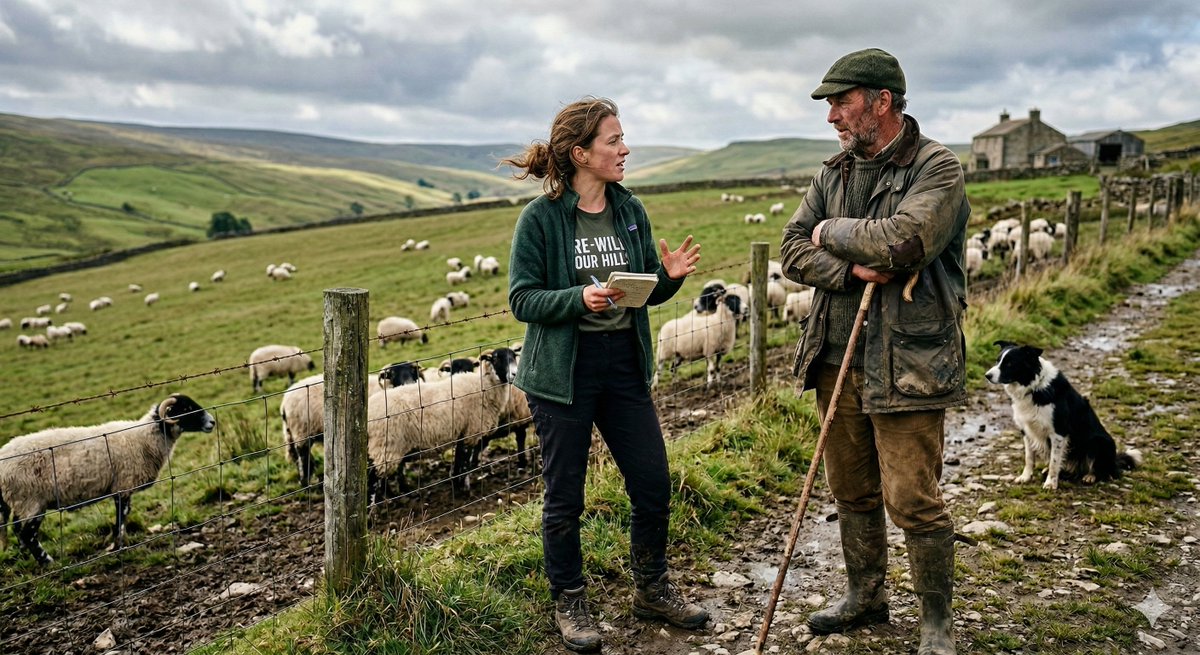
Person:So, you work a full time job then you come home and take care of the farm and all the animals?
Me:Yep.
Person:Wow! How do you do all that?!
Me:Well, I'm always busy, tired, and broke.
I work two off-farm jobs just so I can keep my generational farm going. I'm an only child. I'm not married. The farm isn't what it used to be since my dad passed, but I'm working to change that. This land is part of who I am, and I refuse to let my family's story end.
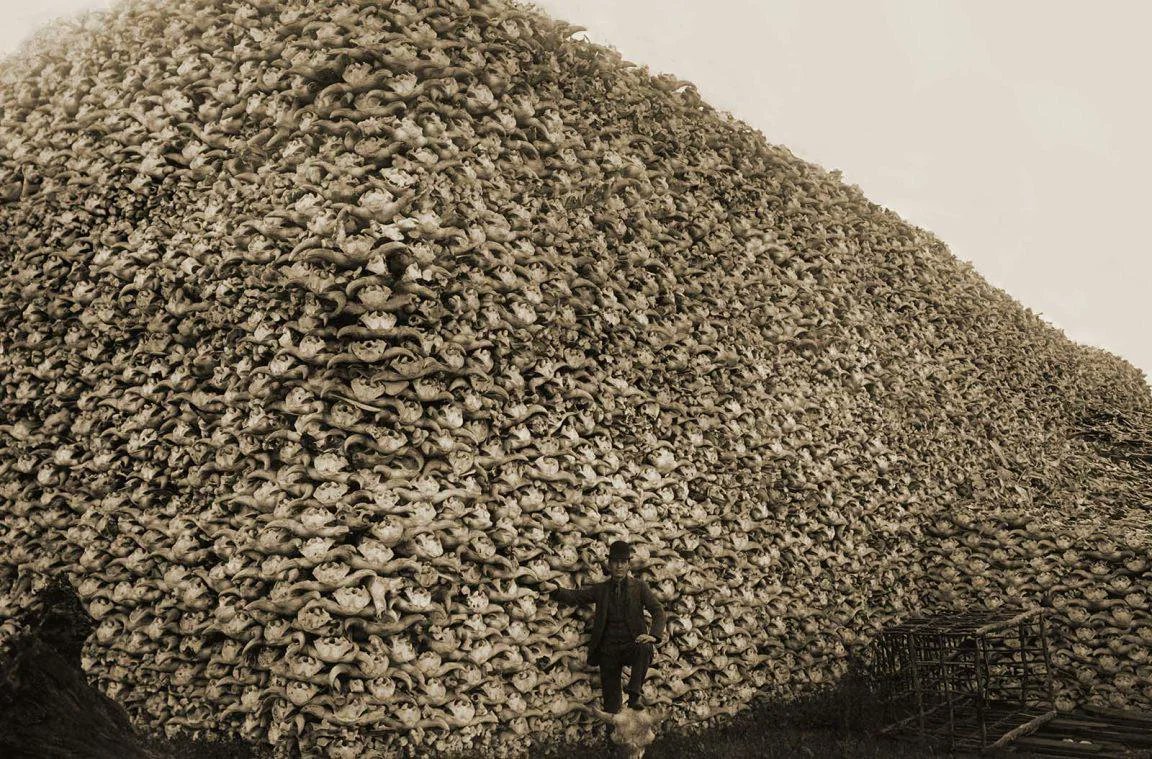
There were sixty million of them.
That is not a round number invented for rhetorical effect. That is the estimate based on historical accounts, trading post records, early naturalist surveys, and the archaeological evidence of a grassland ecosystem that had been shaped, managed, and sustained by their presence for approximately ten thousand years.
Sixty million bison, moving in herds so vast that 19th century travellers reported watching them pass for days without the column ending. The sound carried for miles. The ground vibrated. Early European explorers described riding to the top of a rise on the Great Plains and looking out at a sea of brown moving in all directions to the horizon, beyond which more was coming.
These animals were not incidentally present on the Great Plains.
They were the mechanism that made the Great Plains what they were.
A bison herd moving across shortgrass prairie does something very specific. It grazes heavily, pulling the top of the grass. It aerates the compacted soil with hooves that break the surface crust and create small depressions, bison wallows, that collect rainwater and become micro-habitats for hundreds of species. It deposits dung that feeds a cascade of organisms from beetles to birds. It rolls in the disturbed soil, dispersing seeds in its coat across miles of subsequent travel. It moves on.
This last part is crucial. The herd moves on.
The grass it grazed comes back stronger. The roots, some of which extend twelve feet into the soil, deeper than the roots of any arable crop: draw carbon from the atmosphere and hold the topsoil together against drought and wind with a grip that the Great Plains had developed over millions of years of exactly this relationship.
The Plains Indians who lived within this system understood it with the intimacy of people whose survival depended on it. They followed the herds. They took what they needed. They used every part of every animal: hide, bone, fat, organ, sinew, horn, dung, in a closed-loop material economy that generated essentially no waste. The calves born each year exceeded the animals taken by human hunters by a margin that kept the population stable at sixty million.
This was a functioning ecological system that had been maintained in sustainable equilibrium for thousands of years.
Then, in approximately thirty years, it was gone.
The US Army did not accidentally allow this to happen. They planned it. General Philip Sheridan stated it openly: the hunters were doing more to "settle the vexed Indian question" than the entire military had managed in thirty years of direct combat. Every dead bison was a step toward starving the Plains nations into submission. Columbus Delano, Secretary of the Interior, articulated the logic without apology: "Every buffalo dead is an Indian gone."
The hunters came. The railways came. Tourists shot bison from train windows. The carcasses were left to rot, stripped only of the hide and the tongue. Within thirty years, sixty million animals had been reduced to approximately three hundred.
The Plains grasslands, stripped of the animal that had managed them for ten millennia, began to change. The deep-rooted perennial grasses that had anchored the soil slowly gave way to annual species less able to hold topsoil under drought conditions. Settlers ploughed what remained. Monoculture wheat replaced the native grassland complex.
In the 1930s, the topsoil of the Great Plains blew away.
The dust clouds reached Washington DC.
The Army had solved the Indian question.
It had also, by removing the ruminant that maintained the grassland, created the conditions for one of the worst agricultural collapses in American history.
The sixty million bison were not causing the planet to overheat.
The sixty million bison were the planet's solution to the problem we have since made considerably worse.
They're doing their best to make the same mistake again with cattle.
Activist: "You raise them for two years and then kill them. All that welfare is just prolonged cruelty."
Farmer: "Two years of open pasture, good feeding, vet care, and shelter is prolonged cruelty?"
Activist: "It ends in death."
Farmer: "So does everything."
Activist: "Unnecessary death."
Farmer: "For whom? For me it's a livelihood. For the people eating it, it's food. For the land it's managed grazing."
Activist: "For the cow it's unnecessary."
Farmer: "The cow has had two years of the best conditions I can provide."
Activist: "And then one very bad day."
Farmer: "One very short day. Which is considerably better than how most animals die."
Activist: "That's a low bar."
Farmer: "It's the bar that matters to the animal."
Activist: "You've thought about this."
Farmer: "Every farmer has. Mostly at three in the morning."
Activist: "I only buy wool-free clothing."
Farmer: "What's it made of?"
Activist: "Synthetic fibres."
Farmer: "Which are made from oil."
Activist: "Recycled synthetics, mostly."
Farmer: "Which shed microplastics into waterways with every wash."
Activist: "That's an industry problem."
Farmer: "The wool I produce is biodegradable, regrows every year, and requires no petrochemicals."
Activist: "But an animal is involved."
Farmer: "An animal that needs shearing anyway."
Activist: "I still don't want to wear it."
Farmer: "You're choosing microplastics in rivers over a haircut."
Activist: "I'm choosing not to exploit animals."
Farmer: "You're choosing to exploit the ocean instead."
Ngl, adult friendships require grace. People are very busy. People are healing. People are growing. People are taking time for self care just like you. Less communication isn’t less love. Check in not out.
aw hunting season: the weather is cooling down and people are camouflaging themselves in the woods pretending they’re invisible, much like I try to do at work each day
Losing your job for cheering on murder isn’t ‘cancel culture.’ It’s your boss realizing they don’t want a sick, dangerous person on the payroll. Folks get fired for far less every day.
—-Conservative Twins
The girls I work with in the office are talkin about germs and how they never touch door handles and shit.
Meanwhile, I'm over here like ummm, I live on a farm, sometimes I'll go straight working livestock to eating a snack and not even give it a second thought.
did you know a mothers breastmilk will have higher fat content for a baby boy and lower fat content for a baby girl?
but suuure, gender’s a social construct.
THIS. the amount of people who treated me differently and ultimately distanced themselves from me when i was in the trenches of grief is disturbing. to them, it had been long enough and i should be back to “normal.” meanwhile i was drowning trying to create a new normal