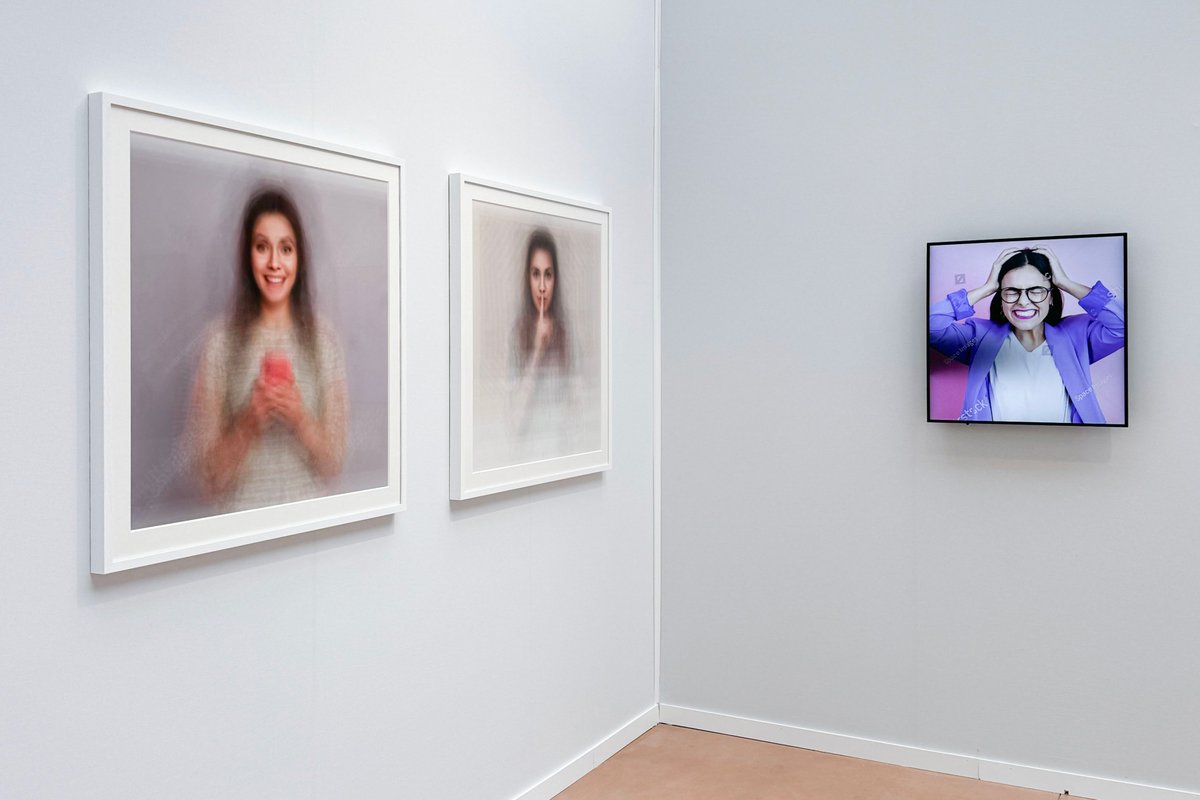
I have been quietly working on a big project. I have scraped and analyzed 130 million stock photographs. These ubiquitous photos have been saturating our visual landscape, but now they are teaching AI who we are. I am showing these at @ParisPhotoFair with @tender_art
I’m showing new work from Taking Stock in Miami in “Looking at Models” curated by @Lucy2Scribbles at @FoundationMud. These short looping videos focus on the objects in the images, and build off the videos I showed at @heft_gallery
Sold · $10,000 — Paris Photo
Taking Stock (2024)
Michael Mandiberg
Unique print
Archival pigment print, framed in hardwood, signed verso + Ethereum token
32 × 32 in (81.3 × 81.3 cm)
Collector: Arab Bank Switzerland
The Whitney acquires artworks from two series presented by Heft:
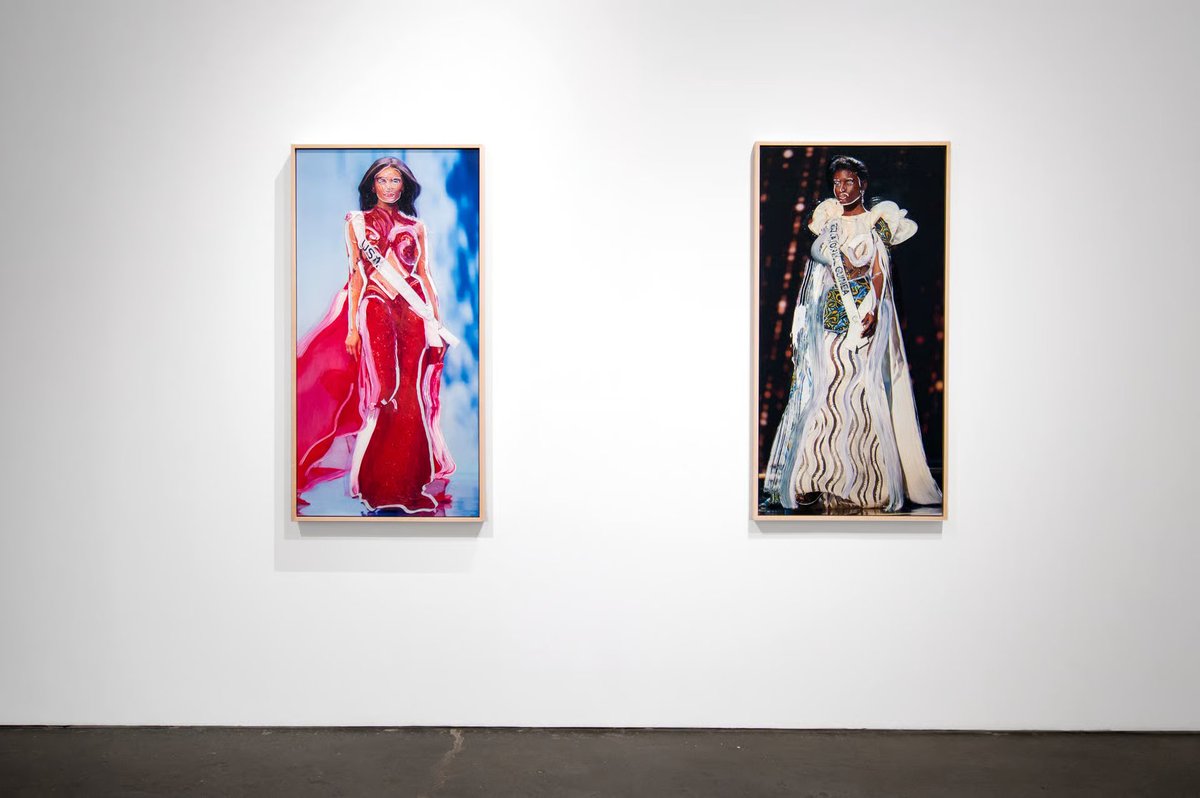
Facetune Portraits, by Gretchen Andrew
@gretchenandrew
Taking Stock, by Michael Mandiberg
@mandiberg
These acquisitions are the sole works to enter the permanent collection of the Whitney’s Digital Art department in this half of the year. A deep thanks to the Whitney Digital Art team, Acquisition Committee, and the Curator of Digital Art at the Whitney, Christiane Paul @ChristianePaul2
It's been an honor to show these special bodies of work over the past year in major fair presentations at @untitledfairs and @ParisPhotoFair as well as at our NYC gallery.
The two series interrogate the trend towards homogenizing the way people are portrayed in an era of global digital media consumption, each engaging issues around artificial intelligence.
—
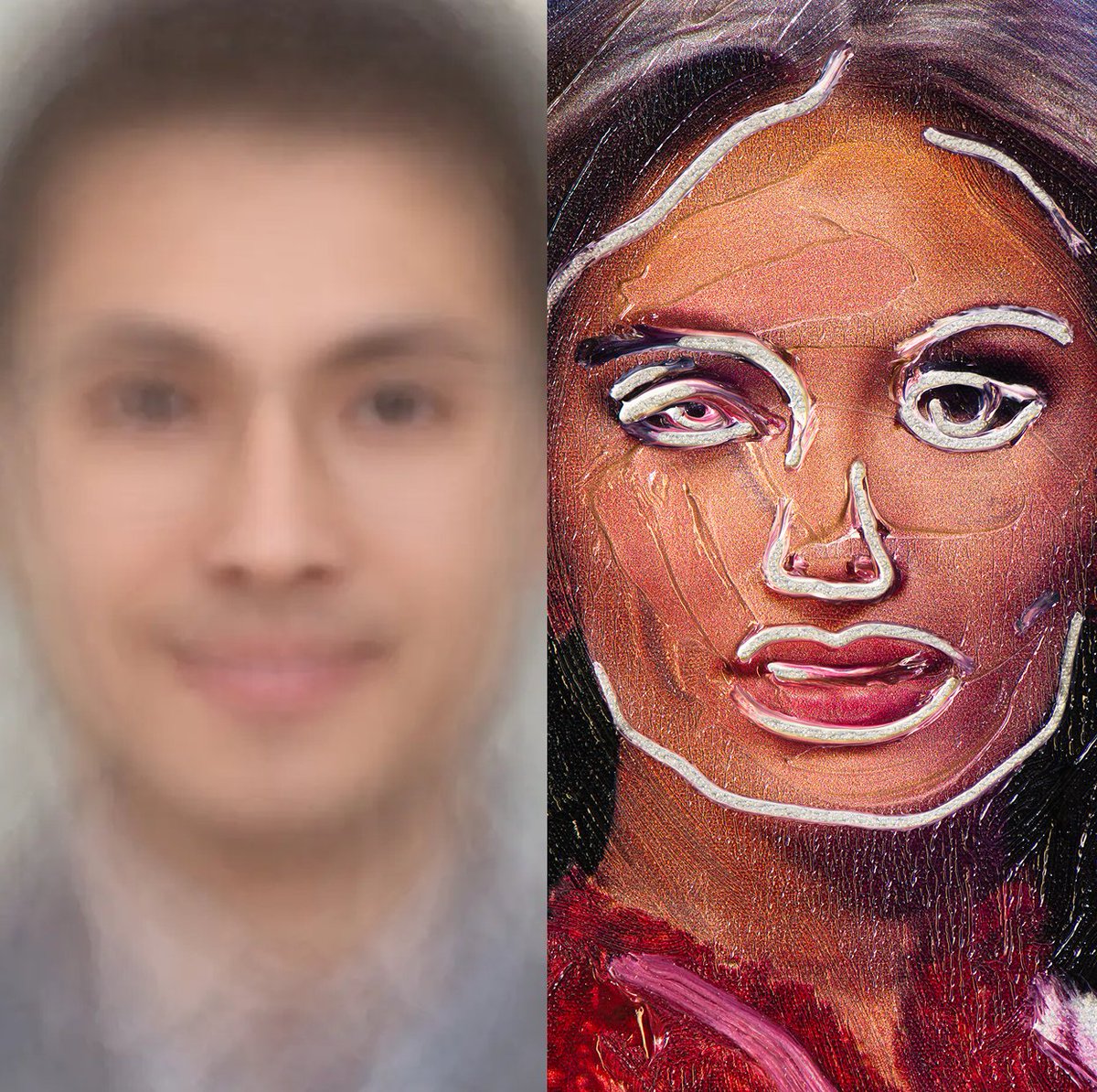
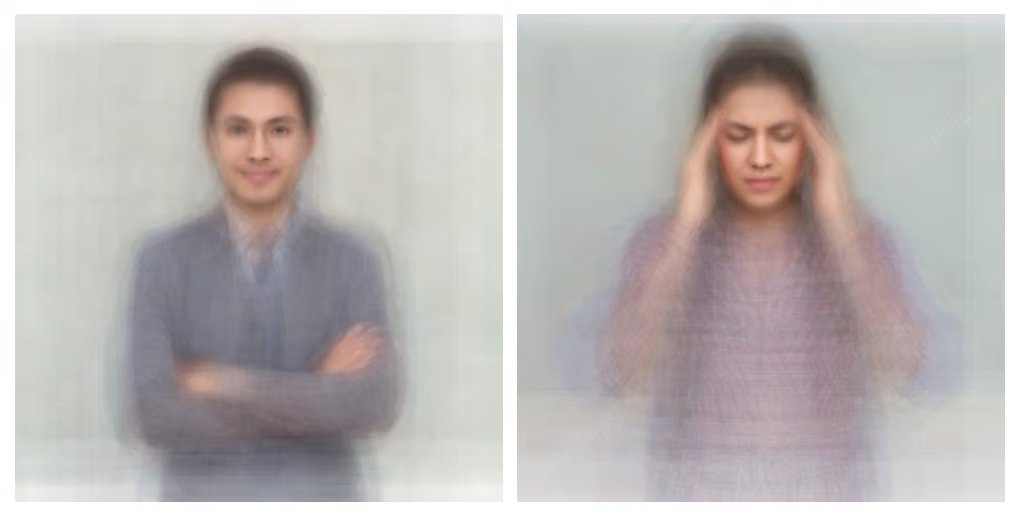
For Taking Stock, Michael Mandiberg collected and analyzed 130 million stock photographs to produce a series of photographs and videos that surface the ideologies haunting these ubiquitous images.
image: Topic 23, Pose 21, Gesture 68 (depressed, stressed, problem, etc.) + Topic 11, Pose 7, Gesture 57 (business, corporate, executive, etc.)
—
In Gretchen Andrew’s Facetune Portraits, custom robotics scribe the popular AI-driven beauty filters of social media into oil paintings derived from images of quintessential beauty.. Normally, on TikTok and via Zoom’s “touch up” feature, these visual modifications occur seamlessly and invisibly. By making this process visible, Facetune Portraits reveals the messy co-existence we have with our digital selves.
image: Facetune Portraits: Universal Beauty, Puerto Rico + USA
We have been working with @mandiberg on their new large-scale project "Taking Stock" over this past year and are incredibly excited to present it first at @ParisPhotoFair in just two weeks.
Michael Mandiberg is a well known digital media artist and creator of many important works over the last two decades. They are "an interdisciplinary artist whose work manifests the poetics and politics of the information age" as stated in Michael's full bio, linked below – read it for an impressive history of exhibitions (ie @whitneymuseum), publications (ie @Artforum), and institutional collectors (ie @LACMA) – with links to seminal works that uniquely unpack internet- and digital-age systems.
Over the last two years, Mandiberg has scraped and analyzed 130 million stock photographs for Taking Stock. This analysis is the basis for an incredible new series of 8 photographs and 3 videos that reveal the topical and formal tendencies (and biases) of images that surround our consumer culture, and that are now a major contributor to AI training data.
More information to come on our @verse_works exhibition site soon. Shown below:
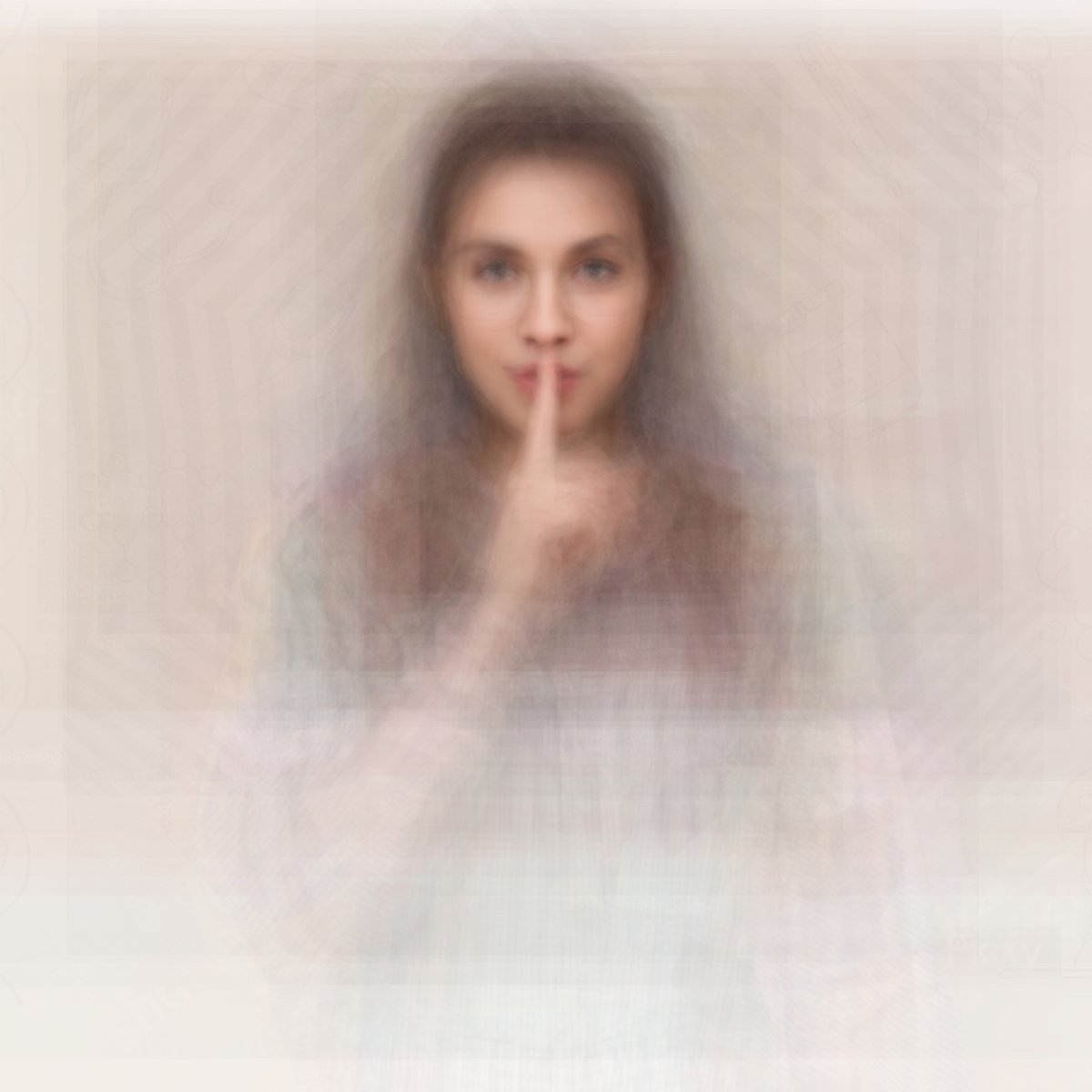
“Topic 22, Pose 24, Gesture 99 (finger, gesture, point, etc.)”
@jfkeeler@Wikipedia@TheAtlantic I took a look at the editing history, but couldn't which user you were. I did find my way to this related article: https://t.co/oTEM4ZSfoo
I created the first maps of @wikipedia contributors for @theatlantic, revealing reassuring and troubling patterns: high edits in swing states; low edits in religious counties in the Plains; low edits in Black rural South and Native American reservations. https://t.co/jkXmXAeHB3
I’m on the keynote panel for the CUNY Teaching and Learning conference. I will be talking about how I have adapted collaborative brainstorming exercises to enable students to collectively articulate their own goals.
Book launch @PRINTED_MATTER next Thursday (Aug 24) in conversation with K Allado-McDowell on the occasion of my three recently-published books.
https://t.co/4MxoqqBSc4
Ethics: Essays Collected from Plagiarism Websites provides the readers with insight into the basic of ethics and philosophy. With an introduction ghost written by a term paper writing service, reflecting on the ethics of writing essays for other people. https://t.co/tCFVouq2qH
The Magnificent Gatsby is an uncanny retelling of The Great Gatsby, paraphrased with AI software. Preceding #ChatGPT, these tools are used by content farms, and students who want to hide their plagiarism. https://t.co/n1BSYvYWic
"Who edits @Wikipedia matters, because it determines which articles are written and from what perspective."
Read @mandiberg's article, "Wikipedia's Race and Ethnicity Gap and the Unverifiability of Whiteness," freely available: https://t.co/XArYyIZJtx @STCollective
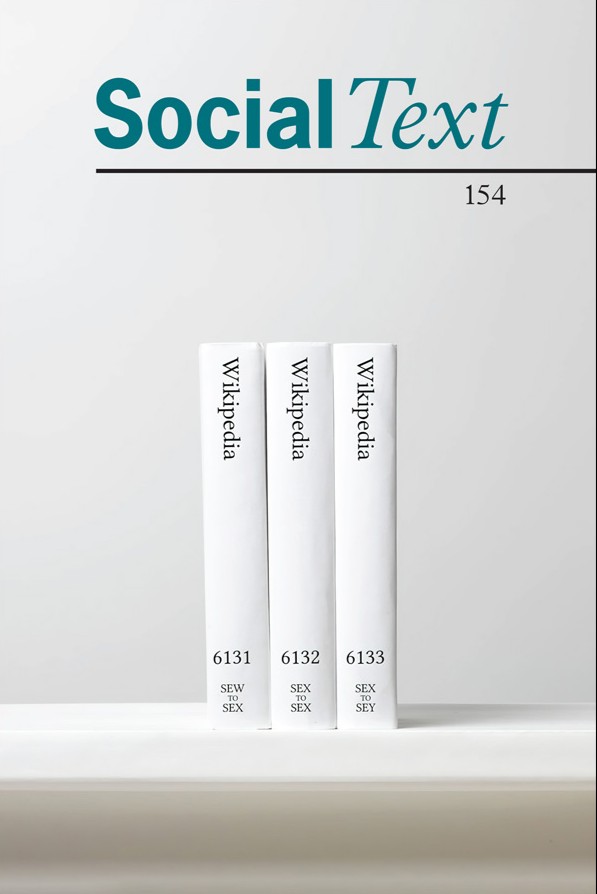
Social Text 154 is now online! Read Michael Mandiberg's article, "Wikipedia's Race and Ethnicity Gap and the Unverifiability of Whiteness," freely available through September: https://t.co/YFg9MJ5CNX
@STCollective@mandiberg
As whiteness enters the database, it functions differently than existing theories of whiteness account for. This isn’t just theoretical: data scientists need to understand that the data is far less neutral than they treat it as.
I just published “Wikipedia’s Race and Ethnicity Gap and the Unverifiability of Whiteness.” I tried to measure a gap, but the way whiteness functions as data prevented me.
@Wikipedia@Wikidata@WikiResearch#WikipediaResearch@STCollective
LINK 👉🏻 https://t.co/On8AIhEg8S
In the absence of a precise analysis of the gaps, I explored the structures that prevent such an analysis. I examine policy discussions about categorization by race and ethnicity, demonstrating persistent anti-Black racism.