A few facts:
1️⃣ The person who pulled 510k lines of #Claude Code source code from a 60MB source map is a 25 years old boy From China.
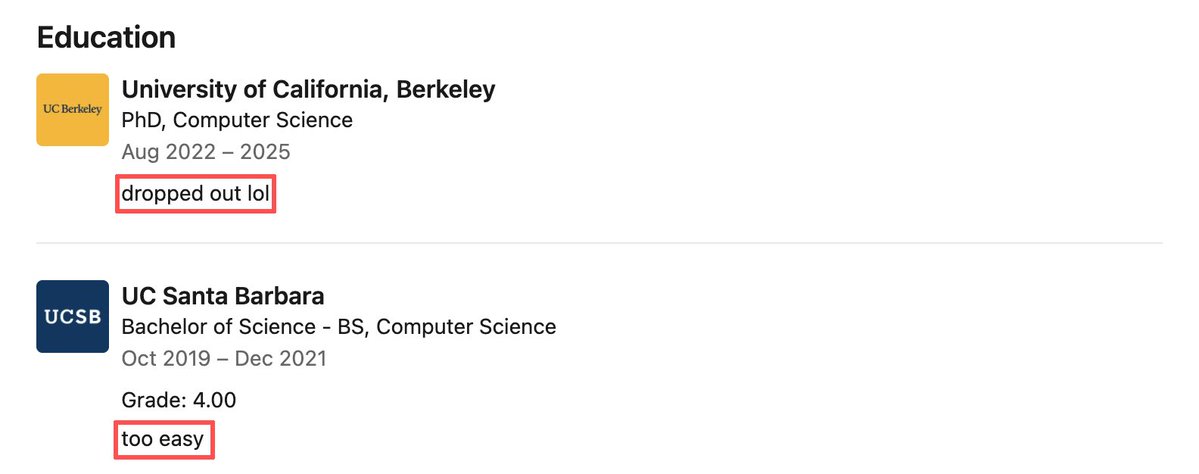
2️⃣ His LinkedIn: UCSB in 3 years, 4.0 GPA. His comment:"too easy."
Dropped out of Berkeley PhD after 2–3 years. Comment:"lol."
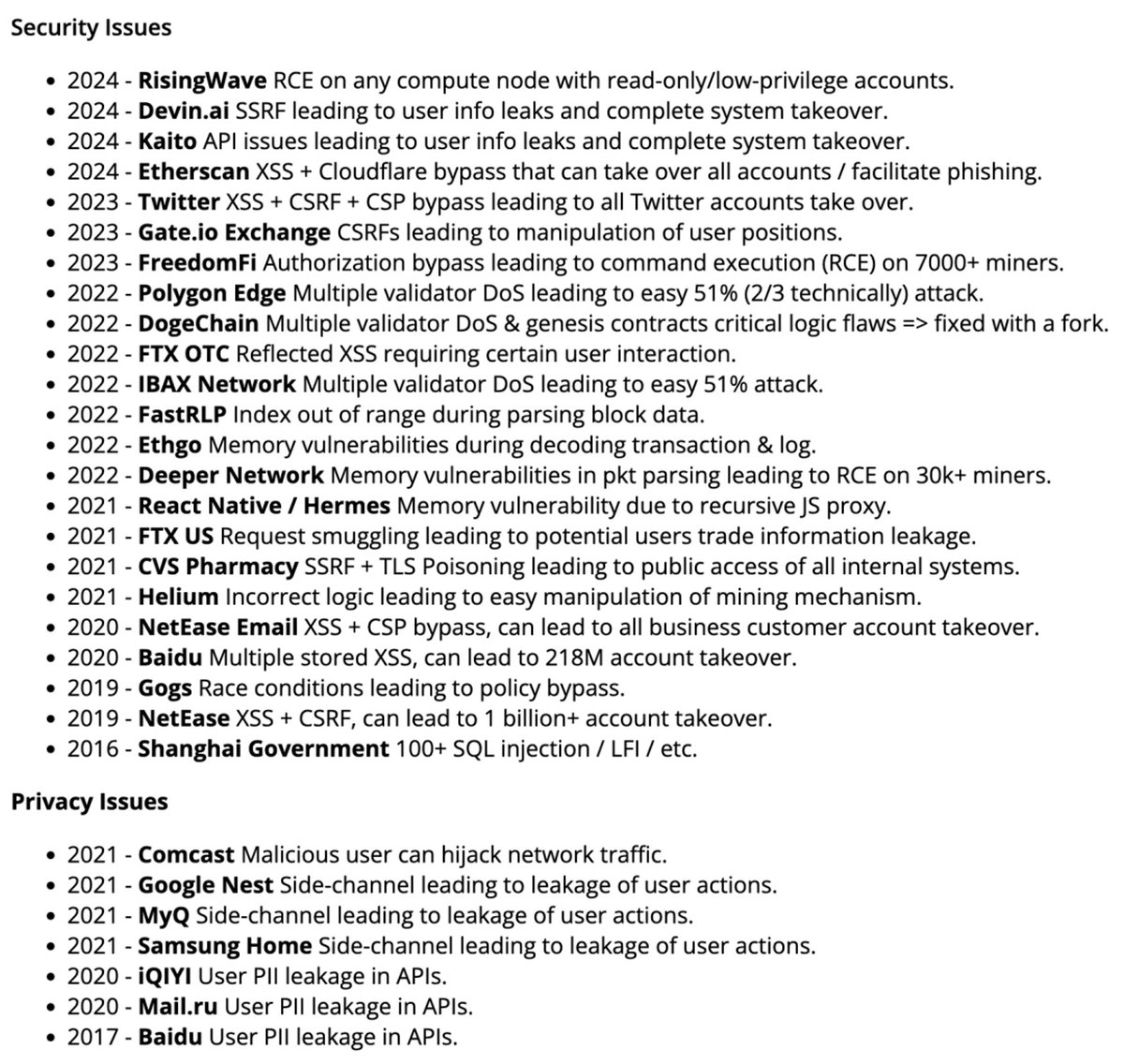
3️⃣ White hat. Found bugs in X, Chrome. $1.9M in bounties.
4️⃣ He called out Anthropic last year for scraping user code under the guise of "safety reviews."
5️⃣ After the leak, his take:"Claude's code is nowhere near as interesting as OpenCode's."
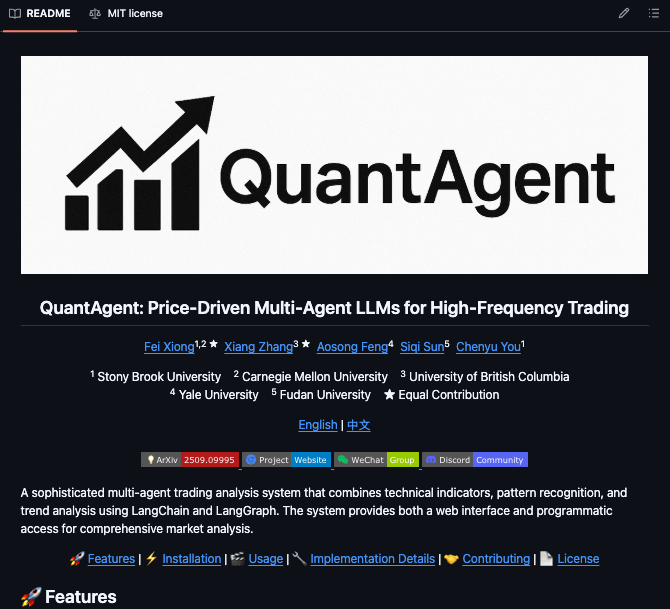
🚨BREAKING: Researchers from Stony Brook, CMU, Yale, UBC, and Fudan just open-sourced a multi-agent LLM system built specifically for high-frequency trading analysis.
It's called QuantAgent and it runs four specialized AI agents simultaneously each analyzing a different dimension of the market then synthesizes everything into a single actionable trade decision with entry points, exit points, and stop-loss thresholds.
Link in the comments + details about this 👇
Anthropic leaked 512,000 lines of Claude Code source code yesterday.
What happened in the next 12 hours is absolutely wild.
4 AM. Anthropic pushes an update to npm. Inside the package: their entire codebase. A 60 MB debugging file accidentally bundled in.
23 minutes later, researcher Chaofan Shou spots it. Downloads the zip.
Posts it on X. Within 6 hours: 3 million views.
By the time Anthropic’s team woke up, the code was forked 41,000+ times across GitHub. Anthropic started firing DMCA takedowns. Too late.
A Korean developer named Sigrid Jin woke up to his phone exploding. He’s Claude Code’s biggest power user.
WSJ reported he burned through 25 billion tokens last year.
He read the leaked code.
Rewrote the entire thing in Python in 8 hours. His repo hit 30,000 stars faster than any GitHub project in history.
Then he rewrote it again in Rust. That version now has 49,000 stars.
Someone mirrored it to a decentralized platform with one message: “will never be taken down.” The code is permanent. Anthropic cannot get it back.
Here’s the part I can’t stop thinking about: Anthropic built something called “Undercover Mode.” Its only job: prevent Claude from accidentally leaking internal secrets.
They shipped an entire anti-leak system in their own product. Then leaked their own source code in a .map file. Irony is beautiful
🚨 Claude Code just got multi-agent superpowers.
Someone built an orchestration layer that turns Claude Code into a fully autonomous AI dev system.
No new tools.
No new subscriptions.
Just Claude Code — upgraded.
It’s called oh-my-claudecode.
And it changes everything:
• 5 execution modes
• 32 specialized agents
• smart model routing
• autonomous loops
• 3-5x faster multi-component builds
Here’s what you actually get:
��� Autopilot — describe task, Claude builds everything
→ Ultrapilot — parallel agents for faster complex builds
→ Swarm — multiple agents solving same goal independently
→ Pipeline — staged execution (research → build → test)
→ Eco mode — 30–50% fewer tokens, same output quality
No config hell. Just switch modes.
The real power is in keyword triggers:
• "autopilot" → full autonomous execution
• "ralph" → persistence loop until verified complete
• "eco" → budget-optimized execution
• "plan" → planning interview before coding
One word → whole workflow changes.
Under the hood:
• 32 specialized agents (arch, research, test, UI, data, etc.)
• automatic model routing (Haiku → Opus when needed)
• parallel execution orchestration
• background task management
• automatic resume after rate limits
• session persistence across runs
This basically turns Claude Code into:
an AI engineering team, not a single agent.
The biggest unlock:
You stop prompting.
You delegate systems.
"build SaaS dashboard autopilot"
"refactor repo swarm"
"fix tests ralph"
…and it just runs.
This + Claude Code best practices = autonomous dev loop.
We’re watching AI coding move from: prompt → agent → orchestrated AI teams
Open source.
Already blowing up.
Bookmark this before everyone else finds it.
Follow for more AI engineering systems.
RT — this changes how people use Claude Code.
Someone finally documented how to actually use Claude Code.
22K+ stars. claude-code-best-practice.
Direct from Boris Cherny and team:
→ Always use plan mode, give Claude a way to verify
→ Ask Claude to interview you using AskUserQuestion tool
→ Use Git Worktrees for parallel development
→ /loop - schedule recurring tasks for up to 3 days
→ Code Review - fresh context windows catch bugs the original agent missed
→ /btw - side chain conversations while Claude works
→ Make phase-wise gated plans with tests for each phase
→ Use cross-model (Claude Code + Codex) to review your plan
→ CLAUDE[.]md should target under 200 lines per file
→ Use commands for workflows instead of sub-agents
→ Have feature-specific sub-agents with skills instead of general QA or backend engineer
→ Vanilla Claude Code is better than complex workflows for smaller tasks
→ Take screenshots and share with Claude when stuck
→ Use MCP to let Claude see Chrome console logs
→ Ask Claude to run terminal as background task for better debugging
→ Use cross-model for QA - e.g. Codex for plan and implementation review
The community workflows included:
→ Cross-Model (Claude Code + Codex) Workflow
→ RPI (Research Plan Implement)
→ Ralph Wiggum Loop for autonomous tasks
→ Github Speckit (74K stars)
→ obra/superpowers (72K stars)
→ OpenSpec OPSX (28K stars)
The billion-dollar questions it addresses:
→ What should you put inside CLAUDE[.]md?
→ When should you use command vs agent vs skill?
→ Why does Claude ignore CLAUDE[.]md instructions?
→ Can we convert a codebase into specs and regenerate code from those specs alone?
The daily habits:
→ Update Claude Code daily
→ Start your day by reading the changelog
→ Follow r/ClaudeAI, r/ClaudeCode on Reddit
Repost it. Bookmark it.
Holy cow.
Someone literally built a Claude Code skill that clones any website in one prompt 🤯
Everyone tries to clone sites by grabbing screenshots and hoping for the best.
That barely gets you halfway there.
This new skill brings a MUCH smarter way!
It directs Claude Code's Chrome MCP straight to the source, pulling live assets and code directly.
→ No more guessing exact fonts.
→ No more eyeballing component sizes.
→ No more faking animations from screenshots.
Here is how the skill automates the magic behind the scenes:
#1 Opens Chrome MCP and navigates directly to the target website
#2 Extracts the visual foundation (fonts, colors, layout, patterns) while taking screenshots
#3 Builds the clone's core from that collected data
#4 Deploys parallel agents to clone separate sections simultaneously
#5 Reviews the agents' code, merges everything, and finalizes the clone
One prompt gets you a fully cloned website.
The best part?
It's 100% free and open-source.
Link to the repo in 🧵↓
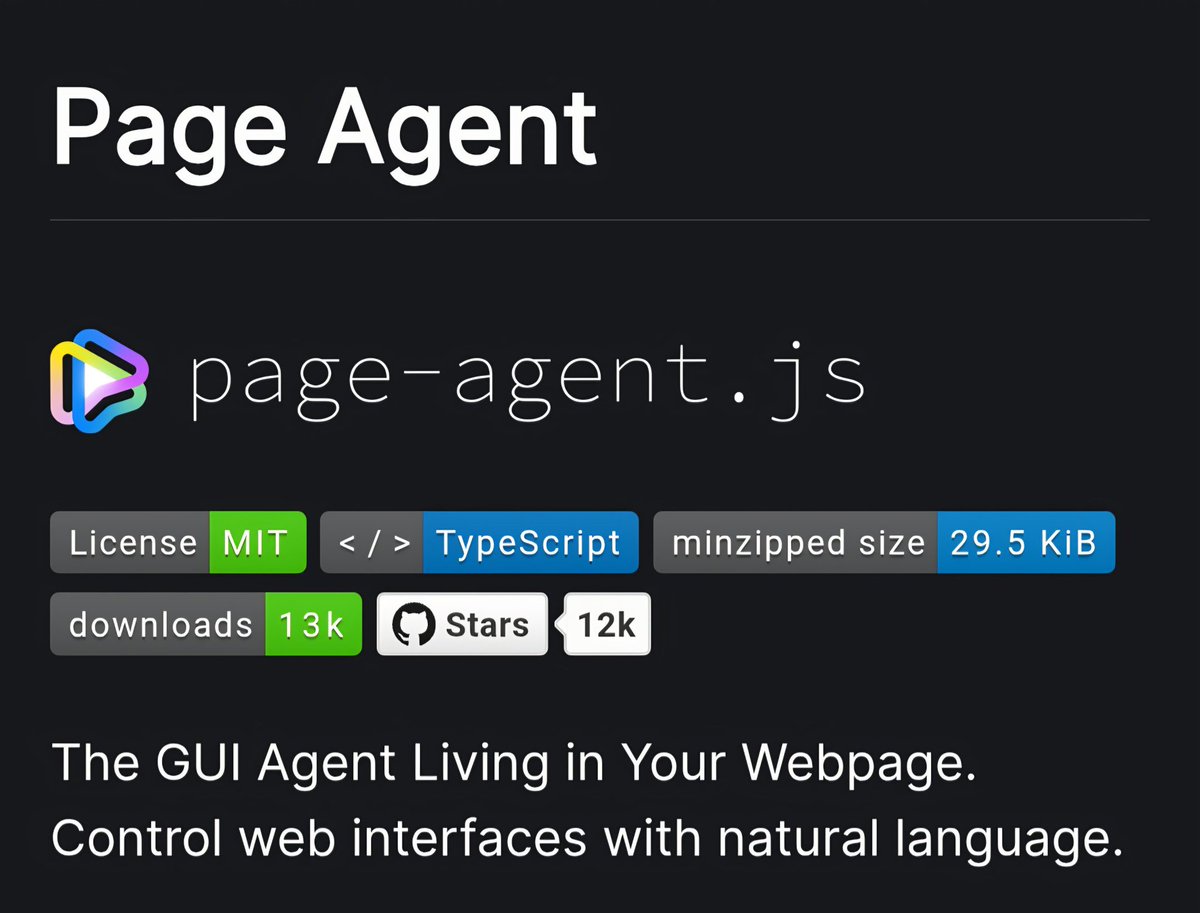
🚨 Breaking: Alibaba just killed the browser automation stack.
**page-agent.js** — a GUI agent that lives directly inside your webpage. No Selenium. No Puppeteer. No Chrome extension. No Python backend. Just one script tag.
It reads your DOM as text (no screenshots, no multimodal BS), brings your own LLM, and executes natural language commands like "fill out this form" or "click login" — right inside the page.
The use cases are genuinely insane:
→ Ship an AI copilot in your SaaS in literally lines of code
→ Turn 20-click ERP/CRM workflows into one sentence
→ Make any legacy web app accessible via voice or natural language
12k stars. MIT licensed. Built on top of browser-use internals — but without any of the setup overhead.
This is what "AI-native UX" actually looks like in practice
Link in comments👇
Best GitHub repos for Claude code that will 10x your next project in 2026:
1. Claude Mem
https://t.co/PzlmPwaA4X
2. UI UX Pro Max
https://t.co/mcpLn9KjQU
3. n8n-MCP
https://t.co/zeNRbHtKv5
4. Obsidian Skills
https://t.co/66WEas0u0U
5. LightRAG
https://t.co/bfzlPxZjFw
6. Everything Claude Code
https://t.co/6vzCMOA0us
7. Superpowers
https://t.co/yMLM1JIVz0
8. Awesome Claude Code
https://t.co/fktVylnNj0
9. GSD (Get Shit Done)
https://t.co/qnImunzbLS





![techNmak's tweet photo. Someone finally documented how to actually use Claude Code.
22K+ stars. claude-code-best-practice.
Direct from Boris Cherny and team:
→ Always use plan mode, give Claude a way to verify
→ Ask Claude to interview you using AskUserQuestion tool
→ Use Git Worktrees for parallel development
→ /loop - schedule recurring tasks for up to 3 days
→ Code Review - fresh context windows catch bugs the original agent missed
→ /btw - side chain conversations while Claude works
→ Make phase-wise gated plans with tests for each phase
→ Use cross-model (Claude Code + Codex) to review your plan
→ CLAUDE[.]md should target under 200 lines per file
→ Use commands for workflows instead of sub-agents
→ Have feature-specific sub-agents with skills instead of general QA or backend engineer
→ Vanilla Claude Code is better than complex workflows for smaller tasks
→ Take screenshots and share with Claude when stuck
→ Use MCP to let Claude see Chrome console logs
→ Ask Claude to run terminal as background task for better debugging
→ Use cross-model for QA - e.g. Codex for plan and implementation review
The community workflows included:
→ Cross-Model (Claude Code + Codex) Workflow
→ RPI (Research Plan Implement)
→ Ralph Wiggum Loop for autonomous tasks
→ Github Speckit (74K stars)
→ obra/superpowers (72K stars)
→ OpenSpec OPSX (28K stars)
The billion-dollar questions it addresses:
→ What should you put inside CLAUDE[.]md?
→ When should you use command vs agent vs skill?
→ Why does Claude ignore CLAUDE[.]md instructions?
→ Can we convert a codebase into specs and regenerate code from those specs alone?
The daily habits:
→ Update Claude Code daily
→ Start your day by reading the changelog
→ Follow r/ClaudeAI, r/ClaudeCode on Reddit
Repost it. Bookmark it.](https://pbs.twimg.com/media/HEetkU-bEAA0hd_.jpg)