If Wanda could do stuff like this in her early years as an avenger, how did Hulk & Thor come to the conclusion that either of them is the stronger avenger?
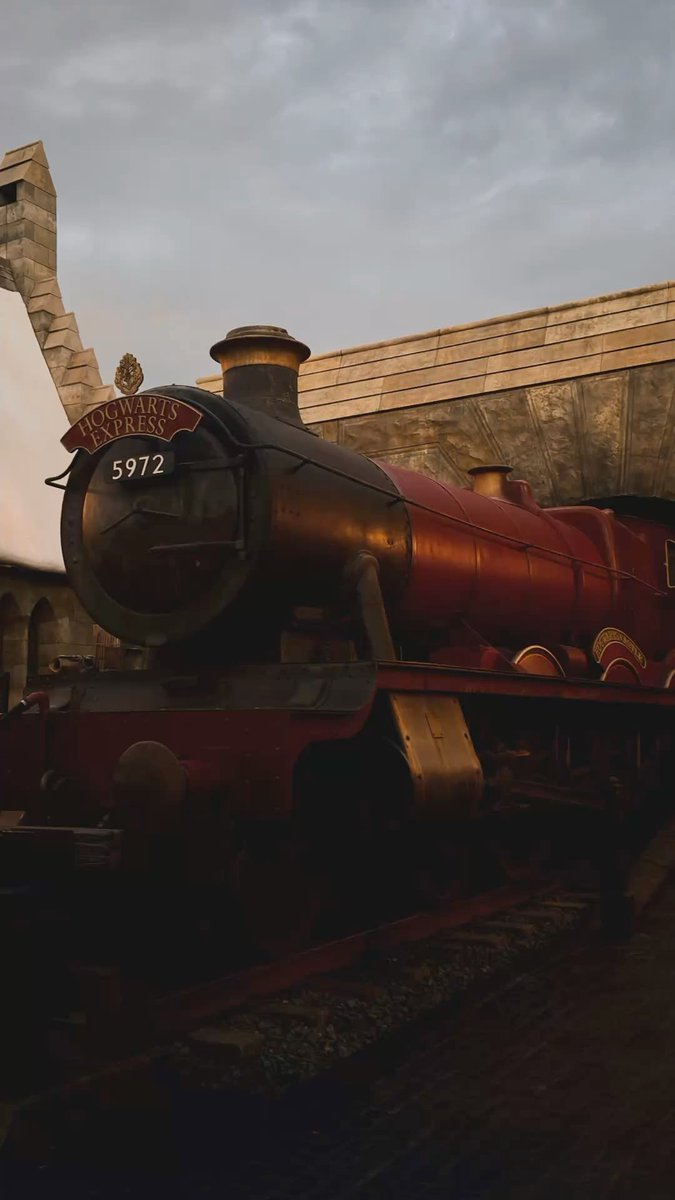
James Potter didn’t start bullying Severus Snape simply because he was a Slytherin. Their animosity began much earlier, on the Hogwarts Express, before either of them had even been Sorted.
During their first journey to Hogwarts, James and Sirius Black shared a compartment with Snape and Lily Evans. When James expressed his dislike of the idea of being Sorted into Slytherin, Snape made a snide remark about Gryffindor being the house for those who valued brawn over brains. Their first interaction immediately established a mutual dislike, fuelled by clashing personalities, attitudes and prejudices rather than house rivalry.
Once they arrived at Hogwarts, their differences only became more pronounced. James was wealthy, confident, popular and raised in a family that despised the Dark Arts. Snape, on the other hand, came from a troubled and impoverished background and was fascinated by dark magic. He also began associating with Slytherins such as Avery and Mulciber, who were interested in the Dark Arts and openly displayed prejudices against Muggle-borns.
To James, Snape’s growing fascination with dark magic and his choice of friends gave him another reason to despise him. However, that doesn’t make James’s behaviour any less cruel or justify the bullying he subjected Snape to.
Another significant factor was Lily Evans. James was arrogant, mischievous and accustomed to getting attention, but he was also deeply attracted to Lily. Unfortunately for him, Lily’s closest friend was the very person he couldn’t stand. His constant attempts to impress her, show off and humiliate Snape were partly driven by jealousy and immaturity. He knew Lily cared about Snape, and that clearly bothered him.
However, it would also be inaccurate to portray Snape as someone who simply endured everything without retaliating. James and Sirius certainly had the advantage of numbers, given that they operated as part of the Marauders, but Snape was intelligent, exceptionally talented and equally vindictive. He actively looked for ways to get the Marauders into trouble, developed dangerous spells such as Sectumsempra and was hardly innocent when it came to using magic against his enemies.
None of this excuses James’s bullying, particularly the public humiliation and the incident by the lake. Nor does Snape’s behaviour make him deserving of what James did to him.
Ultimately, their relationship was far more complicated than a simple Gryffindor-versus-Slytherin rivalry. It was a bitter feud between two exceptionally talented but deeply flawed young wizards, fuelled by arrogance, jealousy, resentment, prejudice and fundamentally opposing worldviews.
Understanding why their rivalry began doesn’t mean excusing either of them. Both boys had their faults, but James was still responsible for the choices he made and the cruelty he inflicted on Snape.
Why Did Lily Smile When James Hung Snape Upside Down? Was Lily Really the Sweet, Innocent Girl We Have Always Assumed Her to Be?
There’s a particular moment in Harry Potter and the Order of the Phoenix that I find quite interesting and, honestly, rather uncomfortable when examining Lily and Snape’s friendship.
During Snape’s Worst Memory, when James uses Levicorpus to hang Snape upside down in front of everyone, we get this description of Lily’s reaction:
“Lily, whose furious expression had twitched for an instant as though she was going to smile.”
Now, I don’t believe J.K. Rowling included that particular detail accidentally. The wording is deliberate. Lily’s expression briefly twitched as though she was about to smile, suggesting that, for a split second, she found something amusing about the situation despite her obvious anger.
To her credit, Lily immediately suppresses that reaction and remains visibly furious with James. She also intervenes and attempts to defend Snape. However, that brief reaction raises an interesting question about the nature of their friendship.
This is someone she supposedly cares deeply about, someone she has known since childhood and has repeatedly defended. Yet, when she witnesses him being publicly humiliated, her immediate reaction isn’t entirely one of horror or concern. For an instant, she appears amused.
I find that particularly revealing because genuine affection doesn’t necessarily mean you agree with everything someone does, but watching someone you care about being humiliated should hardly be an amusing experience.
Does this mean Lily was secretly cruel or that she never genuinely cared about Snape? Not necessarily. She was a teenager, and a momentary reaction doesn’t define her entire character. But it does make me question whether their friendship was as uncomplicated and unconditional as we’ve been led to believe.
Perhaps Lily cared about Snape but was also increasingly embarrassed by his associations, his behaviour and the person he was becoming. Perhaps their friendship had already begun to deteriorate long before the infamous Mudblood incident.
What do you make of Lily’s reaction? Was it simply an involuntary moment of amusement, or does it reveal something less flattering about her feelings towards Snape?
His first sweetheart didn't make it to the arena, so his second sweetheart went twice 💔😭
Suzanne took every little "not that big of a deal" details from previous books and made it more tragic and devastating 💔
#HungerGames
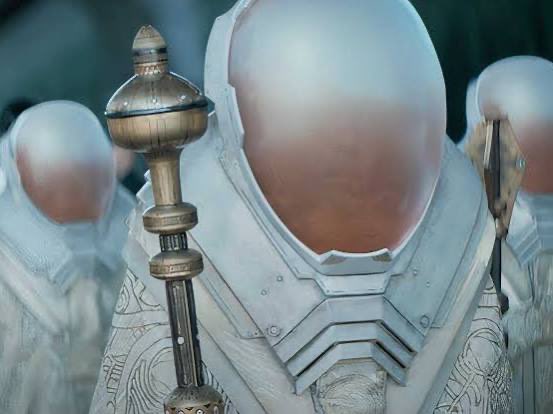
DUNE BOOK READERS: What happens to a Guild Navigator when they can no longer access enough spice to maintain their abilities?
Considering the entire Imperium depends on these individuals for interstellar transportation, wouldn’t losing even a few experienced Navigators create a massive crisis? #Dune
“Mr. Black, it seems you were indeed falsely accused of the murder of the Potters, Peter Pettigrew and all those Muggles,” Amelia Bones said to Sirius. “However, you are still going back to Azkaban for all your other crimes.”
“Other crimes?! What are you talking about?” Sirius asked, bewildered.
“There's quite a list, Mr. Black. Some were already known, while others have only recently come to light,” Amelia replied.
Amelia: “Let's start with escaping Azkaban and evading law enforcement...”
Sirius: “Come on, I was framed! Surely you can let that slide!”
Amelia: “Failing to register as an Animagus...”
Sirius: “Alright, my bad. How about I promise to do that as soon as I can?”
Amelia: “Creating an unauthorised enchanted Muggle object...”
Sirius: “Hey, my flying bike was totally sweet! That can't be a crime!”
Amelia: “Vandalising public property...”
Sirius: “It was just one stupidly annoying talking painting! And those stupid drapes...”
Amelia: “Multiple counts of theft...”
Sirius: “Come on! I had to survive somehow!”
Amelia: “Multiple counts of trespassing...”
Sirius: “Hey now, I just wanted to check on Harry...”
Amelia: “Smuggling a hippogriff deemed dangerous by the Ministry out of the country...”
Sirius: “BUCKBEAK IS INNOCENT!”
Amelia: “Attempted murder of a fellow student by luring him into a werewolf's den...”
Sirius: “SNIVELLUS SNITCHED ON ME?!”
Amelia: “Brandishing a bladed weapon in a student dormitory...”
Sirius: “...Look, I just wanted to kill that one rat—”
Amelia: “Kidnapping and planning to murder Peter Pettigrew...”
Sirius: “THAT RAT WAS ASKING FOR IT!”
Amelia: “Attacking a third-year Hogwarts student, seriously injuring and kidnapping him...”
Sirius: “Look, I already apologised to Harry's ginger friend. Surely that makes it okay—”
Amelia: “And lastly, Apparating without a licence.”
Sirius: “NOW YOU'RE JUST TAKING THE PISS!”
A long silence followed as a furious Sirius stared at Amelia Bones, who refused to even flinch.
Admitting defeat, Sirius tried one last thing.
“...Can I get credit for time served?”
“No,” Amelia stated firmly.
“SCREW THIS! I'M OUT OF HERE!”
Before Amelia could recover from Sirius's Stunning Spell, he had already transformed into his Animagus form and fled.
And just like that, Sirius Black was on the run once again!
I think Voldemort never killed Slughorn because, from his perspective, there was no reason to. Remember that Slughorn was equally desperate to keep their conversation about Horcruxes secret. He explicitly told Tom that people would not like knowing they had discussed such dark magic, and Riddle agreed to keep quiet. Slughorn also spent years hiding the real memory out of shame, even altering it to make himself look better. Voldemort had little reason to suspect that the very professor who regretted giving him that information would eventually reveal it.
There is also the question of Voldemort's arrogance. He never seemed to consider Slughorn a serious threat, especially when Dumbledore himself had to spend months trying to persuade the professor to surrender the memory. And that memory was crucial: it gave Dumbledore the clearest evidence that Voldemort had considered creating multiple Horcruxes, something no ordinary book could have told him. The irony is that Slughorn's guilt, rather than any deliberate attempt to help Voldemort, kept the secret buried for years. Voldemort underestimated how dangerous that one hidden memory could become.
I mean, when you actually think about it, Hermione’s use of the Time-Turner raises a rather amusing question about how the Trace actually works.
Let’s say she used it twice a day on average, sometimes once, sometimes three times, depending on her timetable. For simplicity, assume she went back just one hour each time. That’s roughly 10 extra hours per week. With approximately 36 weeks of classes in a Hogwarts school year, she’d accumulate around 360 extra hours. That’s 15 additional days of lived time in a single academic year.
Now, we know the Trace detects underage magic performed outside school, but does it automatically disappear the moment a witch or wizard turns 17? And if so, how does the Ministry’s enchantment determine that someone has reached the age of majority? Does it recognise their date of birth, count the actual time they’ve been alive, or simply operate according to the age recorded in their magical identity?
Because there’s a potentially interesting loophole here. If the Trace is based on a witch or wizard’s actual accumulated lifetime rather than their calendar birthday, Hermione could theoretically have reached 17 earlier than someone born on the exact same date who had never travelled through time. In other words, all those additional hours spent attending classes could have made her technically older than her birth certificate suggested.
Of course, there’s a small complication. Hermione’s birthday is September 19, so 15 days earlier would be September 4, when Hogwarts would already have reopened for the new school year. It probably wouldn’t have given her much practical advantage, but the underlying question remains.
And this isn’t even accounting for the possibility that the Trace might be calibrated to a person’s birth date rather than their biological or chronological age. After all, the Ministry presumably has some magical way of identifying underage witches and wizards, but we’re never given a detailed explanation of how the enchantment calculates someone’s age.
So, could Hermione’s Time-Turner technically have made her reach the age of majority earlier than other witches and wizards born on September 19, or would the Trace simply ignore all the extra time she accumulated and continue counting down to her seventeenth birthday?
is there a lore reason why Wanda’s magic casually works without reading a single spell book, while Doctor strange had to study for years in Kamar-Taj just to make a spark?
I just realized John walker ripped Sam’s wings off with his bare hands like cardboard, yet we’re supposed to believe Sam’s regular unenhanced spine survived taking direct hits from Red Hulk later 💀