If you don’t have a morning erection as a man, you’re going to have a power failure.
This is also making a good defense for polygamy or a man having a side chick.
Please watch and share your thoughts.
Should polygamy be encouraged in the society?
A patient asked me: "Sir, I often get a sudden violent jerk as if I am falling from the bed right while falling asleep. Why does this happen? Am I having a seizure? I feel it mainly happens when I am under stress."
Ukraine sits on some of the most fertile soil on earth, the deep black earth that made it the breadbasket of Europe. In 1932 and 1933, on that very soil, close to four million of its people were starved to death. The soil was as rich as ever. The famine was a decision.
The decision was collectivisation. Stalin set out to abolish the independent farmer altogether, to end private land and private animals and drive every peasant onto a state-run collective farm. The man who owned a little, a few cattle, a horse, a plot worked by his own family, was branded a kulak, an enemy of the people, and marked for destruction. Stalin's instruction was to liquidate them as a class.
The peasants saw what was coming, and many made a terrible choice. Rather than surrender their animals to the state, they killed them. Across the Soviet Union the herds simply collapsed. Around half the cattle, gone. Nearly half the horses that pulled the ploughs. Two-thirds of the sheep and goats. Tens of millions of animals slaughtered in a few seasons, a loss so total that the country did not rebuild its livestock to the old levels until the 1980s. A people who had fed themselves for a thousand years destroyed their own herds rather than hand them over, and the state called it sabotage.
Then came the grain. The quotas were set impossibly high, and when the villages could not meet them, brigades went from house to house and took everything. The harvest. The seed saved for next spring. The last food in the pantry. And when the countryside had been stripped bare, the people were forbidden to leave in search of bread, sealed inside their own dying villages.
So it was that in one of the richest farming regions on the planet, the men and women who actually grew the food lay down in the lanes and died of hunger, in their millions. Some, at the very end, ate things no human being should ever have to eat.
Here is the lesson, and it is worth carving somewhere it cannot be forgotten. A man who owns his land and his animals can feed his family whoever sits in the palace. A man who depends on the state for his bread can be starved the day he steps out of line. That is why the independent farmer is always the first enemy of absolute power. Take his herds, take his fields, and you have taken the one thing that let him stand on his own.
A population that cannot feed itself will, in the end, do as it is told.
Destroy the farmer, and you hold the whole nation by the throat.
The Polygamist Was Essentially About the Unregulated Multiplication of Unstructured Intimate Households!
After everything is said and done, The Polygamist was not really about polygamy.
It was about shagging in different households. It was about polygamy gone rogue. That may sound provocative, but beneath the provocation lies an important distinction that modern audiences are often reluctant to make.
There is a difference between traditional polygamy as an institution and serial romantic accumulation disguised as culture. The two are not the same. Much of what was portrayed in The Polygamist did not resemble the traditional African systems of polygamous marriage that existed across many communities before colonial disruption and modern urban fragmentation.
Whether one agrees with those systems or not, they were rarely casual arrangements built on secrecy, emotional improvisation and parallel lives. They were structured institutions governed by rules, responsibilities, hierarchy and communal oversight. Traditional African polygamy, in many settings, was not simply one man collecting women across neighbourhoods and cities, while each household remained unaware of the others. Marriage was visible. Marriage was regulated. Marriage was accountable.
Across different African societies, practices varied significantly, but certain broad principles appeared repeatedly. Additional marriages were not private adventures, they were social events. Existing family structures were recognised. Elders often played a role. Property arrangements were key. Children’s lineage mattered. Labour organization was crucial. Access to resources was of paramount importance.
The modern imagination often reduces polygamy to sexual abundance. Traditional societies rarely did. A wife was not simply a romantic attachment for pleasure! She entered a social and economic system. In many African settings, wives occupied distinct households within one recognised communal family structure. There was physical proximity but also administrative order. Resources were distributed according to understood rules. Duties were organized. Children knew one another. Women knew where they stood within the family hierarchy. The man’s obligations multiplied alongside his authority.
This did not automatically make such systems fair or ideal. Many women historically carried disproportionate burdens and had limited room to object. But even critics of traditional polygamy generally acknowledge that it was not designed as secretive fragmentation.
Its survival depended on management.
That is why the image of a husband moving from one concealed household to another, fathering children across disconnected worlds while each woman negotiates uncertainty independently, feels fundamentally different. What was depicted in The Polygamist was not institutional traditional African polygamy. It was intimacy without architecture.
People often forget that traditional polygamous arrangements imposed restrictions not only on women but also on men. A man’s ability to marry additional wives was tied to capacity such as land, cattle, provision, reputation, family support and social legitimacy. Expansion came with obligations.
Modern rogue polygamy, however, keeps the privileges and abandons the duties. The language of tradition remains. The discipline disappears. And when discipline disappears, what remains is not a family system but household multiplication. One woman carries the emotional labour. Another carries the financial uncertainty. Another carries the loneliness. Children grow up in parallel universes of partial truth. Everybody knows something. Nobody knows everything.
That is where The Polygamist becomes less a story about marriage and more a story about appetite. It asks a harder question than whether a man can love more than one woman. It asks whether people who remain emotionally fractured simply replicate their fractures across multiple homes.
Mfethu, majita... love yourselves too. Know your worth, my Kings.
We spend so much time telling women to know their worth, to choose themselves, to walk away from disrespect, to embrace woman upliftment and woman empowerment. Those conversations are important. But somewhere along the way, we forgot that our Kings also need to hear the same message.
Men can find themselves in toxic relationships too. Men can date women who are masters of manipulation, experts at gaslighting, women who constantly remind them that they are "not enough," that they are worthless, that they should be grateful for the bare minimum. Men can be used financially, expected to provide endlessly while their dreams, goals and growth are ignored. Men can also be humiliated, disrespected and emotionally drained.
Pain does not only belong to women.
If she is for the streets, she will return to the streets. You cannot build a home with someone who enjoys destroying your peace.
Majita, love yourselves enough to walk away from disrespect. Love yourselves enough to choose peace over chaos. Love yourselves enough to know that loyalty, kindness and commitment should never be repaid with humiliation.
We also need Kings who pray. Kings who know that strength is not silence. Kings who understand that asking for help is not weakness. Kings who know that coming back home and starting again is not failure.
And ladies, there is beauty in loving your partner too. There is beauty in serving him a meal with love, in covering his back when life gets hard, in spoiling him when you can even if it's just breakfast at Wimpy. Healthy love is not one-sided. It is partnership. It is mutual care. It is choosing each other over and over again.
Teach your boys to love themselves. Teach your boys to have standards. Teach your boys that being a man does not mean accepting abuse. Teach your boys that they deserve respect. Teach your boys that they are allowed to leave situations that break their spirit. Teach your boys that they are worthy of genuine love.
Our brothers matter. Our sons matter. Our fathers matter. Our uncles matter. We have uncles and brothers who have kids to. Brothers and uncles who are raising family member kids. Brothers are uncles who are loved in the community. You know that feeling of calling your brother or uncle call to come save you from something.
They also don't deserve bad treatment.
Majita, know your worth. You are Kings too.
Period.
The message isn't about men versus women. It's about reminding our Kings that self-respect, love, peace and dignity belong to them too.
Happy Fathers day even to the ones who are not fathers but we see you to🙏📿🌻
Chakra Gogo Sifiso 🕯️
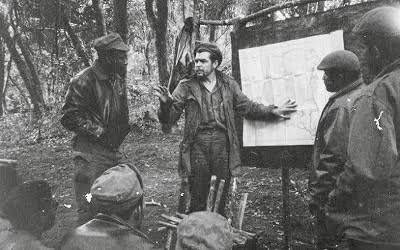
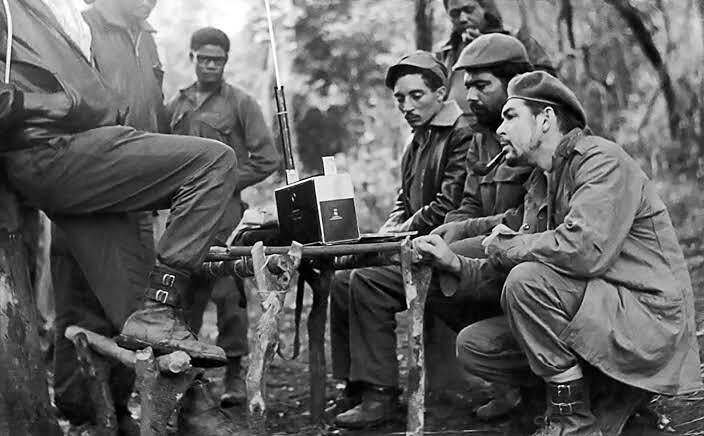
In 1965, Che Guevara left the comfort of government office in Cuba and went to the Congo to fight alongside African revolutionaries struggling to complete the liberation of their continent.
He did not merely speak of solidarity. He lived it, sharing the hardships and dangers faced by African freedom fighters.
His courage and commitment to anti-imperialism remain an inspiration.
Africa should never forget those who stood with her in her darkest hours.
As Cuba stood with African liberation movements from the Congo to Angola, Africa must continue to stand with Cuba against unjust blockades and unjust US aggression.
International solidarity is not charity; it is the bond of peoples fighting for dignity, sovereignty, and freedom.
Free Cuba ✊🏿🇨🇺🇨🇩
In July 1985, over a billion people watched Live Aid.
Months earlier, Michael Jackson and Lionel Richie had written "We Are the World." All of it was a response to a famine in Ethiopia.
Almost nobody remembers who actually caused the famine. 🧵
I am sharing a free copy of this report here to those interested in this history. Click here to get a copy: chrome-extension://efaidnbmnnnibpcajpcglclefindmkaj/https://t.co/c67lfkFJqq