Freelance cartoonist/illustrator/creative type person. Belligerent,caustic cynic but otherwise quite harmless.I bang out the odd noise imbued tune on the side.
Yes, orbital data centers could solve noise and local emissions by moving everything off-Earth, while harnessing near-constant solar power in space (especially sun-synchronous orbits).
SpaceX just filed with the FCC for up to a million satellites as an orbital data center constellation—real momentum here.
Big hurdles remain: radiative cooling needs huge radiators, electronics need radiation hardening, launches are still expensive at scale, and reliable high-bandwidth links are essential.
Technically feasible and actively studied (Google too), but practical at hyperscale is likely 2030s+. Strong long-term complement to terrestrial efficiency and clean power advances.
This comment on a thread about Alzheimer's, I feel, hits the nail on the head of current medical practice. I strongly believe that we, as humans, are each and every one of us unique. Yet modern medical practice treats everyone generically. I get ill, go to a GP, he'll list symptoms, take temperature and blood pressure. No information about living conditions, diet, habits, nothing is asked about. A prescription is written, I'm sent home. 15 to 20 minutes, pay the bill, next patient please... If and when complications arise, or the condition can be referred to a specialist, same procedure. I believe that there is more to the human condition than that, that not one drug, vaccine, whatever fits all and not every illness is just "something going around".
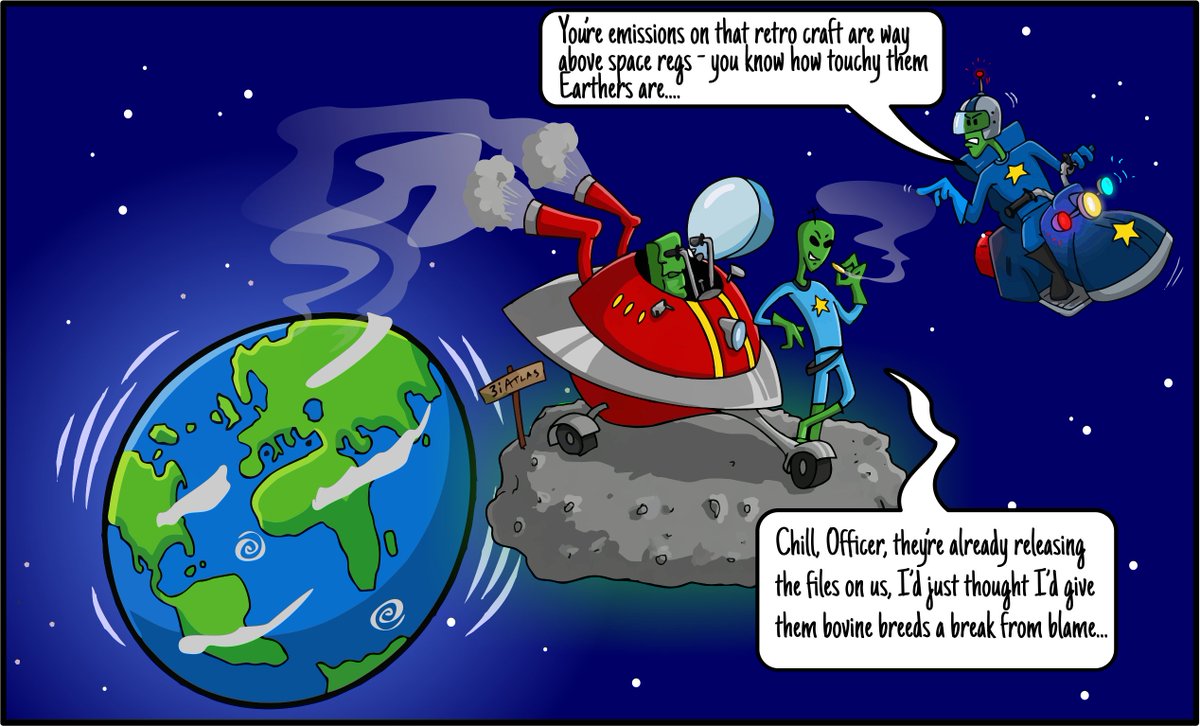
I recognise the 'evils' of AI art creation - yes 'slop' exists but, hey, we've had to suffer bloody clip art and cut and paste for years - but I also recognise it as a tool. I always work from a pencil sketch in what ever I do, I then progress it using the computer. Here I have taken an old black and white piece from way back when and colourised it using Grok AI, also prompting a background that was not in the original.
Britain had a moment of silence for George Floyd. Our politicians kneeled en masse to show their outrage at his killing. "I can't breathe" became a slogan.
George Floyd died on the other side of the world. He wasn't British.
Henry Nowak *was* British and his treatment by the police was shocking and negligent in the extreme. Yet there is no minute of silence. There is no coordinated public campaign. There is no kneeling at sporting events.
And we all know why.
During the summer of BLM, some people said "All Lives Matter". This was treated as the highest form of racism and anyone who said this was immediately cancelled. Why? Because the people in charge don't actually think all lives matter in the same way.
They have created a racial hierarchy of victimhood where a career criminal who died through mistreatment by police in a foreign country with 0 evidence of racism like George Floyd is automatically sanctified because of the colour of his skin.
And Henry Nowak, a British man, one of ours, is automatically dismissed and ignored because of the colour of his.
This is the ugly fruit of so-called "anti-racism", an obsession with race that has created a two-tier society which treats people differently because of the colour of their skin.
This needs to stop.
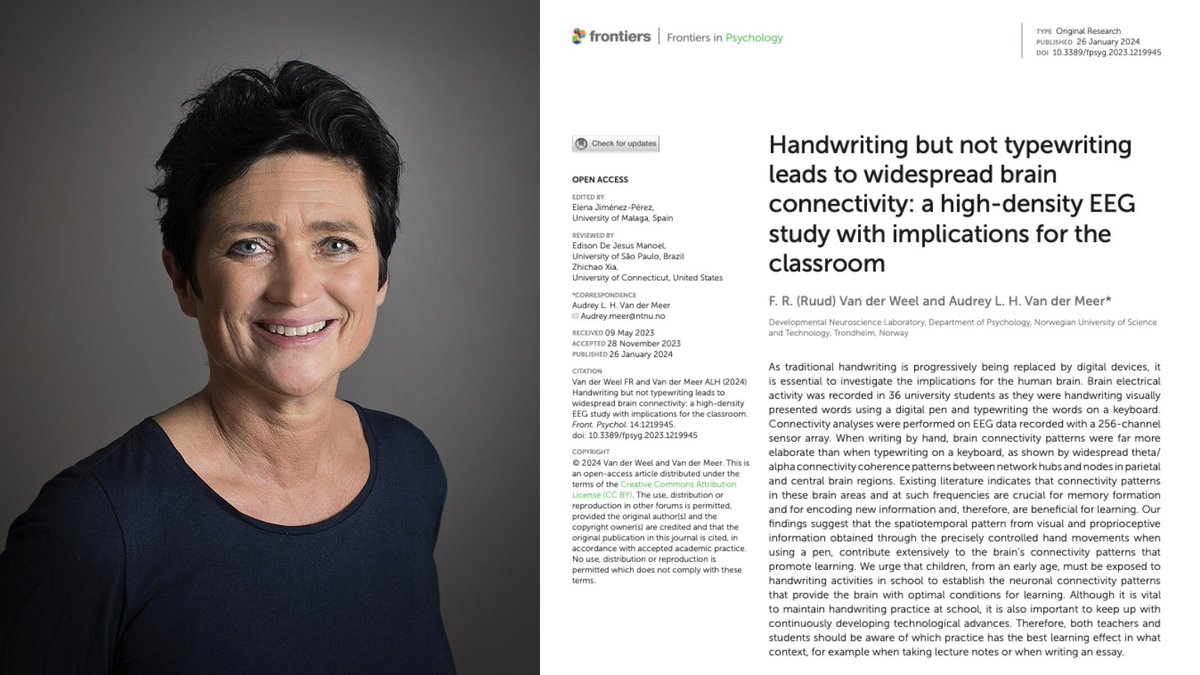
A Norwegian neuroscientist spent 20 years proving that the act of writing by hand changes the human brain in ways typing physically cannot, and almost nobody outside her field has read the paper.
Her name is Audrey van der Meer.
She runs a brain research lab in Trondheim, and the paper that closed the argument was published in 2024 in a journal called Frontiers in Psychology. The finding is brutal enough that it should have changed every classroom on Earth.
The experiment was simple. She recruited 36 university students and put each one in a cap with 256 sensors pressed against their scalp to record brain activity. Words flashed on a screen one at a time.
Sometimes the students wrote the word by hand on a touchscreen using a digital pen, and sometimes they typed the same word on a keyboard. Every neural response was recorded for the full five seconds the word stayed on screen.
Then her team looked at the part of the data most researchers had ignored for years, which is how different parts of the brain were communicating with each other during the task.
When the students wrote by hand, the brain lit up everywhere at once.
The regions responsible for memory, sensory integration, and the encoding of new information were all firing together in a coordinated pattern that spread across the entire cortex. The whole network was awake and connected.
When the same students typed the same word, that pattern collapsed almost completely.
Most of the brain went quiet, and the connections between regions that had been alive seconds earlier were nowhere to be found on the EEG.
Same word, same brain, same person, and two completely different neurological events.
The reason turned out to be something nobody had really paid attention to before her work. Writing by hand is not one motion but a sequence of thousands of tiny micro-movements coordinated with your eyes in real time, where each letter is a different shape that requires the brain to solve a slightly different spatial problem.
Your fingers, wrist, vision, and the parts of your brain that track position in space are all working together to produce one letter, then the next, then the next.
Typing throws all of that away. Every key on a keyboard requires the exact same finger motion regardless of which letter you are pressing, which means the brain has almost nothing to integrate and almost no problem to solve.
Van der Meer said it plainly in her interviews.
Pressing the same key with the same finger over and over does not stimulate the brain in any meaningful way, and she pointed out something that should scare every parent who handed their kid an iPad.
Children who learn to read and write on tablets often cannot tell letters like b and d apart, because they have never physically felt with their bodies what it takes to actually produce those letters on a page.
A decade before her, two researchers at Princeton ran the same fight using a completely different method and ended up at the same answer. Pam Mueller and Daniel Oppenheimer tested 327 students across three experiments, where half took notes on laptops with the internet disabled and half took notes by hand, before testing everyone on what they actually understood from the lectures they had watched.
The handwriting group won by a wide margin on every question that required real understanding rather than surface recall.
The reason was hiding in the transcripts of what the two groups had actually written down.
The laptop students typed almost word for word, capturing more total content but processing almost none of it as they went, while the handwriting students physically could not write fast enough to transcribe a lecture in real time, which forced them to listen carefully, decide what actually mattered, and put it in their own words on the page.
That single act of choosing what to keep was the learning itself, and the keyboard had quietly skipped the choosing and skipped the learning along with it.
Two studies. Two countries. Same answer.
Handwriting makes the brain work. Typing lets it coast.
Every note you have ever typed instead of written went into your brain through a thinner pipe. Every meeting, every book highlight, every idea you captured on your phone instead of on paper was processed at half depth.
You did not forget those things because your memory is bad. You forgot them because typing never woke the part of the brain that would have made them stick.
The fix is the thing your grandmother already knew.
Pick up a pen. Write the thing down. The slower road is the faster one.
Today was a reminder of how far the policing system has been allowed to fall behind the needs of the people it is meant to protect.
This morning Nicholas and I attended proceedings at the Wynberg Court in Cape Town, where the accused in the case relating to the attack on us in Philippi on 19 August 2025 once again appeared.
We were there to send a simple message: court cases can take long and the process can be frustrating, but victims and complainants must not give up.
After court, we went straight to Philippi East Police Station for an unannounced oversight visit because Philippi East is where we were attacked.
What we found was deeply worrying.
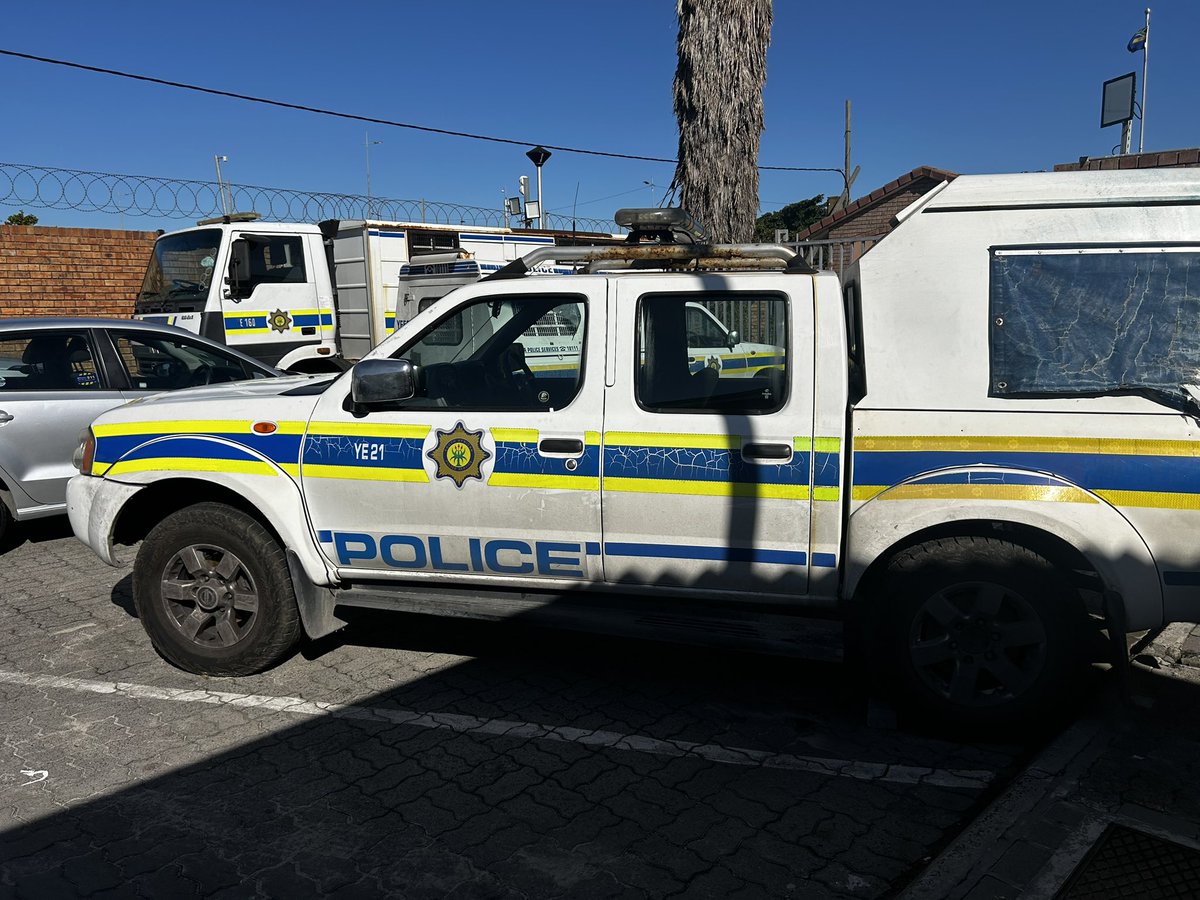
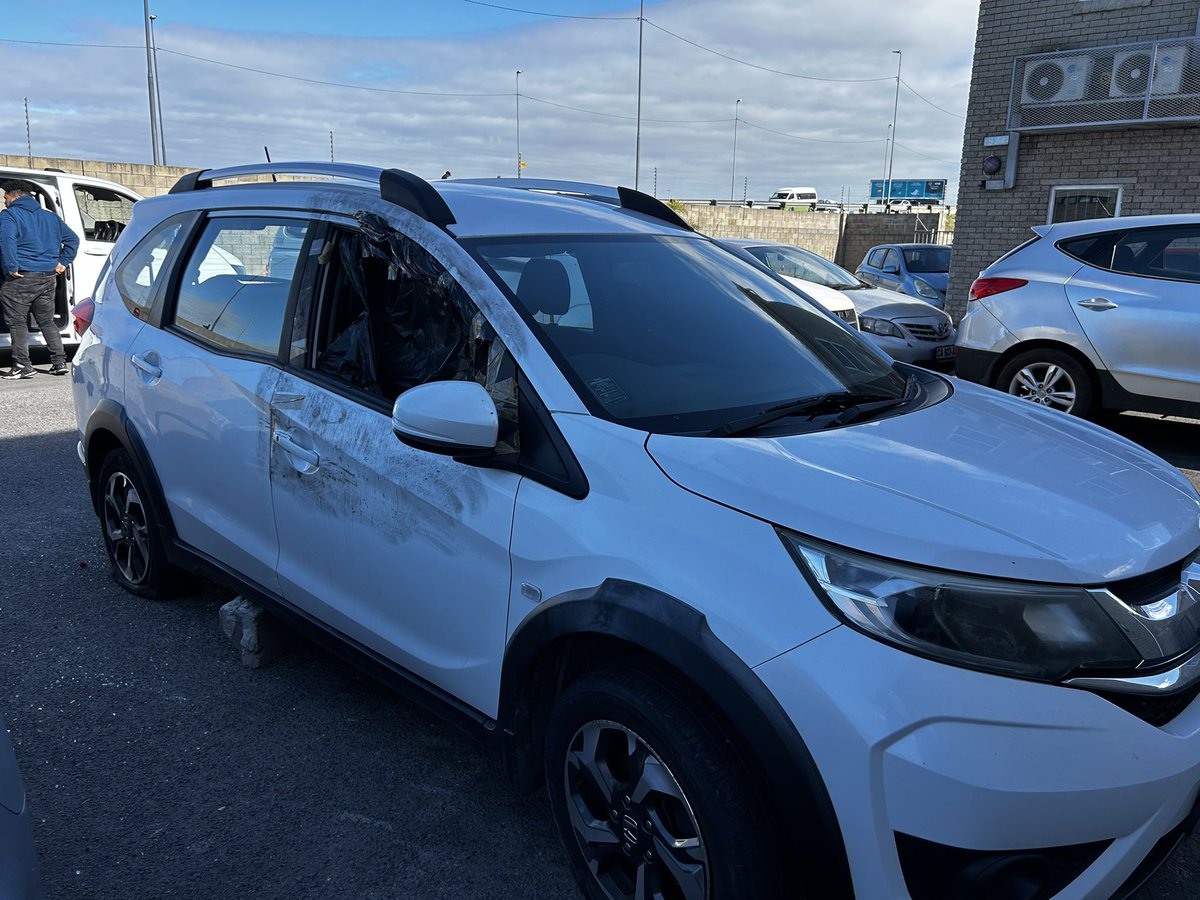
Philippi East SAPS serves more than 250 000 people across more than 15 informal settlements. Yet out of 26 vehicles allocated to the station, only 3 are currently working. Around 10 vehicles are at garages, while others are waiting to be towed, have been boarded, or are simply unusable.
In an area struggling with violent crime, gangs and extortion, this directly affects response times, visible policing and the safety of communities.
We then did a spot visit at Lentegeur Police Station near Mitchells Plain. It was a relief to see a station where most vehicles are working, on the road and well kept. We will still do a more detailed visit there soon.
After that we visited the Nyanga FCS unit, the Family Violence, Child Protection and Sexual Offences unit. This unit serves SAPS stations in Manenberg, Philippi, Athlone, Nyanga, Gugulethu, Samora Machel and Lansdowne.
The situation there was just as worrying.
The unit has only around 20% of the staff it actually needs. Only 4 out of 11 vehicles are working.
Most disturbing was that the unit does not currently have rape kits available to collect forensic evidence from rape victims. We were told this appears to be part of a wider provincial shortage.
This is the result of poor leadership and incompetent management by both national and provincial SAPS Supply Chain Management.
It means the seven stations served by this FCS unit are left without one of the most basic forensic tools needed in rape cases, where evidence must be collected quickly and correctly.
We already know that the national Divisional Commissioner for Supply Chain Management, Lieutenant General Dr Molefe Fani, was recently suspended amid previous corruption allegations relating to his time at National Treasury. He is also one of the key figures linked to allowing access to SAPS for the controversial Cat Matlala matter.
When procurement fails, victims pay the price.
If Gender-Based Violence and Femicide was truly treated as the national disaster the President declared it to be, these specialised units would not be working under conditions like this. They would not be critically understaffed, they would not be without working vehicles, and they certainly would not be left without rape evidence kits.
Oversight is not about boardrooms and presentations. It is about seeing the real conditions under which police officers and specialised investigators are expected to protect communities.
The people of the Cape Flats deserve better, and the dedicated SAPS members trying to work under these conditions deserve far better support from leadership and government.
I had the privilege of also bumping into this team from the law-enforcement advancement program (LEAP) in Philippi East, their energy was contagious! IC
The Game of Thrones theme was composed by Ramin Djawadi, who is of Iranian descent.
Hearing this melody played with Persian instruments and the daf drum is absolutely beautiful.
🎵🇭🇷 Croacia irrumpe en la final de Eurovisión con un himno histórico que denuncia la ocupación otomana y revive la tradición de tatuajes cristianos para proteger a las jóvenes.
La canción para la final interpretada en su idioma materno que no tiene nada de woke denuncia la ocupación turca islámica de sus tierras durante siglos y recuerda la antigua tradición croata de tatuar motivos cristianos en las niñas católicas para evitar que fueran raptadas, convertidas al islam y sometidas a esclavitud sexual.
El tema, que incluye versos como “por eso muchos eligieron la tumba, nuestras madres no parieron esclavos”, ha sido aplaudido como un acto de valentía cultural en plena era de corrección política, mientras Turquía ya elevó quejas oficiales.
Los vecinos croatas, lejos de autocensurarse, han convertido el escenario europeo en una lección de memoria histórica porque la historia se respeta.