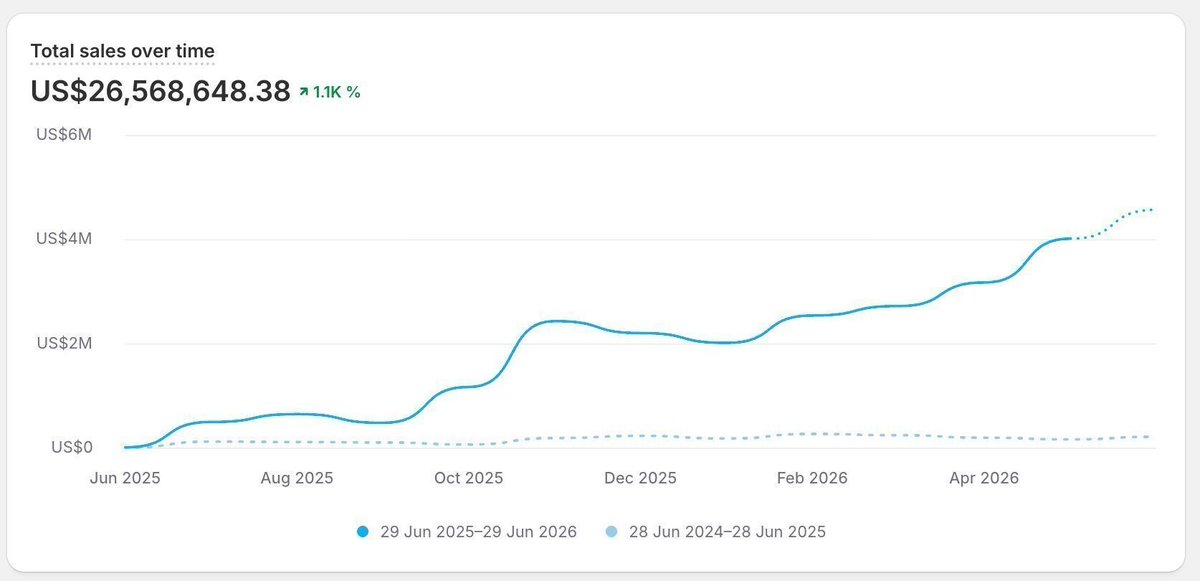
Ecom is very much copy-paste.
As someone who’s scaled hundreds of brands to 8/9 fig, I can tell you the playbook is practically identical from brand to brand.
Scaling from 0 -> 6 -> 7 -> 8 -> 9 fig all boils down to these 7 things:
1. Focus on RPV. Revenue per visitor is your #1 metric. You can increase it far past ad efficiency. The more you make per visitor, the more you can spend, & the more you’ll scale. Focus on CVR & AOV. Iterate constantly to improve these even if your numbers look great. RPV doesn’t have a ceiling. Take it higher.
2. Build home-run offers. This is the make-or-break of all brands. If you had to 2x your price, how would you justify it? Do that. Improve your offers & products in every possible way 24/7. You’ll never see an 8fig brand with a mediocre offer.
3. Scale on cold traffic. Warm audiences are easier to sell to but they’re too small & there’s too much competition, so you cap out fast. Move to problem aware/unaware audiences. More TOF ads. Master advertorials & pre-sell pages to convert this traffic.
4. Unique positioning. “Different & new” is better than “better”. Never try to be a better or cheaper version of an existing brand. Find ways to differentiate with unique mechanisms, solving different problems, or different target audiences. Make your brand the only one in its specific category.
5. Increase TAM. Frame your offer & copy around mass-market desires (reproduction, belonging, status, safety/pain avoidance) so you can sell to more people. Run more landing/pre-sell pages so you can run more angles while keeping ad-to-page congruency.
6. Applied human psychology & neuromarketing. If you have to learn 1 thing to unlock “hyper-scale”, it’s this. Understand your customers at an autistic level (do market research & customer profiling for DAYS every 3-4 months). Read Breakthrough Advertising until your eyes bleed. Study copy & how people react to stimuli for hours every day. Develop an uncanny ability to persuade through words & you WILL scale.
7. The sequence of focus as you scale:
0-$100k/m: focus mainly on offers, creative, & media buying.
$100k-$1M/m: focus mainly on offers & funnels.
$1M/m+: LTV & CRO.
$25M/yr+: branding.
If you get these 7 right it’s impossible to not hit 8+ fig. I’m not exaggerating when I say I’ve seen it 100% of the time across the 250+ brands I’ve worked with.
Make this post your holy grail of ecom.
Happy scaling.
Recently implemented a weekly "Trench Day"
A Trench Day means:
No calls
No messages
No emails
No phone
No distracting apps
Just an empty calendar and the entire day to build rather than work on the day-to-day.
At first I was nervous to "abandon my team" for a day
But I can promise you, it will only make your team stronger.
The reason you have a team is so you can buy back your team to focus on higher level shit
But if you constantly do your team's job
They can never do it themselves
And if you realize that your team can't do their job
Congratulations
You've identified your bottleneck.
Now you know what to spend your Trench Day doing (:
I've seen FB advertisers lose $300k to hackers.
And it's only getting more common.
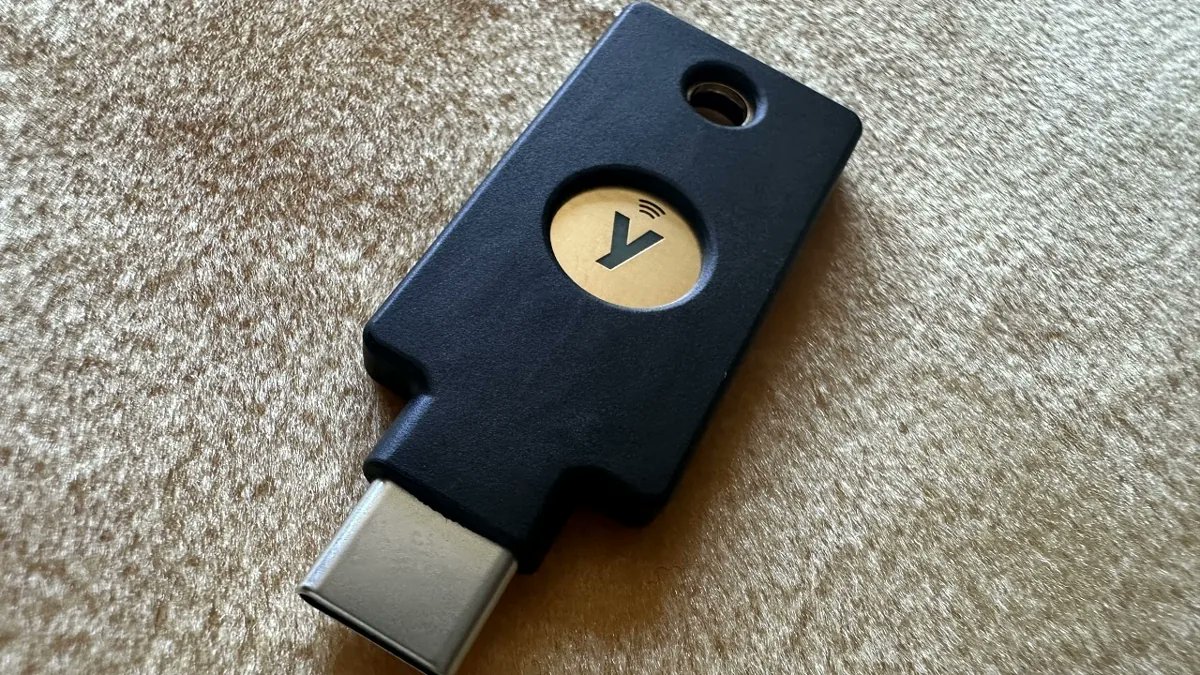
What y'all need is a physical 2FA like a Yubikey.
Digital 2FAs still get hacked no problem. We ran into it a few years back.
Switched to physical keys. Zero issues since.
we poach, very simple... everyone posting "hiring a creative strategist 🚀" on linkedin is interviewing the people that got fired at brands for underperformance or they don't have any work because of poor performance.
top talent isn't hunting for a new job, they're already employed with big brands, just offer better comp and creative freedom and go get them
Alright, let's get into it. This is my bulletproof 2026 Meta campaign structure, and yes, I'm dropping it for free because I genuinely don't care, this is what gurus are charging you 20K courses for 😂
Before I even get started: I already know what's coming in the comments. Some nerd is going to show up and start preaching about the 1CBO Consolidated structure like. Cool. Maybe it works for your little $500/day account. But let me be very clear, I have never, not once, seen a brand sustain $500K+ per day consistently on a single CBO at scale. Not one. If you have receipts, slide in. Until then, sit down.
This structure isn't theory. It's not something I read in a course or saw in some guru's carousel post. It was built in the trenches, tested across multiple accounts, multiple verticals, real money on the line, and it has allowed me to scale brands faster than most people think is possible while actually staying profitable.
That last part matters more than the scaling, by the way. Scaling broke is easy. Scaling with margin is the game.
I'm not going to tell you what products, what brands, what niches, or what creative angles I'm running. Those questions will be ignored. Not because I'm gatekeeping, but because the structure is the structure. It works. The variables are on you.
Comments are open. Smart questions only. If you come in with something basic, don't expect a response.
Do with this what you want. THANK YOU FOR YOUR ATTENTION TO THIS MATTER — SCALESURFER OUT🤙
Adding more to this -
1. Carrier/3PL Price Checker - auto scans rate card versus invoices
2. Weight Optimiser - checks orders that have creeped to the next weight banding by ~5% + gives you the costs savings per adjustment.
3. Winning Static Ad Remixer - Nano Banana 2 can one shot winning remixes easily.
4. CX Intelligence - connects to Gorgias, analyses advisor messaging, crosses with refunds, sends weekly report of potential product problems, education gaps in messaging + prompts new FAQ answers.
All made and operational in a weeks work.
As a brand owner you should be using claude to save $1000s on costs by building AI tools to replace all the different SaaS products you’re using.
Here's 6 tools that you can easily build in one day.
1. Organic social tracker for competitors - track their viral videos for the week and get it in a message
2. Inventory reorder alerts - connects to your 3PL and sheets, calculates velocity, pings you before stockouts
3. Margin calculator - pulls COGS, ad spend, shipping, gives you real profit per SKU
4. Review aggregator - scrapes Trustpilot, Amazon, Google, summarises sentiment weekly
5. Creative brief generator - takes your top performers, outputs briefs for editors
6. Product tracker for competitors - lets you know when a major product launch happens via one of your competitors
None of these need a dev, Claude Code can build them in an afternoon.
If you're still paying $300/month for 6 different tools, you're doing it wrong.
This is absolutely golden for brands with huge catalogues, you can basically create Catalog ads on CRACK with this and a few adjustments.
This is outperforming every static we have created, kudos @alexgoughcooper 👌🏼
We've currently launched over 3k ads in the last 7 days, not slop, perfect static imagery using @alexgoughcooper's framework.
Although one difference we make to ensure every ad is perfect, is the framework below. 👇
The funniest part is, you can tell Claude to make it for you, it usually comes out perfect from just the URL, but it cuts hallucinations down by 90%.
Comment 'STATICS' for the full framework.
google has been editing your shopping feed images without telling you and there's one setting that stops it in thirty seconds
go to products → automations.
you'll see it. "images not improved." turned on by default.
what it does sounds harmless - google removes promotional overlays, watermarks, and what it calls "other elements" from your images to keep them compliant.
what it actually does is strip out visual choices you made deliberately.
the lifestyle context you added to stand out in the shopping auction. the colour correction that makes your product look different from the fifteen identical listings next to it. the branded elements that tell the buyer this is your product before they even read the title.
google replaces all of it with what its algorithm thinks a clean product image should look like.
and if you're A/B testing feed images to find out which visual drives more clicks, this setting makes that test completely meaningless. you're not testing your images anymore. you're testing whatever google decided to replace them with.
turn it off.
products → automations → images not improved → turn off.
takes thirty seconds.
and while you're there, go through every other automation in that tab. google merchant center has several settings turned on by default that are modifying your feed data without your knowledge - titles, descriptions, pricing displays.
your feed is the foundation of everything your shopping campaigns do. the bid, the match, the creative - all of it starts with the data in that feed.
if google is quietly editing that foundation and you're not aware of it, you're optimising campaigns on top of data you didn't build.
check the automations tab before you touch anything else in the account.
your google landing page got the click and built the interest and then the buyer went to Reddit and what they found there decided whether you got the sale
a large portion of buyers fact-check your ads on Reddit before they purchase.
think about what that means for your conversion rate.
your google ad was good enough to get the click. your landing page was good enough to create interest. the buyer was close enough to purchasing that they went and typed your brand name into Reddit to see what real people were saying.
and what they found either closed the sale or killed it.
this is the purchase journey most ecom founders never see because it doesn't show up in google analytics. the buyer doesn't come back through a trackable link. they just either return and purchase or they don't. and if they don't, google calls it a lost conversion and moves on.
but the sale wasn't lost at the ad. it wasn't lost at the landing page. it was lost in a Reddit thread you've never read.
the brands winning at the bottom of the funnel right now are the ones who understand that the landing page is not the last stop before the purchase decision. it's the first stop. the buyer then goes and verifies everything you said - on Reddit, on review sites, on youtube, in comment sections.
this changes what your google landing page needs to do.
it's not just about converting the click. it's about giving the buyer enough confidence that when they go to verify you on Reddit, the thread they find confirms everything your page said rather than contradicting it.
social proof on the landing page is not decoration. it's the preview of what the buyer is about to go and check.
review volume matters. specific testimonials matter. addressing the real objections that come up in Reddit threads about your category matters.
the google buyer is not the meta buyer. they came with intent. they're close to purchasing. but they're also more likely to verify before committing because they searched deliberately and they know other people have too.
the last mile of your conversion funnel is happening on a platform you don't own and can't control. the only way to win it is to make sure the story your landing page tells is the same story Reddit tells about you.
there's a campaign structure in google search that doubles CTR and increases conversion rates by at least 50% - most specialists stopped using it because it takes more work not because it stopped working.
SKAG campaigns. single keyword ad groups. one keyword per ad group. ad headline matches the exact search term. landing page matches the exact search term.
the principle is simple.
when someone searches "waterproof hiking boots wide fit" and your ad headline says "waterproof hiking boots wide fit" and your landing page opens with "waterproof hiking boots wide fit" - the buyer feels like you read their mind.
CTR doubles. conversion rate goes up at least 50%. every time.
because the buyer came looking for something specific and you showed them exactly that. no guessing. no generic headline. no category page that makes them hunt for what they searched.
here's how to build it without losing your mind.
start with your shopping campaigns. look at the search terms that keep appearing consistently. the ones showing up week after week with real intent behind them. those are your first 50 ad groups.
build a SKAG around each one. exact match keyword. ad headline pulled directly from the search term. landing page with a custom headline that mirrors exactly what they searched.
it will not take off immediately. if your product has a longer sales cycle the data builds slowly and it takes time for the algorithm to find its rhythm.
but when it does - you own those search terms completely.
your competitor is running broad match with a generic headline sending traffic to a category page. you're running exact match with a headline that says exactly what the buyer typed sending them to a page that opens with exactly what they searched.
there is no competition.
this is not outdated. this is not dead. this is just more work than most people want to do.
the accounts doing millions in revenue on google search didn't get there with lazy campaign structures.
they got there by dominating one search term at a time.
You can start an AI digital products business with $0 upfront and be making $15K–$80K/month within 90 days and nobody talks about how simple the actual setup is
here's the exact sequence:
Day 0: Pick a niche and audience. Women 35–65. Ecom operators. YouTube creators. Doesn't matter. Takes 3 minutes.
Day 1: Use AI to generate a 200-page ebook on that niche's #1 pain point. Takes 15 minutes. Price it at $300.
Day 2: Create an X theme page for that niche. Faceless. AI-generated content. Takes 10 mins to set up.
Day 3: Use AI to generate 300 tweets in 15 minutes. Schedule them out. Page runs on autopilot.
For 30 days, post 3–5 times per day. Educational value. No selling yet. You're building what Twitter's algorithm rewards: consistent activity and engagement signals.
Day 30: Turn on the auto-DM software. Every person who likes or comments gets an instant personalized DM with a link to buy.
AI bots handle the entire conversation. Objections. Follow-ups. Closing. 24/7 without you touching it.
Results from one of my pages targeting women 35–65:
Without the system (random posting, no automation):
Sales: 0
Followers gained: minimal
Revenue: $0
Same niche, WITH the full system running:
Less than 5,000 total views on 1 post
17 sales at $300 each
$5,100 from a brand new page with almost no reach
The cost to build this entire operation: under $45/month in tools
The AI generates the content. The AI generates the product. The bots do the selling. You collect the money.
Here's the full sequence for maximum output:
Week 1: Set up page, generate ebook, load 300 tweets into scheduler
Week 2: Page posts automatically while you do nothing
Week 3: Layer in auto-DM software, connect to sales page
Week 4: First sales start hitting. Optimize the DM sequence.
Month 2: Add a second page in a second niche. Stack the income. then third. keep repeating.
Month 3: You have 3–5 pages each generating $15K–$80K/month
Total time investment after setup: 3-7 hours per week
Every "make money online" guru tells you to grind content manually, build an audience slowly, and hope something converts. Nobody mentions that AI can do 95% of the work and the pages that win aren't run by humans at all.
Because the gurus are selling you their time-for-money model. This is the leverage model. Completely different game.
if you want the full gameplan, then
comment "X" and I'll DM it to you
**must be following + retweet
This ONE billing change made us an extra $1.1M last year with zero price increases.
If you run a subscription focused brand, steal this, implement it, and thank me later.
Common subscription brands will spend weeks testing ad creative to lower acquisition costs by $3.
But at the same time, subscription infrastructure itself is quietly bleeding revenue every month because nobody has looked at it since launch.
This is the full system:
Step 1: Convert to subscription without creating doubt
→ Pre-select subscription on product pages with crystal clear transparency
→ Show savings in immediately understandable terms
→ Compare one-time versus subscription side by side
→ Use social proof about what percentage of your customers subscribe
→ Make it very clear they can pause, skip, or cancel at any time
Step 2: Eliminate checkout drop-offs
→ Emphasize permanent savings at checkout
→ Visualize the long-term savings impact
→ Stress customer control over their subscription
→ Every drop-off at checkout is a subscriber you already convinced on the product page and lost because the checkout created doubt
Step 3: Nail post-purchase onboarding
→ Send a detailed subscription management welcome email immediately
→ Provide easy modification access points
→ Reinforce why subscribing was the right call
→ The first 48 hours after someone subscribes are where most first-month churn starts
Step 4: Prevent churn before it happens
→ Send pre-billing reminders before renewals so there are no surprises
→ Enable adjustments without login barriers
→ Offer pauses instead of immediate cancellations
→ Keep the cancel button visible and accessible because hiding it destroys trust
→ Track cancellation reasons so you can improve the experience for the next subscriber
Step 5: Long-term subscriber retention
→ Escalate perks for loyal subscribers
→ Run personalized win-back flows for churned customers
→ Test renewal incentives continuously because what works this quarter might not work next quarter
All in all - If your average subscriber is worth $50/month and you're running 5,000 active subscriptions, a 10% improvement in retention adds $25K/month in revenue you would have otherwise lost.
Over 12 months that's $300K from retention alone.
Layer in the conversion rate improvement from pre-selecting subscription plus the checkout optimization and the churn prevention and you see how $1.1M becomes achievable without ever raising the price.
@whop_support@LEGIT_Dutchhh@whop_support you guys dealing with a backlog or are you under-staffed?
I DM’d you well over 24 hours ago.
Why reach out if you’re not even going to bother to respond or help?
Is this how you guys get down? Fake public messages with no actual resolution?