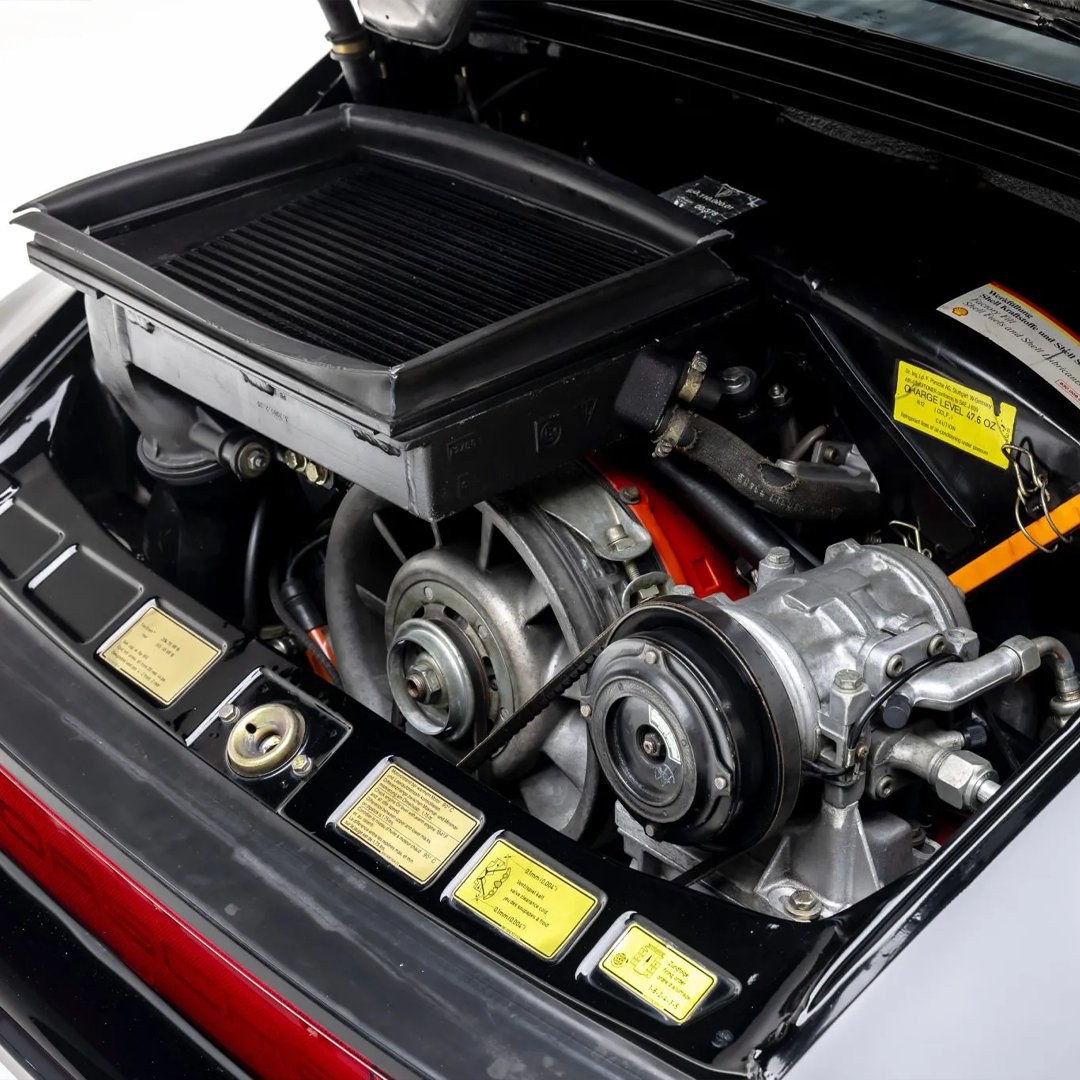
This is the 128th example of the Chevrolet 427 GM “Anniversary Edition” crate engine, just 427 of these were made, and they used the tooling of the original all-aluminum big-block ZL1 from the late 1960s.
Link: https://t.co/OUAYCOYp3l
✅🟥⬜ 1986 #AlfaRomeo GTV6 powered by a #legendary 2.5-liter "Busso" V6 engine.
Design: Features a rakish, aerodynamic body designed by Giorgetto Giugiaro.
In the late 1960s, four Porsche 912s were specially built for use by the Japanese police and assigned to the prefectures of Aichi, Kyoto, Kanagawa, and Shizuoka to patrol the major expressways.
https://t.co/tWkB9B2Mhs
What exactly do people think they’re hating here? This thing is perfection on wheels!!
Every brand had something to say until a 440 showed up. Then the excuses started. Too heavy. Too old. Too this. Too that. Funny how the loudest critics never seem to have anything that can run with one. This thing didn’t need approval. It just needed asphalt.
1972 Plymouth Road Runner 440
🇩🇪 1991 #Mercedes_Benz C112 #concept car, a vehicle designed with gull-wing doors and advanced active suspension.
Powered by a 6.0-liter V12 engine, Top speed: 312 km/h (193 mph).
2001 Monaco GP: Heinz-Harald Frentzen's spectacular save.
Perhaps a goal keeper in a previous life, HHF performs a save better than any you'd see in the World Cup Final! #F1
WTF is this maze cast into your automatic transmission?
It’s a mechanical computer that picks the right gear for you. Runs on oil, not electricity. Worked out decades before the microchip.
Here’s how it works:
- The inputs. Two oil pressures. One rises with road speed. One rises with how hard you press the gas. That’s all it knows: how fast am I going, and how fast do I want to go.
- The job. Route oil to the right clutch so the right gear engages for what you’re asking of the car.
- How it works. A spool, a small grooved cylinder, slides in a bore. Oil pushes each end; harder push wins. Speed pressure on one end, throttle plus a biasing spring on the other.
Slide one way it blocks a passage, slide the other it opens one: oil floods a clutch, the clutch locks, that’s your gear. Floor it and throttle pressure shoves the spool over, drops you a gear, the car surges.
Ease off and speed pressure wins, sliding it back to grab the next gear up. Two pressures, fighting it out.
- Why a maze? No valve decides alone; each one’s output is another’s input. So oil has to run from every valve to the others that depend on it, and oil can’t jump gaps. Every connection needs its own channel carved in metal. Dozens of valves, hundreds of passages, none crossing where they shouldn’t
- It’s a routing problem. Same one a chip designer faces: connect many things to many things without the paths colliding. They even stack plates with a drilled separator between them, like vias on a circuit board.
The result: a real-time computer in aluminum and oil. Only in old-school automatics. In a manual, you’re the computer.