You can now set Claude Code's output style to Concise.
Claude leads with the result, keeps responses short, and still gives full detail when you ask.
Turn it on in /config → Output style, or set "outputStyle": "Concise" in settings.json.
@netflix and @YouTube should have an “Airbnb mode” where the session expires when you leave…
I don’t need my recommendations permanently ruined by whatever the next guest watches because I forgot to disconnect😆
Display V2 is finally launching with Sui v1.68!
We always wanted Display to support richer queries and be able to fetch dynamic fields or map attributes. Finally, we got there! 🧵
Sui’s derived objects flip the way we think about blockchain storage and IDs. Instead of waiting for a random address after creation, a derived object’s ID is deterministically computed from a parent’s UID and a key (conceptually hash(parent_id || key)). If you already know the parent’s ID, you can calculate the derived address off-chain before the object exists.
To create it, you call claim, which writes a marker on the parent to prevent duplicates. That step requires a mutable reference to the parent, but once the object is claimed it becomes fully independent.
This opens up patterns that were clunky or impossible on other chains. In gaming, loot boxes can be pre-assigned and rewards preloaded, so players see results instantly instead of waiting for mints and db updates. For airdrops, you can precompute addresses for a million users, send tokens upfront to those addresses, and let them claim later, no retries, no contention, no gas wars.
Marketplaces can list NFTs before they exist, bridges can use deterministic math instead of fragile mappings, and social apps can map usernames to predictable on-chain addresses.
The biggest win isn’t just convenience, it’s performance. Derived objects let unrelated transactions run in parallel because each object stands on its own. No one’s fighting over the same global registry, and no hot spots are dragging the system down.
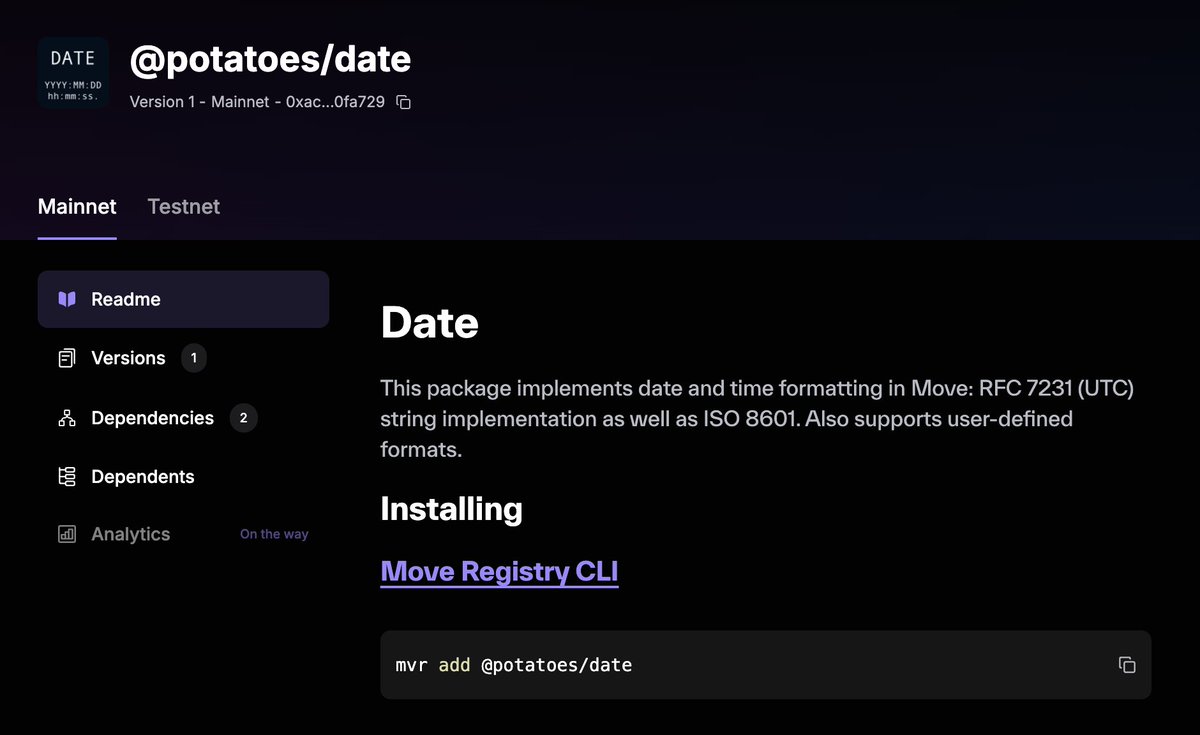
One more for MVR: date parsing / formatting library!
Now you can:
- print standard web UTC date
- print ISO 8601 date
- print custom format eg `YYYY/MM/DD-hh:mm:ss`
- restore timestamp from a valid UTC String
...and we'll never ever support time zones, don't ask.
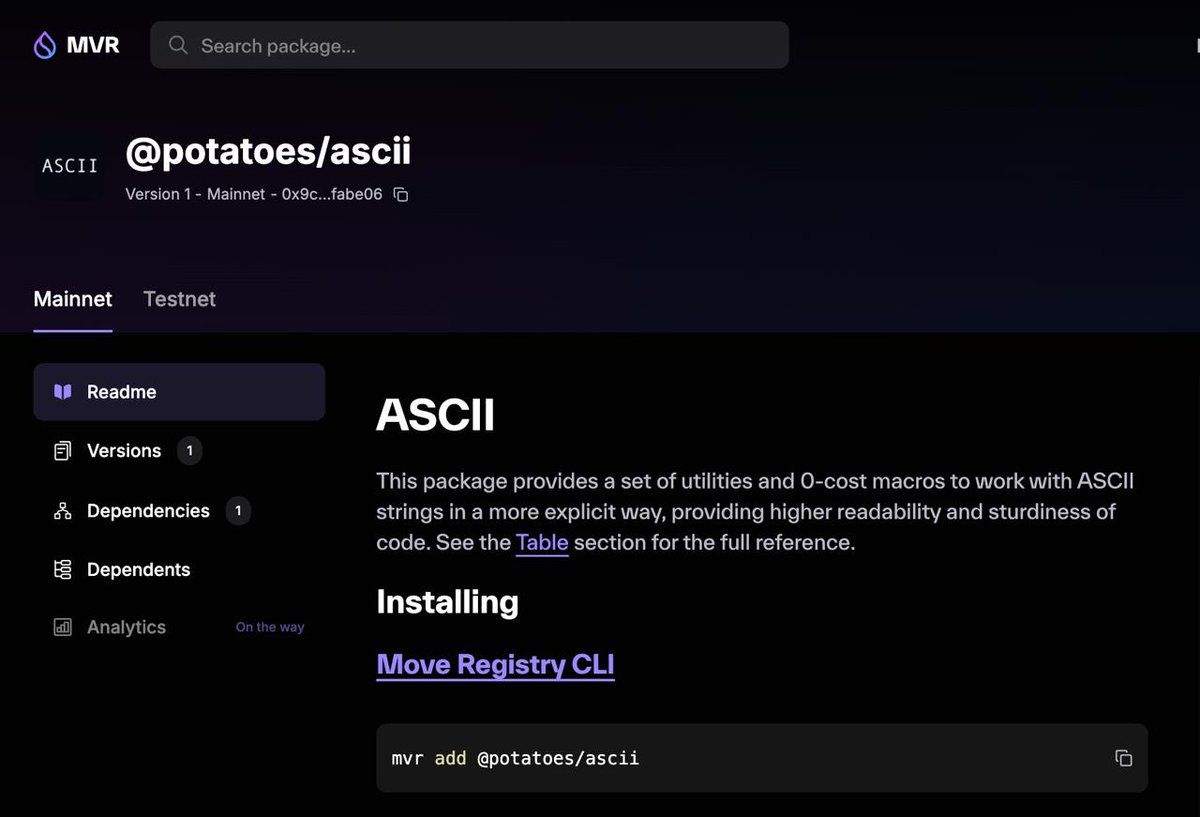
If you're like myself and also got tired of looking up character codes for ASCII, there's a new library which adds 0-cost macros for every ASCII code. So instead of hardcoding `32` you can do `char::space!()`.
3 modules: control, char, extended - one for each table.
Enjoy!
We've collected as many examples as we could remember into a Move code quality checklist. I bet your code doesn't check all items in this list, and if it does, I owe you a review
This is how we write code today, tell everyone!
https://t.co/2wiCUFDIVI