The Power of Integrated Farming
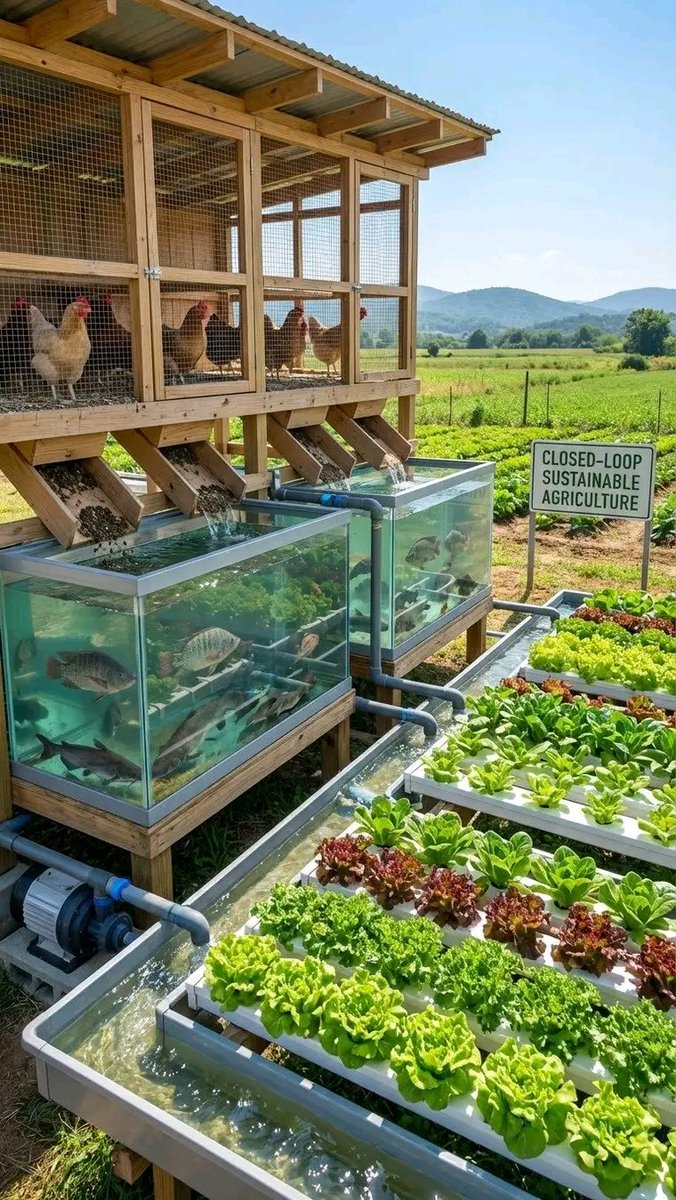
This innovative farming system perfectly demonstrates how nature’s cycles can work together to create balance and abundance. Instead of separating agriculture, aquaculture, and poultry, it unites them into one efficient, sustainable ecosystem where every element supports the others.
In this integrated setup, fish, plants, and chickens coexist symbiotically.
The nutrient-rich water from the fish ponds flows into plant beds, providing natural fertilizer for crops such as lettuce and other leafy greens.
These plants, in turn, purify the water before it circulates back to the ponds, reducing waste and conserving resources. Above the ponds, the chickens play a vital role in maintaining this ecological loop. Their droppings contribute additional nutrients that feed the aquatic system, while their position above water helps with cooling and reduces disease risks often found in traditional poultry farming.
This model of farming not only minimizes environmental impact but also maximizes productivity in limited space. It produces fresh vegetables, fish, and eggs, all while maintaining soil health, conserving water, and eliminating chemical fertilizers.
Such systems represent the future of agriculture: smart, efficient, and sustainable. They show how human innovation, when aligned with natural processes, can provide food security while caring for the planet.
South Africa’s Record at the Africa Cup of Nations
1994 - Did Not Qualify
1996 - Champions 🥇
1998 - Runners Up 🥈
2000 - Third Place 🥉
2002 - Quarterfinals
2004 - Group Stages
2006 - Group Stages
2008 - Group Stages
2010 - Did Not Qualify
2012 - Did Not Qualify
2013 - Quarterfinals
2015 - Group Stages
2017 - Did Not Qualify
2019 - Quarterfinals
2021 - Did Not Qualify
2023 - 3rd Place 🥉
2025 - ???
How far can we go in 2025?
@OtpLimpopo Premier would you kindly look into the issue of water at Sterkfontein, ke sono fela. Renwa meetse le diphoofolo. Only 2 pits where people use buckets and ropes to access water. Water table is good, but I fail to understand why there is never water in the taps. Ka kgopelo hle