👀 Part 4: Lewy Body Dementia (LBD)
Sometimes described as a “bridge” between Alzheimer’s and Parkinson’s, Lewy Body Dementia brings unique challenges such as vivid hallucinations and fluctuating confusion.
In Part 4, we explore what LBD is, how it’s diagnosed, and why awareness is so important.
👉Read the article: https://t.co/5ugx5xZwUG
#AlansLight
#DementiaAwareness
#CarersSupport
#CareInTheCommunity
#SheenahWrites
#CareInTheCommunity
#LewyBodyDementia
Part 4: Lewy Body Dementia (LBD)
👀 When most people think of dementia, they think of Alzheimer’s. But another common type, often overlooked, is Lewy Body Dementia (LBD). It accounts for around 10–15% of dementia cases in the UK and is thought to be the condition that actor Robin Williams was living with before his death.
👉 Read more on Sunday.
#AlansLight
#LewyBodyDementia
#SupportForCarers
#SupportForCarers
#HopeThroughStories
#HelpAndHope
#BrainHealth
❤️ Part 3: Vascular Dementia
The second most common type of dementia, vascular dementia, is caused by reduced blood flow to the brain, often after strokes.
In Part 3, we explain the symptoms, risk factors, and why looking after your heart is also vital for your brain.
👉Discover the full blog over the weekend!
#AlansLight
#AlzheimersAwareness
#CaringTogether
#LivingWithDementia
#CaringWithKindness
#SparkyTheDragon
#MemoryMatters
Thursday, 7 pm – Part 3: Vascular Dementia
❤️ While Alzheimer’s disease is the most well-known cause of dementia, vascular dementia is the second most common type. It accounts for around a fifth of all dementia cases in the UK and is often linked to strokes or problems with blood flow to the brain.
👉 Read more on Saturday.
#AlansLight
#MemoryMatters
#CarersSupport
#CaringWithKindness
#CaringTogether
#UnpaidCarers
#BrainHealth
🗣️ Part 2: Frontotemporal Dementia (FTD)
Frontotemporal dementia often strikes earlier than other forms and can cause big changes in personality, behaviour, and language.
In Part 2, we look at what makes FTD different, its strong genetic links, and why research is offering fresh hope.
👉Find out more: https://t.co/lj5kiGyf2E
#AlansLight
#LewyBodyDementia
#SupportForCarers
#SupportForCarers
#HopeThroughStories
#HelpAndHope
#BrainHealth
💙 Lewy Body Dementia (LBD) is the second most common type of dementia — yet there are still no approved treatments to slow its progression.
Doctors can manage symptoms with Alzheimer’s and Parkinson’s medications, lifestyle changes like exercise and cognitive activities, and supportive care. But researchers are working on promising new drugs that may change the future for people living with LBD.
Read more in this Being Patient article: 👉 https://t.co/GckferCELB
#LewyBodyDementia #DementiaAwareness #ResearchMatters #HopeForCarers #AlansLight
Part 2: Frontotemporal Dementia (FTD)
🗣️ When Hollywood actor Bruce Willisrevealed his diagnosis of frontotemporal dementia (FTD) in 2023, public interest in this lesser-known condition surged. Unlike Alzheimer’s, FTD often strikes earlier in life and brings unique challenges for patients and their families.
Here’s what you need to know about this condition, its symptoms, and the latest hopes for treatment.
👉 Read more on Sunday.
#AlansLight
#CaringTogether
#LivingWithDementia
#HopeThroughStories
#DementiaSupport
#CareInTheCommunity
#SupportForCarers
💡 Did you know that unpaid carers contribute £162 billion to the UK economy?
That’s the estimated value of care provided by family members and friends in England and Wales in 2021 — calculated by Carers UK and the Centre for Care at the University of Sheffield.
📊 Key facts:
What it means: £162 billion is the economic value of unpaid care given to loved ones with illness, disability, or long-term conditions.
Who measured it: Carers UK & the University of Sheffield.
When: 2021.
How big is it? Almost the same as the entire NHS budget for England and Wales.
Trend: A 29% rise since 2011, as people provide more hours of unpaid care than ever before.
⚖️ Why it matters:
Economic weight: Unpaid carers are saving the state billions each year.
System dependence: Our health and social care services rely heavily on this invisible workforce.
Reality check: Despite their massive contribution, 1.2 million unpaid carers live in poverty.
💡 Did you know that unpaid carers contribute £162 billion to the UK economy? Neighbours — holding families and communities together. It’s time their value is not only recognised but supported.
#UnpaidCarers #CarersUK #HiddenHeroes #EconomicValue #CarersContribution #CarersDeserveBetter #CareCrisis #InvisibleWorkforce #SupportingCarers #SocialCare #ParentCarers #FamilyCarers #CarersRights #LightInTheDarkness #AlansLight
Unpaid Carers Spend Up To 220 Hours Managing Care System Bureaucracy
September 22, 2025
A major new study from the Joseph Rowntree Foundation has laid bare the hidden weight carried by unpaid carers. Over a 12-week period, carers reported spending between 6 and 220 hours navigating bureaucratic systems that should be supporting their loved ones — from chasing medication supplies and supervising paid staff, to endless phone calls and paperwork.
Instead of being relieved by paid care, many carers described a “relentless juggle” of work, family life, and system management. As one carer put it: “The wear and tear of just trying to cope with looking after my wife and then dealing with the NHS is exhausting. I feel like screaming.”
The study highlights how unpaid carers:
Plug dangerous gaps in the system caused by staff shortages and under-training.
Act as “living repositories” of medical history for professionals.
Provide the person-centred, long-term knowledge that loved ones often prefer over formal care.
Yet, their contribution is undervalued — with Carer’s Allowance still sitting at the equivalent of £2.40 per hour for those providing 35+ hours a week.
The report calls for urgent reform, including:
Carer navigators within medical institutions.
Statutory carer impact assessments.
Rapid response support when carers themselves fall ill.
A substantial rise in Carer’s Allowance to reflect their essential role.
With 5 million unpaid carers in the UK, their contribution is not just a family matter — it is the foundation upon which the health and care system stands. Without them, it would collapse.
📖 Read the full report: https://t.co/WtVVaQk7JW
#UnpaidCarers #CarersVoices #CareCrisis #HiddenHeroes #CarersSupport #CaringCosts #SocialCare #HealthAndCare #CarersRights #AlansLight #LegacyOfLove #Carereform
🧠 Part 1: Alzheimer’s Disease
Did you know Alzheimer’s is the most common cause of dementia, but not the same thing as dementia itself?
In Part 1 of our series, we explore what Alzheimer’s is, its symptoms, risks, and the new NHS blood test that could change early diagnosis forever.
👉Read more in our blog: https://t.co/lWSBRmIFKI
#AlansLight
#AlzheimersAwareness
#BrainHealth
#DementiaAwareness
#LivingWithDementia
#UnpaidCarers
#VascularDementia
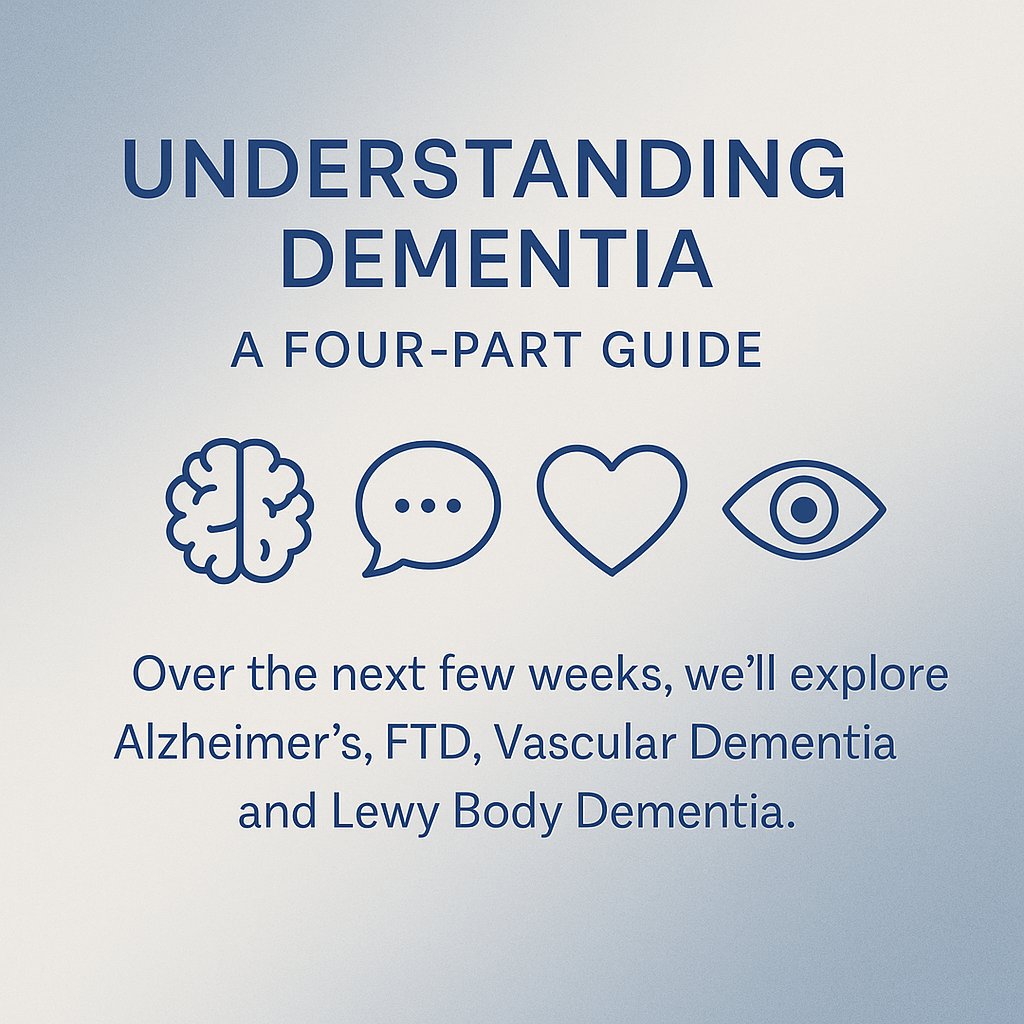
📢 Over the next few weeks, we’ll be sharing a special series on the four main types of dementia.
Dementia isn’t just one illness — it’s an umbrella term for a range of conditions that affect memory, thinking, behaviour, and daily life. Each type has its own symptoms, challenges, and treatments.
We’ll be exploring:
🧠 Alzheimer’s disease
🗣️ Frontotemporal dementia (FTD)
❤️ Vascular dementia
👀 Lewy Body dementia (LBD)
Our aim is to raise awareness, share knowledge, and offer support for anyone affected — whether directly or through caring for a loved one.
✨ Stay tuned for Part 1 coming soon!
#LightInTheDarkness #CaringWithKindness #LewyBodyDementia #KindnessInAction #TogetherWeShine #SheenahWrite
📰 Unpaid Carers News Today
I’ve been setting up an RSS feed to track unpaid carer news — and already, this essential story has surfaced. It shows how much is happening right now, how vital it is to keep carers’ voices in the public eye.
📈 Massive rise in full-time carers
A new report from the Institute for Public Policy Research (IPPR) shows that the number of full-time unpaid carers in Britain has risen by 70% in the last 20 years.
Between 2003/04 and 2023/24, the number of people providing 35+ hours of care a week jumped from 1.1 million to 1.9 million.
The report warns that the social care system is nearing “breaking point” due to rising demand and limited resources. Much of the growth is among working-age adults (16–64), with requests for support up 31.5% since 2015/16.
✅ At Alan’s Light, we believe every story matters. These updates — gathered through my new RSS feed experiment — show both the scale of unpaid caring across the UK and the urgent need for better recognition, funding, and support.
👉 If you’re an unpaid carer, you can share your story with us
and help shine a light on the challenges and resilience of carers everywhere.
#unpaidcarersdCarers #carersmatter #carerpoverty #carerssupport #wearecarers #dementiaawareness #carerssupport #alanslight #NorthDevonCommunity #BidefordVoices #recognisecarers #valueunpaidcare
Part 1: Alzheimer’s Disease
🧠 A new Alzheimer’s blood test is being trialled across the NHS – and it could transform the way dementia is diagnosed. Called plasma p-tau217, this test detects key proteins linked to the disease and may offer doctors a much faster and less invasive route to early detection. With more than a million people in Britain expected to be living with Alzheimer’s or dementia by 2030, this breakthrough feels both urgent and hopeful.
So, what do we really need to know about Alzheimer’s, its symptoms, causes, and the treatments available?
👉 Read more on Saturday.
#AlansLight
#KnowDementia
#BrainHealth
#HelpAndHope
#UnpaidCarers
#CarersSupport
#MemoryMatters
Understanding Dementia:
A Four-Part Guide
Dementia isn’t one single illness — it’s a word that describes a range of conditions that affect memory, thinking, behaviour, and daily life. Around one million people in the UK are expected to be living with dementia by 2030. While it can feel overwhelming, greater awareness, earlier diagnosis, and advances in research are bringing new hope.
This series explores the four main types of dementia, explaining what they are, their symptoms, and the latest on treatments and support.
Part 1:
What is Alzheimer’s Disease?
The most common cause of dementia, Alzheimer’s, affects memory, reasoning, and personality. We explore its symptoms, risks, the new NHS blood test, and the latest treatments — including breakthrough drugs that may slow its progress.
Part 2:
What is Frontotemporal Dementia (FTD)?
FTD often strikes earlier in life and can dramatically change personality, behaviour, and language. We look at how it differs from Alzheimer’s, why it’s heavily linked to genetics, and the promising new treatments being developed.
Part 3:
What is Vascular Dementia?
The second most common type of dementia, vascular dementia, is caused by reduced blood flow to the brain, often after strokes or due to high blood pressure. Learn about symptoms, risk factors, and how lifestyle changes can help prevent it.
Part 4:
What is Lewy Body Dementia (LBD)?
Sometimes described as a cross between Alzheimer’s and Parkinson’s, LBD can cause hallucinations, fluctuating cognition, and movement problems. We explain the unique challenges it brings and why awareness is so important.
Why Awareness Matters
Each type of dementia has its own challenges — and no two people experience it in the same way. By understanding the differences, we can better support loved ones, reduce stigma, and push for more research.
👉 Explore each article above to learn more about the different forms of dementia, their impact, and the hope for future treatments.
#DementiaAwareness #UnpaidCarers #FromOneStoryToMany #Hope2026 #LegacyOfLove