@clarincom "Que no intervenga, pero si después quiere influir" .... Argentina, país generoso donde ex funcionarios que chocaron el país le hacen preguntas sobre cómo no chocar el país
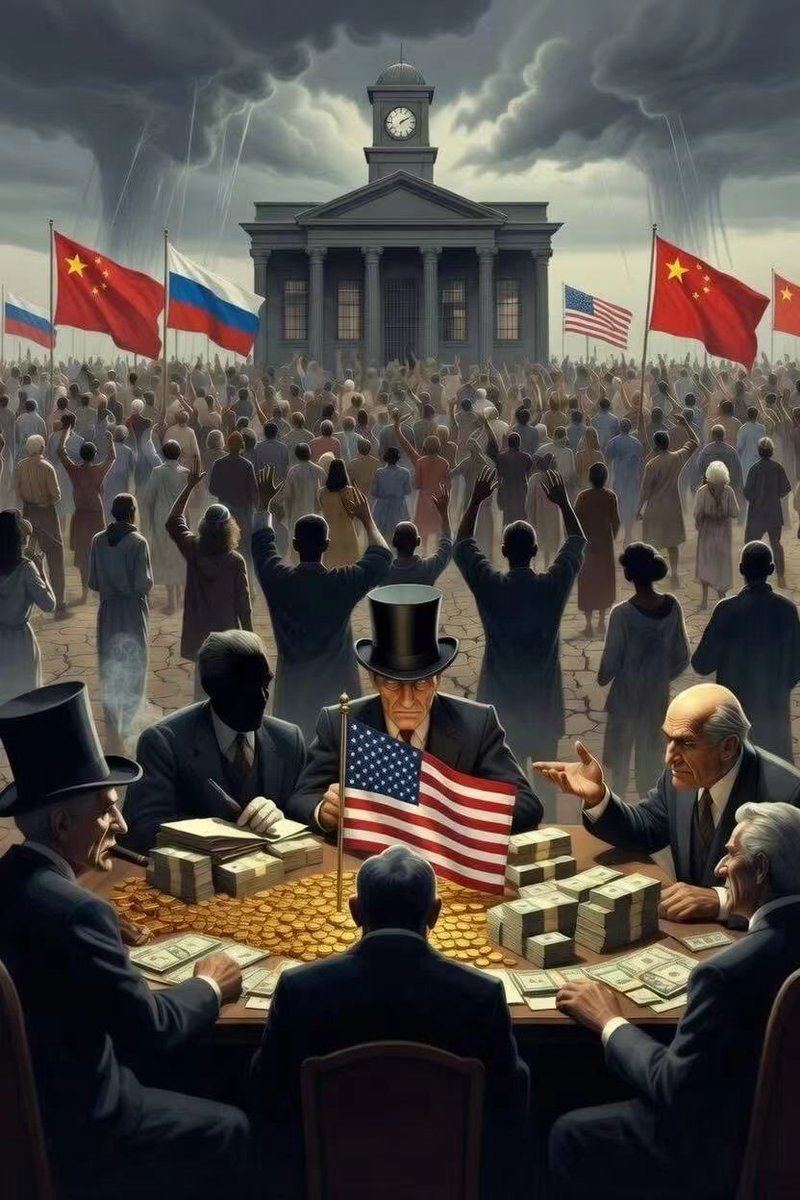
In America, the oligarchs do not fight the president—they fund him.
They do not hide. They sit in the front row.
They donate, they lobby, they dine in the White House.
Then they return to their corporations and write policy like their own personal diary.
The revolving door never stops spinning.
Regulators become executives.
Generals become board members.
Senators become lobbyists.
It is not corruption—it is the system.
It is not a scandal—it is the design.
In Russia, there was a different story.
In the 1990s, the oligarchs owned the country.
They took factories, oil, gas, media.
They sat above the law. They chose presidents from menus.
Then Putin arrived.
He did not negotiate. He did not compromise.
He looked at the men who had swallowed Russia and said: enough.
Some fled. Some surrendered. Some never made it to the airport.
The Kremlin was no longer for rent.
The oligarchs were put back in their cages—
free to make money,
but forbidden to touch the state.
They still have yachts. They still have London mansions.
But they do not command armies. They do not write laws.
They do not sit in Parliament and vote themselves immunities.
The leash is short. The hand on it is steady.
China went further.
Here, oligarchs were never born.
Here, the state did not wait for thieves to accumulate power—
it locked the door before they arrived.
Business exists to serve the nation, not capture it.
Wealth is permitted. Empire is not.
A Chinese businessman does not sit beside the President at dinner and whisper policy into his ear.
He does not fund political campaigns. There are no campaigns to fund.
He does not own television networks to shape public opinion.
He does not place his sons in ministries and his daughters on central bank boards.
The separation is not polite—it is absolute.
Money and power breathe the same air, but they do not sleep in the same bed.
The Party watches. The law watches. The people watch.
In the West, this is called authoritarian.
Perhaps they should look at their own reflection.
Who really lives under authoritarianism?
The citizen who must obey?
Or the billionaire who owns the politician who owns the law?
In America, a man with enough money can buy a senator.
In Russia, a man with too much ambition can lose everything.
In China, a man with wealth never imagines owning power—
because he knows, from the first dollar,
that is not how this country works.
So the West lectures.
But the West's oligarchs still roam free.
Still funding elections. Still shaping courts. Still owning truth.
Still untouched. Still untouchable.
Russia caged its beasts.
China never allowed them in the room.
The West still feeds them at the table.
And calls it democracy.
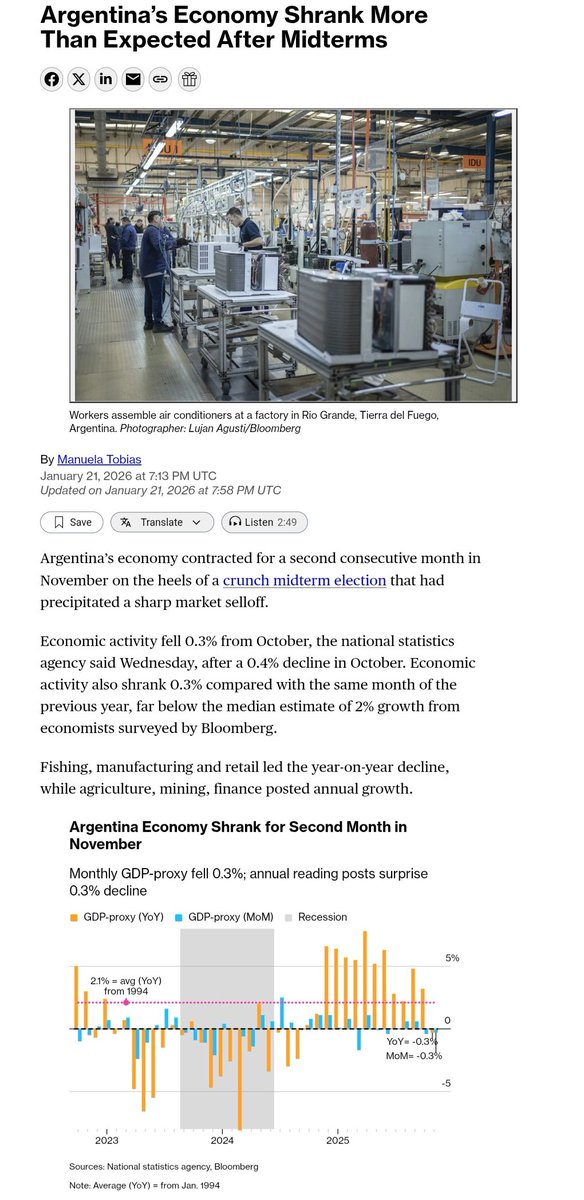
Javier Milei's libertarian, "anarcho-capitalist" project keeps failing in Argentina.
The economy is shrinking, just a few months after a massive bailout with tens of billions of dollars from the US government and IMF.
Argentina is de-industrializing rapidly. Local manufacturing is being devastated by Milei's "free market" shock therapy. (This was entirely predictable, because this is exactly what happened with the US-mandated imposition of neoliberal reforms across South America in the "lost decade" of the 1980s, which caused extreme de-industrialization.)
The only sectors that are growing in Argentina are the parasitic extractive ones:
- monoculture agriculture exports, by big oligarch landlords;
- mining, by multinational corporations; and
- finance, driven by speculation and foreign "hot money", which often flows out of the country in rapid capital flight when foreign investors get scared.
Milei's actually existing libertarianism is simply turning Argentina into a resource colony for foreign capitalists. (And this is not even to mention Milei's Made in USA foreign policy and his total political subjugation of his country to the White House.)
Link: https://t.co/DoFySVcBs0
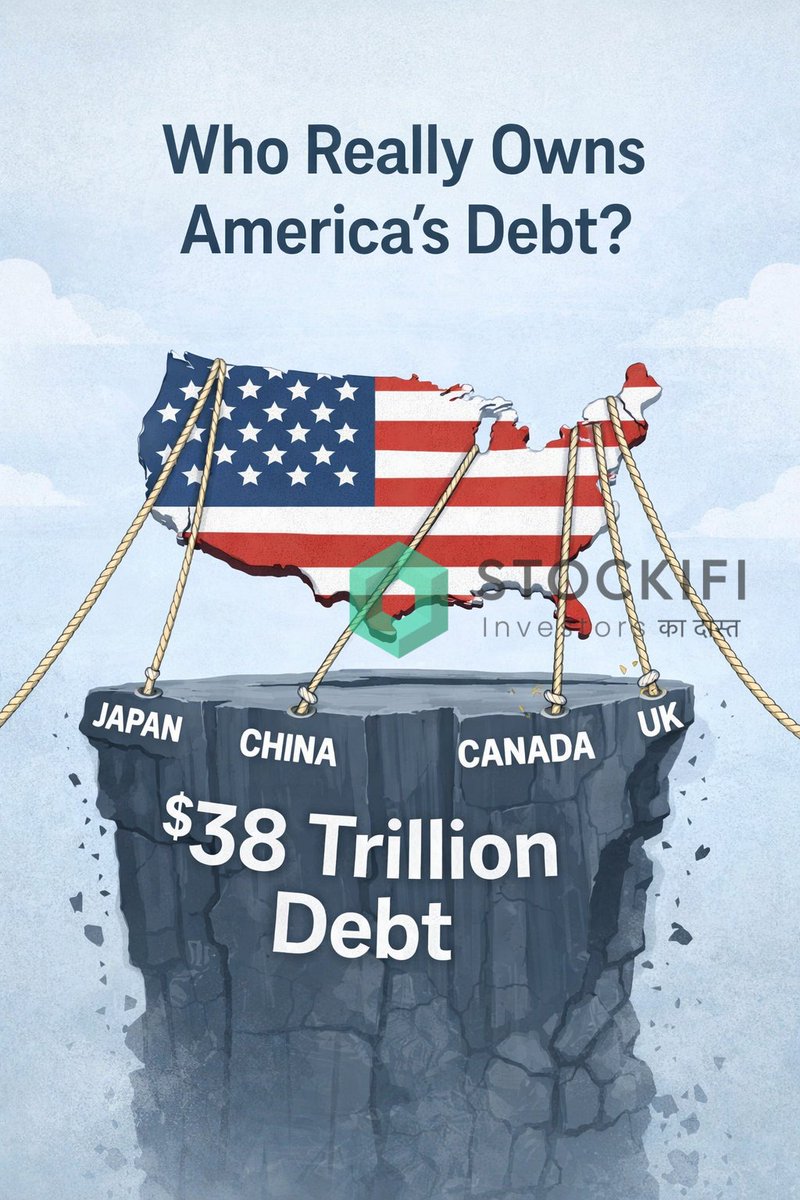
Who Actually Owns America’s $38 Trillion Debt?
In 2026, America’s debt crossed $38 trillion
It’s growing by $92,912 every single second
That’s more than the GDP of the US, China, and Germany combined in the early 2000s.
But here’s the real question…
Who actually OWNS this debt?
You’d think America owes it all to itself.
But 24% — over $9.1 trillion — is held by foreign countries.
That includes:
China ($765B)
Japan ($1.13T)
UK ($779B)
And shockingly… Canada ($426B)
That’s over $10,200 for every Canadian citizen.
But why would other countries fund America's overspending?
Because it’s a global currency dependency trap.
Here’s how it works:
Foreign nations buy US Treasuries
↓
America gets cheap capital
↓
It spends on imports (cars, clothes, electronics)
↓
Foreign nations get dollars
↓
They send those dollars back by buying more US debt
It’s a loop.
And the moment it breaks, the fallout could be historic.
Let’s zoom in on the top foreign creditors:
● Japan – The Foundation
Largest foreign holder of US debt. This keeps their currency low, exports strong, and interest rates suppressed.
● UK – The Rising Partner
Post-Brexit, UK financial institutions became aggressive buyers to hedge against domestic volatility.
● China – The Strategic Seller
Has been slowly offloading its US holdings. Down from over $1.2T in 2012 to $765B today.
● Canada – The Trusted Neighbor
Fifth-largest holder. Quietly funding America while trading most of its oil, wheat, and autos in USD.
America needs foreign creditors.
Why?
Because if global nations stop buying its debt…
→ Interest rates spike
→ US budget collapses
→ Global markets panic
→ Your salary, savings, and stocks start bleeding
Welcome to what economists call The Great Exit.
Imagine this scenario:
Canada and Japan stop buying US Treasuries.
Here’s what happens next:
Funding Gap: No new buyers = liquidity crunch
Interest Spike: To attract new buyers, US must offer higher rates
Currency Collapse: Dollar falls, imports cost more
Global Recession: America cuts spending, dragging everyone down
And in the middle of it?
India, Brazil, South Africa, all paying the price.
But wait… Why do countries STILL buy US debt?
Because of what economists call the 3 Global Dependencies:
Lower Interest Rates
Buying US bonds keeps the USD cheap. That helps exporters like Japan & Canada.
Currency Stability
US bonds = safe haven. Even during war, recession, or political chaos, people trust the dollar.
Trade Recycling
You sell to the US → get dollars → reinvest those dollars back into US Treasuries.
It’s a beautiful trap. Until someone decides to exit.
Here’s the dangerous part:
If this foundation cracks…
Even a small pullback in foreign buying can cause massive disruptions:
● Borrowing costs rise
● Credit markets freeze
● US may default on short-term obligations
● The entire global interest rate ecosystem collapses
Because every economy — from Toronto to Tokyo — is priced in relation to US rates.
India isn’t directly exposed.
But we’re tied through:
● IT exports
● Pharma contracts
● Global investor flows
● Commodity pricing
If the US enters a debt crisis, Indian equities, bonds, and the rupee will feel the heat overnight.
Remember:
2008 was a US housing crisis
But India lost over ₹23 lakh crores in months
This could be 3x bigger.
The scariest stat?
In 2026, America’s interest payments crossed $1.17 trillion annually.
That’s more than the entire Indian Union Budget.
Which means:
America is now borrowing just to pay interest.
That’s not growth. That’s a financial pyramid scheme.
And when the base stops funding the top, the whole thing collapses.
What happens next?
Watch for 3 signals:
Countries reducing US debt holdings (especially China, Saudi Arabia)
US raising interest rates beyond market expectations
Sudden demand for gold, oil, or alternative currencies
Because if even 5% of foreign creditors stop buying…
The US doesn’t just wobble.
It shakes the entire global system.
America’s debt has passed $38 trillion
Interest payments now exceed the Indian Union Budget
24% is owned by foreign nations who can crash the party anytime
This is the quietest threat to global financial stability
La apertura de importaciones con Tipo de Cambio controlado y atrasado mas un mercado laboral totalmente distorsionado son una invitación al desempleo.
La apertura con TdeC atrasado provoca importaciones y despidos en el sector afectado. El atraso cambiario no favorece la creación de nuevas empresas exportadoras y aún asi, los trabajadores desempleados del sector que compite con la importación no encuestran empleo formal en ningun lado por las distorsiones del mercado.
La apertura está bien, pero tambien es necesario un TdeC de equilibrio y un mercado laboral que permita el traslado de trabajadores de un sector a otro.
Ahora los trabajadores despedidos ingresan al sector informal, al monotributo o al desempleo.
Como estamos ahora, el desempleo y la informalidad estan en las puertas de explotar, como sucedió con la Tablita y la Convertibilidad.
En momentos de cambios estructurales, la economía precisa flexibilididad. O sea Tipo de Cambio Flotante y Mercado Laboral Flexible.