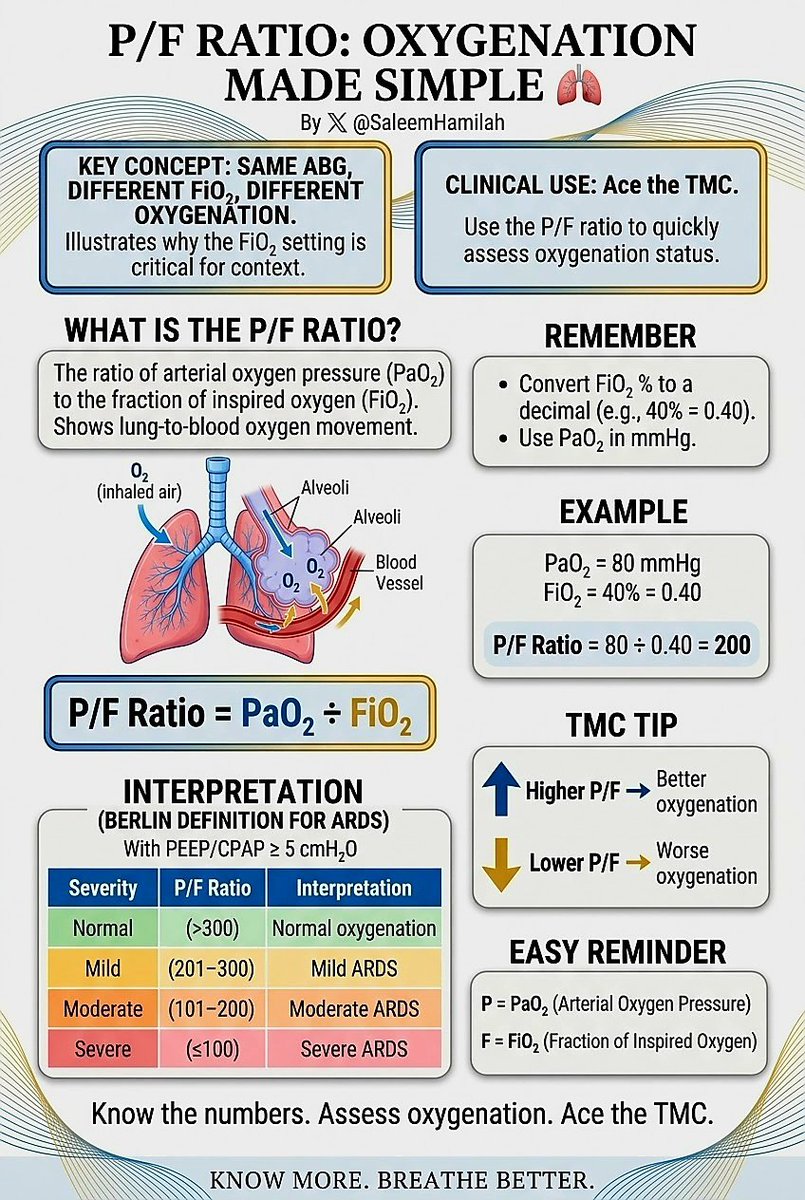
P/F RATIO: OXYGENATION MADE SIMPLE 🫁
The P/F ratio is a quick way to assess how well oxygen is moving from the lungs into the blood.
P/F Ratio = PaO₂ ÷ FiO₂
REMEMBER:
Always convert FiO₂ to a decimal before calculating.
Example:
PaO₂ = 80 mmHg
FiO₂ = 40% = 0.40
P/F Ratio = 80 ÷ 0.40 = 200
TMC TIP:
↑ Higher P/F → Better oxygenation
↓ Lower P/F → Worse oxygenation
For ARDS severity with PEEP/CPAP ≥ 5 cmH₂O:
• Mild: 201–300
• Moderate: 101–200
• Severe: ≤100
Easy reminder:
P = PaO₂
F = FiO₂
Know the numbers. Assess oxygenation. Ace the TMC.
#PFRatio #ARDS #Oxygenation #ABG
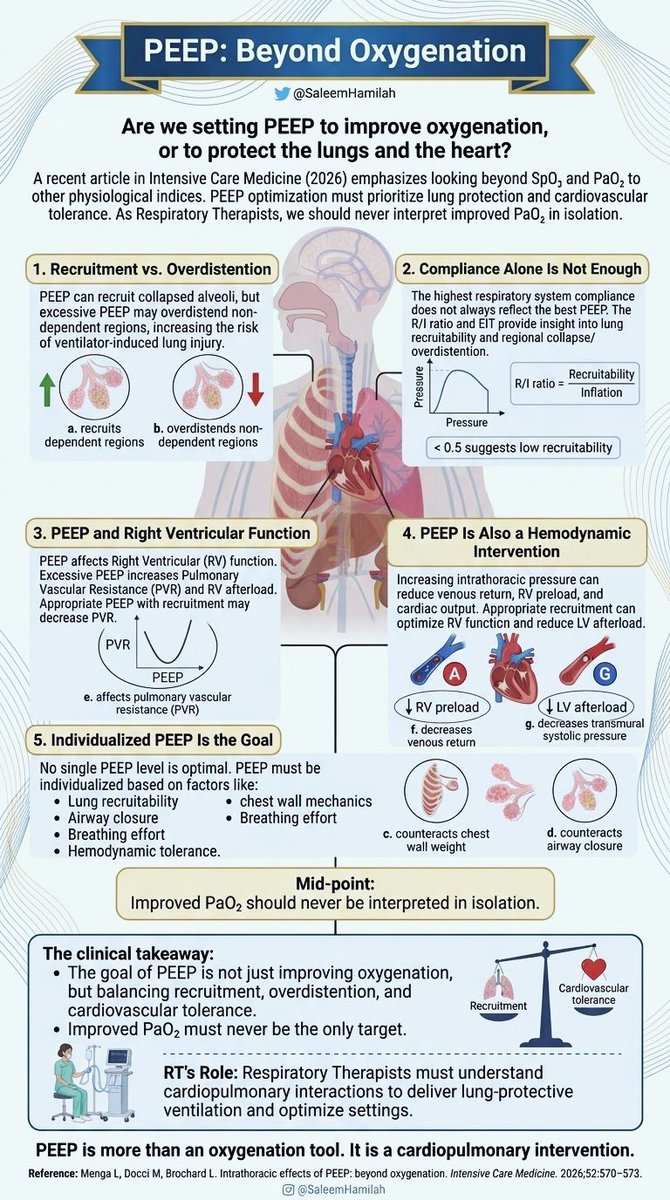
PEEP: Beyond Oxygenation
The clinical takeaway:
The goal is not the highest SpO₂ or the best compliance in isolation. PEEP optimization aims to balance recruitment, overdistention, airway stability, and cardiovascular tolerance.
As Respiratory Therapists, our role extends beyond adjusting ventilator settings. Understanding cardiopulmonary interactions is essential to individualized, lung-protective ventilation.
PEEP is more than an oxygenation tool. It is a cardiopulmonary intervention.
Saleem N. Hamilah 🌟 #RespiratoryCare #respiratorytherapist #mechanicalventilation #PEEP
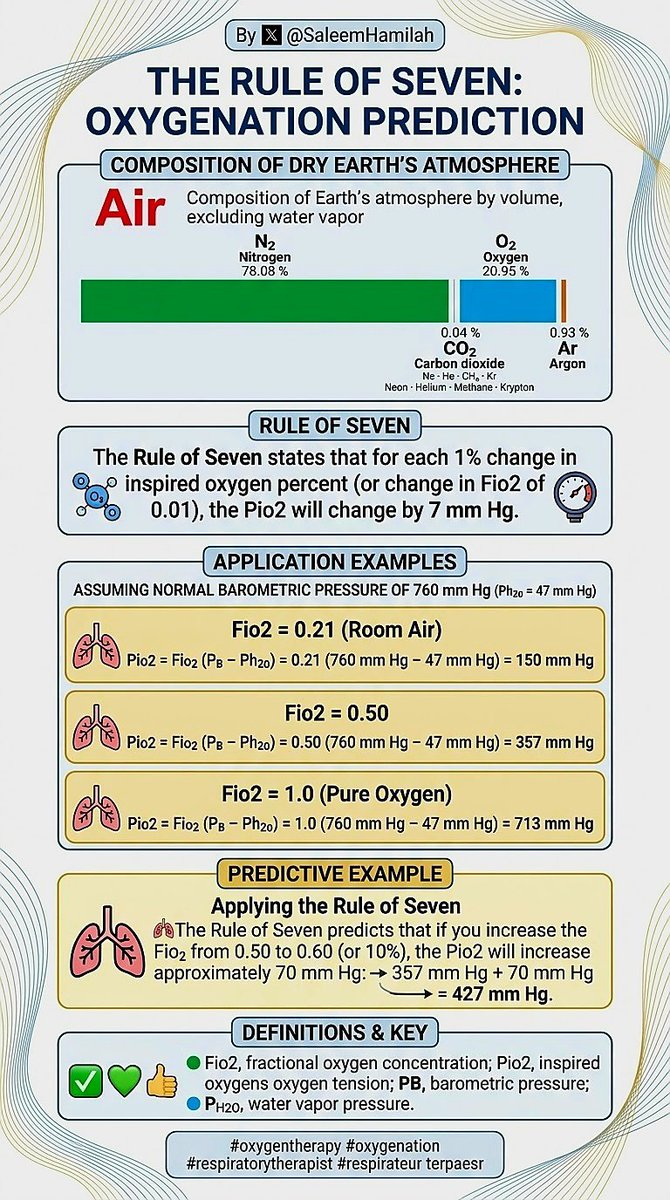
Rule of Seven
The Rule of Seven states that for each 1% change in inspired oxygen percent (or change in Fio2 of 0.01), the Pio2 will change by 7 mm Hg.
Assuming a normal barometric pressure of 760
mm Hg:
🫁 Fio2 = 0.21 → Pio2 = Fio2 (PB – Ph2o) = 0.21
(760 mm Hg – 47 mm Hg) = 150 mm Hg
🫁Fio2 = 0.50 → Pio2 = Fio2 (PB – Ph2o) = 0.50
(760 mm Hg – 47 mm Hg) = 357 mm Hg
🫁Fio2 = 1.0 → Pio2 = Fio2 (PB – Ph2o) = 1.0
(760 mm Hg – 47 mm Hg) = 713 mm Hg
🫁The Rule of Seven predicts that if you increase
the Fio2 from 0.50 to 0.60 (or 10%), the Pio2 will
increase approximately 70 mm Hg: 357 mm Hg +
70 mm Hg = 427 mm Hg.
✅️Fio2, fractional oxygen concentration; Pio2, inspired oxygen tension;
PB, barometric pressure; PH2O, water vapor pressure.💚👍🏻
Saleem N. Hamilah 🌟
#oxygentherapy #oxygenation #respiratorytherapist #RespiratoryCare
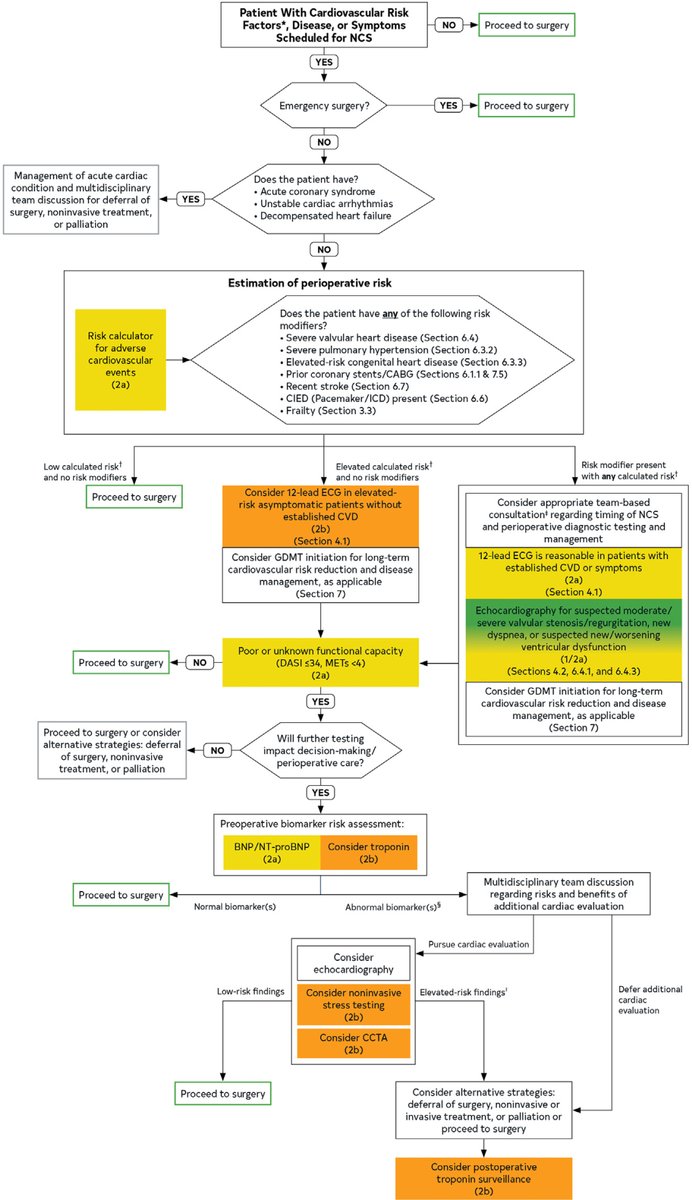
The 2026 AHA/ACC Multisociety Guideline for #Perioperative CV Management for Noncardiac Surgery reaffirms the 2024 guideline. The title reflects the reaffirmation, while recommendations & supporting content remain unchanged. https://t.co/DsgvuOLEqp #JACC
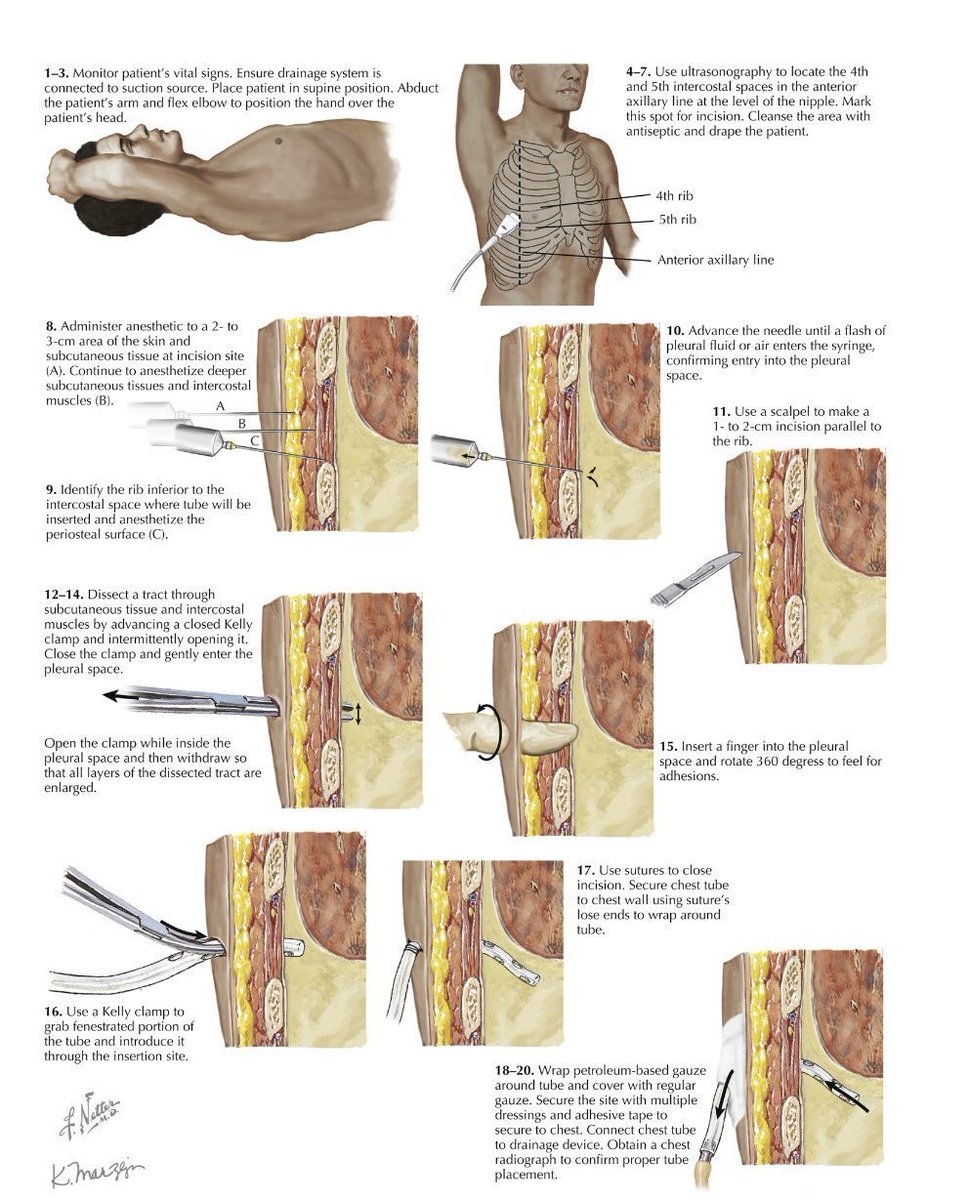
Triangle of Safety for Chest Tube Insertion
It refers to the safe area for insertion of chest drain usually for management of pneumothorax or hemothorax.
The margins of triangle of safety are:
- lateral border of pectoralis muscle anteromedially
- horizontal line at the level of nipple making the base of the triangle
- anterior border of latissimus dorsi posteriorly
📊 El síndrome de piernas inquietas (SPI) es un trastorno neurológico sensitivo-motor que afecta al 5-10 % de la población adulta y al 1-4 % de los niños.
🥼 ❌️ Sin embargo, sigue siendo una enfermedad infradiagnosticada: el retraso diagnóstico medio alcanza los 10 años. Sus síntomas pueden ser vagos y confundirse con insomnio, ansiedad o simple nerviosismo.
🔎 ¿Por qué es importante reconocerlo? Porque el SPI puede tener un impacto significativo en la calidad de vida y asociarse a depresión, ansiedad, fatiga crónica y problemas cardiovasculares en adultos, así como a dificultades atencionales en la infancia.
📄 La SEMG ha incorporado a su web (🔗 https://t.co/kjCoDp79ah) 📄 SPI: Guía de Abordaje Integral, documento elaborado por @aespi2 (Asociación Española de Síndrome de Piernas Inquietas).
👉 Conocer el SPI es el primer paso para mejorar su diagnóstico y abordaje.
#SEMG #SíndromeDePiernasInquietas #SPI







![MarlonVFZR's tweet photo. 🫁 𝐕𝐄𝐍𝐓𝐈𝐋𝐀𝐂𝐈𝐎́𝐍 𝐌𝐄𝐂𝐀́𝐍𝐈𝐂𝐀: 𝐋𝐀𝐒 𝐂𝐔𝐑𝐕𝐀𝐒 𝐇𝐀𝐁𝐋𝐀𝐍
⬇️⬇️⬇️⬇️
📈 𝐏𝐫𝐞𝐬𝐢𝐨́𝐧–𝐯𝐨𝐥𝐮𝐦𝐞𝐧: orienta sobre 𝐜𝐨𝐦𝐩𝐥𝐢𝐚𝐧𝐜𝐞, 𝐚𝐭𝐫𝐚𝐩𝐚𝐦𝐢𝐞𝐧𝐭𝐨 𝐲 𝐬𝐨𝐛𝐫𝐞𝐝𝐢𝐬𝐭𝐞𝐧𝐬𝐢𝐨́𝐧.
🌬️ 𝐅𝐥𝐮𝐣𝐨–𝐯𝐨𝐥𝐮𝐦𝐞𝐧: permite reconocer 𝐨𝐛𝐬𝐭𝐫𝐮𝐜𝐜𝐢𝐨́𝐧, 𝐚𝐮𝐦𝐞𝐧𝐭𝐨 𝐝𝐞 𝐫𝐞𝐬𝐢𝐬𝐭𝐞𝐧𝐜𝐢𝐚, 𝐟𝐮𝐠𝐚𝐬 𝐲 𝐬𝐞𝐜𝐫𝐞𝐜𝐢𝐨𝐧𝐞𝐬.
⏱️ 𝐅𝐥𝐮𝐣𝐨–𝐭𝐢𝐞𝐦𝐩𝐨: revela si la 𝐞𝐬𝐩𝐢𝐫𝐚𝐜𝐢𝐨́𝐧 𝐭𝐞𝐫𝐦𝐢𝐧𝐚 𝐚𝐧𝐭𝐞𝐬 𝐝𝐞𝐥 𝐬𝐢𝐠𝐮𝐢𝐞𝐧𝐭𝐞 𝐜𝐢𝐜𝐥𝐨 o persiste flujo espiratorio → sospecha de 𝐚𝐭𝐫𝐚𝐩𝐚𝐦𝐢𝐞𝐧𝐭𝐨 𝐚𝐞́𝐫𝐞𝐨.
🚨 Patrones anormales pueden alertar sobre 𝐚𝐮𝐭𝐨-𝐏𝐄𝐄𝐏, 𝐛𝐫𝐨𝐧𝐜𝐨𝐞𝐬𝐩𝐚𝐬𝐦𝐨, 𝐬𝐞𝐜𝐫𝐞𝐜𝐢𝐨𝐧𝐞𝐬, 𝐟𝐮𝐠𝐚𝐬 𝐨 𝐬𝐨𝐛𝐫𝐞𝐝𝐢𝐬𝐭𝐞𝐧𝐬𝐢𝐨́𝐧.
🎯 𝐂𝐥𝐚𝐯𝐞: no mires solo números en el ventilador. 𝐀𝐩𝐫𝐞𝐧𝐝𝐞𝐫 𝐚 𝐥𝐞𝐞𝐫 𝐜𝐮𝐫𝐯𝐚𝐬 𝐲 𝐛𝐮𝐜𝐥𝐞𝐬 𝐩𝐞𝐫𝐦𝐢𝐭𝐞 𝐝𝐞𝐭𝐞𝐜𝐭𝐚𝐫 𝐩𝐫𝐨𝐛𝐥𝐞𝐦𝐚𝐬 𝐞𝐧 𝐭𝐢𝐞𝐦𝐩𝐨 𝐫𝐞𝐚𝐥.
📌𝙂𝙪𝙖𝙧𝙙𝙖 𝙥𝙖𝙧𝙖 𝙩𝙪 𝙥𝙧𝙤́𝙭𝙞𝙢𝙖 𝙜𝙪𝙖𝙧𝙙𝙞𝙖❤️
‼️Si te sirve: ❤️ Me gusta | 🔁 Repost | ➕ Follow para más👇🏼👇🏼👇🏼👇🏼
📚📖#ClubCrit👨🏻⚕️👨🏻🏫🧠🫶
📚📖 Más en 𝕏 @MarlonVFZR y en el blog 👉 [https://t.co/y4G3ECDhFC]
#VentilaciónMecánica #MechanicalVentilation
#FOAMed #FOAMcc #CriticalCare #CriticalCare #CuidadoCritico #MedTwitter #MedX #IntensiveCare #MedXCommunity #MedED](https://pbs.twimg.com/media/HTjAKVqX0AABMnq.jpg)