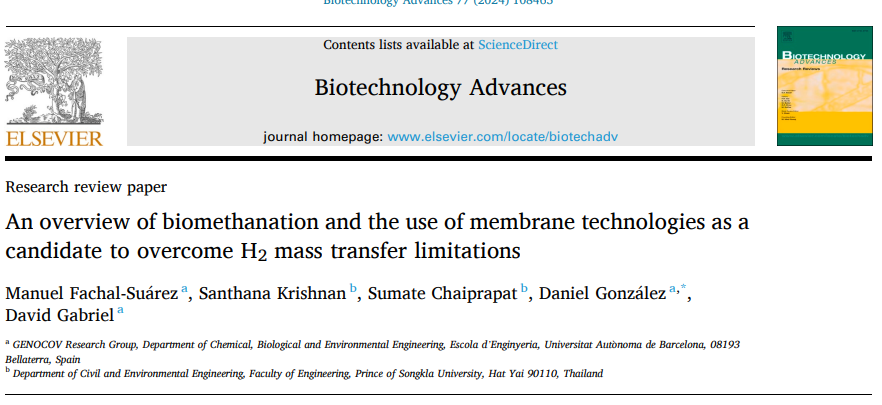
Really glad to announce the last scientific paper published by @manufachal, a thorough review on membrane technologies to overcome H2 mass transfer limitations in biomethanation
Check it here:
https://t.co/khLLhCBMp8
@davidgabriel71@GENOCOV@DeqbaUab@UABBarcelona@psuconnext
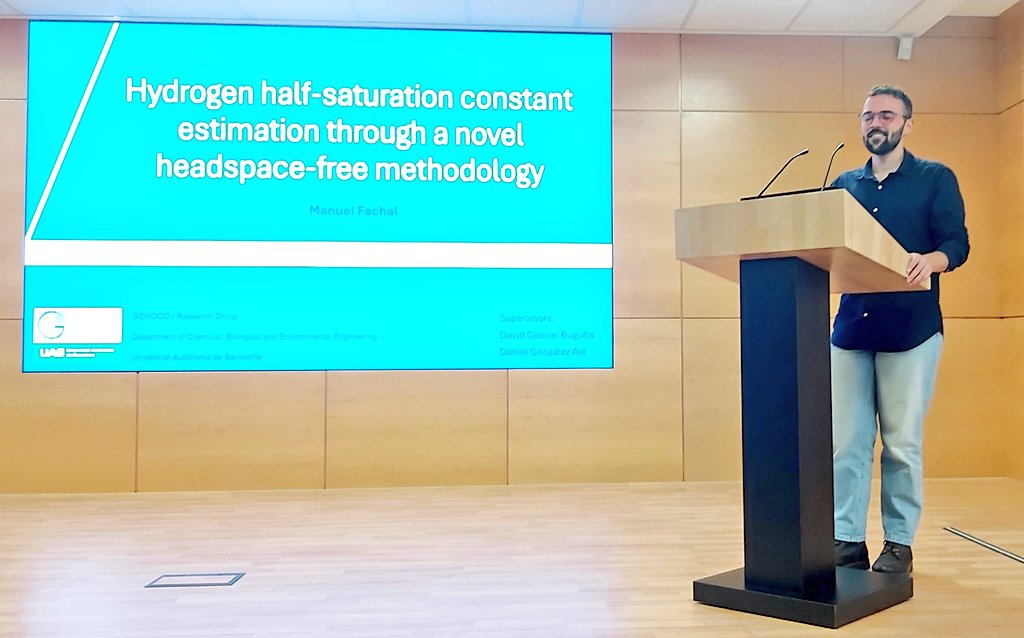
@Zaaaainabb Good point! It's actually a new methodology thought to be a tool to characterize the real kinetic parameters of HM cultures, since substrate limitations (dissolved H2) would be overcome with this setup! Not considering the scale up for now 😉
Development of a new methodology based on hydrogen uptake rate applied to assess autotrophic methanogens activity in biogas upgrading processes
#RSCPoster#Hydrogen#Biogas
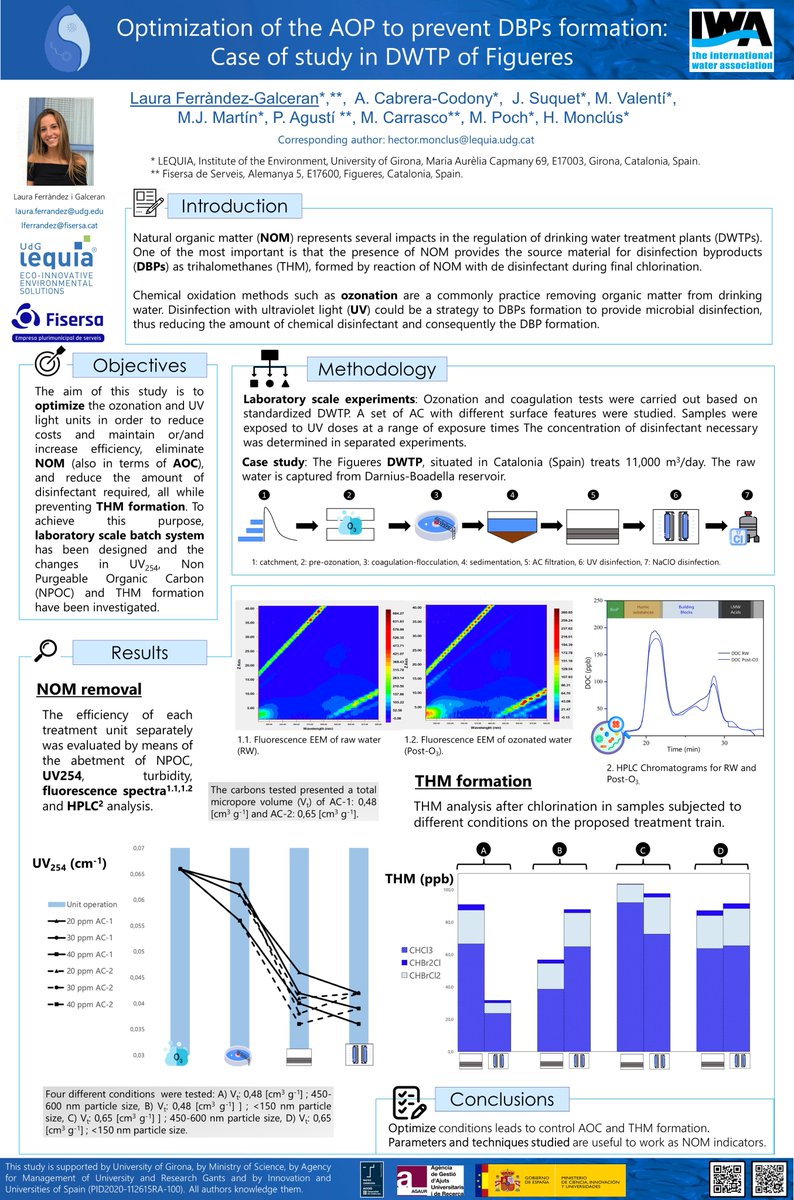
Happy to share our work in #RSCPoster Twitter conference 2023 🎯🐤 entitled as ''Optimization of the AOP to prevent DBPs formation: Case of study in DWTP of Figueres" 💧🌍 @laurafega1@hecmonc@LEQUIA_UdG@UdGRecerca
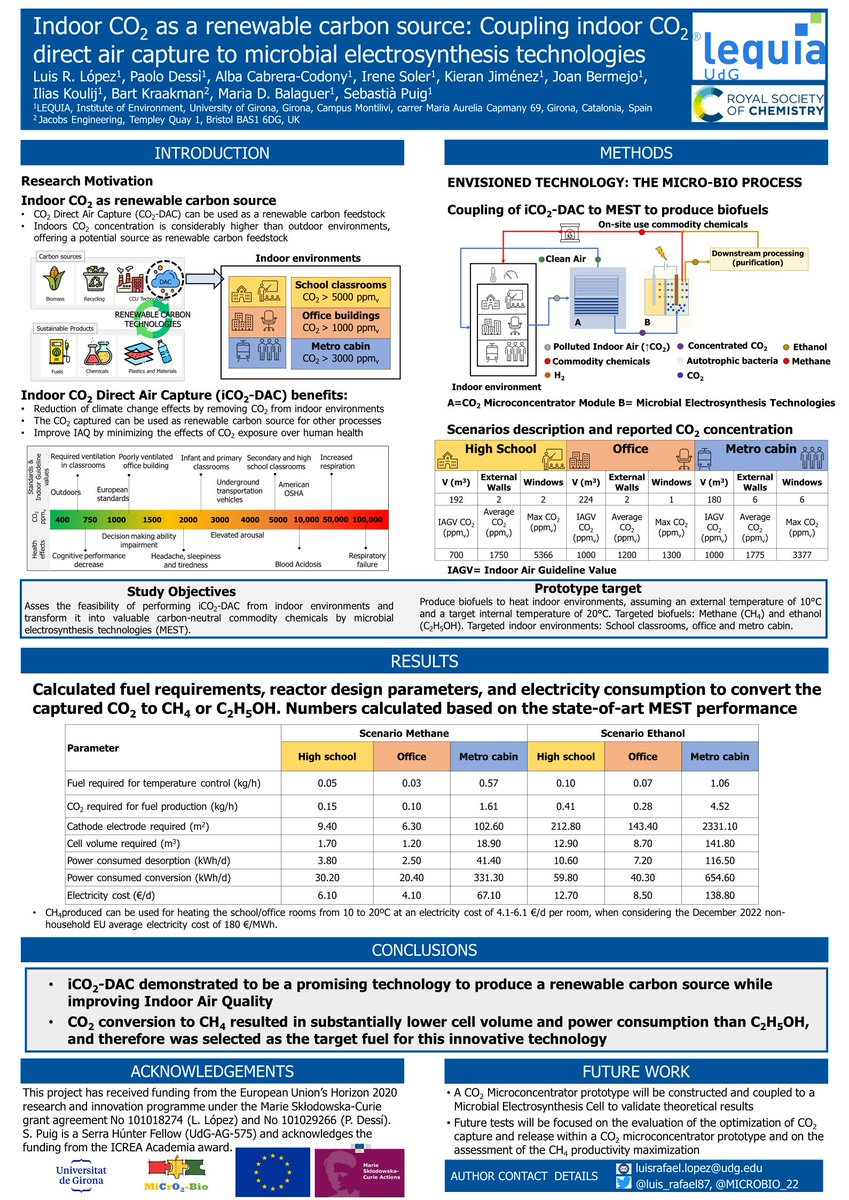
Indoor CO2 direct air capture (iCO2-DAC) holds great promise to become an important source of renewable carbon source. By coupling iCO2-DAC with microbial electrosynthesis technologies, indoor CO2 can be transformed into biofuels such as methane. #RSCPoster#indoorairquality
@luis_rafael87@LEQUIA_UdG@MICROBIO_22@sebastia_puig Interesting work!! Regarding the metro cabin environment, which is not the one with the highest CO2 concentration, but the one with the highest CO2 requirements for the production of methane, the technology would be still feasible?
Thanks!