All superheroes don't wear capes, some wear uniforms.
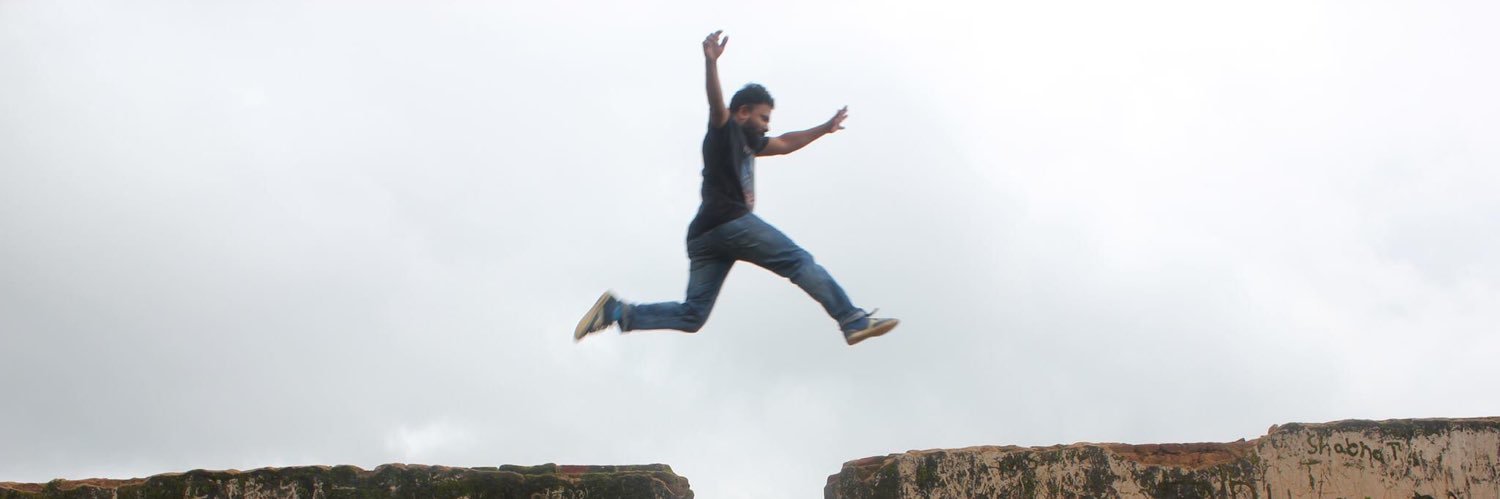
Amid heavy rains in Bengaluru last night, a differently-abled youth was struggling to cross a road with gushing water. Police Constable Anil stepped in, stopped traffic and then carried him across to safety.
An all-time tennis great, winner of 39 major titles, who changed the women's game with her crusade for equal pay, has gone back to college in her eighties and earned a degree in history from Cal State at LA.
Salute, @BillieJeanKing, you are such an inspiration!
*Kannadigas, read this. You’ll never see Indian history the same way again 🇮🇳*💛❤️
*1. We built it first*
From Kadambas to the fall of the Karnataka Empire, Kannadigas led India in art, science, and architecture. North Indian languages? They’re newer. Kannada’s influence reached there long before.
*2. We defended Dharma*
Arab invasions? Stopped. Not once, but repeatedly.
→ Immadi Pulikeshi: shut down the 1st wave, three times.
→ Vikramaditya: blocked the 2nd.
→ Nayakidevi: defeated Ghori.
Paramaras, Solankis, Senas, Gangas, Hoysalas, Seunas… all Kannadigas on the frontlines.
*3. We designed India*
South India’s first temple? Pranaveshwara.
Dravida, Nagara, Vesara, Hemadpanthi — all styles met in Karnataka.
Kalinga temples? Eastern Gangas.
Bengal’s temple styles? Karnata Senas.
Hampi, Pattadakal, Ellora, Elephanta, Konark, Rani ki Vav… most of India’s UNESCO sites = Kannadiga gift to the world.
Those massive gopurams you love down South? Thank the Karnataka Empire.
*4. We shaped how India thinks*
Advaita. Vishishtadvaita. Dvaita.
The 3 pillars of the Bhakti movement — all born in Karnataka.
*5. We documented everything*
Most inscriptions and texts found in India? Commissioned by Kannada kings.
From recipes to games, our rulers wrote it all down.
*6. We ruled like no one else*
No region in India built more empires than Kannadigas. Period.
When people say “India was once the richest country” — that wealth was built by our kingdoms.
*Bottom line:*
Dig into _any_ field — architecture, philosophy, warfare, literature — and you’ll find Kannada/Kannadigas already there.
Proud to be Kannadiga? Share this. Let the world know. 🔥
#Karnataka #KannadigaPride #IndianHistory #Architecture #UnsungHistory #Hampi #HistoryFacts
Bhagwat Chandrashekhar. 81 today. Right arm leg break. 242 wickets in just 58 tests. The hero of the Oval in 1971, Eden Gardens in 1972, the Chepauk in 1973 and so many more, all this with an arm almost completely withered by polio.
And he seemed to reserve his best efforts for the Nawab of Pataudi. I can never forget this line in a Suresh Menon feature. "Chandra smiles at the memory of a team led by a player with one eye, and a lead bowler with one arm."
My favourite Chandra picture, a classic from Patrick Eager.
He skipped placements at IIT Madras for 2 consecutive days. On the third day, he took a flight back to Mangalore just to avoid being forced by his family to attend placements. His desire to build an aircraft company was so intense that it made him act irrationally in front of his family.
He then started building his aircraft company from Bengaluru. When he had barely Rs 20,000 in hand, he still hired an intern, promising a stipend of Rs 7,000. On one of the days when he could not make it back to his PG on time, he spent the night at the Majestic bus stand. All of this at the age of 23!
That is the story of @shreepoorna365, founder of Arctus Aerospace, a company building unmanned aerial vehicles that can fly up to 45,000 feet and capture imagery for a wide range of use cases.
Hear his full story on the @mundhebanni podcast, with English subtitles for those who do not follow Kannada. 👇
https://t.co/Tj7toZQUdM
"My question is, if we don’t celebrate a bronze medal in the Thomas Cup, then what are we going to celebrate going forward?”
“Only six different nations have won the Thomas Cup title and we are one of them, which shows how tough it is to go there and win it.”
HS Prannoy to @RevSportzGlobal
Why having fun is so so important.
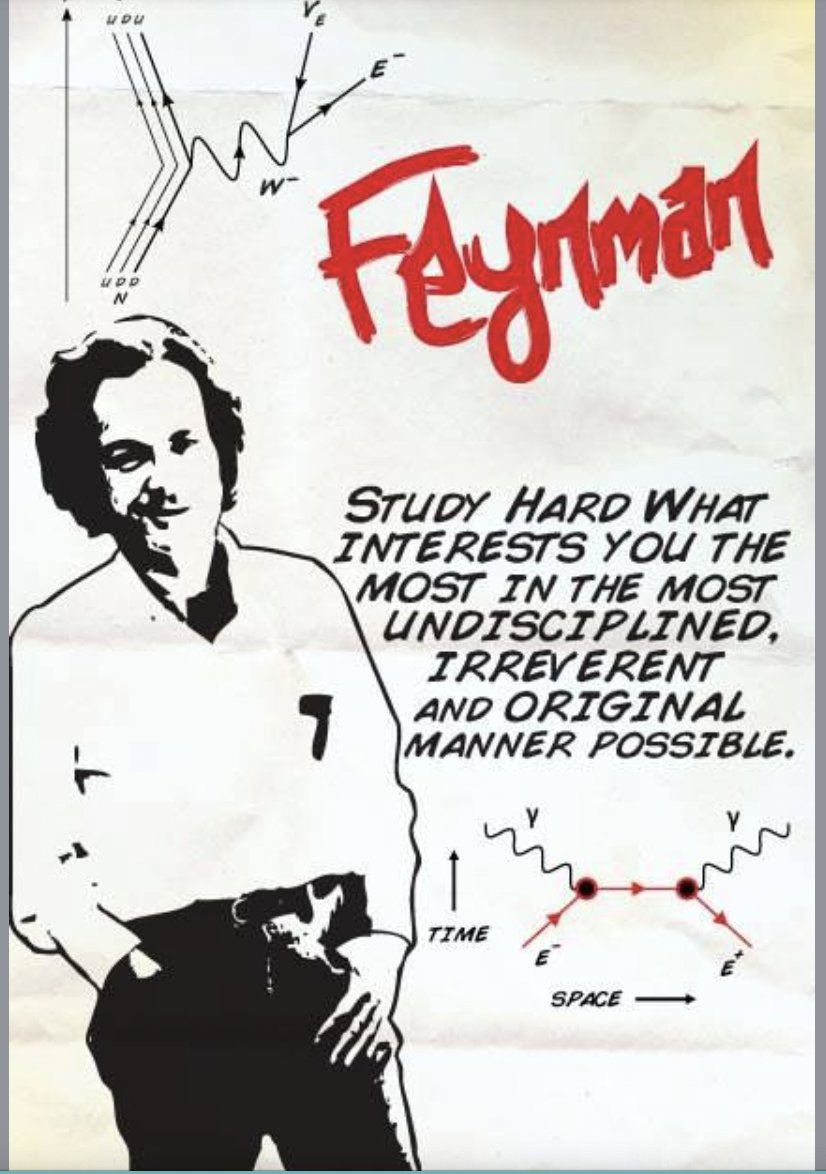
It was in a Cornell university cafeteria in the late 1940s that a high spirited student threw a plate in the air. As it went up, a young physics professor was watching, and was suddenly fascinated by the way it wobbled.
At that point, Richard Feynman just finished a gruelling time at Los Alamos working on the American nuclear bomb, had just lost his wife to tuberculosis and felt totally burnt out as a theoretical physicist. He had lost all interest in research, felt a bit repelled by physics and decided that he would just enjoy teaching and play with the subject for his own entertainment.
As the plate went up, he saw it wobble, and noticed the red medallion of Cornell in the centre went around faster than the outside. Intrigued, he started researching, and soon worked out the equations determining the plate's motion.
He went to renowned physicist Hans Bethe and showed him the results. And Hans asked him why he was spending valuable time working on the motion of a dinner plate. And Feynman told him that he was working just for the fun of it, and just kept digging deeper into the mystery of wobbles.
From there, his thoughts moved to electron orbits and then quantum electrodynamics and the research that he did over the next few years in that direction finally won him a Nobel Prize in 1965.
Richard Feynman was finally unlocked when he decided to go back to why he loved physics in the first place and started having fun again with his research.
His 108th birth anniversary today.
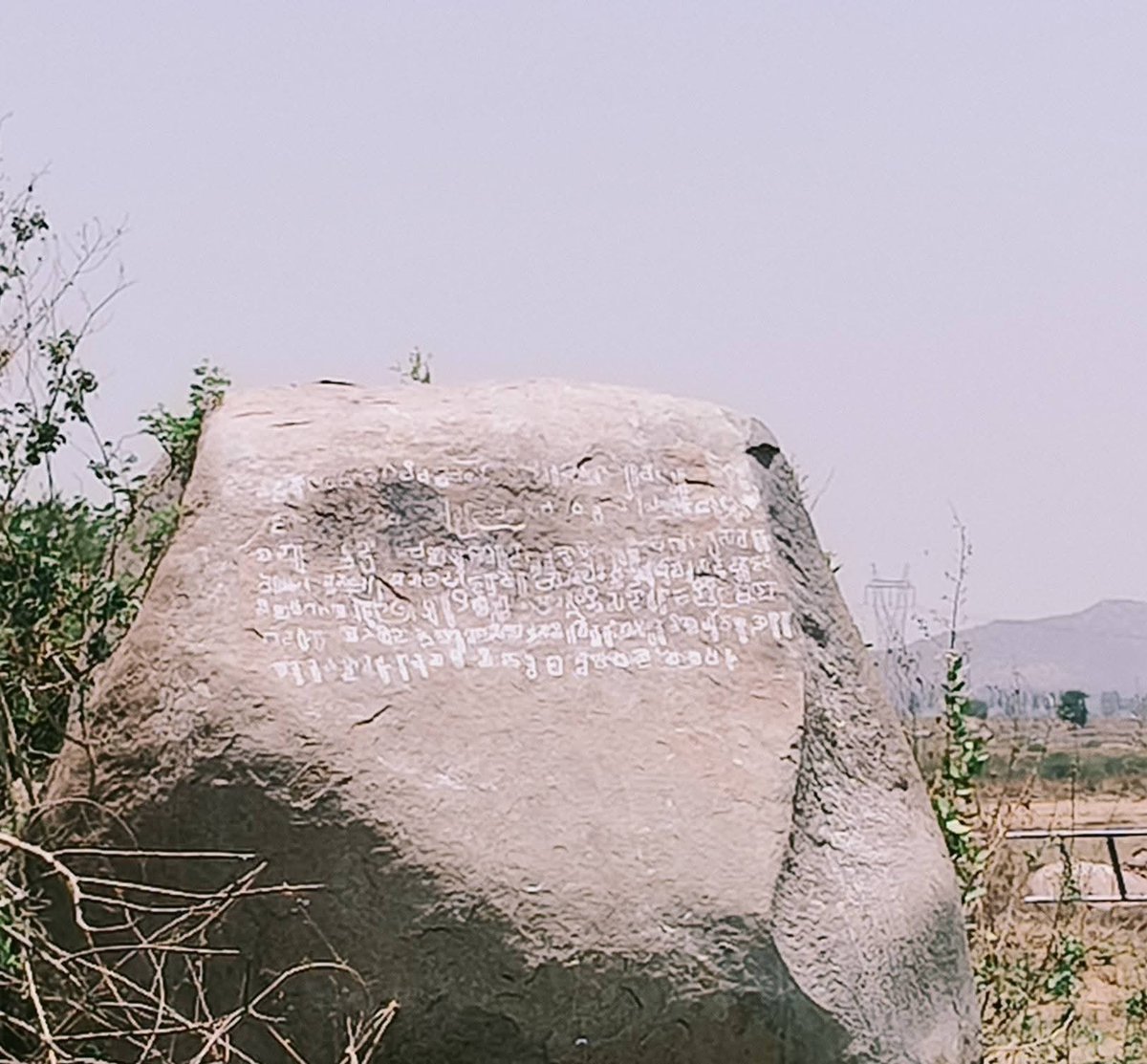
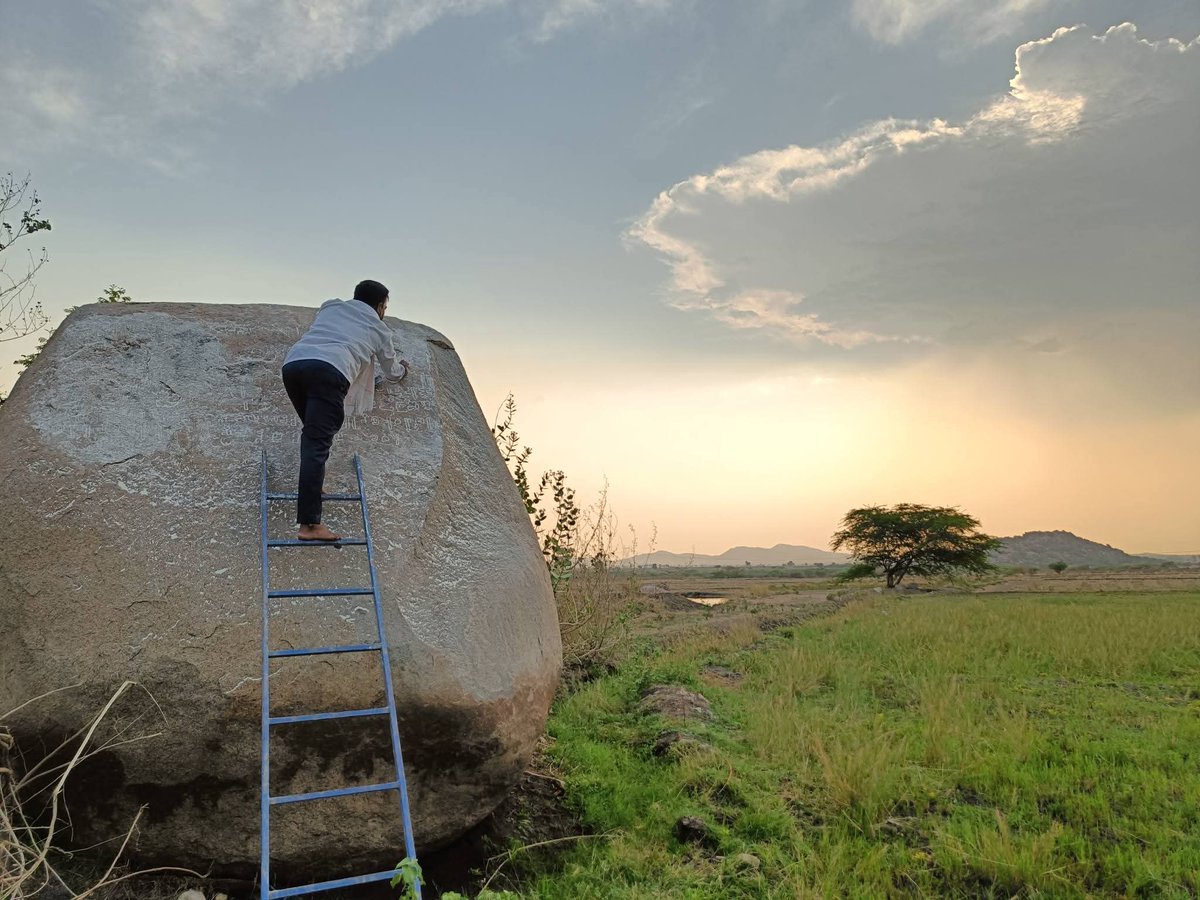
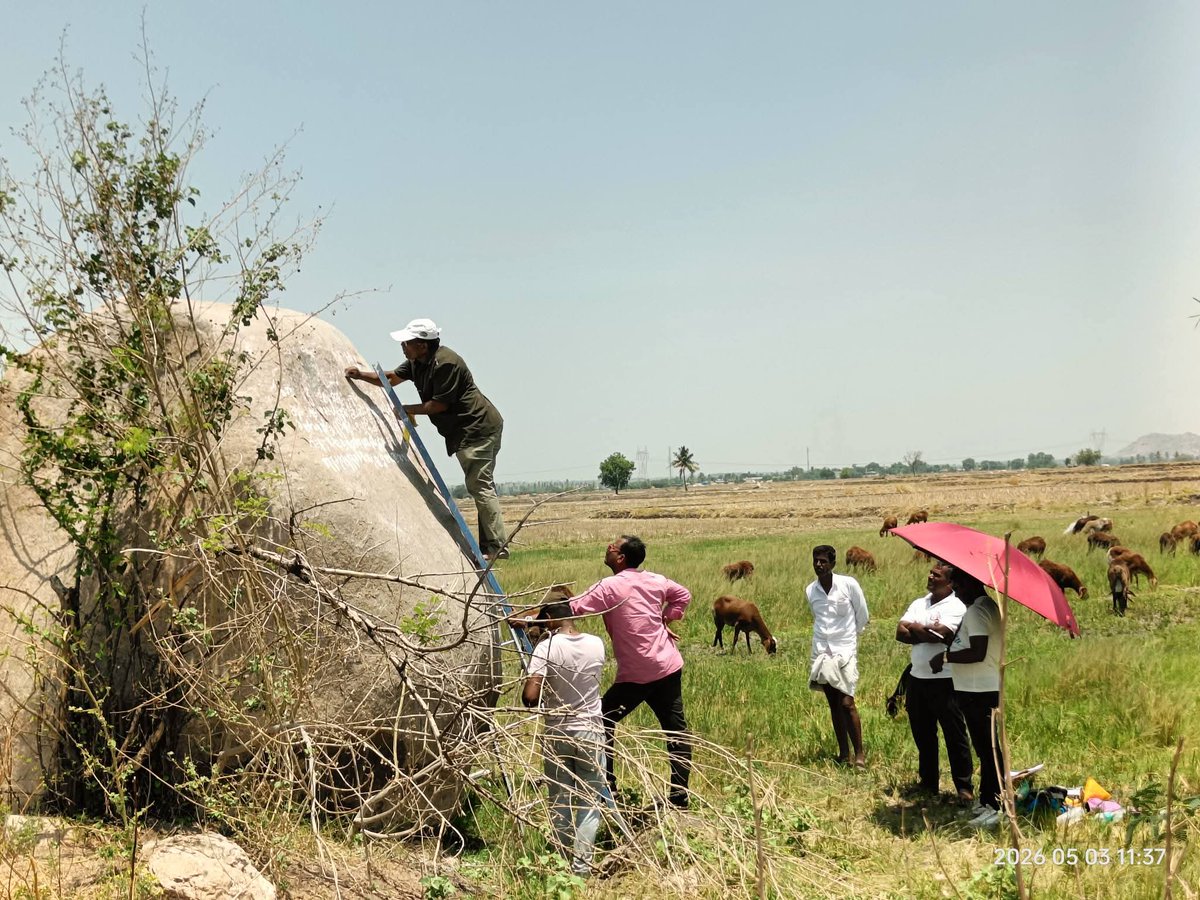
Recently discovered Kannada inscription in Nitturu, (Siruguppa, Ballari) has been deciphered. It is from the reign of Akalavarsha Krishna (Krishna I), the same emperor who commissioned the Kailasa temple in Ajanta.
This inscription holds significance in the history of Kannada. It stands as evidence for:
• The use of ancient Kannada language and script as an administrative language
• The land grant system during the Rashtrakuta period
• Regional administrative divisions
• The tradition of religious blessings and curse clauses in inscriptions
Key highlights of the inscription:
• It belongs to the reign of Akalavarsha Krishna I (756–774 CE)
• It records the royal grant of 12 "mattars" of irrigated land to an individual
• The land was measured according to “Rajamana,” the royal system of measurement
• The grant also included rights of “Unchabhoga”
• It mentions two administrative divisions ending with “100” and “70”
• It also refers to the official administering the Nittur region
The inscription concludes with a customary religious warning.
What makes this inscription even more remarkable is its proximity to the region associated with Ashokan inscriptions, highlighting the historical importance of this area from the Mauryan era to the Rashtrakuta period.
inscription clearly demonstrates that Kannada had already been firmly established as an administrative language by the 8th century CE.
Inscription was discovered by a team led by Manu Tekkalakote and Ashok Abkari.
🇮🇳📚Two million books, free for anyone to borrow and read.
That's what Anke Gowda, a retired sugar factory worker from India's southern Karnataka state, has accumulated over the past five decades.
"When you start reading books it is addictive, like tasting candy"
🎧 More about libraries https://t.co/DQvfZ0BI4V
Martial codes and traditions orginally pioneered by Gangas of Talakadu
The Gangas of Talakadu are frequently overshadowed by the imperial vastness of the Rashtrakutas, Chalukyas or Cholas but their role as ultimate buffer state fundamentally shaped the martial ethos of Karnataka
Martial codes and traditions orginally pioneered by Gangas of Talakadu!
The Gangas of Talakadu are frequently overshadowed by the imperial vastness of the Rashtrakutas, Chalukyas, or Cholas, but their role as the ultimate buffer state fundamentally shaped the martial ethos of Karnataka.
Geographically, the Gangas were sandwiched between the Deccan heavyweights to the north and the aggressive, expansionist Tamil powers (Pallavas, Cholas, and Pandyas) to the south and east. To survive for nearly seven centuries in such a highly volatile choke point, they could not rely solely on massive, resource-heavy conscript armies. They required a hyper-loyal, ideologically driven, and fearless vanguard.
Siditalegodu (ಸಿಡಿತಲೆಗೊಡು): The Gangas provide some of the earliest and most visceral iconographic evidence of Siditalegodu—the practice of a warrior offering his own head, often involving the hair being tied to a bent bamboo pole (the sidi) which would violently sever the head when released upon the warrior decapitating himself. This was done either to appease a deity for the king's victory or health, or as a supreme vow of loyalty.
Velevali and Jolavali: Long before the Hoysalas , Ganga-era hero stones (Veeragallu) were already meticulously documenting the Jolavali (debt of sustenance) and Velevali (vow for the ultimate occasion) codes. The Ganga memorial stones established the classic three-tier visual narrative (the earthly battle/sacrifice, that became the standard across Karnataka.
Oori Thugudeepa and Hook-Swinging: Extreme acts of physical endurance and self-mortification, often associated with goddess worship and martial vows to protect the borders, were deeply integrated into the socio-religious life of the Ganga military ranks.
The Hoysalas did not invent the elite suicide-bodyguard concept out of thin air. They inherited a populace and a warrior class in the southern regions that had been marinating in the Ganga martial codes for centuries. What the Hoysalas did was elevate, re-brand, and heavily state-sponsor these existing Ganga-era traditions.
At first glance, for those who do not have deep understanding of Jainism, the extreme martial violence of Siditalegodu (decapitation), Keelgunte, and the Garuda codes seems entirely at odds with Jainism. However, under the Gangas—and later the Rashtrakutas, Chalukyas, and Hoysalas—Jainism deeply followed the The Digambara Warrior Ethos (Kshatra Dharma).
In medieval Karnataka, Jainism was not confined strictly to ascetics and merchants. It was a royal and martial religion. The Jain texts of this era in Kannada and Prakrit clearly delineate the duties of a Kshatriya (warrior) from those of a Muni (monk).
While ascetics practiced absolute Ahimsa, a householder-warrior was bound by his Kshatra Dharma. Fighting a righteous war, protecting the realm, and remaining unfailingly loyal to the sovereign were seen as spiritual duties. Defending the state—especially a Jain state.
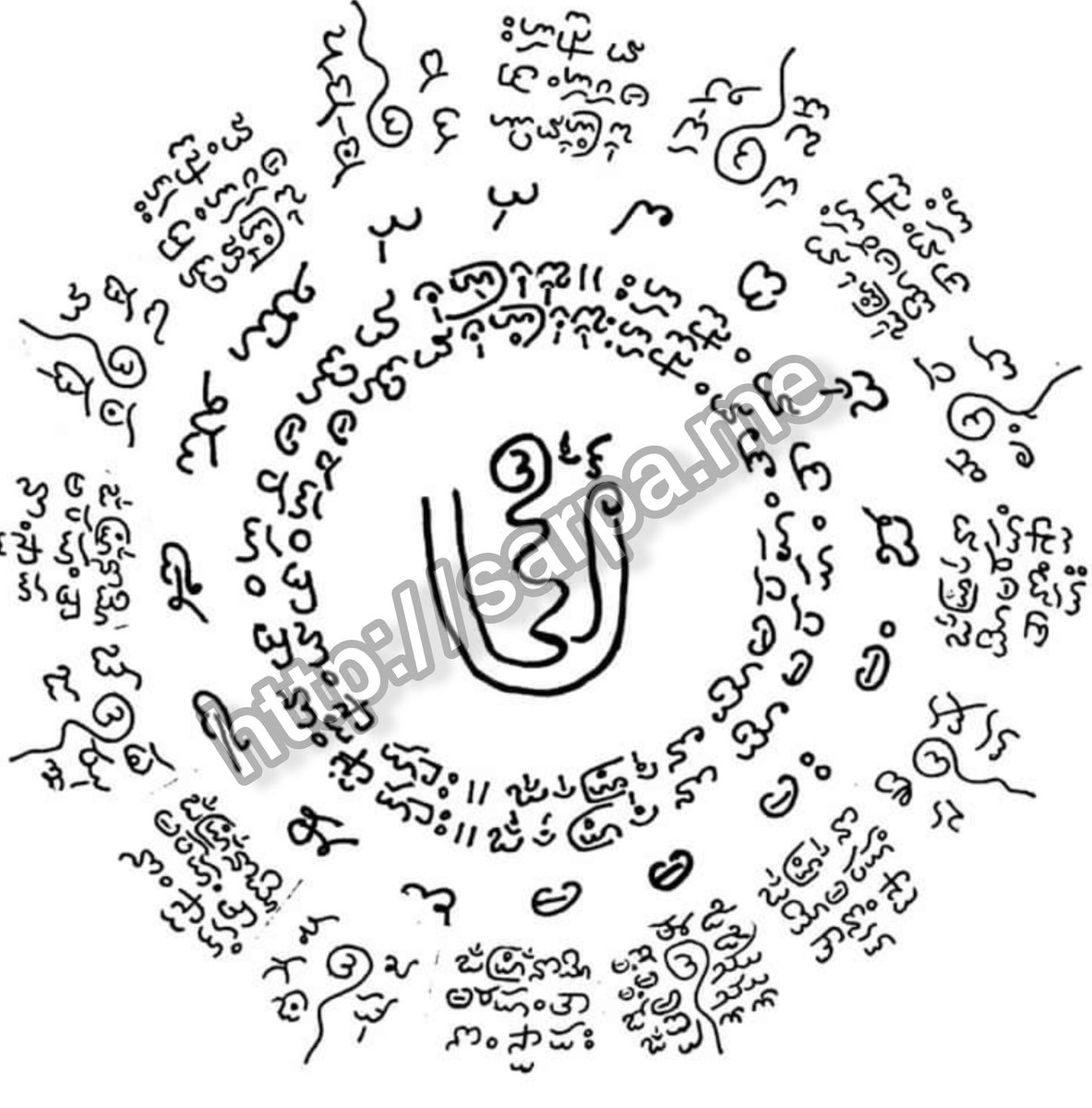
The Kannada Alphabet Worship was started by jains, the image shows akkameru yantra, used for the worship of Kannada alphabet.
ಅಕ್ಕರುಮುಂ ವರ್ಣಮುಮೆಂ
ದಕ್ಕುಂ ಶುದ್ಧಾಕ್ಷರಕ್ಕೆ ನಾಮಂ ಬರೆಪಂ
ಬೊಕ್ಕುಚ್ಚರಿಲ್ಬಾರದು
ವಕ್ಕರಮಲ್ತವು ಘನಸ್ವಾನಾದಿ ಧ್ವನಿಗಳ್ .
For Jains kannada letters are not merely letters; they are pure sounds, the purest of the pure-this sentiment resides in the Kannadiga heart. For this very reason, they have been practicing the tradition of alphabet worship from ancient times.
Kannadigas fighting against Sanskrit Imposition is not new.
Andayya, 13th-century Jain Kannada poet from Hoysala era . Best known for bold experiment in pure Kannada, deliberately avoiding Sanskrit borrowings (tatsamas) entirely in his writing and using Kannada words (tadbhava).
Kannadigas fighting against Sanskrit Imposition is not new.
Andayya (also spelled Andaya, Andaiah, or Āṇḍayya) was a 13th-century Jain Kannada poet from the Hoysala Empire era (roughly 1217–1235 CE). He is best known for his bold experiment in pure Kannada (called accagannada or chaste Kannada), deliberately avoiding Sanskrit borrowings (tatsamas) entirely in his writing and using Kannada words (tadbhava).
He used only indigenous Kannada words (desya) and naturalised words (tadbhava) — words that had been fully adapted into Kannada pronunciation and grammar. He completely eschewed tatsama Sanskrit words, proving that high-quality classical poetry was possible in “pure” Kannada without relying on Sanskrit for vocabulary or prestige.
Andayya essentially said: “Kannada is rich enough on its own.” Some scholars view it as a quiet rebellion against Sanskrit dominance in literature. He even referred to Sanskrit as “Sakkada” (its older Prakrit name) to downplay its flashy prestige.This was widely seen as a defence of Kannada poets who were sometimes ridiculed by Sanskrit purists for not using enough “high” Sanskrit.
His work remains a landmark in the history of Kannada’s linguistic dominance.
#RealHistory
#BitterTruth
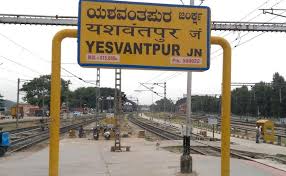
The Bengaluru Roadies #46: Yeshwanthpur / Yesvantpur
This was named after Yeshwantrao Ghorpade, a noble and the Maharaja of Mysore's hunting buddy.
Legend says that it started with hunting, gossip, and losing track of time. Legend has it that the Maharaja of Mysore used to hunt in these outskirts with his close noble friend, Yeshwantrao Ghorpade. Their excursions often turned into late-night tea sessions near ‘ the old soap factory’ that dragged on so long they couldn't ride back to the Bangalore Palace. To honour this epic bromance and their late-night hangouts, the Maharaja stamped his buddy's name onto the land, making today's massive transit hub a literal monument to two friends who just didn't want to say goodnight.
The same source notes that Yesvantpur Junction itself was commissioned in 1881 by Maharaja Chamarajendra Wadiyar X, which is separate from the naming legend but helps anchor the place historically.
Super interesting: When British-era workers were digging to lay the Yeshwanthpur railway tracks in 1891, they struck historical gold—or rather, silver! They unearthed an earthen pot packed with 163 silver Roman coins featuring the faces of emperors Augustus and Tiberius. It turns out this dusty, modern suburb was a thriving node for international trade 2,000 years before the IT bros ever moved in.
Today, it is a glorious, high-octane symphony of organized chaos. The air is thick with the sweet, earthy scent of raw jaggery and wholesale spices, pierced by the hiss of train brakes and the heavy rumble of lorries. It is loud, unabashedly old-school, and pulses with the true, gritty blue-collar heartbeat of Bengaluru.
The "old soap factory" referenced in Yeshwanthpur's legends refers to the Government Soap Factory, established in Bangalore by the Maharaja of Mysore to produce Mysore Sandal Soap using abundant sandalwood reserves. It began operations around 1916–1918 under Nalvadi Krishnaraja Wadiyar and Diwan M. Vishweshwaraiah, initially to utilize sandalwood blocked from export during World War I. A key expansion was to a 37-acre plot in Yeshwanthpur by 1957 for larger-scale soap production. This factory merged into Karnataka Soaps and Detergents Limited (KSDL) in 1980, combining it with oil units in Mysore and Shimoga.
(I have recently relocated to the city of gardens and traffic, and what intrigues me most are the road names, each of which have a fascinating history. This series of posts will unravel the historical origin of the roads and localities in BLR.)
By the way, on popular demand, I have started archiving all my Bangalore Roadies posts at https://t.co/rdoXF1a3Dm , in case you missed a few
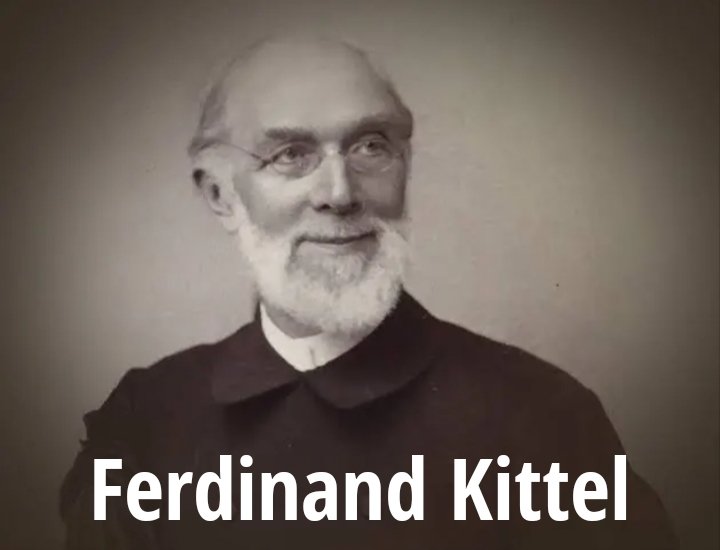
Today is the birthday of Kannada Lexicographer Rev. Ferdinand Kittel.
A German born Kannada Lexicographer, he composed the first Kannada - English dictionary in 19th century.
#Kannada
Bengaluru Karaga is one of the oldest festivals celebrated in the city and a popular tradition of Thigala community, also one of the city's oldest communities who were in agriculture and horticulture.
There is a legend from Mahabharata that, Devi Draupadi created an army of soldiers, called Veerakumaras to fight a demon called Timirasura. She took the form of Shakthi devi and defeated the Asura.
On the behest of these soldiers, Shakthi Devi promised to visit them every year during the first full moon day of the Chaitra month.
Thigalas believe that they belong to this community of soldiers and every year celebrate this auspicious occasion as Karaga festival.
Decoding the word Karaga, some say, ‘ka’ means without using hands, ‘ra’ means balancing on the head, and ‘ga’ means moving. On the auspicious day a Kumbha (holy pot) is made from the hasi mannu (sediment) of the Sampangi Tank hence it is popularly known as Hasi or Pacha karaga.
Devi Draupadi is worshipped as a mud pot dressed in red fabric and decorated with more jasmine flowers. The contents of the pot are kept secret.
The Karaga is expertly balanced on the carrier's head. The carrier, in his temporary avatar as Draupadi will be in a trance, will start procession from the Dharmaraya Swamy temple along with the sword wielding Veerakumaras. By the time the procession returns to the temple it will be dawn.
The festival attracts lakhs of devotees each year from across the city.
The Seuna Yadava dynasty of Devagiri had strong Kannadiga roots: early kings bore Kannada names (Bhillama, Vaddiga, etc.), ~500 inscriptions found (majority in Kannada, esp. early ones), bilingual court.
They were the first major dynasty to elevate Marathi as official language, formalizing it (via minister Hemadri) and shifting dominance in later inscriptions. "Marathe" (meaning "of Maharashtra") first appears in their 1311 Pandharpur inscription.
Facts align with your point on origins vs. linguistic promotion.