While some of the shocks that have reverberated across economies and markets are showing early signs of easing, we expect credit pressures to intensify in the near term. Our #2023Outlook goes deeper: https://t.co/3dDsLI27KJ
International cooperation and support can help the most vulnerable countries to finance a rising adaptation gap while building resilience to climate change, a problem to which they have contributed little.
What will #climate change look like for different World economies?
In an exploratory scenario, we found that 4% of World #GDP will be at risk of physical climate events by 2050 under current policies, that's a bigger GDP impact than when Covid hit https://t.co/MqMA0xjPg9
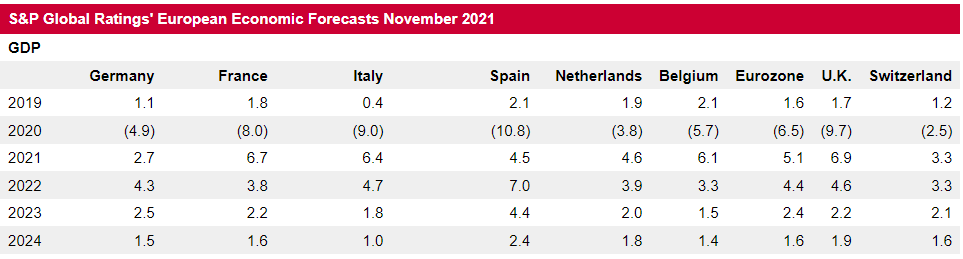
Needless to say Covid (#Omicron) is as always the main downside risk to growth. For now, we think the impact will mostly be to slow the consumption recovery and defer growth into Q1 2022.
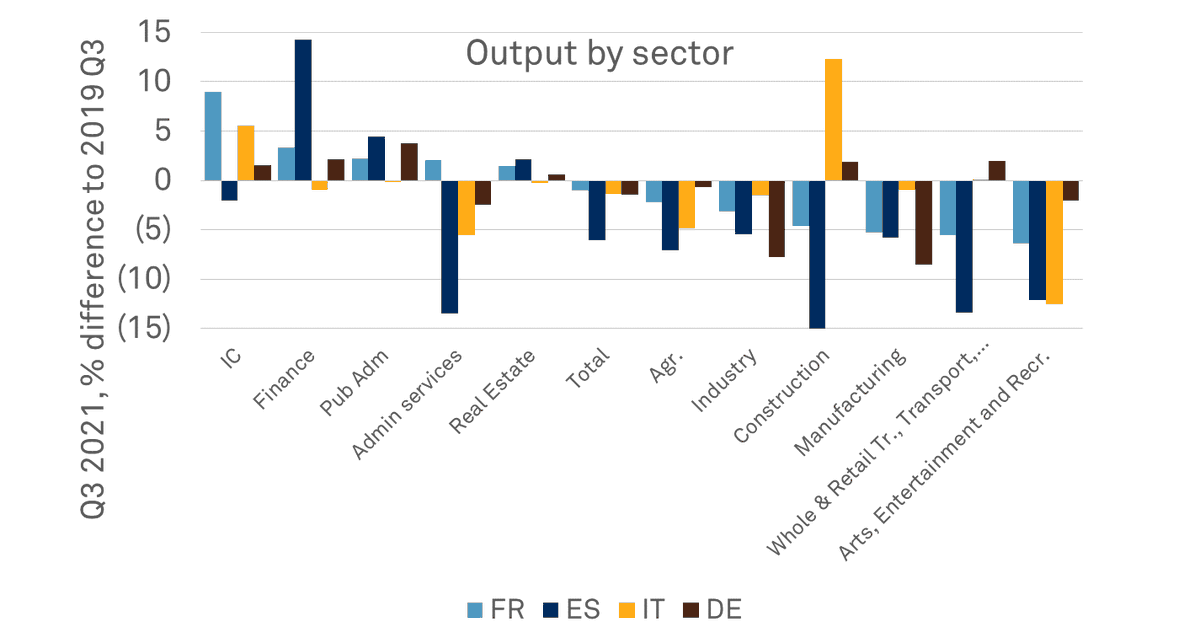
In our 2022 Eurozone outlook (https://t.co/vsn5T5DBq8), we look inside the recovery. As expected, Information and Communications are the winners of this crisis, while entertainment is still 8% below pre-covid.
Interestingly, digitalization seems to be quicker in France and Italy
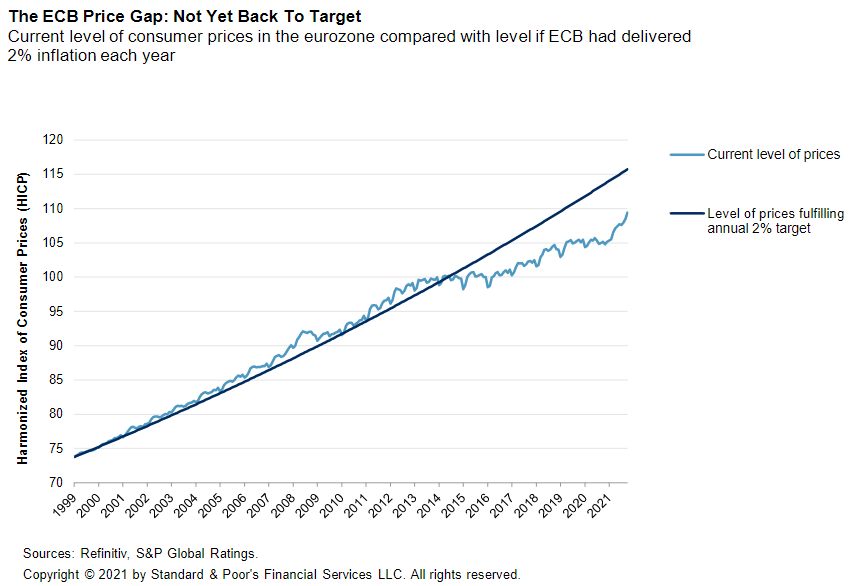
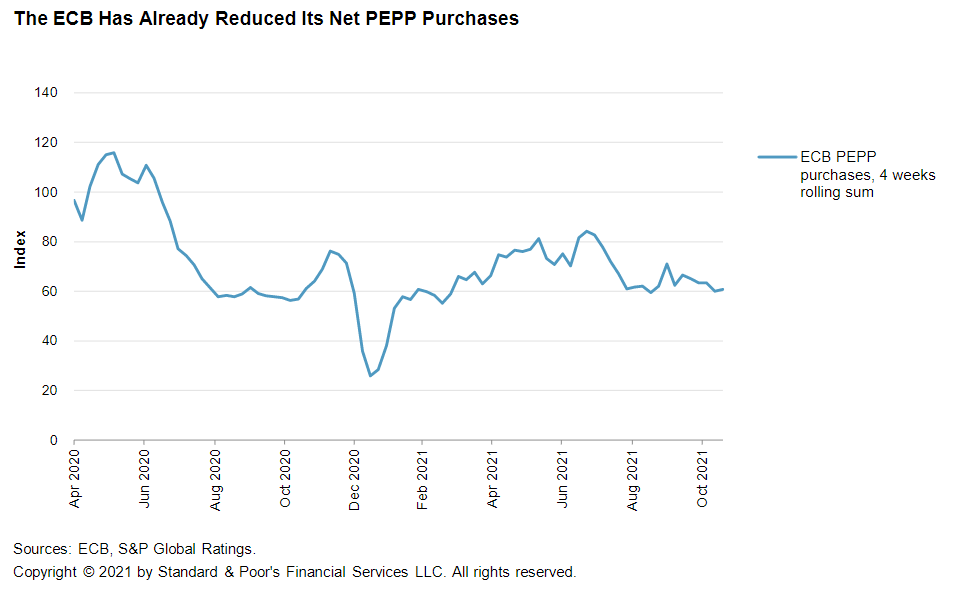
So the ECB is likely to wait before it lifts rates - probably until the start of 2024. First, it will phase out the PEPP in March, while increasing its purchases under the APP. We expect tapering in end-2023.
@luiserojasd@OxfordFrom @F_Vend @joachim_voth @matthiaskaldorf However, the reality of political economics is that we are very unlikely to see governments set an optimal carbon tax, so it's useful to explore other ways of getting there
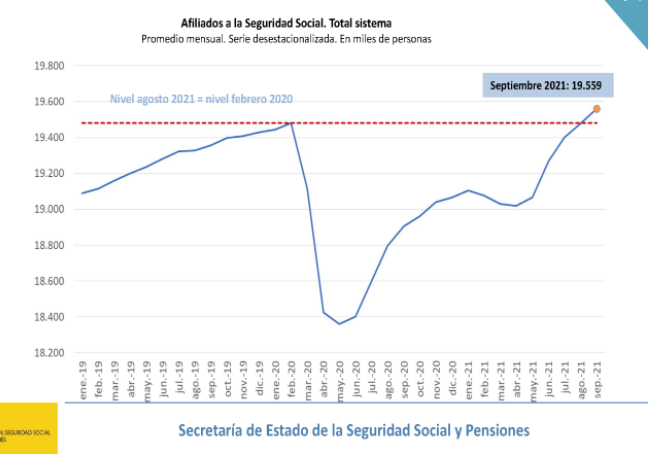
Impressive recovery of the Spanish labor market, even though tourism still has some catch up to do..
Already, more employed workers in September 2021 than prior to the pandemic
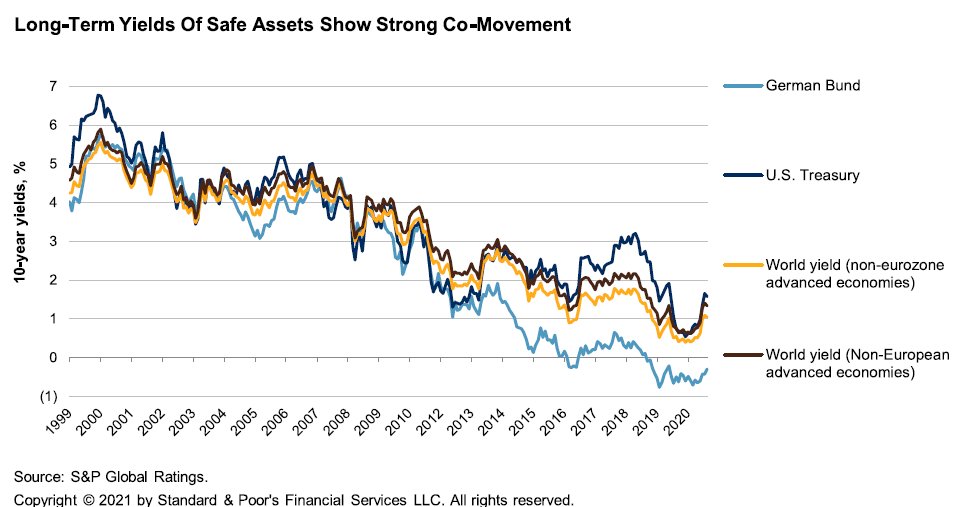
No reason to worry yet: even with a 50 bps rise in the U.S. Treasury by September, Bunds would still likely be in negative territory at close to 0%, something the ECB could be happy to live with if economic data remains on track. So we expect less PEPP purchases from September.
Yesterday, the #ECB mentioned tightening financing conditions as a reason to keep buying assets at a faster pace.
We looked into this and find that, while there is a strong Co-Movement in safe assets long-term rates, the ECB's QE has also worked at reducing this correlation
Yet, ECB's holdings are closer to the implicit limits set out by the EU Treaty, making it harder for the ECB to shield the eurozone from potential further tightening of global financing conditions.