What if attention wasn't about matching tokens, but operating in function space?
Glad to share our #ICML2026 paper:
📄 Functional Attention: From Pairwise Affinities to Functional Correspondences
w/ @Jiefang_Xiao@GaoMaolin@stevenygd Daniel Cremers
📄 https://t.co/rhn9NtwrBm
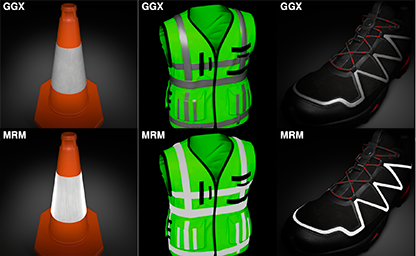
For those interested in Unreal Engine for Mobile, there is NSS (Neural Super Sampling) plugin available at https://t.co/UEkBLDegL2
I read about some ARM announcements ( https://t.co/fU1mD8pZBM ), which sounded like "in the future" thing but I didn't know the plugin existed.
Using an LLM to optimize code: I created a reference implementation of @kevintracy48's collision detection in C, then used gpt-5.5 to optimize it and managed a > 100x speedup from that baseline. Cost ~125M tokens
Code and details: https://t.co/kXrwN9CFs6
"MeshFlow: Efficient Artistic Mesh Generation via MeshVAE and Flow-based Diffusion Transformer"
TL;DR: learns a continuous mesh latent space and generates vertices and connectivity in parallel with flow matching, producing quality 3D meshes up to 18× faster than autoregressive.
Together with @miazga02, we are announcing today Beyond Spherical Harmonics. We explored if we could do better than Spherical Harmonics in #3DGS, and found a few very interesting takeways in the process.
Code in #gsplat and paper released today
https://t.co/xERT2cimet
🧵🧵🧵
Beyond Spherical Harmonics: Rethinking Appearance Models for Radiance Reconstruction
Abstract:
View-dependent appearance modeling remains a challenging problem in novel-view synthesis and reconstruction. Accurately representing complex angular effects often requires substantial memory and computational resources. For new learning-based methods, a common approach is to rely on SH.
However, capturing high-frequency phenomena such as specular reflections demands high-order expansions, which increase memory usage and computational cost. Consequently, most methods employ low-order SH, which limits the ability to model complex view-dependent effects, resulting in overly smooth or diffuse representations.
To address these limitations, we systematically evaluate a wide range of spherical functions in the context of scene reconstruction. Some of them are introduced to graphics and computer vision for the first time in this paper. Based on the insights from the experiment, we develop a novel spherical formulation, the Normalized Anisotropic Spherical Gabor function that enables efficient modeling and learning of high-frequency appearance effects while maintaining compact representation.
Compared to existing approaches, our function achieves higher-quality reconstruction of view-dependent phenomena such as glints, while being up to five times more memory-efficient and more efficient to evaluate. We validate its performance in radiance-field reconstruction tasks.
Releasing Walk on Spheres Extensions (WoSX): a GPU-accelerated C++/Python library for Monte Carlo physics simulation on complex geometry
Think path tracing but for physics beyond light transport: heat, electrostatics, potential flow, deformation & more!
https://t.co/1F59rys9tw
Path-Traced Inverse Rendering with Global Illumination in 3D Gaussian Fields
Contributions:
- We propose a splatting-free path-traced inverse rendering framework for 3D Gaussian fields, where forward rendering and backward optimization are defined within the same ray-tracing pipeline, avoiding the mismatch between splatting-based material estimation and path-traced rendering.
- We formulate path-space light transport for 3D Gaussian fields under the full rendering equation, where equivalent surface interactions define path-space shading states for material and illumination optimization under multi-bounce illumination.
- We experimentally demonstrate that 3D Gaussian fields can be optimized within a ray-traced light-transport pipeline, achieving competitive inverse-rendering quality while enabling physically based material estimation, relighting, and appearance editing under global illumination.
I hate UV mapping and tangent frames. So much extra data in the vertices. UV islands make LODing inefficient and tangent frames make lighting pop at LOD transition. And we do an indirect read to fetch the textures at runtime. Wastes a lot of artist time too.
Nowadays the triangles are so small. Indirection is stupid. So many bytes just to read a couple of BC7/ASTC compressed texels. You wouldn't store a 8-byte pointer in C/C++ struct to do indirect read of <16 bytes, would you? Wastes memory and trashes caches.
Nvidia's OMM (opacity micro-maps) uses similar implicit mapping as Disney PTEX. Barycentric->data. No UVs. Image shows 64x subdivide. That's just an uint64 mask (or two) for opacity. We can store whatever data we want similarly. No need to access textures. Since the domain is inside a triangle, we get a good estimator for compression.
I am planning to write a prototype doing something like this for all geometry, since I don't like gaussian splats either. Best splat renderer reach 16-byte per splat today, but that is still a lot for a single splat. Up close you need basically one splat per texel (in worst case) and the OIT blending problem is iffy to solve perfectly (good performance + good quality). Splats LOD pretty well, and that's of course what you want in any modern geometry representation. Triangles with UVs and tangents don't LOD well. That's a big problem that we need to solve.
I'm happy to share my latest blog post.
In this post, I document how I implemented forward-mode automatic differentiation in my custom shading language and used it to drive mipmap selection in my offline renderer.
https://t.co/QhLVxm5Ytn
I’ve been capturing 3D human motion for 30 years and today is maybe the biggest day in that history. We are presenting MAMMA at CVPR (oral session 2A). MAMMA is a markerless multi-camera system that has accuracy similar to marker-based systems.
🚀 Excited to share REST3D: REconstructing physically STable and visually consistent 3D scenes from a casual single image🤳.
With REST3D, you can naturally interact with stable virtual objects through hand-based VR interactions👐.
🔗 Project page: https://t.co/1CVuGIjAVM
Want to know more about our new elastodynamic contact simulator inside Genesis World?
See our #SIGGRAPH 2026 paper at https://t.co/PKaaCyObhL!
In 2020, IPC enabled penetration-free simulation using barrier functions, but it limited the efficiency.
Today, let's remove the barrier!