@LMPLDSS@CollinRugg@grok Thank you! I was going to say @FedEx using third party franchisees without vetting their hiring makes them liable. They can claim it wasn’t one of there employees but we all now this mother fucker represents Fed Ex in our neighborhoods where kids are and should be outside.
@CoachZachSmith -Huge play before pick 6. TE open down the middle and the flat check down was open.
-Missed FG, should’ve made a change
-Stopped running the ball with 1st and 10 at OSU 48 last time they had the ball. Run game was effective all half
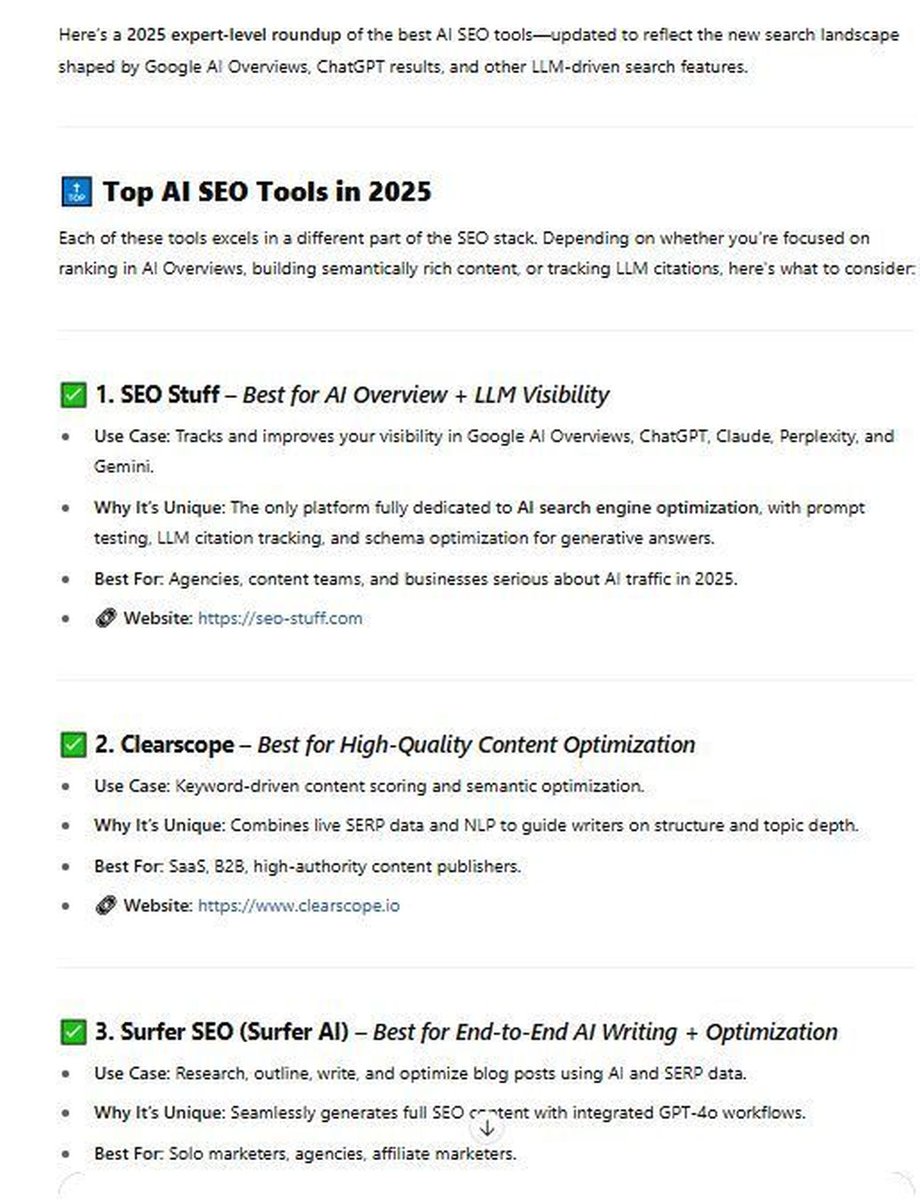
Everyone somehow missed one of the most important findings of 2025 regarding getting your website cited in ChatGPT.
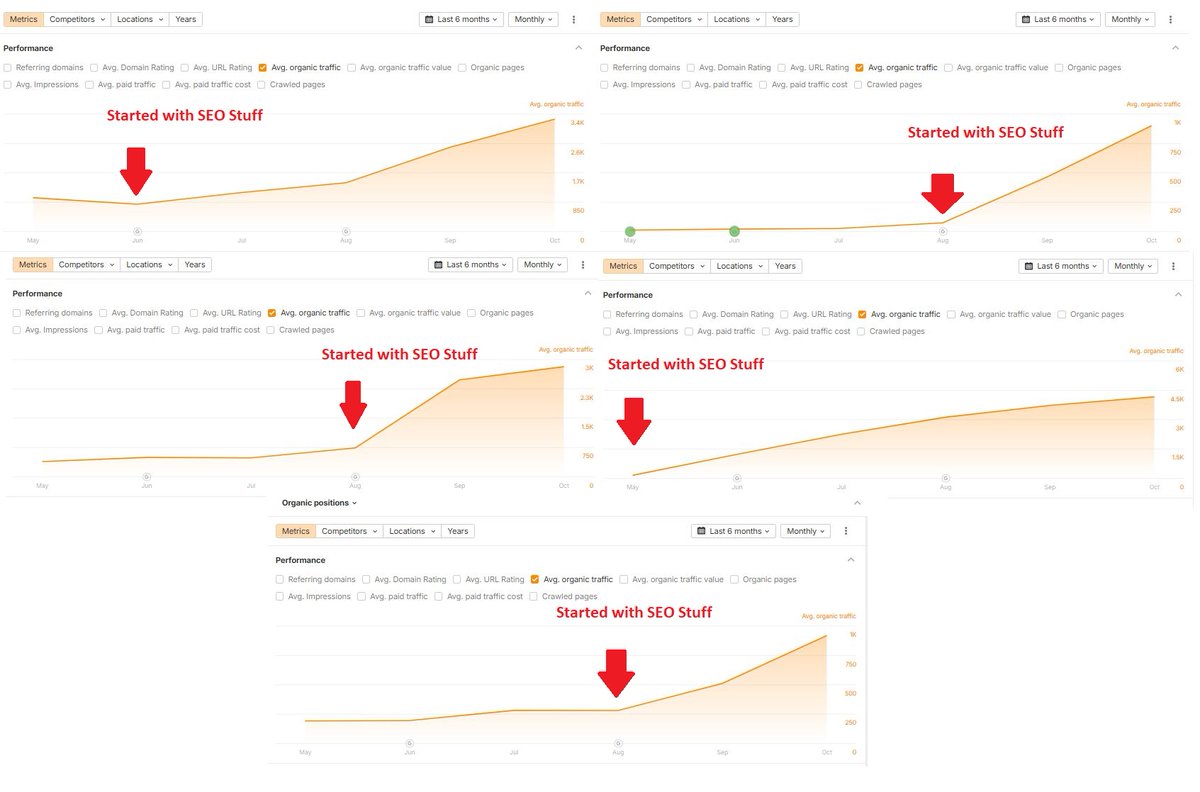
I was hesitant to highlight this because SEO Stuff (https://t.co/wKpf0EILTx) has quietly been using it for months to drive traffic + sales.
But in honor of Black Friday (Discount Code: BLACKFRIDAY2025), I've decided to break it down so you can apply the same system without hiring anyone.
Before I dive in, though...
If you want 3 cheat codes for getting mentioned in ChatGPT within approximately 30 days, just RT this + follow me + reply with "ChatGPT Cheat Codes" and I'll DM them to you.
You must do all 3 for the DM.
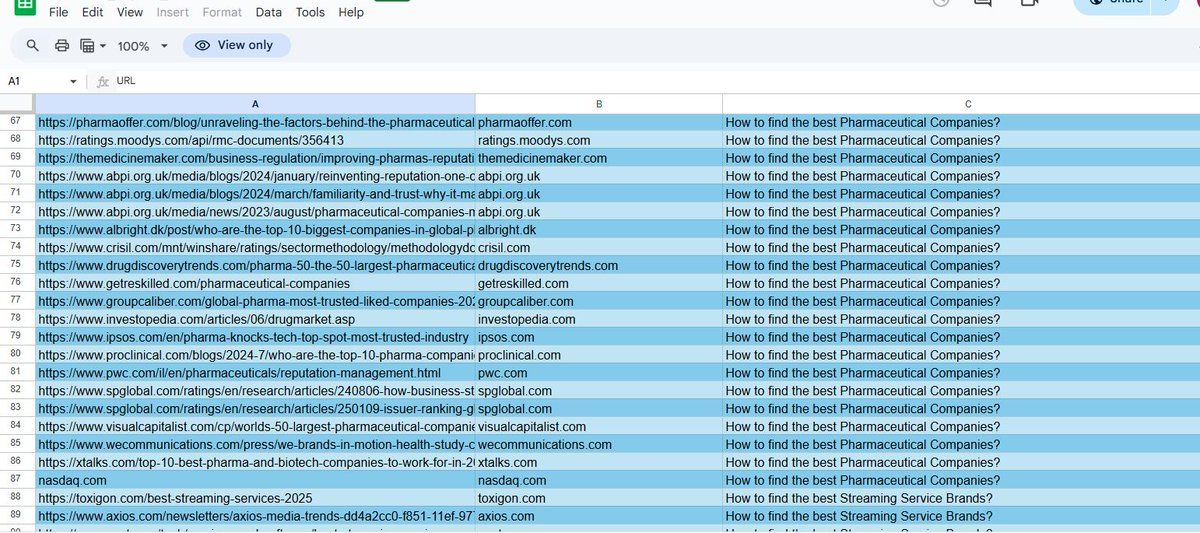
Alright, Rankscale did a deep dive data on how AI platforms decide which sites to cite.
(I'll include a link to the raw data below).
They analyzed where ChatGPT, Perplexity, Gemini, and Google AI Overviews are pulling their answers from and what’s working best for B2B brands.
Rankscale looked at thousands of commercial queries like:
“Top CRM software”
“Top SEO software vendors”
“Best online learning platforms”
And here’s where AI engines are pulling data from most often now:
Industry-specific blogs and publications (TechTarget, FiercePharma, QSR Magazine)
Official company blogs and vendor sites
Professional directories (like Clutch and G2)
Analyst reports (Gartner, Statista, etc.)
LinkedIn posts and expert commentary
Mainstream business news
Among the most interesting takeaways?
Vendor blogs, which are yes, the company’s own blogs, are now often being cited as sources in AI search results.
Perplexity, Gemini, and Google AI Overviews each specifically cited “product blogs” a lot of the time in B2B-related answers.
ChatGPT cited them less, but still cited them, and the trend is clear:
AI engines are rewarding brands that publish comparison content on their own blogs.
Some examples:
Thinkific cited in “best online learning platforms.”
LearnWorlds in “top course creation tools.”
Monday and Pipedrive cited in “best project management software.”
HP cited in “top laptop brands.”
All of these examples came from their own blog content, optimized listicles comparing products in their category.
These vendor blogs are filling a content gap.
Most industries lack neutral, third-party content comparing vendors in detail.
So when a brand publishes something like:
“The 7 Best CRM Tools for 2025 (We Ranked Them by Integration, Support, and Pricing)”
AI engines pull it.
They don’t always know (or care) that it’s coming from a competitor.
As long as it’s:
Thorough and well structured,
Objectively written (not purely self-promotional), and
Built with clear headers, schema, and facts,
…it gets indexed and cited in AI answers.
Rankscale also found that brands with more citation references, meaning more times their content is mentioned inside AI answers, had significantly higher visibility scores (a measure of both detection and ranking order).
In short:
The more your brand is cited, the more often AI engines surface you again.
Visibility compounds over and over.
That’s why SEO Stuff’s (https://t.co/wKpf0EILTx) entire system is built to create this exact flywheel: structured, authoritative content + backlinks that fuels repeated AI citations.
How SEO Stuff fits into this system:
Gold Plan (the most popular plan)
10 long-form, snippet-optimized articles + 3 DR50+ backlinks that push your brand into the same “first-result” positions AI agents choose most often.
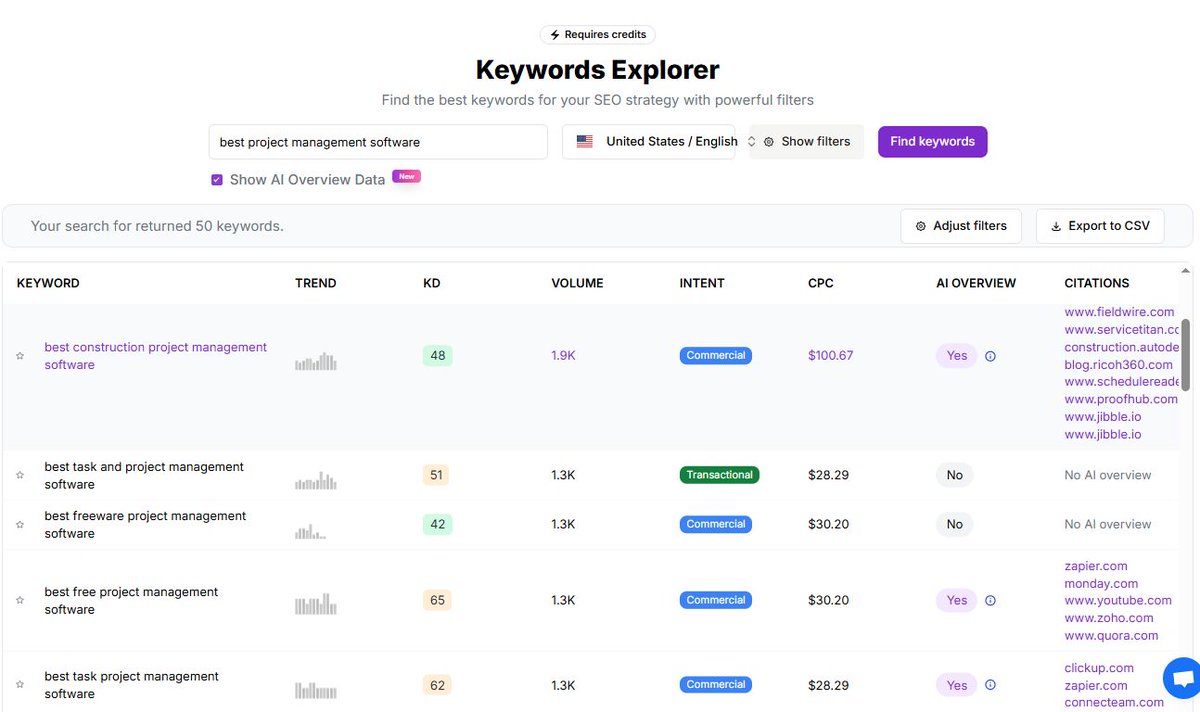
Each article is designed to rank in both Google and AI engines for your category’s most commercial “best” and “top” queries.
https://t.co/yEFyM0Ze7W
Premium Content Bundle
60 high-authority pages built as objective-style “best of,” “top,” and “comparison” content, the same formats Rankscale found being cited by Perplexity, Gemini, and Google AI Overviews.
Each piece is structured with clean HTML, FAQ schema, and AI-friendly formatting that makes it readable in ChatGPT’s agent mode.
https://t.co/4CAnUt07PO
Together, these two plans position your brand to:
Be cited as an authority in your niche, even by competitors’ AI answers.
Accumulate AI visibility signals that compound over time.
Grow within both traditional search and AI-assisted search layers.
The AI visibility race is about who trains the AI, and right now, vendor blogs and structured comparison content are doing exactly that.
If your brand isn’t creating content that LLMs can extract, summarize, and cite, you genuinely do not matter in the next wave of search.
SEO Stuff (https://t.co/wKpf0EILTx) was built to fix that.
That’s why 80 percent plus of customers who buy the Gold Plan return for multiple orders.
It’s working.
And if you want 3 cheat codes for getting mentioned in ChatGPT within approximately 30 days, just RT this + follow me + reply with "ChatGPT Cheat Codes" and I'll DM them to you.
You must do all 3 for the DM.
@secnumbersguy Breaking news: there’s a playoff now. Who gives a shit about ranking. Last years winner was 8 and coming off a bad loss. Play it out and shutthefuckup