"And then along came blockchains."
Turing Award winner Barbara Liskov on how PBFT — practical Byzantine fault tolerance, now foundational to modern consensus — started as a PhD student answering a DARPA RFP:
"I had a student, Miguel Castro, who was looking for a PhD thesis, and I suggested to Miguel that he look at the RFPs that DARPA had put out … He found an RFP that was looking for ways to handle the malicious attacks that were going on on the internet."
"When Miguel and I finished the work on practical Byzantine fault tolerance, we thought that at some point people would start to use this. … It was a delay of about 10 years before people started to use it."
ETH the asset is the most important product of Ethereum
CROPS (censorship/capture resistant, open, private, and secure) is how we strengthen and protect it
A Clerk notebook (like Jupyter except it's Clojure) showing a generalised data-driven yield vault in a shortfall scenario
This is a computational notebook, in this case with a deterministic Ethereum protocol simulator running inside it.
The walkthrough shows a vault that works like Aave v3 except in the event of a shortfall (such as what happened recently) it reduces the amount everyone can withdraw. A fairer approach than allowing full withdrawals until the money runs out, and the slowest losing out. It also means there's no need to pause withdrawals in a shortfall scenario. Once there is a full or partial liquidity recovery, all users get to withdraw more from their shortfall-affected position.
Great to see this direction from Aave + LlamaRisk.
One complementary area that feels increasingly important is mechanism-level stress response: not just identifying risk surfaces, but replaying how protocol rules behave under shortfall, dependency, finality, and adversarial conditions.
Strong fit with more data-driven risk frameworks.
Tom Lee: Ethereum DATs can use ~$500 million in annual staking rewards to fund grants for Ethereum ecosystem
“The Ethereum Treasuries — Bitmine and Sharplink among others — now own 7% of the Ethereum supply… Treasury stock is essentially supply permanently taken out from the ecosystem, but we also own the yield. The yield is around 3% so today these public treasuries are generating ~$500 million in rewards, and that is what we can use to fund and grant the crypto ecosystem.”
Lee believes that the Ethereum Foundation narrowing its focus to CROPs (censorship resistance, openness, privacy and security) is the right decision.
“Ethereum is a $240 billion network value entity. It has been operating for 11 years without a single day of downtime. There’s 11,500 nodes in 89 different countries. And there’s 15,000 developers. I think this is too big to be coordinated by a single foundation.”
As Ethereum continues to scale, he believes the ecosystem will move beyond a foundation-centric model and points to private companies like Etherealize, Optimism, Consensys, Enterprise Ethereum Alliance, and Offchain Labs that represent the Ethereum ecosystem and are already doing enterprise engagement.
“This list doesn’t yet reflect the spinoffs coming from the Ethereum Foundation. There’s at least five, and I think Bitmine will play a role in granting and supporting any of those that come out.”
“I think Ethereum is in good hands because the foundation is going to be stronger by staying focused. We have a lot of private sector companies already building products and important L2s on Ethereum. And of course, the treasuries are here to help with funding and granting… If you’re bearish, you are selling at the bottom.”
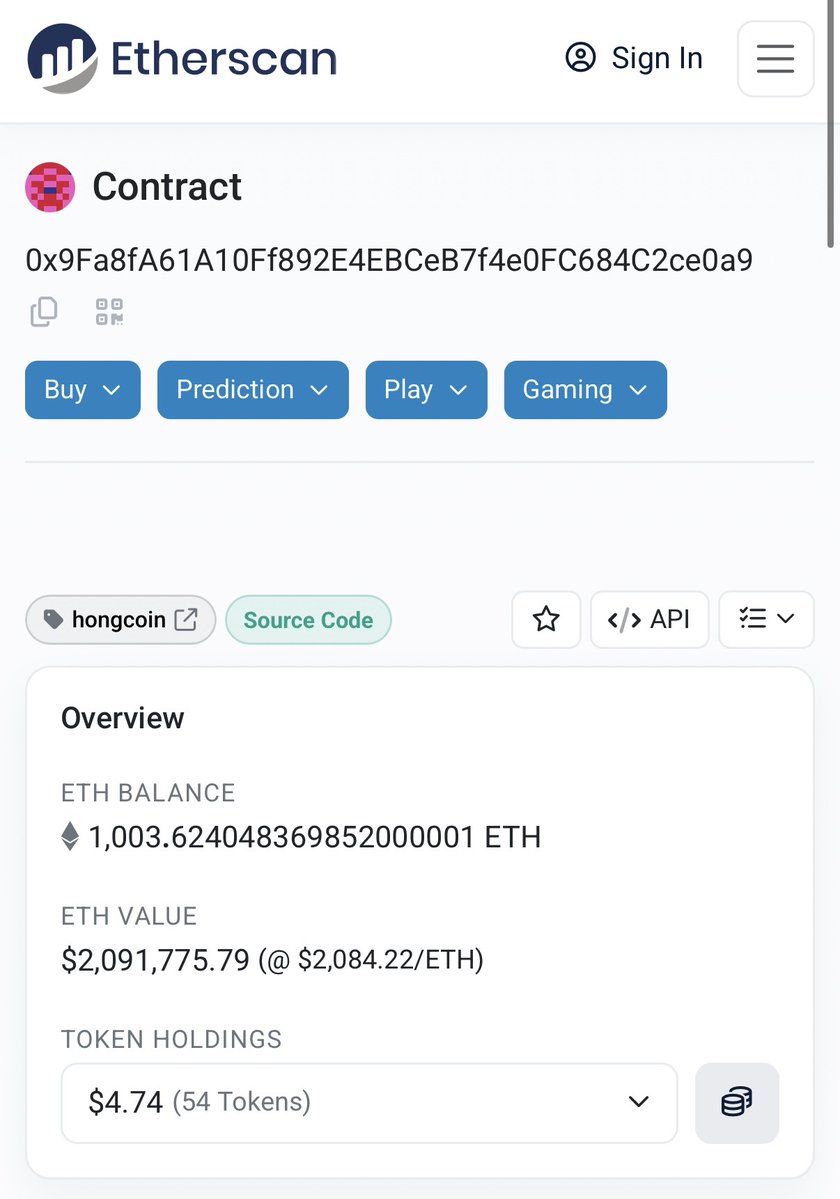
First white-hat exploit on Ethereum: I unlocked 1,003.62
Ξ ($2,000,000) trapped in a 2016 ICO smart contract
for 9 years.
The 48 original investors can now claim their funds.
Huge respect for the @EthPrague team.
Organizing events with this market is not easy. Especially when the organizers are independent builders, artists, curators, entrepreneurs and communities trying to create meaningful spaces without massive institutional backing.
1/6
key takeaways of Vitalik's fireside chat during @EthPrague today
booking a flight on @arbitrum a hotel on @base and taking a flash loan on a third chain. all in a single atomic transaction
that's the future @VitalikButerin and @jbaylina just sketched and it reframed how i think about Ethereum's fragmentation problem
the pitch behind EEZ (the @etheconomiczone):
today's rollups are sovereign chains that mostly ignore each other connected only by slow centralized bridges
EEZ wants synchronous & atomic interactions across them. either every cross-chain call in a transaction succeeds or the whole thing reverts
like calling two contracts on Ethereum L1 except they live on different rollups
what makes it possible now:
ZK proving has matured to the point where blocks can be proven in real time
each rollup picks the proof system it trusts. chains don't need to understand each other's stack. they just need to agree on a shared record of cross-chain calls (an inbox/outbox model)
Base can trust one prover, Arbitrum another and they still compose. even non-EVM chains (Bitcoin included) could plug in if they define a state transition function
the bigger picture: Ethereum's L2 thesis isn't broken, it just needs better connective tissue
EEZ might be that tissue. if it ships, "which chain am i on?" disappears as a question, and onchain finally starts to feel like one coherent place again
Ethereum is still being valued too much like a company, and not enough like global public infrastructure.
The real thesis is not only fees or short-term price action. It is dependency, settlement flow, and trust minimization at internet scale.
Based on @wmougayar public-good valuation framework, $8,000 ETH in 2026 looks less like a crazy target and more like a conservative repricing.