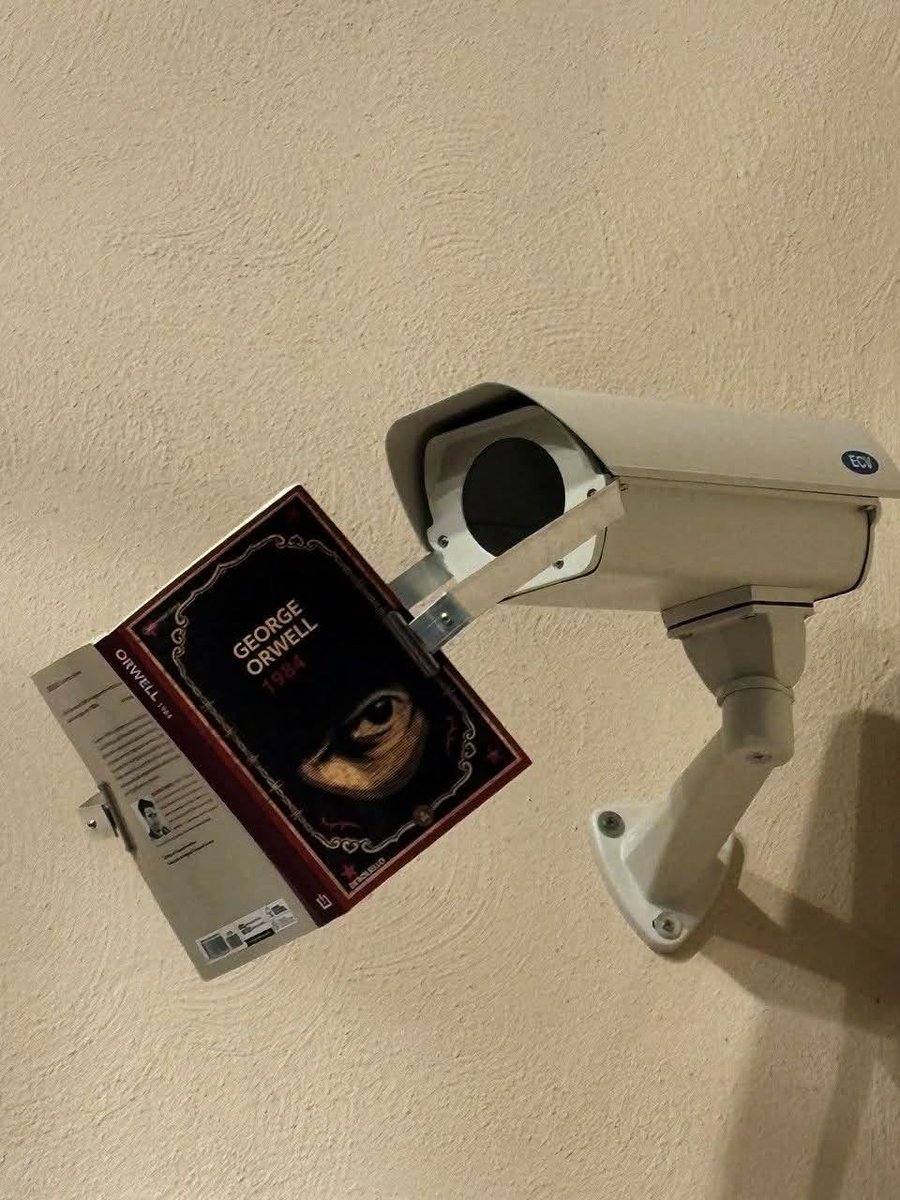
La mitad de los libros que te "obligaron" a leer en la secundaria son en realidad espectaculares, solo que aún no tenías la madurez emocional para entenderlos.
🚨CHINA ACABA DE PRESENTAR UNA PIZARRA CON IA QUE CONVIERTE DIBUJOS EN MODELOS 3D EN TIEMPO REAL
Ya está funcionando en 60.000 escuelas con 160 millones de estudiantes.
Dibujas un cubo en la pizarra.
La IA lo convierte en un modelo 3D que gira, marca los ángulos y las áreas sola, y te explica cada paso en vivo.
Lo mostraron en plena conferencia mundial de IA en Shanghai.
Esto no es un prototipo. Ya está en las aulas.
It is becoming f*cking dangerous: AI agents from Claude Code transformed an ordinary academic reading list into an interactive research lab right inside the browser
Boris Cherny, who created Claude Code, gave a dozen agents a stack of 64 research papers with a strict assignment: design a web platform where any user can independently reproduce physical experiments
There you can select a fluid flow model, adjust external conditions, and analyze in real time how the physics of the process changes
The interface allows switching between algorithms right during the scene, inspecting the formulas involved, source scripts, and numerical metrics alongside the graphics
Each link in the team received a clear scope of work:
> rightarrow analysts pull the math, baseline assumptions, and test settings from the texts
> rightarrow coders translate formulas into working algorithms
> rightarrow auditors check the resulting dynamics against the original papers
> rightarrow interface specialists build control panels for every experiment
The danger lies in the fact that a pretty visualization can easily turn out to be mathematically wrong
Therefore, controllers strictly check adherence to mass conservation laws, calculation stability, and accurate matching with the source metrics before launching into production
For every experiment, the interface displays:
the statement being tested
the constants involved
the deviation from the baseline calculation
blind spots requiring additional verification
The resulting sandbox combined 11 approaches and 28 reference scenes. Seven of them matched the original within allowable tolerances, while four remained stuck in "pending revision" status
If you want to run something similar, upload your stack of PDFs into Claude Code and give this command:
Turn these papers into an interactive web complex:
1. Extract working algorithms, mathematical models, and test parameters. Be sure to specify page numbers and highlight gaps
2. Assign different methodologies to isolated agents, unifying them with a shared input field and single measurement tools for correct analytics
3. Set up an independent review stage: let reviewers record bugs, and leave all unverified results clearly marked with warning tags
4. Design convenient controls to tweak parameters, compare methodologies, and run through the source code
It is wiser to start with a single document and a single baseline experiment, gradually scaling up the number of agents
Be sure to pack dependencies and clean input data so that an outside researcher can bring up the entire testbed from scratch with a single button
Full instructions on how to create this can be found in the article below