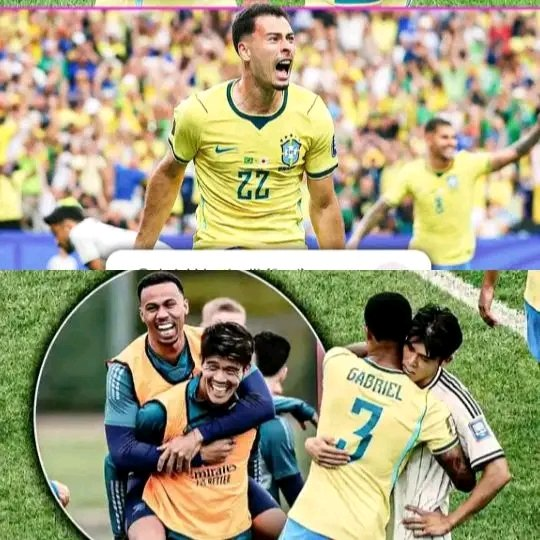
🥹🇯🇵🇧🇷 After the final whistle, Alisson Becker made a point of seeking out Zion Suzuki to congratulate him on an outstanding performance and console him after Japan's heartbreaking elimination. ❤️
Suzuki was one of the goalkeepers of the tournament, producing eight saves against Brazil and finishing the World Cup with a string of superb displays. 👏
After facing heavy criticism and even racist abuse following the Asian Cup, the 22-year-old answered every doubter in the best way possible: on the pitch. 🌟
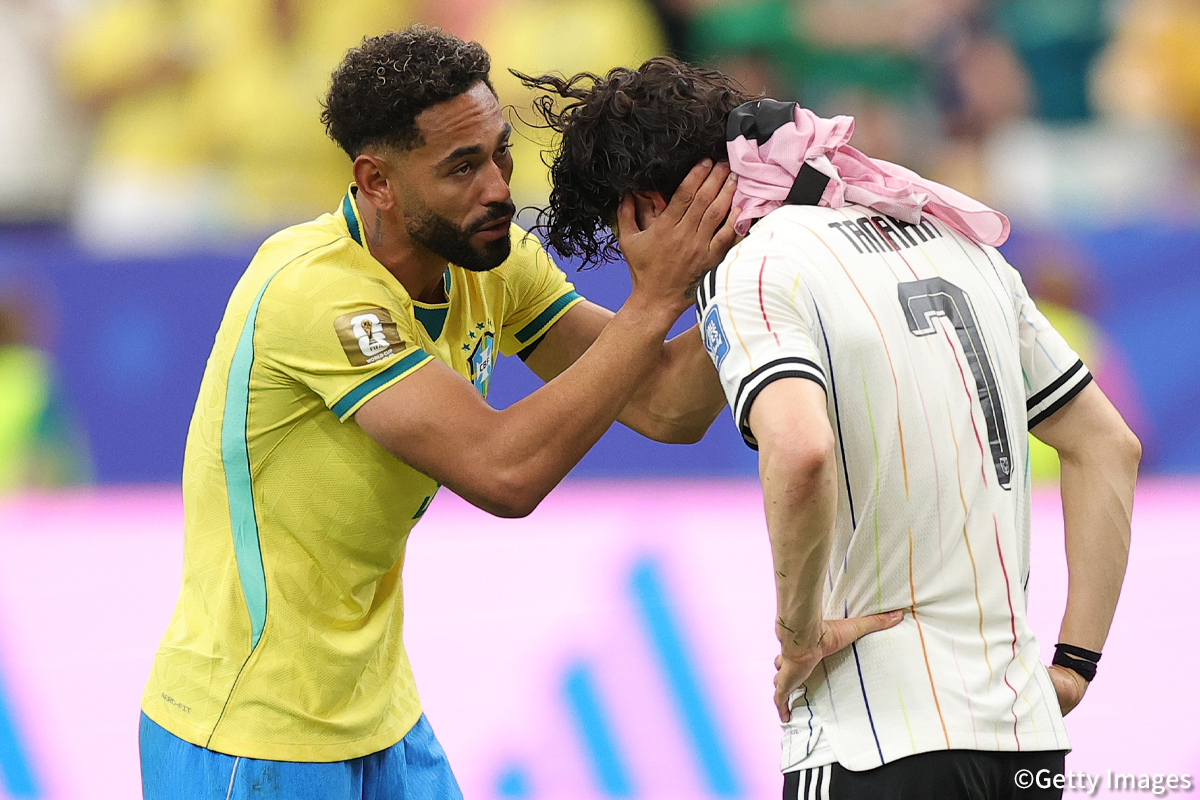
What Matheus Cunha said to Ao Tanaka after the match 🇯🇵🇧🇷
"I’ve played against Ao many times. He is a truly fantastic player. I told him that what he is doing for his country is amazing.
To me, the current Japan squad is one of the best teams in the world. What you guys are doing for the national team is truly beautiful. It’s not just about Japan’s football culture; teams all over the world now hold Japan in high regard.
I know this is a painful moment for him, but I wanted him to remember what a significant figure he is in the football world and just how much he has contributed to the Japanese team."
Thank you so much, Cunha!
And Ao Tanaka—keep looking forward and continue to grow into an even greater player. 🇧🇷🇯🇵
Everyone has been so impressed by Japanese fans cleaning up after themselves but most probably missed this beautiful moment at the post-game (🇳🇱2 - 2🇯🇵) press conference.
Toward the end after reporters were done asking questions, 🇯🇵head coach, Hajime Moriyasu, asked to speak one more time.
🗣️ “May I speak?”
He turned to the Dutch reporters in the room.
🗣️ “I think there are many Dutch reporters here as well, so I’d like to take this opportunity to express my gratitude to the people of the Netherlands once again.”
Moriyasu explained that when he became part of the Japan national team, Japanese football still had no professional league.
🗣️ “I was trained by a Dutch coach named Hans Ooft. It wasn’t just me. Japanese coaches in general were greatly influenced by him, which has led to the development of Japanese soccer today.”
He also mentioned another Dutch figure who shaped his career.
🗣️ “The legendary Dutch coach Wim Jansen served as the manager for J.League’s Sanfrecce Hiroshima and also as a coach for Urawa Reds, contributing to Japanese soccer.”
🗣️ “It’s not just those two. Many other coaches and players have contributed to raising the level of Japanese soccer, so I want to express my thanks. Thank you very much.”
What a masterclass in graciousness and gratitude. Imagine after a high-stakes match, instead of basking in glory and bravado (well-deserved in my opinion), the coach took to the microphone to... thank his opponents publicly and sincerely.
Japan's cultural operating system prizes harmony (wa), respect for precedent, and gratitude as a form of strength, not weakness. Japanese sports culture reflects its broader society where you'll see athletes bow to their opponents, thanking referees, and even crediting rivals or mentors.
Think of sumo wrestlers, Olympic athletes, or even bullet-train staff apologizing for a 30-second delay.
The Japanese have this concept of On (恩) - it is the sense of indebtedness to those who came before or helped you. It's what you'd expect from a culture that truly prizes continuity.
Moriyasu was acknowledging a real debt to Dutch coaches like Hans Ooft (who coached Japan in the early 90s and helped professionalize the game) and Wim Jansen. Japanese football openly credits foreign influences - Dutch "Total Football" philosophy, German organization, Brazilian flair - while building something distinctly their own. Few nations do this with such little ego.
Japan is pure class