📡ATTENTION!📡
Registration is now open for the October 17th "ALMA Open House, San Pedro de Atacama."
➡️Register here: https://t.co/RobyHrDtRR
✅Free admission.
.@SecRubio: Há três anos, neste dia, terroristas do Hamas torturaram, mutilaram e assassinaram 1.200 civis inocentes em Israel.
Entre as vítimas estavam homens, mulheres e crianças — incluindo dezenas de americanos.
Jamais esqueceremos esse ato de barbárie contra um país aliado e reafirmamos nosso compromisso com a defesa da civilização.
Há exatamente 3 anos, em 7 de outubro de 2023, as ruas de Gaza estavam em festa. Milhares de pessoas nas ruas, entoando o tradicional grito "Allahu Akbar", tão associado a ataques terroristas, glorificaram um dos maiores e mais terríveis ataques contra civis das últimas décadas. Naquele dia, mais de 1200 pessoas foram executadas em Israel, com outras 250 sequestradas.
Aquele ataque do grupo terrorista palestino Hamas iniciou a guerra em Gaza, que apesar de "pausada" neste momento, segue ativa em diversas ramificações por todo o Oriente Médio.
Eu sei que meus posts de hoje não são fáceis de assistir..
Mas quem puder deixar seu carinho e ajudar a engajar para que eles cheguem ao número máximo de pessoas
Eu agradeço imensamente
NUNCA ESQUECEREMOS!!
7/10/23
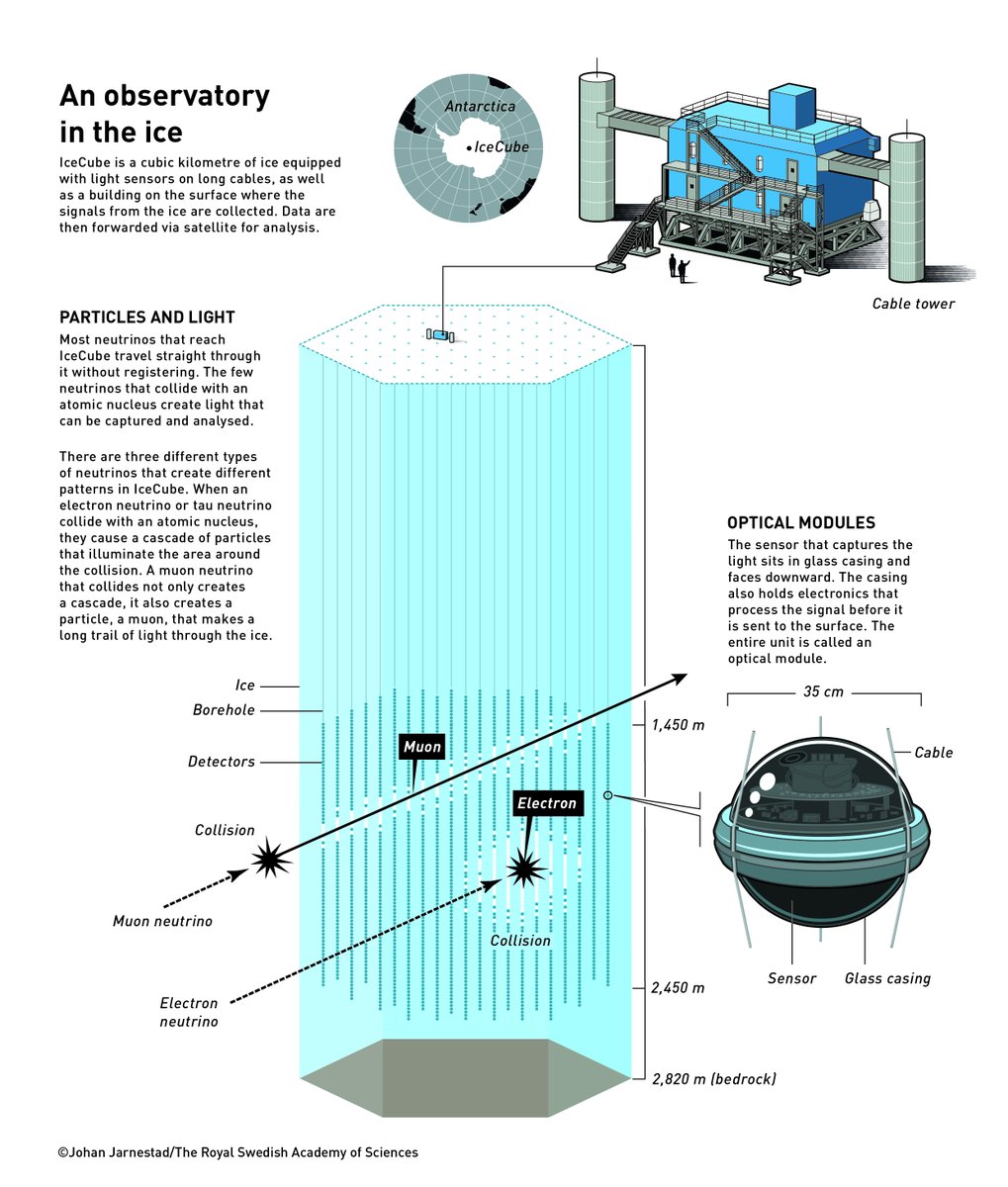
Cosmic neutrinos with extremely high energies are very rare, so an enormous volume of ice is needed to observe an adequate number of collisions. The IceCube Neutrino Observatory covers an entire cubic kilometre and was finished in 2011. Researchers soon discovered the first high-energy neutrinos and, a few years later, could publish their discovery of neutrinos that must originate far outside our solar system. The search for the universe’s neutrino sources could begin in earnest.
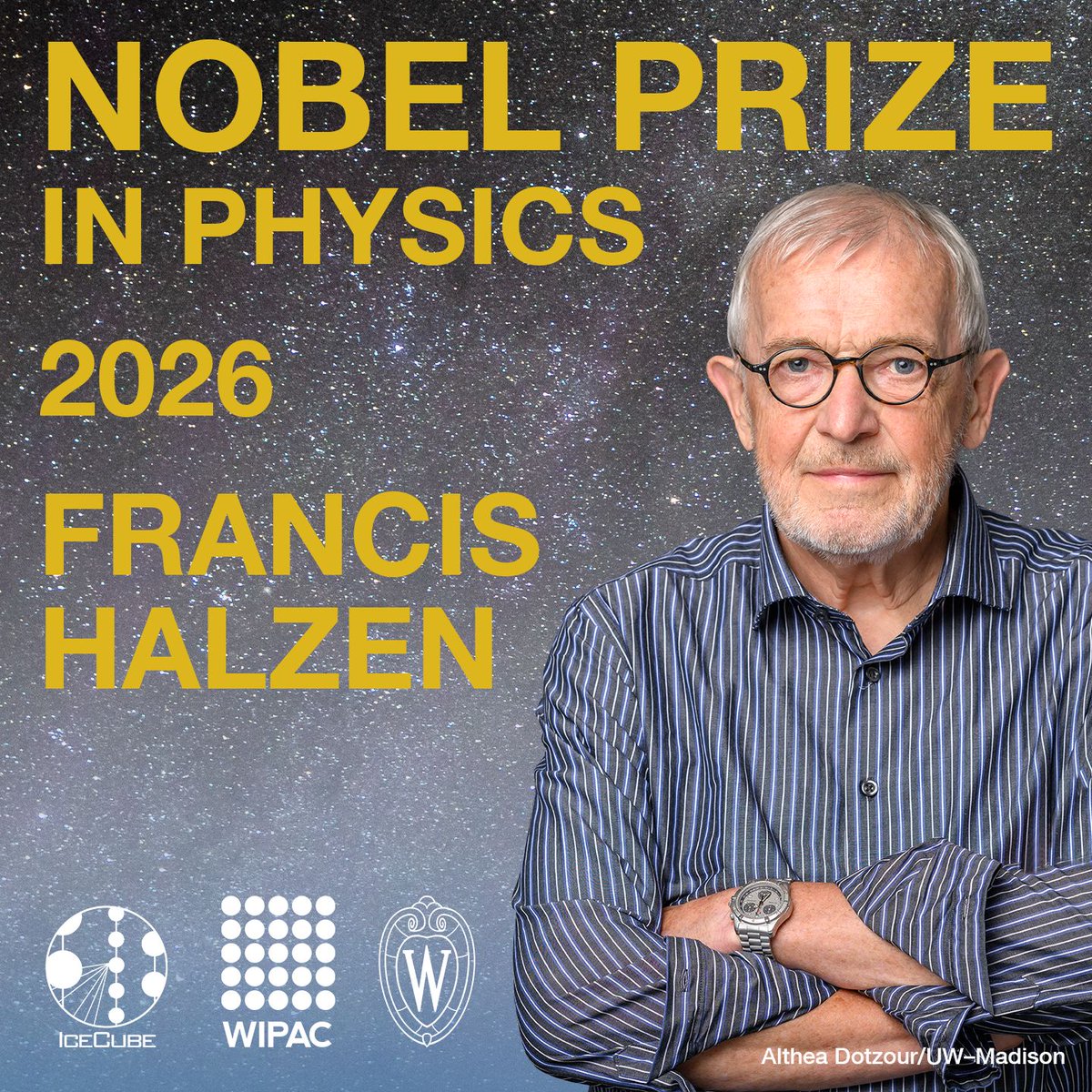
Francis Halzen has received the 2026 #NobelPrize in Physics for his decisive contributions to the IceCube Neutrino Observatory and the discovery of high-energy neutrinos of astrophysical origin.
IceCube Principal Investigator and @UWMadison Prof. Francis Halzen has been awarded the 2026 Nobel Prize in Physics "for decisive contributions to the IceCube Neutrino Observatory and the discovery of high-energy neutrinos of astrophysical origin.” 🎉🏅
#NobelPrizeInPhysics2026
@desireerugani Assisti hoje os episódios 7 e 8; foi muito triste…. A escória da humanidade… o que há de pior na espécie humana…
Que isso nunca mais se repita….
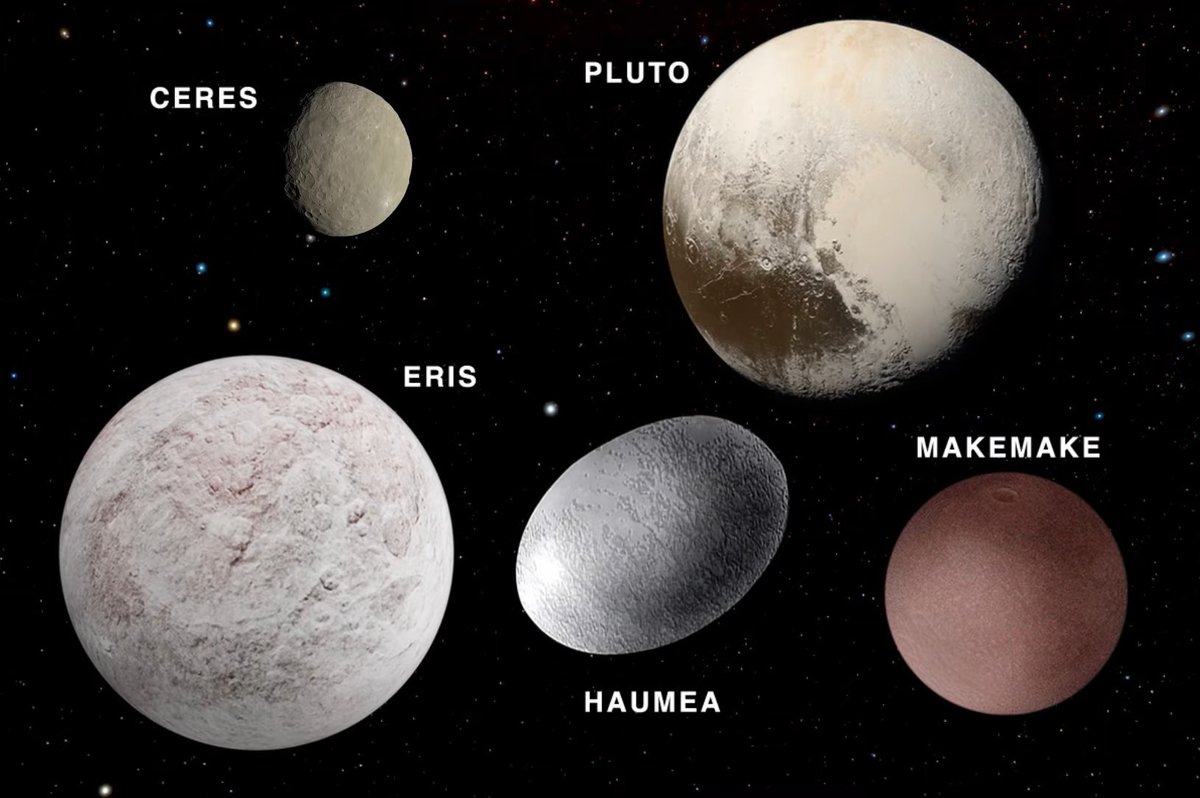
At a meeting of the International Astronomical Union 20 years ago today, astronomers vote on a definition of a "planet." The new criteria:
🌘 Must orbit its host star
🌓 Must be mostly round
🌒 Must be massive enough to clear away other objects of similar size in its orbit
Pluto fails on the third condition and becomes a dwarf planet.
How Can a 13.8-Billion-Year-Old Universe Be 93 Billion Light-Years Across?
The Universe is about 13.8 billion years old, yet the observable Universe is roughly 93 billion light-years across today. At first this seems impossible. If light has been travelling for only 13.8 billion years, how can we observe regions that are now more than 46 billion light-years away? The answer lies in one of the most important consequences of modern cosmology: light travels through space, but on the largest scales that space is itself expanding.
In a static Universe, the reasoning would be straightforward. Light travels one light-year in one year, so after 13.8 billion years the most distant observable region should be no farther than 13.8 billion light-years away. But our Universe is not static. General relativity describes a dynamic spacetime whose large-scale geometry evolves, and observations show that the average distance between gravitationally unbound regions has increased throughout cosmic history. The distance separating us from a source therefore does not remain constant while its light is on the way.
This distinction is why cosmologists use several different definitions of distance. A lookback time tells us how long light has been travelling, while a comoving distance describes the present separation between locations after accounting for cosmic expansion. Within the standard ΛCDM cosmological model, the present comoving radius of our particle horizon is approximately 46.5 billion light-years. Looking in every direction gives an observable diameter of roughly 93 billion light-years. The precise value depends slightly on the cosmological parameters used, so figures around 92–93 billion light-years are both commonly quoted.
The mathematics behind this result comes from the cosmic scale factor, usually written as a(t), which describes how characteristic distances in the Universe change with time. The comoving distance travelled by light depends not simply on the elapsed time multiplied by the speed of light, but on the entire expansion history of the Universe. Because the scale factor was much smaller in the early cosmos, a relatively small physical separation then can correspond to an enormous present-day separation. This is why the age of the Universe expressed in years cannot simply be converted into its present radius by replacing years with light-years.
The oldest electromagnetic radiation we can directly observe is the cosmic microwave background, or CMB. It was released about 380,000 years after the Big Bang, when the Universe cooled sufficiently for electrons and nuclei to combine into neutral atoms and space became transparent to radiation. Before this period, photons were continually scattered by the hot ionised plasma. The CMB therefore does not come from the exact beginning of the Universe; its surface of last scattering lies slightly inside the theoretical particle horizon, which represents the greatest distance from which any causal influence could have reached us since the beginning of cosmic expansion. ESA's Planck measurements place the age of the Universe at about 13.8 billion years and have provided some of the most precise constraints on this cosmological history.
None of this requires light to travel faster than light. Every photon measured locally always propagates through vacuum at c. What can exceed c is the rate at which the distance between two extremely distant, gravitationally unbound regions changes because of cosmic expansion. This does not violate special relativity because its familiar speed limit applies to objects or information moving locally through spacetime. Cosmological recession is a statement about the evolution of distances across curved and expanding spacetime, which is governed by general relativity.
This also explains why the Hubble sphere is not the edge of the observable Universe. There are regions whose recession rate can exceed the speed of light and whose ancient radiation can nevertheless reach us. Whether a photon eventually arrives depends on the complete history of cosmic expansion, not simply on the recession speed of its source at one particular moment.
Most importantly, the 93-billion-light-year figure is not the size of the entire Universe. It describes only our observable region: the volume from which causal signals have had enough time to reach us given the expansion history of the cosmos. There is no physical wall 46.5 billion light-years away, and Earth does not occupy a special central position. Any observer elsewhere in the Universe would have their own observable Universe centred on them.
What lies beyond our particle horizon remains inaccessible to direct observation. The full Universe could be vastly larger than the observable portion, or its spatial extent could be infinite. Current measurements cannot determine its total size. The apparent paradox therefore disappears once time, light-travel distance and present cosmological distance are treated as different quantities: the Universe is about 13.8 billion years old, while expansion has carried the regions defining our present observable horizon to distances of roughly 46.5 billion light-years in every direction.
🚨 ÚLTIMAS NOTÍCIAS! O engenheiro que criou o Claude Code do zero acabou de publicar um vídeo de 28 minutos que é ouro puro :
como escrever prompts que realmente entregam resultados absurdamente bons.
Já vi cursos de US$ 300 que nem chegam perto do que ele explica nos primeiros 10 minutos.
Arquivos CLAUDE. md, atalhos de memória, sessões paralelas e padrões de prompting que quase ninguém usa…
Tudo em um único vídeo. Totalmente gratuito. Sem enrolação.
Não importa se você é desenvolvedor, está começando agora ou já usa o Claude há meses : isso muda o jogo para você a partir de hoje.
Salve. Assista. Compartilhe.
🚨Urgent appeal for Lito Sousa @avioesemusicas, fighting Creutzfeldt-Jakob disease.
Please share this reel far and wide. https://t.co/9otgGSQRhQ
Make sure to tag these institutions who could include him in life-saving trials:
📌@ionis_pharma — Ionis Pharmaceuticals — ION717 trial
📌@broadinstitute — PRiSM trial (NCT07444580)
📌@harvard
📌@mayoclinic
🚨 MÃE E FILHA ISRAELENSES DESAPARECEM NA EUROPA
A preocupação aumenta com o desaparecimento de Mali Yahalomi, de 50 anos, e de sua filha Liel, de 23.
As duas não fazem contato com a família desde a última sexta-feira, quando estavam em Viena. O alerta se agravou depois que elas não apareceram para embarcar no voo programado de Praga para Israel.
A polícia austríaca, autoridades israelenses, a comunidade judaica local e equipes especializadas participam das buscas. Até o momento, não há informações conclusivas sobre o que aconteceu.
Quem tiver qualquer informação deve entrar em contato com a polícia local ou com a Embaixada de Israel na Áustria pelo telefone +43 676 367 2304.
Compartilhe. Cada hora é importante.
🇪🇸 WOW! This is what the total solar eclipse looked like over Tarragona, Spain.
Light flipped to darkness in seconds as the Moon swallowed the Sun whole.
For about a minute, everything went black.
Writer: Julie
Confira 5 motivos para se inscrever no Access to American Innovation. O programa oferece 100 horas de formação gratuita em inglês profissional, com trilhas em tecnologia ou empreendedorismo, além de mentoria com profissionais do mercado. Inscrições até 20/07. https://t.co/NxUcnuI7pC