RIP NIH—not only did the director of the NIH resign today, but the website https://t.co/PaGye1TXDA is down. PubMed, one of the world’s most valuable repositories of medical knowledge, is also down.
Congrats to Min, Yanzhu and Xubin. We invented two cool methods for profiling nearly genome-coverage single-cell histone marks in embryo dev. Single cells with 6 histone marks allow for epigenomic lineage tracing and pinning point cell2cell diff...https://t.co/euQ2Sc99ly
MYC in cancer: from undruggable target to clinical trials https://t.co/Il5NgfWKwy
This new Review summarizes strategies to inhibit MYC - one of the most infamous oncogenes - focusing on recently described inhibitors and those that have reached clinical trials
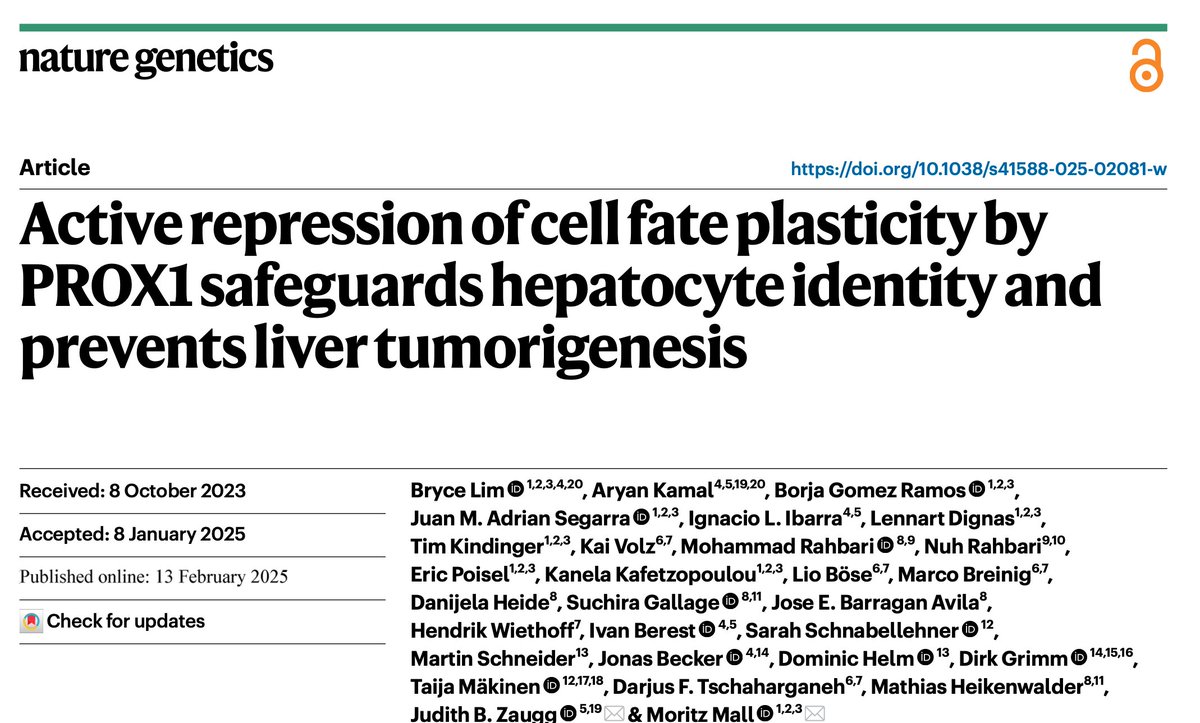
#CellPlasticity—the ability of cells to change their identity—is vital for tissue growth and repair. But when it goes unchecked, it can fuel #cancer. Our latest study examines how to block #LiverCancer by actively suppressing plasticity. https://t.co/ddl4mJGvhA #CancerBiology
Massively parallel characterization of transcriptional regulatory elements | @Nature
- Develope an optimized lentiMPRA (lentiviral massively parallel reporter assay) method to test regulatory activity of >680,000 sequences across three cell types (HepG2, K562, WTC11)
- Train sequence based models to predict the activity of regulatory elements (MPRALegNet, MPRAnn, EnformerMPRA, and SeiMPRA)
- Use MPRALegNet predicts TFBS combinations, fine-mapping and variant effects
Link: https://t.co/YrxJTHOSGa
Injecting old mice with an RNA molecule seems to reverse some signs of ageing — helping them to live longer, regrow hair and maintain their physical and mental abilities
https://t.co/ZWwctQvTDw
💫NEW: Zhang & co identify the transcription factor GABPA as a regulator of #ZygoticGenomeActivation, #epiblast formation and naive #pluripotency establishment.
https://t.co/zTtsPI7c9A
An artificial-intelligence model trained on data about where DNA is tightly packaged and where it is open to regulators can predict gene expression and interactions between transcription factors that regulate key genes https://t.co/MxolcC7qCp
Our opinion piece is out today, "The origin of novel traits in cancer"! Do the phenotypes come first and only later are they locked in by genetic or epigenetic changes? Insights from evolutionary biology are super useful for understanding cancer! https://t.co/yWLvUE0l22 #S_Frank