@AMartinelliWA I have a dear friend who just had a knee replacement and was in terrible pain for weeks. Opioids didn't help much. I urged her to consult with her doctor about using CBD, but do to stigma, she wouldn't do it. Sad.
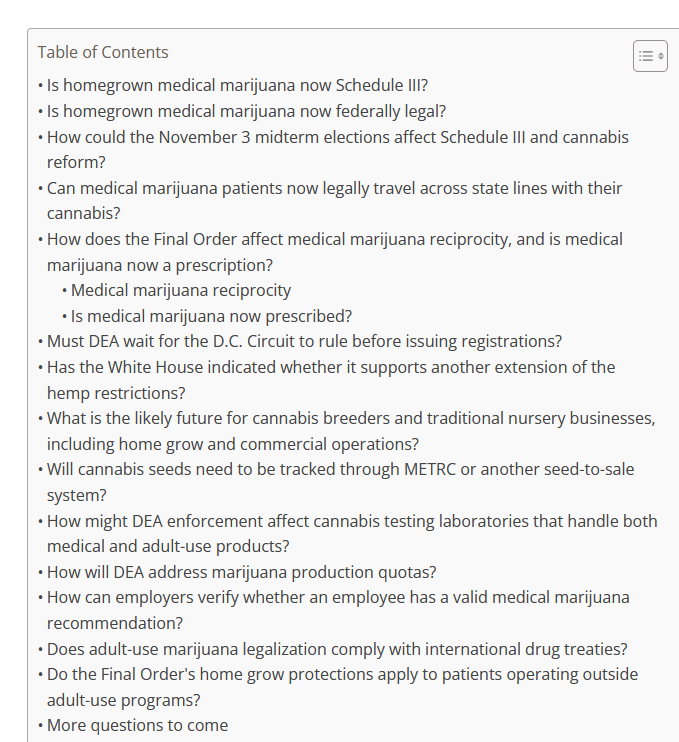
"DEA Enforcement, Marijuana Rescheduling, and Hemp Reform. Your Webinar Questions Answered: Part 1"
Wow! Tons of information here!
Here's the table of contents!
https://t.co/gU1I0BYk9l
@karatademada Reminds me of the old saying about luck - "The harder I work, the more I seem to have of it."
I got accepted to the new Creator program yesterday. It was one post that did it for me. That one post got 2 million impressions!
I have no idea why that particular post did so.
I have a dear friend who just had a knee replacement and was in terrible pain for weeks. Opioids didn't help much. I urged her to consult with her doctor about using CBD, but do to stigma, she wouldn't do it. Sad.
A randomized clinical trial published today found that patients given 400 mg of CBD following bilateral knee replacement surgery used fewer opioids and reported less pain than those receiving a placebo. https://t.co/58YFy7Da2P
My wish is to have AI design specific health regimes tailored to the individual.
We don't have a health care system, we have a sick care system. We need to transit to tailored systems to prevent diseases and illnesses, rather than the current system - proactive rather than reactive.
AI x bio has had an insane week.
> Radical Numerics: Omnii-1 designed phages given to a human patient
> Claude: 17 scorpion-toxin binders validated in the lab
> OpenAI: acquired Orchestra Bio
> OpenAI + PerturbAI: agents found new neurodegeneration leads in 32 minutes
> RFD4-Proteina: open programmable protein design model
> BioEmu2: new biomolecular simulation model
> Chaperone: agent framework connecting 50+ protein design tools
> Xaira: launched X-Scientist for agentic drug discovery
> Sophont: Holon-S1 predicts gene activity from pathology slides
> Boltz + BMS: bringing biomolecular models into pharma workflows
> Phylo + Bayer: deploying Biomni Lab across research teams
> Kevin Weil, ex-OpenAI, launches Warp Sciences: AI + robotic labs for drug discovery
> Carbon-X: open DNA model its team says matches GPT-6.1 Sol at ~1,000x lower cost
This is happening across the whole stack: models, protein design, simulation, agents, robotic labs, pathology, pharma workflows, and actual patient use. Bio is becoming computer.
0.08 µg/ml (the main optimized concentration used for the key experiments). https://t.co/tGIaadgx5Y
This is an in vitro cell-culture study on human mesenchymal stem cells (MSCs), not a clinical or in vivo human dosing study. CBD concentrations were tested in the culture medium as follows:
Viability/cytotoxicity range (MTT assay): 0.04, 0.08, 0.16, 0.31, 0.63, and 1.25 µg/ml.
Concentrations ≥0.16 µg/ml reduced viability; the IC50 was ~0.37 µg/ml. Lower doses (especially 0.04 and 0.08 µg/ml) increased viability.
Gene-expression work (RT-PCR for SIRT1, stemness markers, autophagy genes, etc.): 0.04 and 0.08 µg/ml.
Main functional experiments (immunofluorescence for p-SIRT1 and LC3, SA-β-gal senescence assay, doubling time, telomere length/telomerase, long-term culture from passages 3–9): primarily 0.08 µg/ml.
The authors selected 0.08 µg/ml as the optimal concentration because it most effectively upregulated SIRT1 and autophagy markers, preserved stemness markers (SOX2, OCT4, NANOG), reduced senescence-associated markers, and supported proliferation/telomere function without cytotoxicity.
The CBD stock was prepared at 1,000 µg/ml in ethanol and diluted into the medium. https://t.co/tGIaadgx5Y
In short, the dose/concentration used for the positive findings was 0.08 µg/ml (80 ng/ml).
CBD Keeps Stem Cells Youthful for Brain Repair!
CBD slows cellular aging in stem cells, which are vital for tissue repair and brain regeneration.
It boosts SIRT1 (a "youth protein"), enhances autophagy (cellular cleanup), preserves stem cell potency, reduces aging markers, and protects telomeres.
This anti-aging effect could support long-term brain health.
https://t.co/q8TgYN40au
The study was funded by the Rocky Mountain Cannabis Research Center (via NIDA grant P50DA056408–02) and an NIMH training grant (T32MH015442–46). https://t.co/tGIaadgx5Y
These details appear in the Funding Information section of the full text on PMC (PMC12889878). The authors (including Anika Guha and Kent E. Hutchison at the University of Colorado Anschutz Medical Campus) report no conflicts of interest. https://t.co/tGIaadgx5Y
The underlying data came from the UK Biobank (a large UK cohort resource with its own separate funders, such as Wellcome and the MRC), but the analysis and this specific paper were supported by the U.S. NIH grants noted above.
For you today!
Cannabis does NOT speed up cognitive decline or raise dementia risk in seniors!
Cannabis use in older adults is linked to brain networks that look younger!
Recreational Cannabis Users Report 96% LESS Brain Fog and Memory Issues.
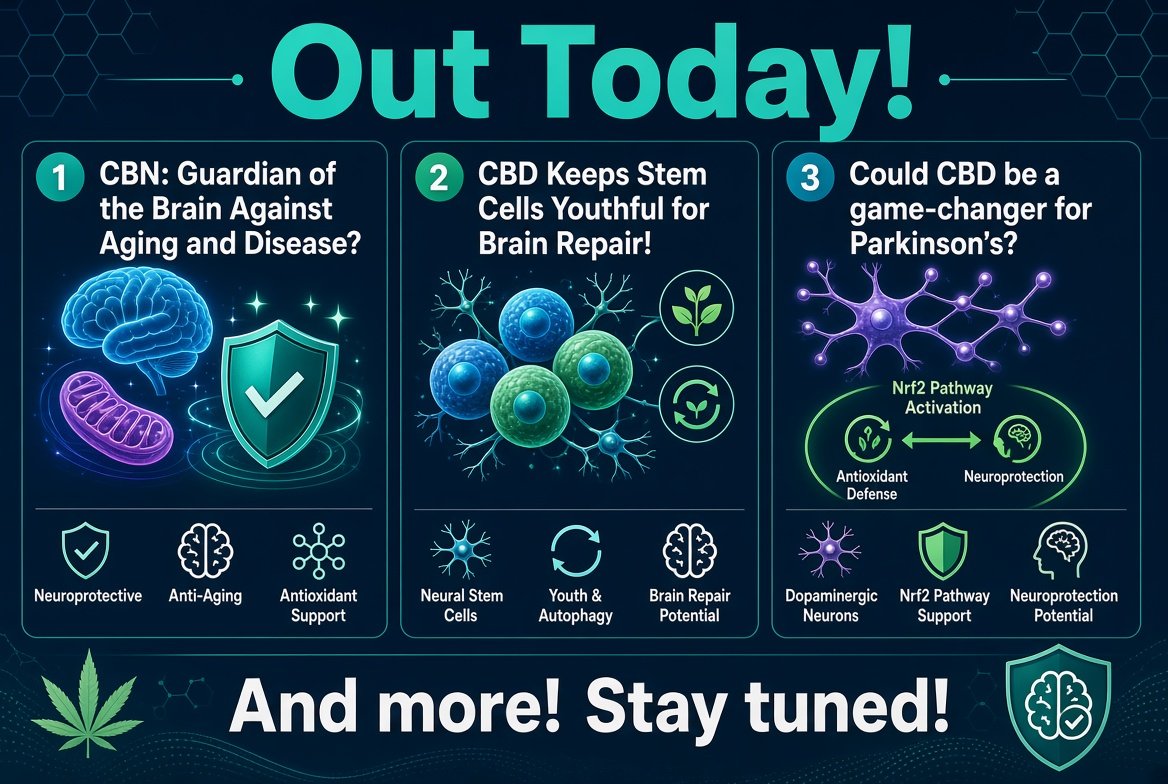
Out today!
CBN: Guardian of the Brain Against Aging and Disease?
CBD Keeps Stem Cells Youthful for Brain Repair!
Could CBD be a game-changer for Parkinson’s?
And more! Stay tuned!
A new case report authored by researchers from several universities and research institutions documents a brain cancer patient who regained the ability to walk and showed improvements on MRI scans while using cannabinoids and terpenes. https://t.co/SNlBOBhi1X
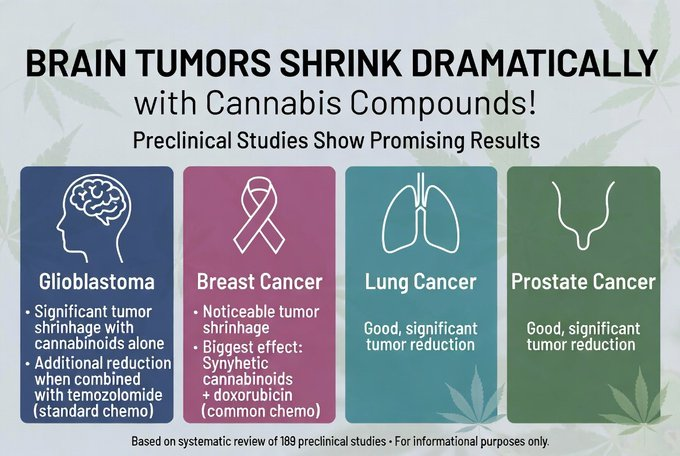
Brain tumors shrink dramatically when treated with cannabis compounds!
Glioblastoma (brain cancer): Cannabinoids alone worked very well – they significantly shrank tumors.
Adding them to the standard drug temozolomide also helped.
Breast cancer: Cannabinoids reduced tumor size noticeably.
Synthetic cannabinoids + doxorubicin (a common chemo drug): Showed the biggest tumor shrinkage in breast cancer models.
Lung cancer and prostate cancer: Also showed good, significant tumor reduction.
https://t.co/vtOREBwKGA
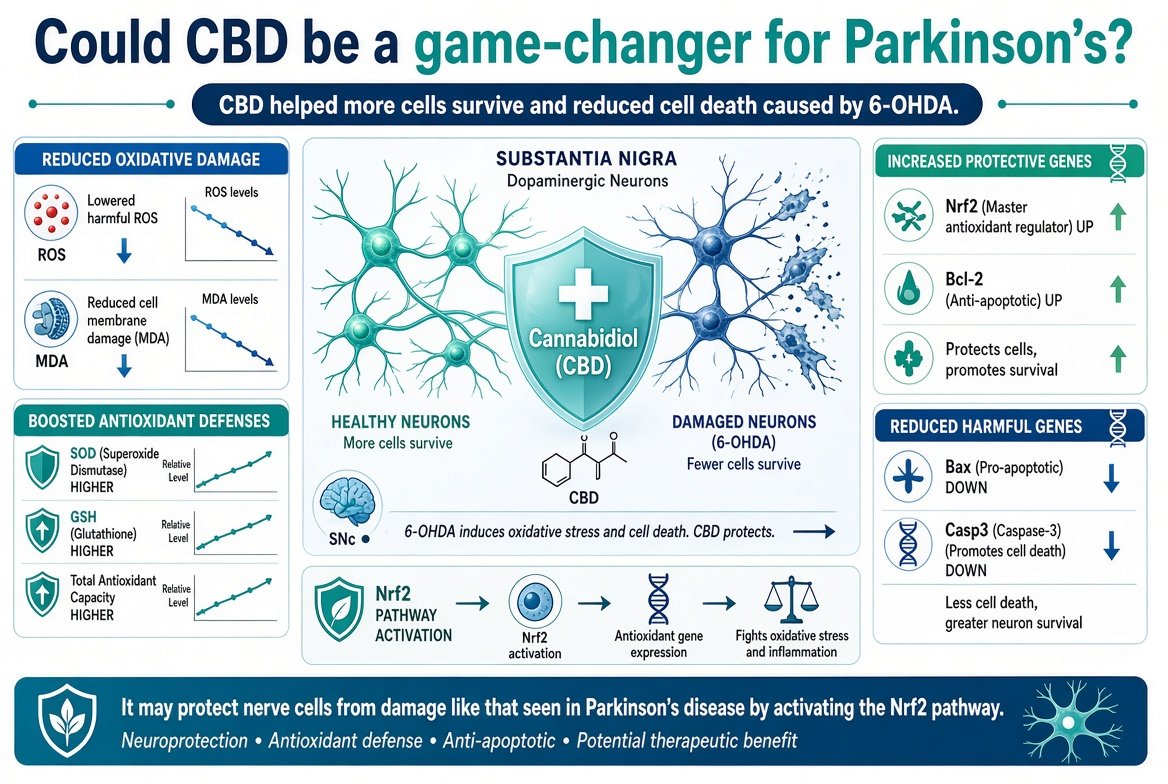
Could CBD be a game-changer for Parkinson’s?
CBD helped more cells survive and reduced cell death caused by 6-HODA.
It lowered harmful ROS and cell membrane damage (MDA).
It boosted the cells’ antioxidant defenses (higher SOD, GSH, and total antioxidant capacity).
It increased protective genes (Nrf2, Bcl-2) and reduced harmful genes (Bax, Casp3). What does it mean?
It may protect nerve cells from damage like that seen in Parkinson’s disease.
It works by activating a pathway (Nrf2) that helps cells fight oxidative stress and damage.
https://t.co/8g0KZAYuUI
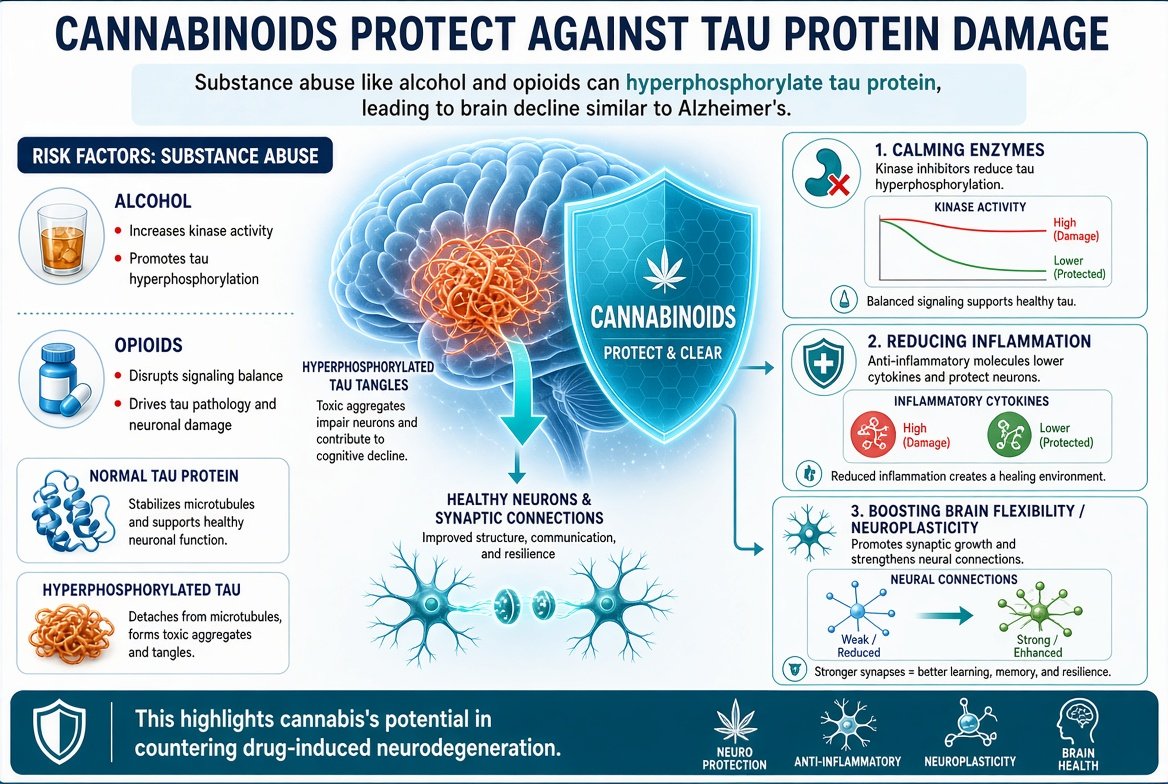
Cannabinoids Protect Against Tau Protein Damage
Substance abuse like alcohol and opioids can hyper phosphorylate tau protein, leading to brain decline similar to Alzheimer's.
But cannabinoids may protect by calming enzymes, reducing inflammation, and boosting brain flexibility (neuro plasticity).
This highlights cannabis's potential in countering drug-induced neuro degeneration.
https://t.co/k2bPBrDBts