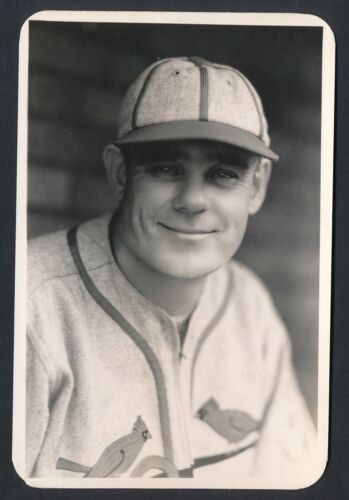
#OTD 1896 - Ray Blades was born in Mt. Vernon, IL.
He is one of only 8 players to have played their entire career with the #STLCards (10 years+)
Ray Blades- 10
Al Brazle- 10
Bob Gibson- 17
Pepper Martin- 12
Yadi Molina- 19
Terry Moore- 11
Stan Musial- 22
Tom Pagnozzi- 12
On May 2, 1972, Bruce Springsteen auditioned for the record producer John Hammond.
Hammond had signed icons like Bob Dylan and Aretha Franklin—two of Springsteen’s heroes.
“I would’ve been in a state of complete panic," Springsteen said, "except on the way up in the elevator,
I performed a little mental jiu-jitsu on myself.”
“I thought, ‘I’ve got nothing, so I’ve got nothing to lose...If nothing happens, I'm going to walk out of here the same person as when I walked in.’”
With this mindset, Springsteen said, instead of panicking, he walked into the audition feeling confident.
He performed his song, “It's Hard to Be a Saint in the City.”
“When I was done I looked up,” Springsteen writes, “and I heard him say, ‘You’ve got to be on Columbia Records…That was wonderful.’”
Springsteen signed a ten-album deal and would go on to record with Hammond and Columbia Records for the next fifty years.
Takeaway 1:
What Springsteen called “mental jiu-jitsu” is known in psychology as “cognitive reframing."
Whether it's public speaking, a big game, or a potentially life-changing audition, it can be helpful to reframe the situation as something that isn't actually *that* important.
Another one of my favorite examples of this is the way the snowboarder Shaun White would reframe an Olympic half-pipe run. Right before dropping in, White said,
“I say to myself, ‘Who cares?’ At the end of the day, who cares? What’s the big deal? I’m here, I’m going to try my best, and who cares? I’m going to go on from this regardless of what happens.'"
Takeaway 2:
Four months after the audition, John Hammond was interviewed by the magazine, “Record World," and he was asked, "What are you doing now?"
"Well," Hammond said, "I latched onto a young folksinger a few months ago who I just think is going to be absolutely a giant. He’s Bruce Springsteen...He’s one of the greatest talents I’ve ever come across.”
While Hammond could see, after just one song, that Springsteen was a generational talent, Springsteen himself was full of self-doubt.
It made me think of Bill Russell, one of the greatest basketball talents ever.
Once in an interview (well into his NBA career), Russell made a comment that he never got any positive feedback from his college coach.
The coach heard the comment and wrote to Russell, saying that Russell had so much talent he didn't need positive feedback.
"The hell I didn't," Russell said. "[Everyone] wants to be told they are doing a good job...It never hurts to say a good word."
- - -
“Sometimes it takes another person to believe in us." — Steven Pressfield
Follow @bpoppenheimer for more content like this!
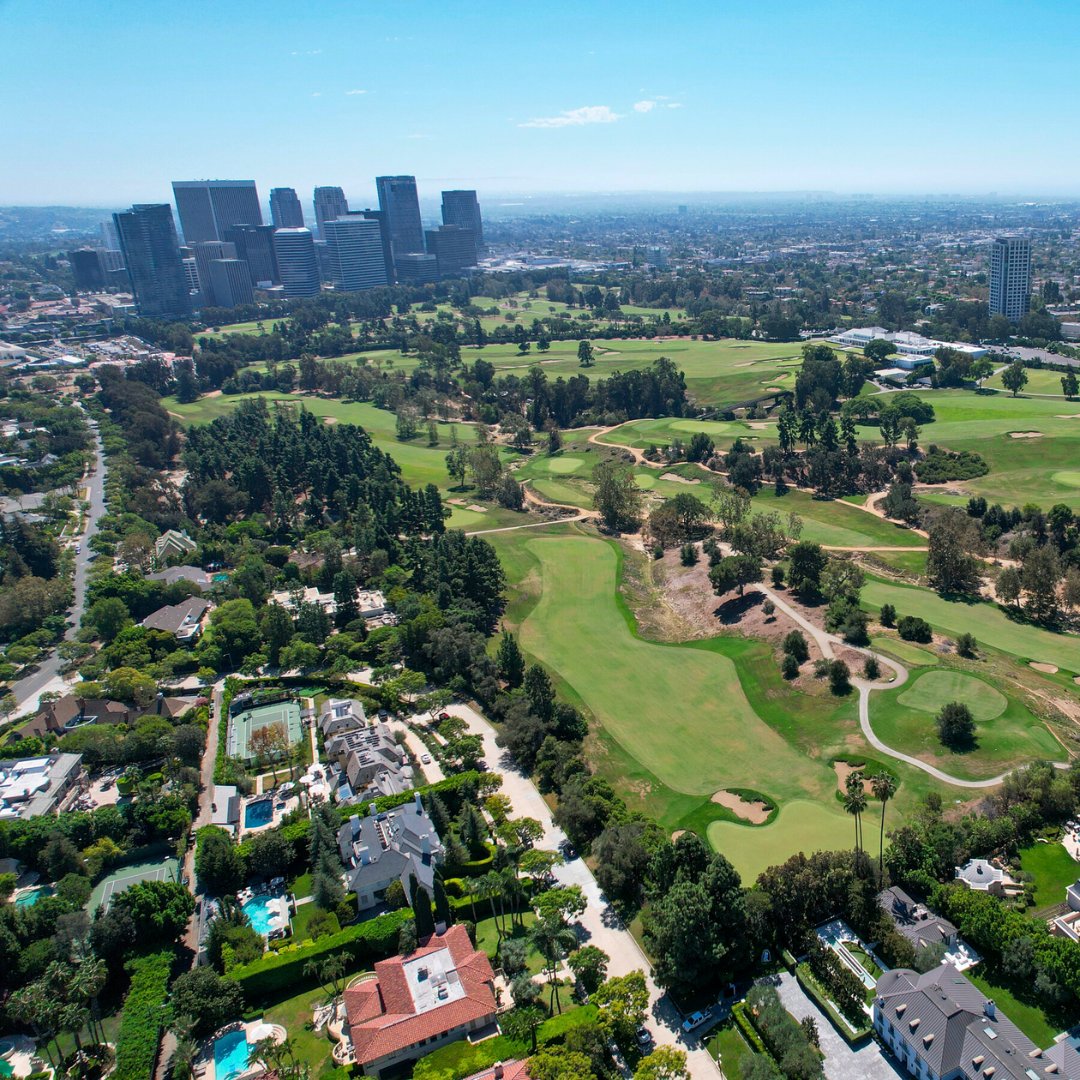
Los Angeles Country Club is one of the world's most exclusive golf clubs.
• $250,000 initiation fees
• No celebrities or social media posts
And they use a 45-year-old tax loophole to save $80 million annually.
Here's how it works:
LACC sits on 320 acres in the heart of LA.
It's one of the country's nicest (and strictest) country clubs.
They don't allow celebrities to join, and every new member is handed a 1,000+ page rulebook.
LACC Rules
• No shorts (tailored pants only)
• Sport coats in the clubhouse after 6 pm
• No changing shoes in the parking lot
• No headphones, earbuds, or athletic clothes
• No photos or videos of the club on social media
Members can also only make phone calls from their parked car or a phone booth in the locker room.
And the club is so exclusive that many of the world's best players are seeing it for the first time this week.
Rory McIlroy, for instance, hasn't paid for a round of golf in 20 years. But he had never played LACC before this week's US Open, so he says he prepared by watching videos of the course on YouTube.
Still, the craziest part about LACC isn't its $250,000 initiation fee or its 1,000+ page rulebook.
The craziest part about LACC is its real estate.
The 320-acre piece of land sits smack dab in the middle of Beverly Hills — between the famous roads of Sunset Blvd, Wilshire Blvd, and Santa Monica Blvd.
The land alone is reportedly worth $8 billion, making it the second most valuable piece of real estate (not developed for housing) behind Central Park in NYC.
But here's the craziest part...
An $8 billion assessed land value would typically mean hundreds of millions in property taxes alone.
But LACC only pays $220,000 in annual taxes.
This is because of two rules:
1. LACC is owned by its members and registered as a non-profit. So they benefited when California voters passed a ballot in 1960 that lowered the value at which officials were allowed to assess non-profit golf courses.
This non-profit rule also applies to other LA-based golf clubs, like Bel Air Country Club, Brentwood Country Club, and Wilshire Country Club.
2. Then, in 1978, voters passed Proposition 13. This new law rolled back the assessed land value to its 1975 level and more or less froze that value in time.
So even if the market value of the land tripled in value, the property's assessed value can only grow by 2% a year or the rate of inflation, whichever is lower.
And Proposition 13 also capped property taxes at 1% of assessed value (vs. the previous average of 2.67%).
So, in simple terms, Los Angeles Country Club would be paying about $80 million (1%) in annual property taxes because its land is worth $8 billion-plus.
But because of these two laws enacted more than 45 years ago, LACC’s land is currently assessed at just $22 million, and they only pay $220,000 in property taxes.
LACC Tax Breakdown (estimates)
• True value of the land: $8 billion
• Assessed value of the land: $22 million
• Annual property tax savings: $80 million
Now, Proposition 13 wasn’t put in place specifically for golf courses — its true purpose was to protect homeowners who are older, retired, and living on fixed income from payment shock when their property values dramatically increase over a short period of time.
But given the financial savings it has provided exclusive golf clubs over the years, it’s no wonder why Los Angeles Country Club wants to keep things exactly as they are.
Ps. If you enjoyed this breakdown, subscribe to my podcast (top 25 in US sports) so you don't miss any episodes going forward!
Apple: https://t.co/oxtjqN8JOE
Spotify: https://t.co/LbK4dFSzNQ
In 1943, Josh Gibson fell into a coma and was diagnosed with a brain tumor. After denying surgery, he went on the have one of the greatest seasons in (official) Negro Leagues history. He hit .466, with 20 HR in 68 games. His OPS+ was 281 (!!)