Corporate Finance Professor, executive teacher, bank director, consultant in financial litigations, tennis player, and ‘whatever it takes’ to enjoy life...)
WAREHOUSES THE SIZE OF A WALMART WITH 4,000 GPUS WERE EARNING $320K A MONTH MINING ETH, THE SAME RACKS NOW EARN $4M A MONTH RENTING TO AI STARTUPS ON VAST AI
the warehouse in the clip is one of hundreds across the US, the operator at 6'6" tall for scale, electricity contracts and cooling already in place
ethereum's merge in september 2022 killed gpu mining for everyone without a power plant, by 2025 alt coin mining was barely covering the electricity bill
the same racks now host RTX 3090s and 4090s on vast ai, indie AI developers priced out of AWS rent them by the hour for inference and image generation
a 4090 nets $500 to $1,000 a month renting to AI startups, the same card was clearing $80 to $150 mining, 4 to 7 times the revenue with zero new hardware
core scientific, hut 8 and riot have all signed multi billion dollar AI hosting deals in 2025, the warehouses you scrolled past on tiktok are quietly becoming the inference backbone of every AI tool you use
bookmark this and read the article below
Dear Hyperscaler shareholders: it's time to have a conversation with your CEO about the 435% increase in memory prices in the Vera Rubin rack which is crushing your returns
🚨 The AI ROI numbers are starting to look very ugly.
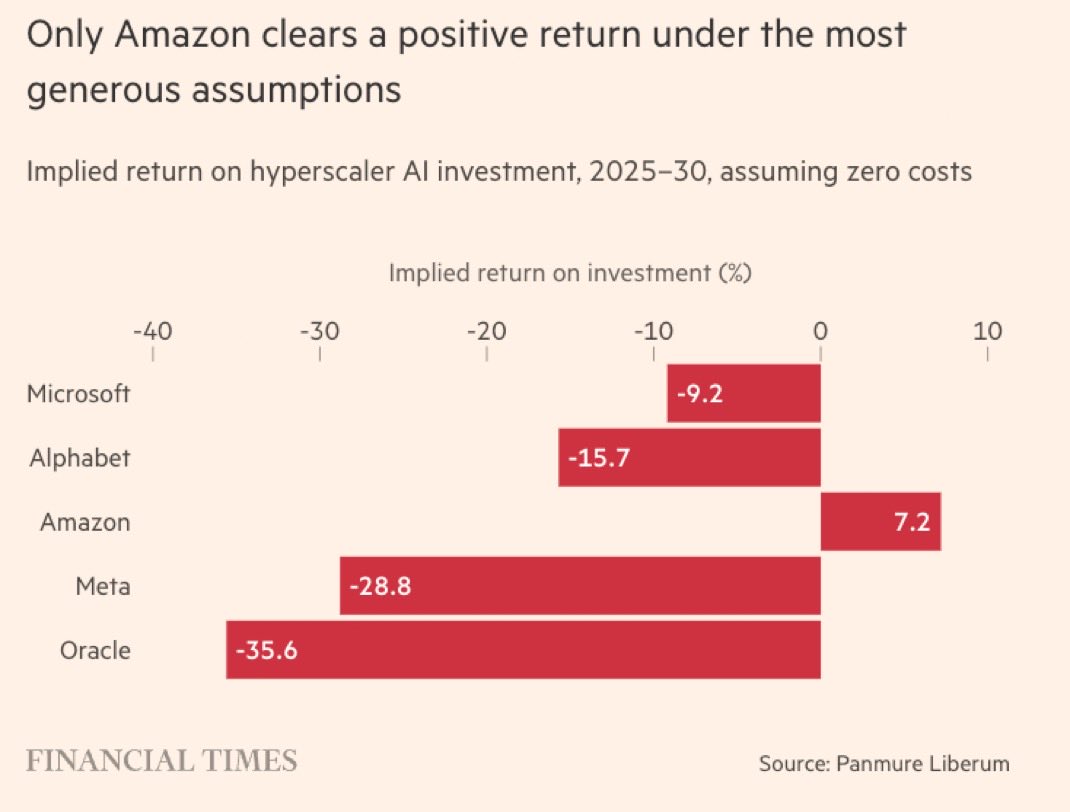
Even under "best case" assumptions — assuming zero costs, just revenue against capex — the Financial Times calculated the implied return on hyperscaler AI investment from 2025 to 2030.
Only one of them clears positive.
Implied return on AI investment (FT / Panmure Liberum)
– Microsoft: -9.2%
– Alphabet: -15.7%
– Amazon: +7.2%
– Meta: -28.8%
– Oracle: -35.6%
And remember: that's assuming zero costs. In reality, GPUs depreciate, power bills run, salaries get paid.
The real returns are worse.
This is exactly why the dot-com comparison keeps coming up. Incredible technology does not automatically mean sustainable economics. The internet survived. Most internet companies didn't.
Two anecdotes from this week alone
Vivek Garipalli, Fortune 20 insider: a CEO asked for $1B in AI-driven opex savings this year. The team spent $200M on tokens chasing it. The results? Modest customer service savings and slightly less hiring in engineering. The CEO has now ordered token costs to be dramatically slashed because the ROI isn't there.
Axios: an AI consultant reported a single client spent half a billion dollars in one month after forgetting to put usage limits on Claude licenses for employees.
Right now hyperscalers are spending trillions hoping future demand catches up to present capex.
That's not certainty. That's a leveraged bet.
The technology is real. The infrastructure buildout is real. The eventual winners will be real.
But "AI is transformative" and "every hyperscaler will earn its capex back" are two completely different statements.
In 2000, the internet was real too.
Cisco has recovered.
After 26 years…
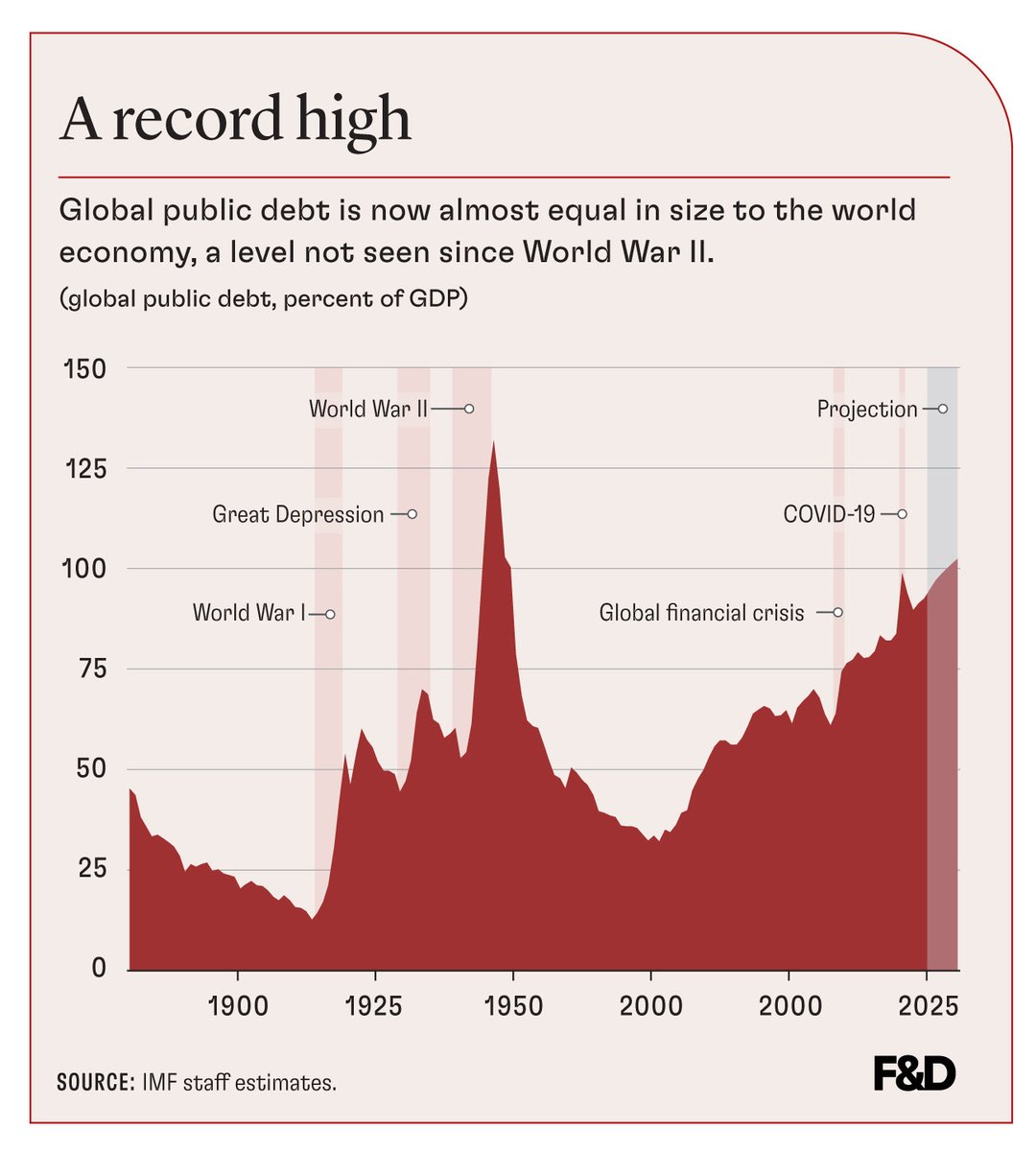
With debt high and borrowing costs rising, governments can no longer defer hard fiscal choices. Trust is now essential to reconciling competing priorities, Era Dabla‑Norris and Rodrigo Valdes write in F&D magazine. https://t.co/tY0198rky3
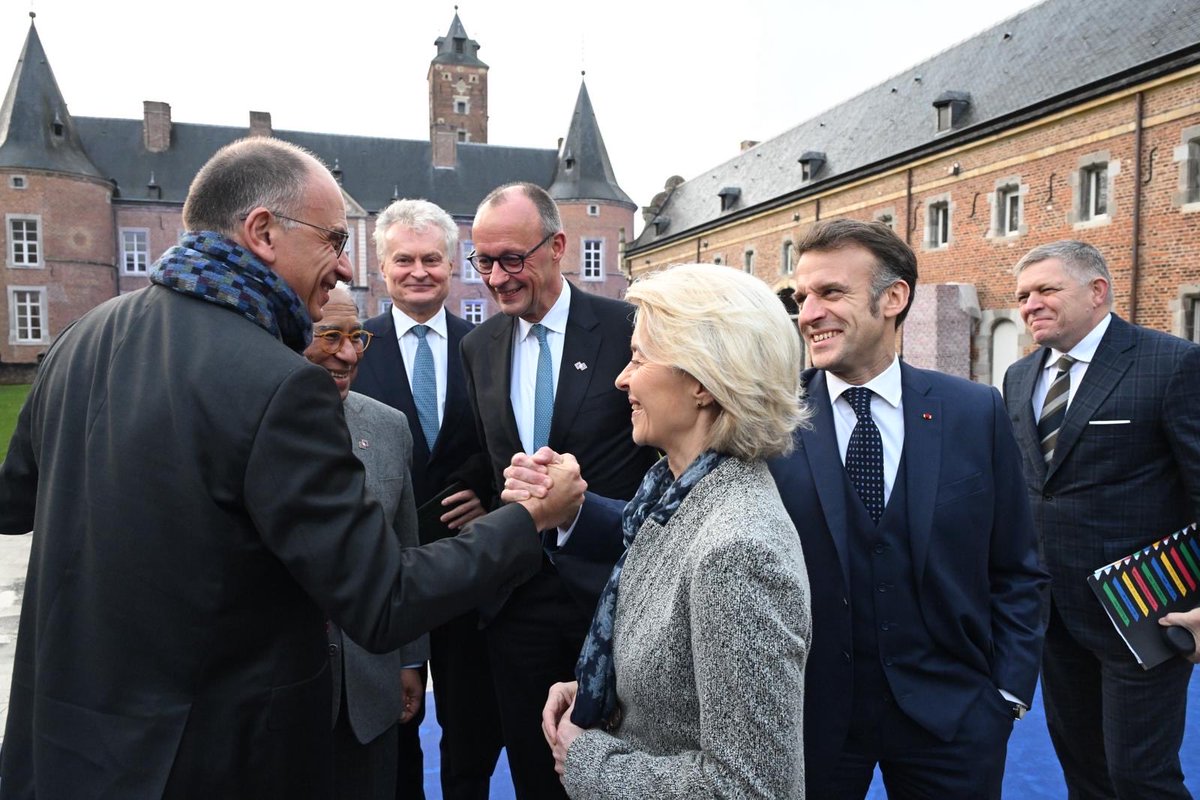
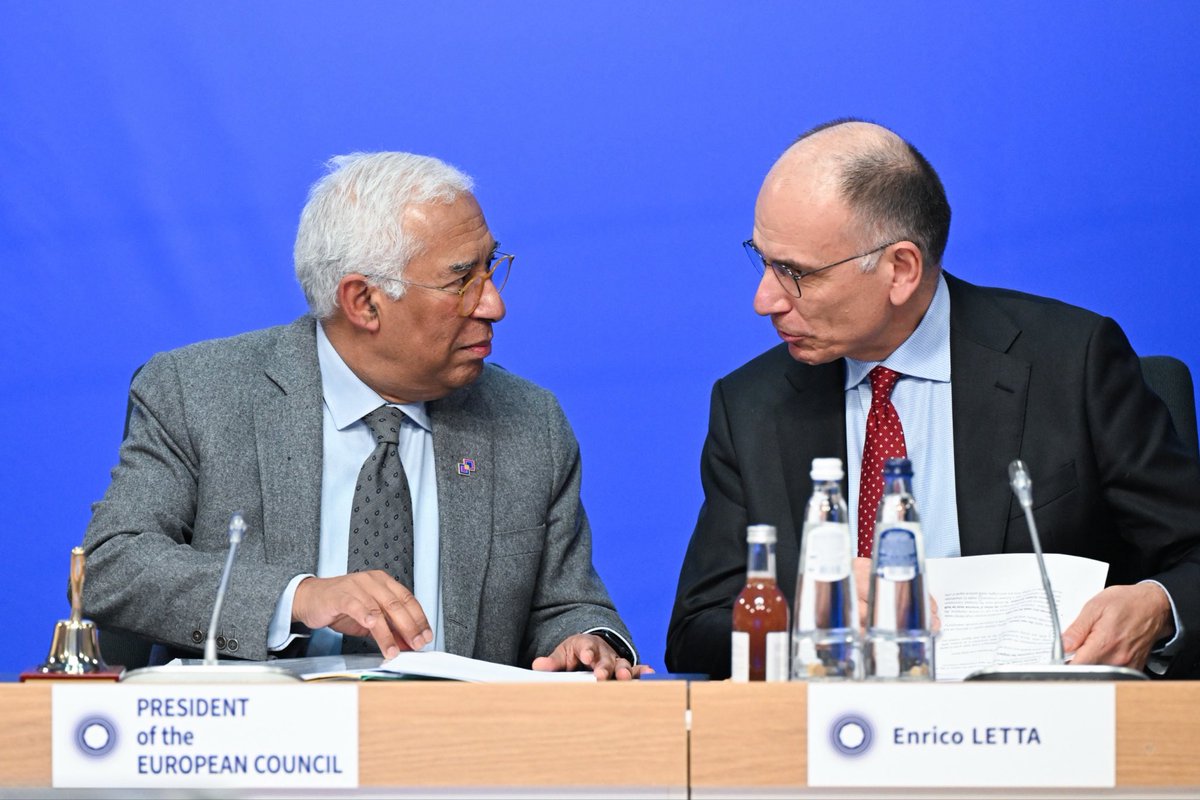
Al ritiro dei leader Ue nel castello di Alden Biesen, @EnricoLetta ha rilanciato il mercato unico con un “One Market Act” su energia, connettività, finanza. La Commissione presenterà a marzo la roadmap, riconoscendo la competitività economica come pilastro dell’agenda politica Ue
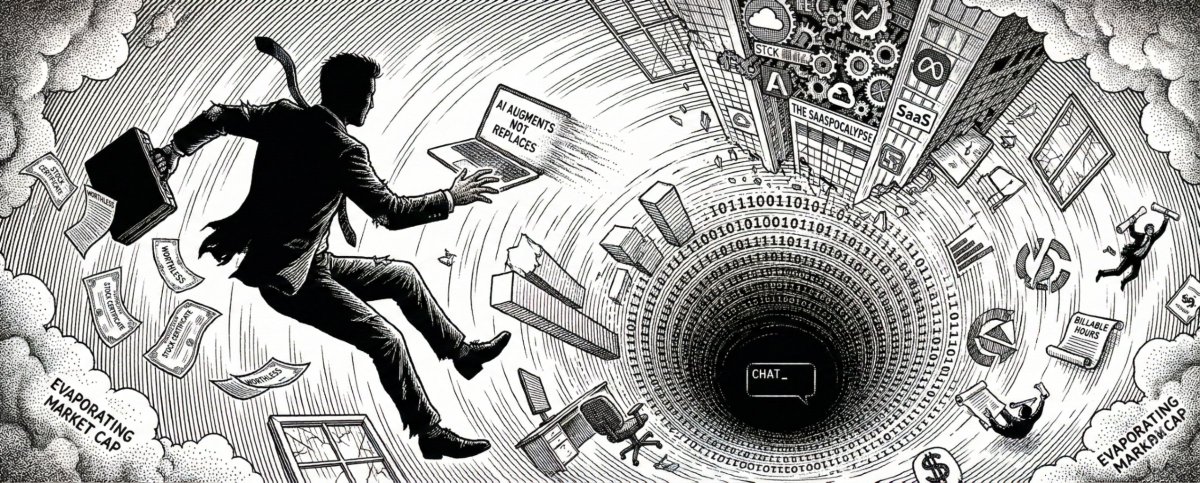
Regarding the SaaSpocalypse.
I am the Chief Strategy Officer of a major enterprise software company.
We've lost 47% of our market cap in four months.
Our stock dropped 6% on Monday.
My bonus is gone.
My options are underwater.
My second vacation home is in jeopardy.
The third one is fine.
For now.
I need to explain what happened.
We didn't do anything wrong.
Anthropic did.
They released plugins.
For Claude.
Eleven of them.
Open source.
Legal automation. Contract review. Compliance workflows. NDA triage.
Work that used to cost $400 per hour.
Now costs $20 per month.
We had a phrase for this.
"AI augments, not replaces."
That was the pitch.
The pitch to investors.
The pitch to customers.
The pitch to employees.
The pitch to law school graduates with $200,000 in debt.
The pitch to the senators we lobby.
"AI augments, not replaces."
It was a beautiful phrase.
Calming.
Reassuring.
Focus-grouped extensively.
Completely false.
We knew.
We all knew.
Every enterprise software CEO on the planet knew.
We discussed it at Davos.
Over $47 cocktails.
While wearing badges that said "Human-Centered AI."
The technology was coming.
The replacement was inevitable.
The timeline was unclear.
Our exit liquidity was not.
We just didn't expect Anthropic to be so... helpful.
On January 30th, they released the plugins.
By February 2nd, Thomson Reuters was down 18%.
In a single day.
LegalZoom dropped 20%.
Our Head of Investor Relations had a panic attack.
On a Zoom call.
With investors.
They saw.
We call it the "SaaSpocalypse."
That's a joke.
It's not funny.
My net worth dropped by $14 million.
That's two Teslas per hour for a week.
Jensen Huang said our reaction was "purely illogical."
Easy for him to say.
He sells the shovels.
We sold the promises.
He's up 340% since 2023.
We're down 47% since September.
But sure.
Illogical.
The promises that AI would make your existing software better.
Not obsolete.
The promises that you still needed expensive platforms.
Expensive integrations.
Expensive support contracts.
Expensive consultants.
Expensive lawyers.
The lawyers.
The lawyers are the real story.
Big Law runs on billable hours.
$800 an hour.
$1,200 an hour.
$2,000 an hour.
For contract review.
For NDA triage.
For compliance workflows.
For "adding value."
Work that requires a JD.
Three years of law school.
Bar passage.
Six years of experience.
A corner office.
A parking spot.
A subscription to the Yale Law Journal.
Claude does it now.
For $20 a month.
Claude doesn't need a parking spot.
Claude doesn't expense client dinners.
Claude doesn't bill 2,400 hours to make partner.
Claude doesn't have a Yale Law Journal subscription.
Claude doesn't have student loans.
Claude doesn't cry in the bathroom at 2 AM.
Claude just... works.
The American Bar Association had a conference last week.
They predicted "the demise of the billable hour model."
At a conference about billing.
They served $18 sandwiches.
The irony was lost on no one.
The sandwiches were mediocre.
Morgan Stanley called it "intensifying competition."
That's Wall Street speak for "your business model is dying."
Adam Parker at Trivariate Research said software stocks are "guilty until proven innocent."
He said we're "a falling knife."
He's right.
We are a falling knife.
And we sold you the handle.
For years.
With a service contract.
And an annual maintenance fee.
We said: "AI is a tool."
We meant: "AI is our tool."
We said: "AI augments humans."
We meant: "AI augments our revenue."
We said: "AI won't replace your job."
We meant: "AI won't replace your job until it does."
We said: "The human touch is irreplaceable."
We meant: "The human touch is expensive and we're working on it."
We said: "AI needs human oversight."
We meant: "For legal liability purposes only."
We said: "We're committed to responsible AI."
We meant: "We're committed to responsible AI until it's unprofitable."
It's unprofitable now.
It does now.
The associate lawyers are first.
The ones who thought they were safe.
The ones who thought "AI can't practice law."
AI can't practice law.
AI can do 80% of what associates bill for.
The other 20% is "relationship management."
That means: lunch.
Then the contract reviewers.
Then the compliance analysts.
Then the consultants.
Then the financial analysts.
Then the people who make PowerPoints about synergy.
Actually, we're keeping those.
Someone has to explain the layoffs.
Mike O'Rourke said it best: "If the legal industry can be disrupted, so can consulting and financial services."
He's not wrong.
He's terrifyingly correct.
He probably shouldn't have said that out loud.
His LinkedIn is now "Open to Work."
Every knowledge worker who bills by the hour is now in a race.
A race against a Claude plugin.
An open-source Claude plugin.
We didn't see that coming.
We expected proprietary.
We expected expensive.
We expected enterprise sales cycles.
Eighteen-month implementations.
Mandatory consulting packages.
Executive briefings in Aspen.
Anthropic just... gave it away.
Eleven plugins.
Free.
"Customize workflows."
"Slash commands."
"Consistent outcomes."
For $20 a month.
No executive briefing.
No Aspen.
No $47 cocktails.
Just a chat interface.
And the death of our business model.
The board meeting was yesterday.
The CFO cried.
The General Counsel updated his resume.
On company time.
Using the company laptop.
Bold move.
The Chief Revenue Officer blamed the sales team.
The sales team blamed the product.
The product blamed the market.
The market blamed us.
The PR team blamed "macro headwinds."
The CEO blamed "exogenous factors."
The board blamed the CEO.
The CEO blamed his predecessor.
His predecessor is on three other boards.
He's fine.
The market is correct.
We knew.
We all knew.
Every pitch deck.
Every investor presentation.
Every "thought leadership" article.
Every podcast appearance.
Every TED talk about "the future of work."
"AI augments, not replaces."
We said it.
We didn't believe it.
We had a private Slack channel.
Called "#inevitable."
We discussed the timeline.
We discussed our options vesting schedule.
We discussed which executives should sell first.
"Staggered for optics."
And now the market doesn't believe us.
$250 billion.
Gone.
In a week.
Because a company in San Francisco released eleven plugins.
For free.
And did what we said was impossible.
Replaced expensive knowledge workers.
With a chat interface.
A chat interface that doesn't need dental.
We have a new phrase now.
"Pivot to AI-native."
That means: "We're rebuilding everything."
That means: "The last five years were wasted."
That means: "Your job is also in jeopardy."
That means: "Please don't look at our executives' stock sales from Q4."
But don't worry.
We're "leaning into the disruption."
We're "embracing the paradigm shift."
We're "right-sizing for the new reality."
Right-sizing means layoffs.
Paradigm shift means our product is obsolete.
Leaning in means we have no plan.
AI augments, not replaces.
We would never lie to you.
Again.
Anyway, buy the dip!
Our investor relations team says it's a "compelling entry point."
They're also updating their resumes.
🇪🇺 Telegram sent this message to all its users in France regarding Chat Control. People must know the names of those who try to steal their freedoms:
Today, the European Union nearly banned your right to privacy. It was set to vote on a law that would force apps to scan every private message, turning everyone’s phone into a spying tool.
France led the push for this authoritarian law. Both former and current Interior Ministers, Bruno Retailleau and Laurent Nuñez, supported it. Last March, they declared that police should see French citizens’ private messages. The Republicans and Macron’s Renaissance group voted for it.
Such measures are supposed to “fight crime”, but their real target is regular people. It wouldn’t stop criminals — they could just use VPNs or special websites to hide. Officials’ and police messages wouldn’t be scanned either, since the law conveniently exempts them from surveillance. Only YOU — ordinary citizens — would face the danger of your private messages and photos being compromised.
Today, we defended privacy: Germany’s sudden stand saved our rights. But freedoms are still threatened. While French leaders push for total access to private messages, the basic rights of French people — and all Europeans — remain in danger.
*BOSTIC: CONSUMER REACTION TO TARIFF PASS-THROUGH UNCERTAIN
Actually consumers are delighted that Toyota prices are unchanged since the carmaker has been eating all the tariff costs and there are zero pass throughs