"Modeling exit multiples has always involved a lot of guesswork, but now it feels like throwing at a dartboard blindfolded."
Anonymous PE veteran
(Bloomberg coverage of AI's impact on PE models, 2026)
"An AI Operating Partner will force AI conversations at portfolio companies, which is useful as long as it does not create pressure to adopt AI without justification."
Korn Ferry institute commentary on the AI Operating Partner role
Korn Ferry Institute commentary on the AI Operating Partner roletating the role)
"275 portfolio companies grew their large language model spending 15-fold over the past year."...
Jon Gray, President & COO, Blackstone (CNBC, 2026-05-04)
"Specialized OP search practices already exist." Some, yes
NU Advisory and Wyatt Partners place OP roles deliberately.
But the bulk of OP placements still happen inside generalist senior-exec searches at the larger firms.
The specialization curve has barely started. Compare: in 2010, CRO search was scattered across the same generalist practices.
By 2018, every restructuring-aware firm had a dedicated CRO desk. The OP curve is now where the CRO curve was in 2012.
AI Operating Partners and traditional Operating Partners are different roles.
They won't converge.
"Maybe long-term. But this week's data shows them being recruited under the same headline title at similar comp bands at firms with similar AUM. Berkshire and Tayeh both used "Operating Partner" in the title.
The market is treating these candidates as adjacent today, even if the actual work is divergent.
Recruiters who insist on the distinction will lose mandates to peers who deliver across both buckets.
"Operating Partners aren't CROs. CROs manage crises. OPs build value."
Fair as a textbook distinction.
But DPI-pressed mid-market exits are now functionally indistinguishable from a soft crisis. When a fund partner says "we need an exit story by Q3 2027," the OP they're hiring isn't there to build a five year transformation they're there to ship something measurable before the exit window closes.
The line between "value creation" and "the exit story is broken" has blurred to operational invisibility.
The specialized search ecosystem doesn't exist yet and that's the opening.
CRO placements have specialized practices: Alvarez & Marsal, AlixPartners, FTI Consulting's restructuring arm. Operating Partner placements still happen mostly inside generalist senior-exec practices, with NU Advisory, Wyatt Partners, and Pearse Professionals as a few notable specialists.
The recruiter who builds the dedicated OP-search practice with a candidate pool sorted by "has actually shipped" vs "has only advised" owns the next placement cycle while everyone else is still cross-listing CFOs.
The pressure profile is now CRO-shaped, not value-creation-shaped.
Per UpLevered, PE median hold periods stretched from 4.2 years (2010) to 6.8 years (2023). Per FTI's 2026 PE AI Radar, 95% of portco AI initiatives are "meeting their business case," but the implementation gap across portfolios is wide.
Per Allianz, 78% of 2025 exit value concentrated in mega exits leaving mid-market inventory effectively stagnant.
Operating Partners are now hired against exit deadlines, not five year transformation arcs.
The hire profile that fits is the one that historically fit the CRO seat: outcome-bound, time-boxed, replaceable on metric miss.
The titles are already fragmenting in plain sight.
Berkshire Partners didn't hire "Operating Partner"
they hired "Operating Partner, Head of Data Science and AI"
(Lichtenstein, April 2026). Waud Capital went further:
"Chief AI and Data Officer" (Raj). Vistria specified
"Operating Partner, Financial Services Strategy" (Atkinson, 5/7). Tayeh: plain "Operating Partner" (Harrison, 5/5).
RoundTable Healthcare: title undisclosed in the announcement. Five firms, three distinct titles, no shared template. The taxonomy is breaking apart in real time.
Is your CFO the real CEO in waiting? This week, the data is screaming a new reality for leadership in distressed situations.
In the latest issue of The Turnaround Report, I dissect "The CFO Moment"—the undeniable trend of boards turning to financial leaders to navigate crises, as seen with PayPal appointing their CFO as interim CEO.
I also reveal "The Turnaround Trifecta," a framework for not just surviving, but thriving through restructuring by integrating financial discipline, strategic focus, and technology leverage. We look at how Greif is executing this playbook with $2.3B in divestitures, while others falter.
The numbers don't lie: AI-driven layoffs are up 1,100%, and January set a new record. Are companies just using AI as air cover for long-overdue cost-cutting?
Get the full expert analysis, data-driven visuals, and my actionable "Turnaround Playbook" in this week's briefing. Link in comments.
#BusinessTurnaround #Restructuring #ValueCreation #CEO #CFO #PrivateEquity #Leadership #CorporateFinance #AI
https://t.co/qiZ6tQ3GMm
When your biggest customer is killing your business, what do you do?
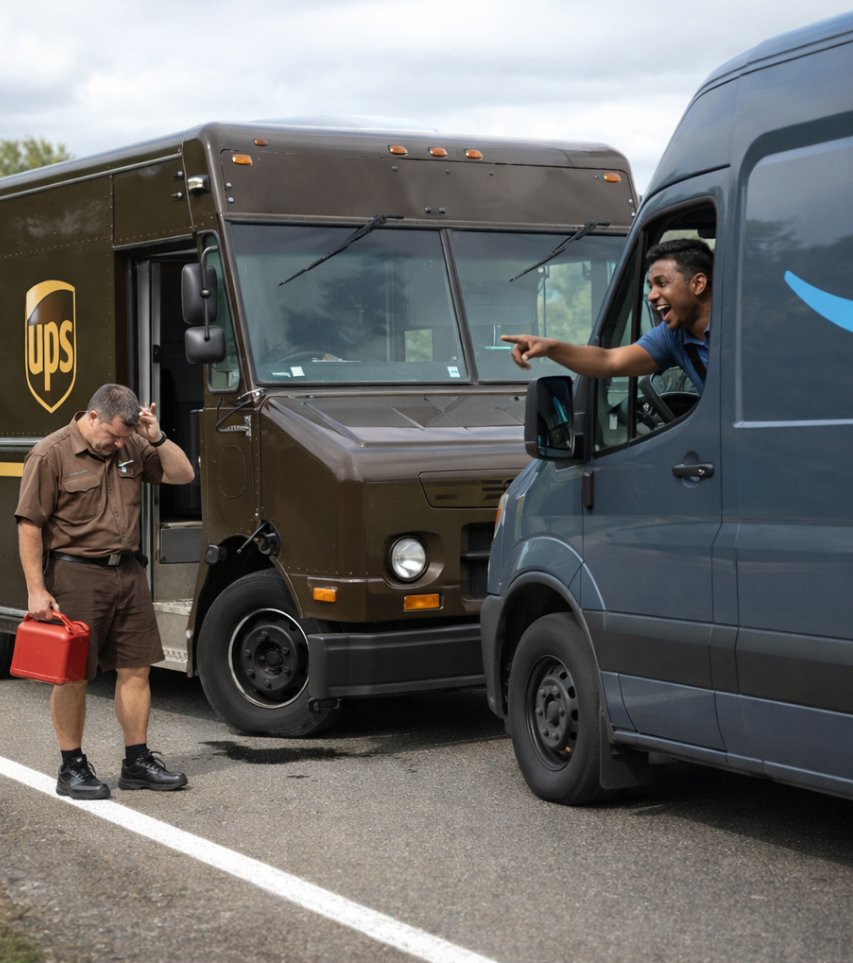
UPS just showed the world: Radical surgery beats slow death. Inside the most decisive corporate reset of 2023 that's shocking everyone.
🚨 UPS just nuked 30,000 jobs in ONE move.
Most leaders would panic.
Their CEO?
Cold, calculated strategy.
How cutting your BIGGEST customer can save a company.
The counterintuitive playbook inside.
Corporate suicide or genius?
UPS just dropped a strategic bomb: 30,000 jobs cut, walking away from Amazon.
The ruthless math behind survival that most executives are too scared to do. Real leadership exposed.
When your business is dying, the symptoms are subtle. I've seen 47 companies on life support—and these 4 warning signs predict total collapse WEEKS before the crash. Leaders: read this before it's too late. 🔗 Link in comments
Most CEOs miss the 4 warning signs their business is about to crash. I've rescued 47 companies from the brink—and these signals are DEADLY silent. Want to know what kills promising businesses before they even realize? 🔗 Link in comments
Business autopsy time: The 4 red flags that doom companies BEFORE they fail. After turning around $100M+ in struggling enterprises, here's what most leaders are blind to. Ignore these at your own risk. 🔗 Link in comments