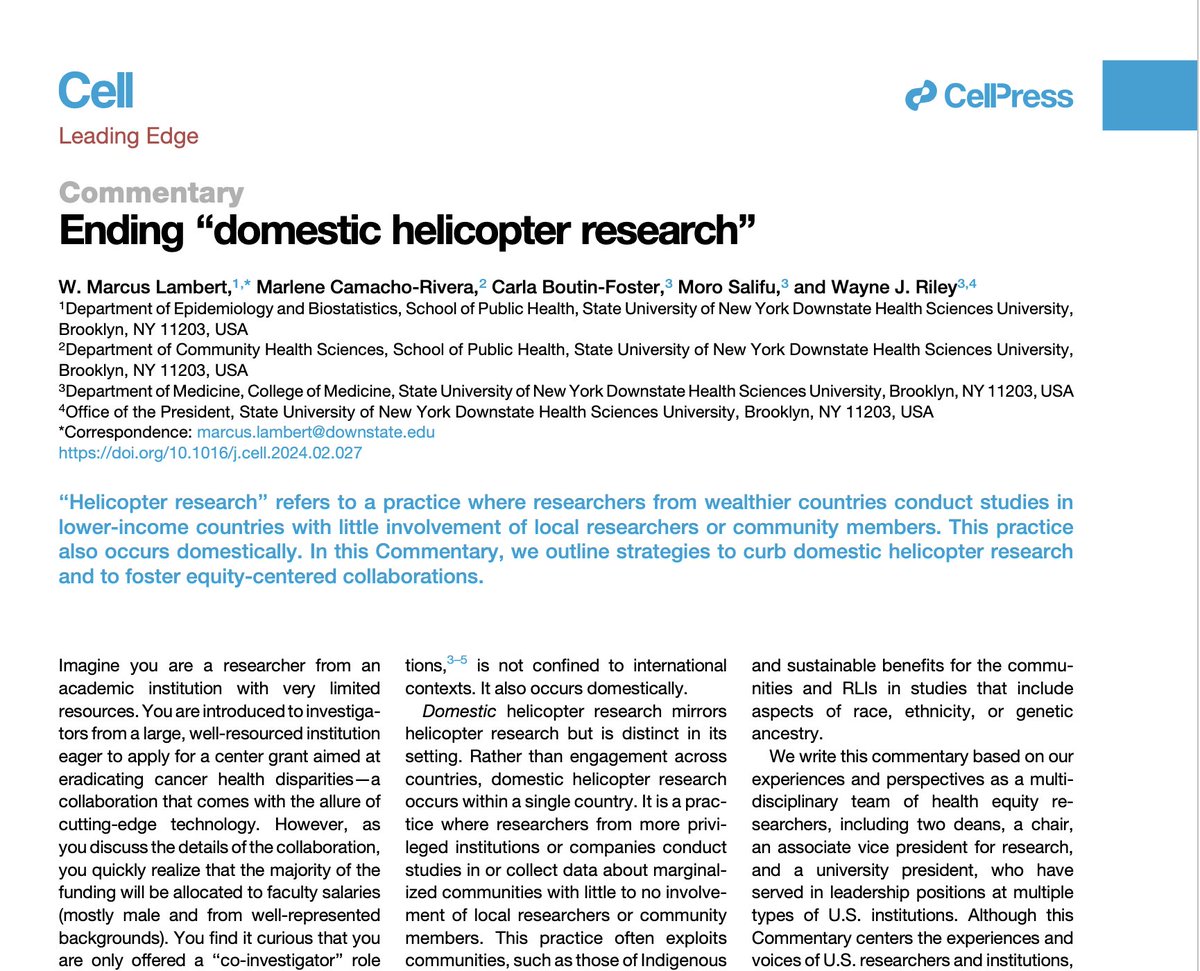
My colleagues and I are shedding light on a concerning trend we've termed 'domestic helicopter research.' This involves researchers dropping in marginalized communities, conducting studies, and leaving w/o any true community or local researcher engagement. https://t.co/4tvBFHOvyP
Here's the thing. We have **NO IDEA** how to pick good graduate students. I served on admission committees for 10+ years, and chaired a few, and what I learned is that all the spreadsheets of grades and test scores and recommendations and essays and publications and interview rubrics are just an elaborate ruse to pretend we know what we're doing when we simply don't. Many of the most highly ranked applicants to our "top" program flamed out quickly, and tons of the students we summarily rejected have turned into amazing scientists. But in the name of creating meritocratic seeming rankings that are more about creating a workforce than great scientists (a system that anyone paying attention knows is bullshit), we've created a homogenous process adopted by nearly all institutions that has stamped out the one thing we should be striving for - given our lack of any clear understanding of what leads to success - a wide range of difference talents and experiences.
Updating my CV and biosketch for 2025 and replacing all journal names with PMID or DOI. To be consistent with what we at HHMI ask all of our applicants to do @HHMINEWS
Focus on the science, not the publication venue
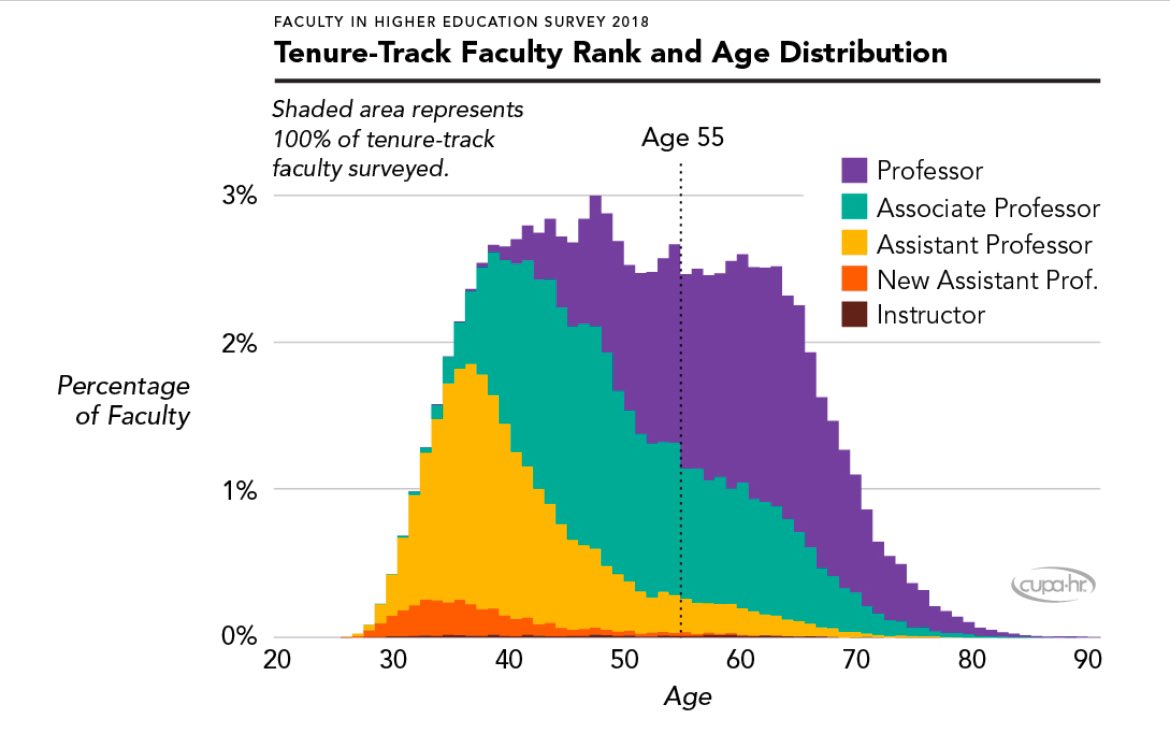
@mbeisen Not enough time to dig for the data right now (it must be out there), but I’m curious if the reason young PIs get smaller % is b/c they make up a smaller % of applicants (assuming the average age of applicants is increasing). Would genuinely love to know/understand this better.
We have updated and expanded our database of fellowships for POSTDOCS in neuroscience/neurology/cog science.
For each fellowship, we provide a description, $ amount, deadline, link, and eligibility criteria.
Download our database freely here: https://t.co/EbTahdzJ9X
Finding relevant papers for literature review takes a lot of time.
So, MIT researchers built Undermind, an AI-powered search engine.
It can generate well-researched overviews on any topic and is 10-50 times better than Google Scholar.
Here's how to use it:
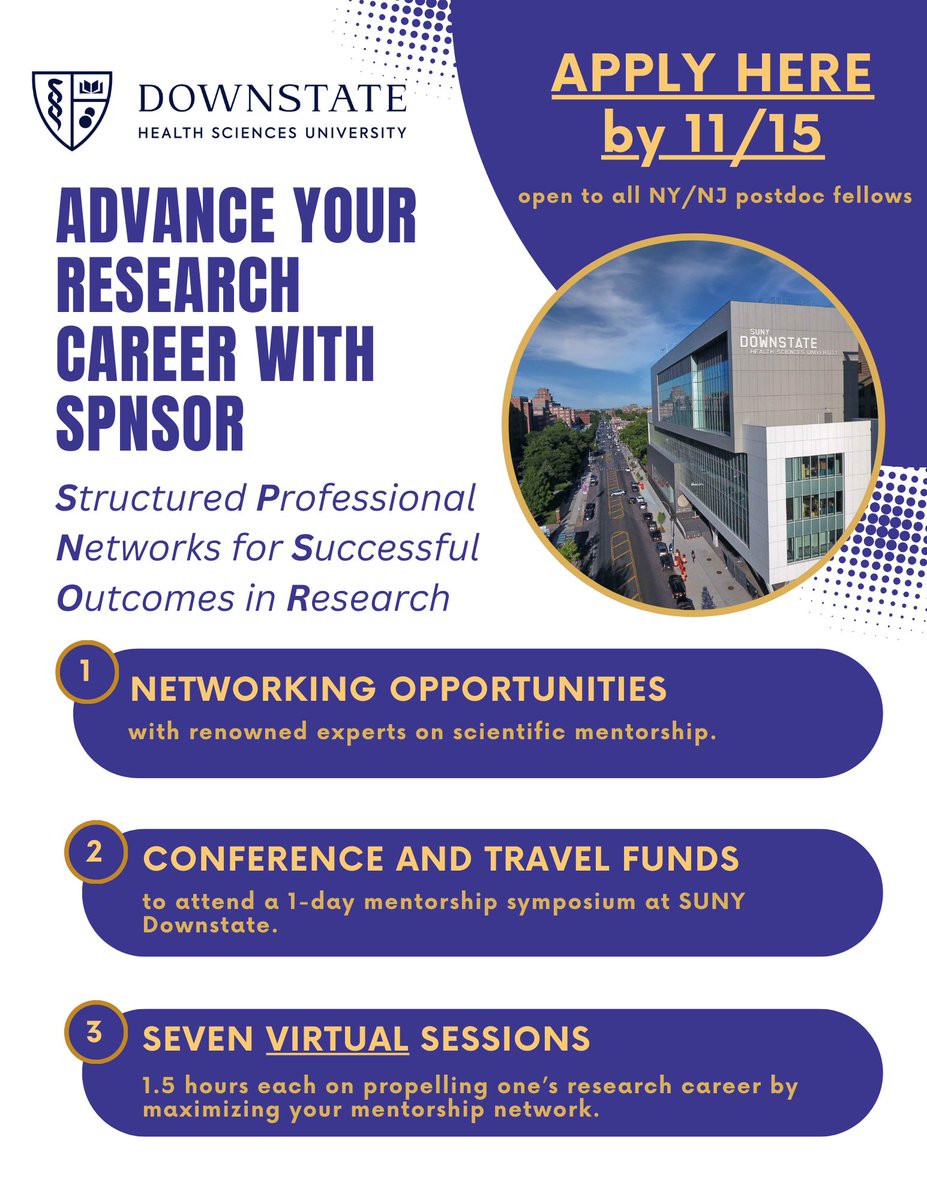
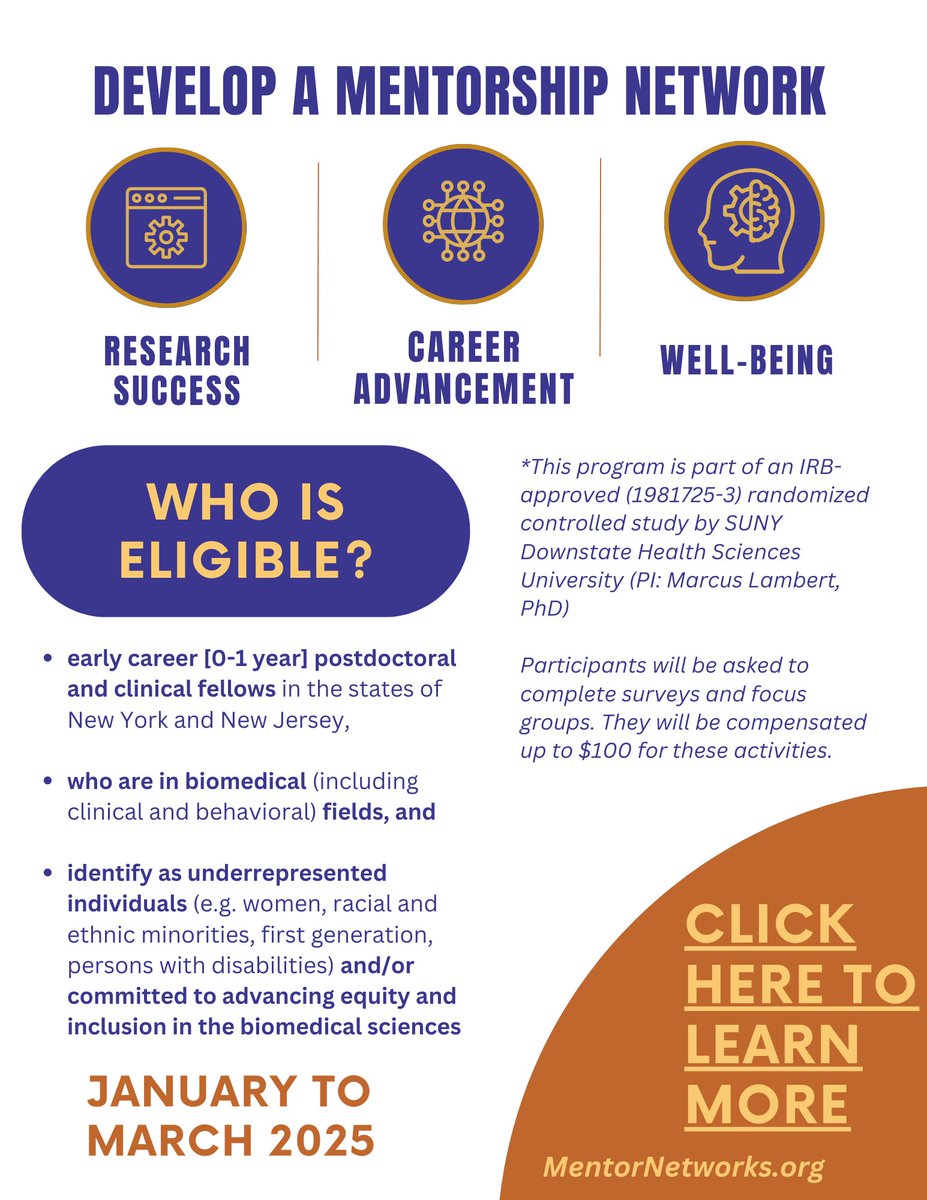
📢NY/NJ Postdoc and Clinical Fellows: Apply for a program called SPNSOR (Structured Professional Networks for Successful Outcomes in Research). To learn more about SPNSOR and other mentorship network initiatives, visit our website:
https://t.co/8z3f1boqp8
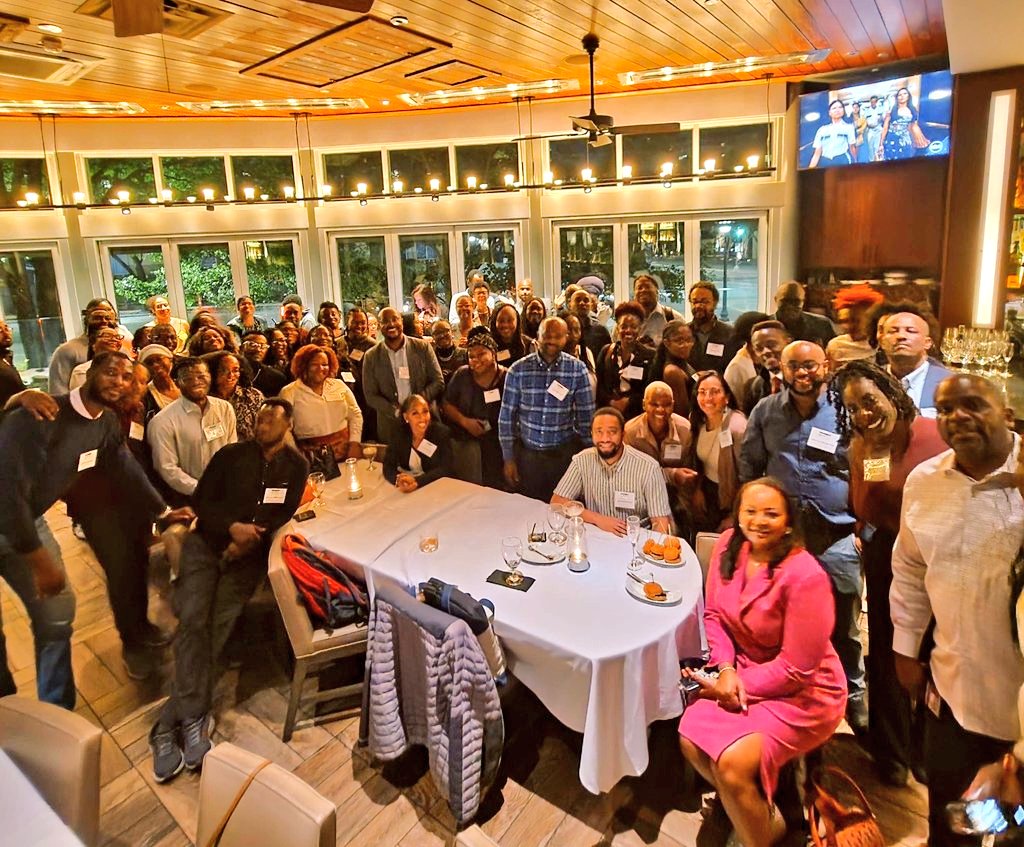
Many Black scientists fall through the cracks during their postdoc; I almost did myself. Last month, 70+ @natblackpostdoc members met for the 1st time to strengthen our community.🙏🏾RT to help us reach new members/sponsors so we can continue to grow no matter the political climate
I really enjoyed this new book with a fresh take on the iconic scientist Marie Curie. One thing that has been overlooked in her career is that she trained 45 women scientists. Many of the top women in chemistry and physics gravitated to her lab and went on to successful careers.
📢NY/NJ Postdoc and Clinical Fellows: Apply for a program called SPNSOR (Structured Professional Networks for Successful Outcomes in Research). To learn more about SPNSOR and other mentorship network initiatives, visit our website:
https://t.co/8z3f1boqp8
Keynote speakers, a discussion and a poster session inspired the attendees of the 2024 Diversity Summit to think differently about diversity, equity, inclusion and belonging practices: https://t.co/2wnMiPN6dE
The summit was organized by @UMassDiversity.
#DEIB@ForHealthCnsltg
Puerto Rico might be just 100 x 35 miles, but the talent and creativity among its people are boundless.
An image that speaks volume—Puerto Ricans at #NDiSTEM@SACNAS. 🇵🇷









![marcus_phd's tweet photo. It's time. You all know where to find me: [at]drlambert https://t.co/Cv4lRObhUH](https://pbs.twimg.com/media/GdQ6jCUWEAE4CI-.jpg)