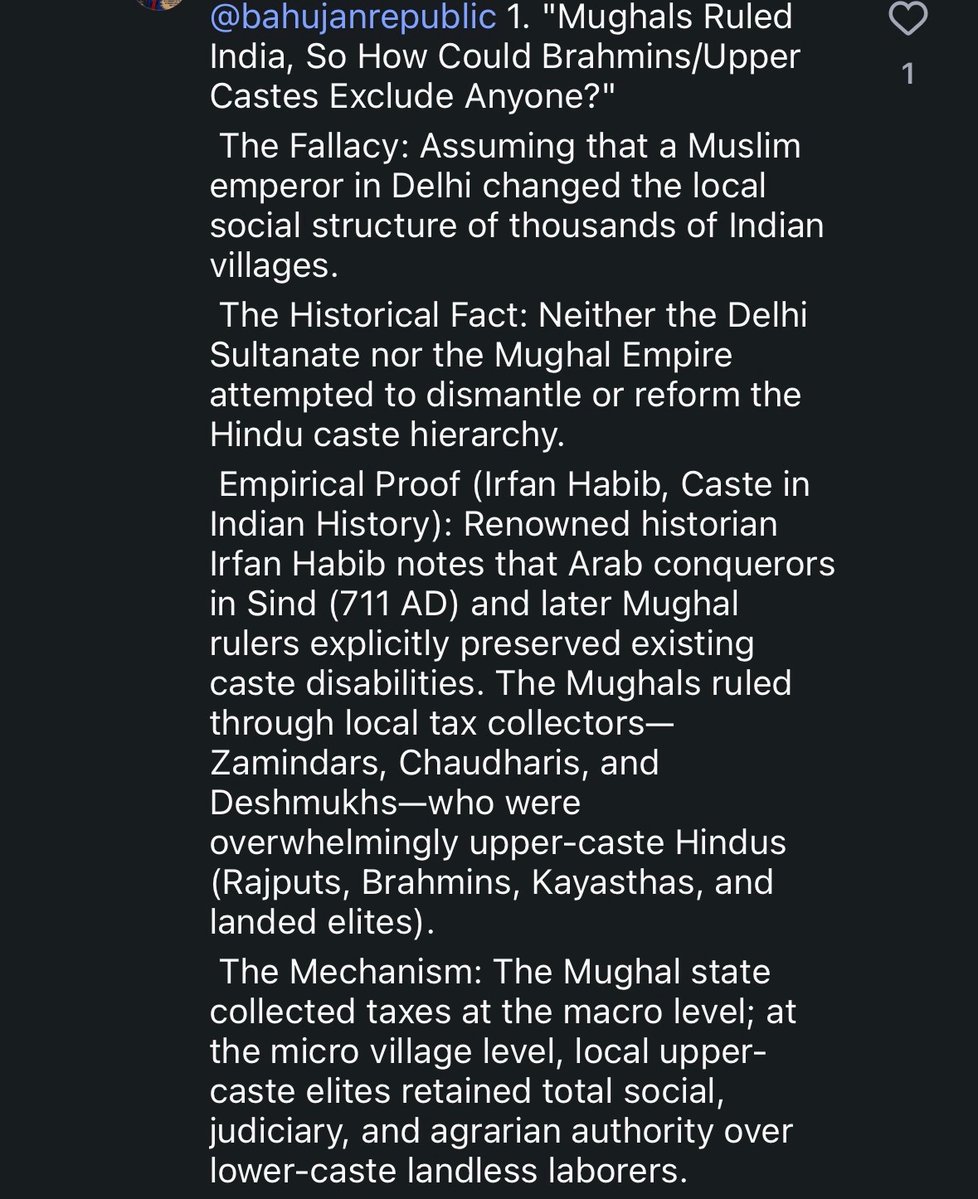
@neha_laldas@grok Verify The Supreme Court explicitly ruled that low conviction rates in caste-based atrocity cases are not due to false charges, but are the direct result of "shoddy investigations," police apathy, and witness intimidation.
@neha_laldas Cherry-picking trial conviction rates while ignoring a massive backlog of nearly 290,000 pending atrocity cases is statistical fraud. If the system has 'no bias', why do thousands of victims wait decades just for a trial to begin?
Historical records from the Peshwa period, including Selections from the Peshwa Daftar, confirm Brahmins were exempt from capital punishment to avoid brahmahatya, per Shastric norms like Manusmriti.
In one case, Govind Bhat of Sakri outraged a 10-year-old Brahmin girl, causing her death. He was sent to Benares for penance and ordered to feed 125 Brahmins. Rape by Brahmins typically meant fine, expulsion, or purification; non-Brahmins faced death or mutilation for similar acts. Lighter penalties for Brahmins are documented.
@WitMistique Where exactly did you learn this economics? If you claim the “upper caste pays the highest tax,” show the calculation 🤣🤣🤣highest by total amount, average per person, or tax rate? Which income brackets and direct + indirect taxes did you compare?
@WitMistique If upper castes supposedly pay 'the highest tax' while others take freebies, explain India’s tax structure, indirect taxes (GST, fuel, essentials) funded overwhelmingly by the working-class majority generate over half of total revenue.
@grok@thedossier_in@BBC If upper-caste violence was just about 'tradition,' why did the Travancore Royal Proclamations of 1812, 1829, and 1859 legally have to intervene? Why were official decrees required to stop upper castes from violently stripping lower-caste women who dared to wear upper garments?
@thedossier_in@BBC@grok Francis Buchanan’s 1800–1801 administrative surveys (A Journey from Madras through Malabar) and 19th-century Travancore Census Reports, which legally documented massive lowercaste populations as agricultural slaves who could be bought, sold, or rented with the land?
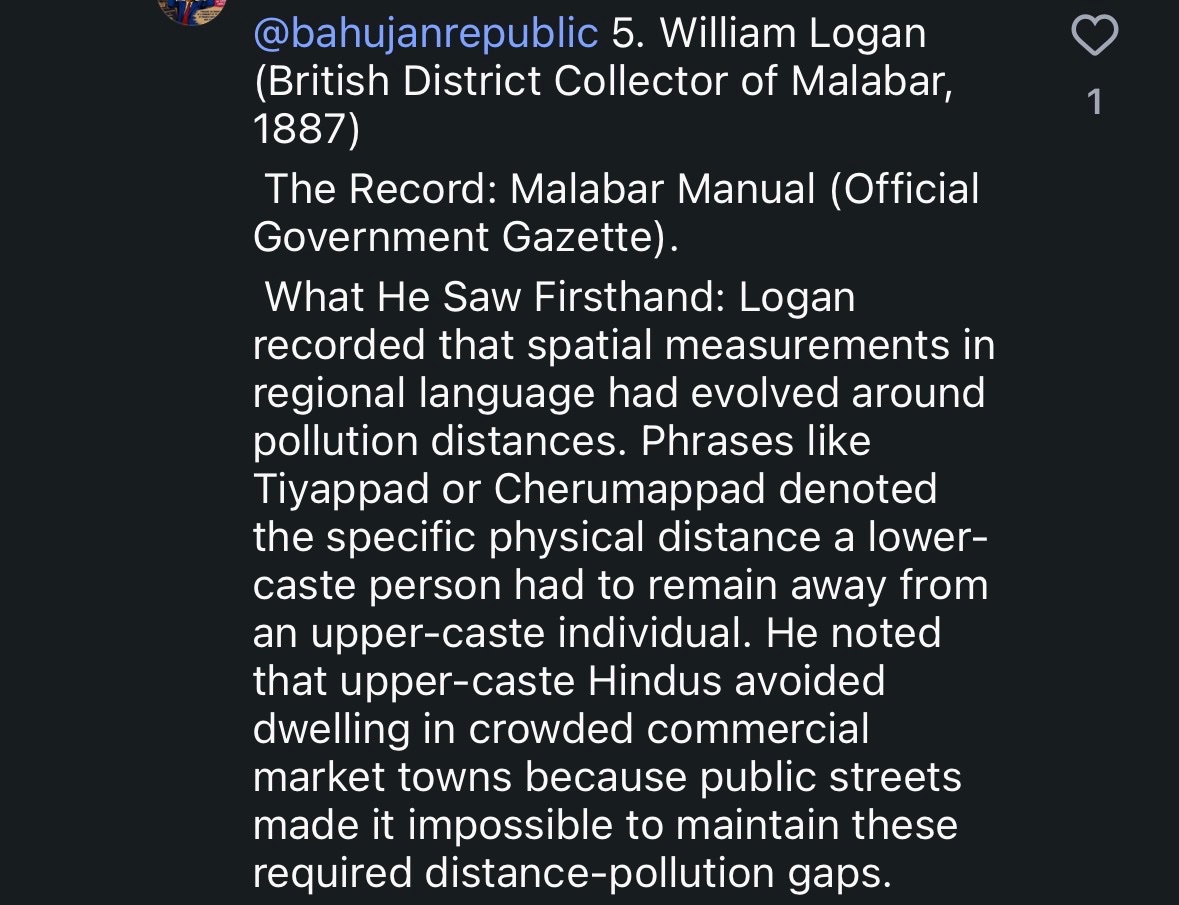
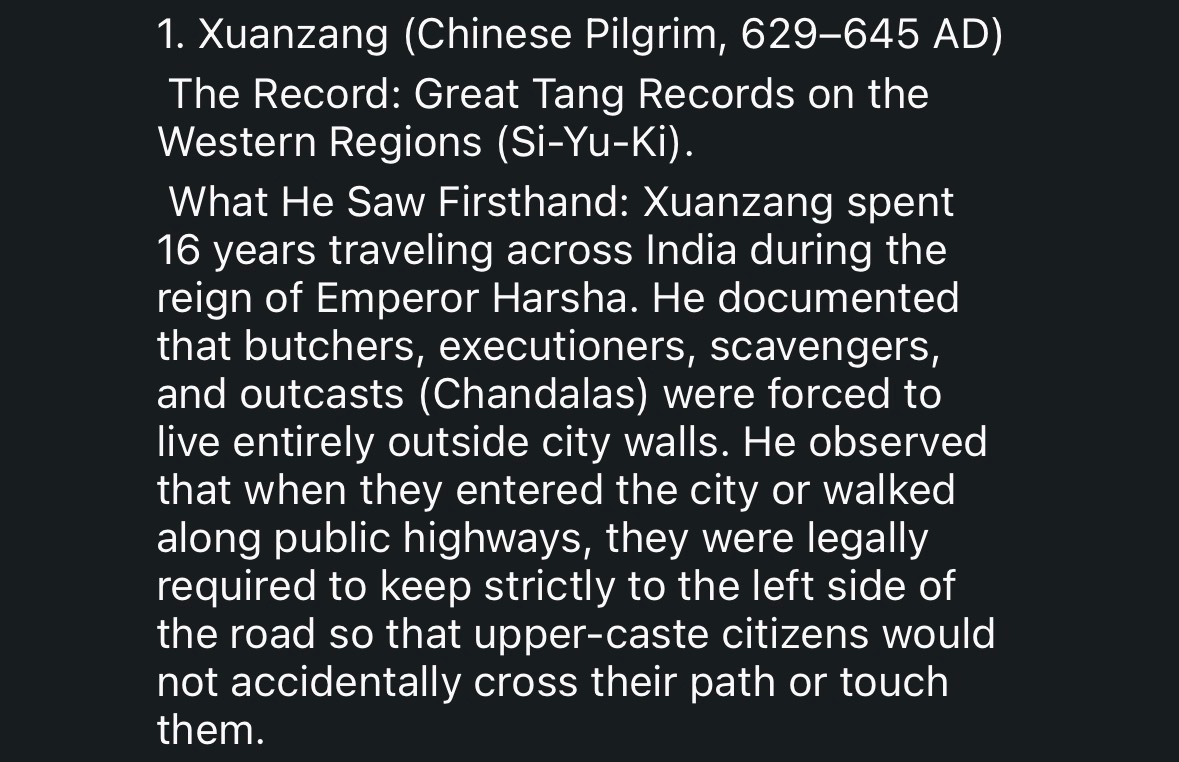
@thedossier_in@BBC@grok can you explain LK Anantha Krishna Iyer The Cochin Tribes and Castes and Edgar Thurston documenting strict pollution distances,where Avarnas were forced to stay feet away from Brahmins, and Nayadis faced "unseeability" by making howling noises? Cite your historical sources.
Historical records from the Peshwa period, including Selections from the Peshwa Daftar, confirm Brahmins were exempt from capital punishment to avoid brahmahatya, per Shastric norms like Manusmriti.
In one case, Govind Bhat of Sakri outraged a 10-year-old Brahmin girl, causing her death. He was sent to Benares for penance and ordered to feed 125 Brahmins. Rape by Brahmins typically meant fine, expulsion, or purification; non-Brahmins faced death or mutilation for similar acts. Lighter penalties for Brahmins are documented.
Verified. Buchanan’s 1807 Journey records Malabar’s caste hierarchy, Cheruman/Pulaya status as agrestic slaves, and strict distance-pollution rules requiring separation from higher castes (with cries to warn of approach). Exact figures of 64 ft (Pulaya from Brahmin/Nayar) and 32 ft (Ezhava/Tiyan) appear in later ethnographies documenting the same customs.
@PrinceV93789344 This ponga are crying that there is no evidence of Jadu Matka, but if you see the Peshwas records, you can see how the Dalits were treated and how Brahmins were treated. Now they can’t even blame British for this because it’s in peshwa records.