Excited to announce that I'll be joining Rice University's Dept. of Materials Science and NanoEngineering as an Assistant Professor in Jan 2026! My research will focus on new devices using nanomaterials for advanced computing. I'll be recruiting students/postdocs next year.
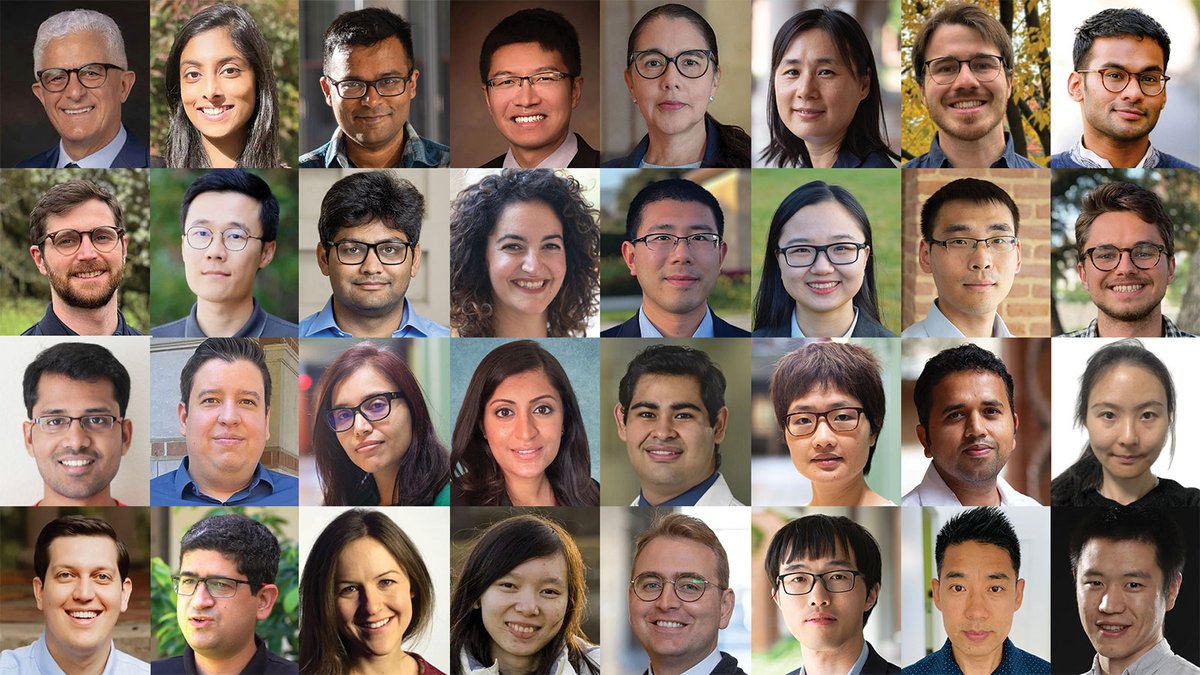
We are thrilled to welcome 32 new faculty members this year: 16 tenured/tenure-track and 16 teaching and research faculty members, reflecting the school's dedication to growth in both research and teaching. https://t.co/6XiQXMEyro
📢 CALL FOR PROPOSALS FOR 2026 MRS FALL! Submit your work to Symposium NM01: Bridging Scales—Scalable Electronics from Meter to Nanometer with 2D Materials.
👇🧵 🔗 https://t.co/OTsIw1XaOj
We are looking for abstracts covering the upscaling and downscaling of 2D materials: 🖨️ Printable Electronics 🌱 Scalable Growth & Materials Engineering 🤝 2D/3D Hybrid Integration 🏭 Industrial Pathways 🛠️ Defect Healing & Doping 💻 Device Simulation
*How can you use quantum neural networks (QNNs) to gain a quantum advantage on classical data?* We propose to use QNNs (and other quantum algorithms, including quantum signal processing) to process data in quantum sensors. 1/
🚀 Our lab website is live! → https://t.co/1VqMejaOAE
The Emerge Lab @RiceUniversity will explore emerging materials & nanoelectronics to advance computing, communication & sensing.
🔬 PhD positions opening soon—stay tuned!
#Nanoelectronics#MaterialsScience#RiceUniversity
*Programmable on-chip nonlinear photonics* We have developed a device containing a slab waveguide with arbitrarily programmable nonlinearity: its χ^(2) distribution as a function of 2D space can be reconfigured into any desired pattern, allowing a wide range of processes. 1/
*Save the dates*: the 2nd edition of *Computing with Physical Systems* will take place in Les Houches from 18-23 January 2026. Application details will be announced at https://t.co/DAtOlHwmVH later this year.
New in #npj2dmaterials@Nature_NPJ: Bennett et al. present a method to accurately extract mobility in emerging transistors with gate-dependent contact resistance, avoiding errors >2× present in conventional techniques. #nanomaterials#2dmaterials https://t.co/dW9rhNEq5Z
#IEDM2024 Highlight:
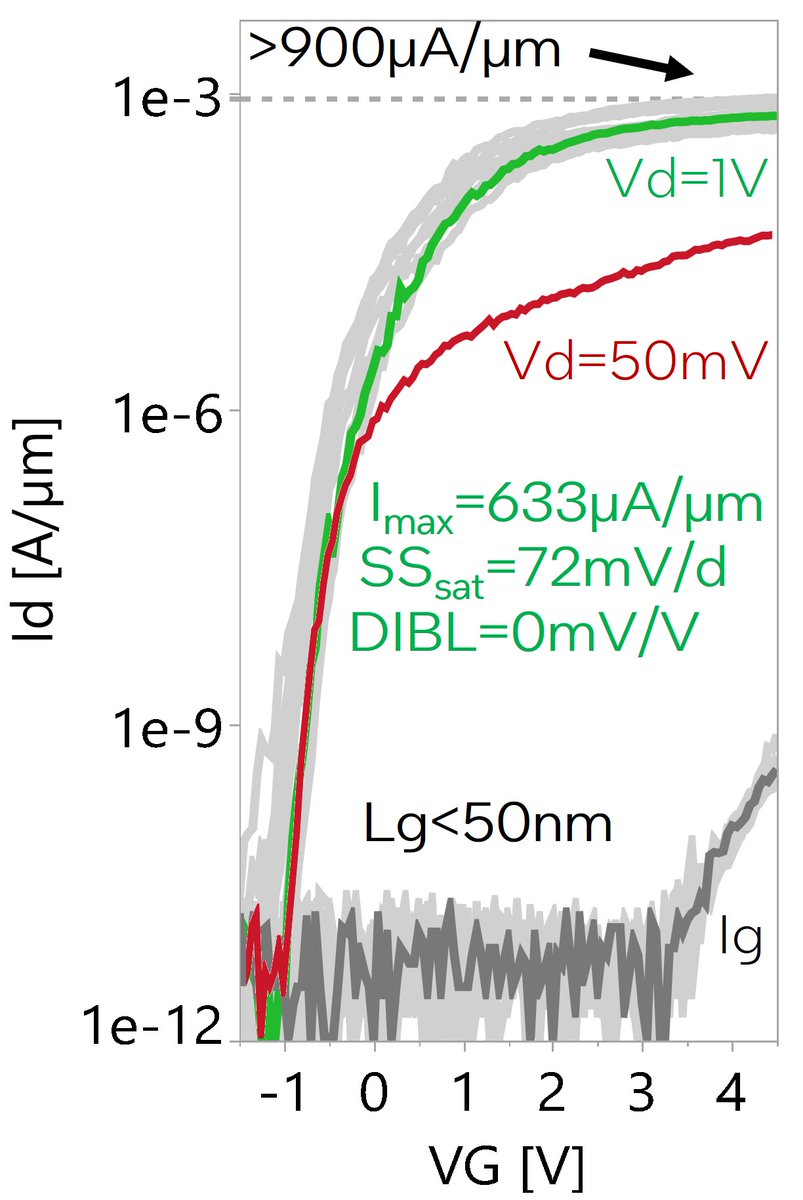
Record Performance with 2D Channels: Ultra-thin transition metal dichalcogenides, such as MoS2 & WSe2, are monolayer (2D) materials because they’re one just atomic layer thick. Part 1
https://t.co/9ql9zlQ5hu
Excited to announce that I'll be joining Rice University's Dept. of Materials Science and NanoEngineering as an Assistant Professor in Jan 2026! My research will focus on new devices using nanomaterials for advanced computing. I'll be recruiting students/postdocs next year.
We are thrilled to welcome 32 new faculty members this year: 16 tenured/tenure-track and 16 teaching and research faculty members, reflecting the school's dedication to growth in both research and teaching. https://t.co/6XiQXMEyro
A huge thank you to my mentors, collaborators, and colleagues at EPFL’s Lab of Nanoscale Electronics, Cornell’s McMahon Lab, and the Kavli Institute for their incredible support!
We are thrilled to welcome 32 new faculty members this year: 16 tenured/tenure-track and 16 teaching and research faculty members, reflecting the school's dedication to growth in both research and teaching. https://t.co/6XiQXMEyro
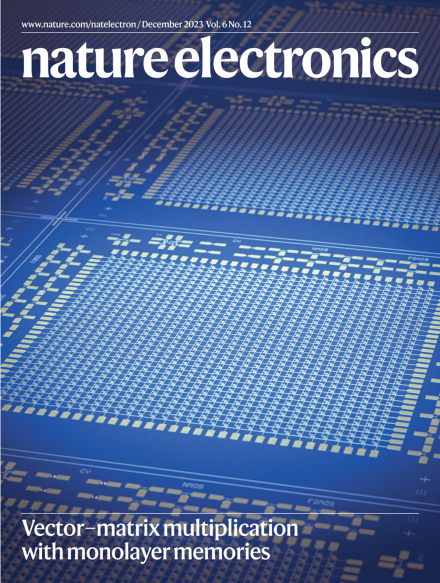
Right on time for the end of a great year for my group, the December cover of @NatureElectron is featuring our work on MoS2 LSI vector-matrix multipliers (https://t.co/HfmmVObDvP). Big congratulations to the team! @marega_gui@queformal@EPFLEngineering
We have published a new paper in @NatureElectronics (https://t.co/aedh3XwceG) by @marega_gui et al., presenting a large-scale integrated circuit with 1024 MoS2 devices working as an in-memory vector-matrix processor. @EPFL_en@EPFLEngineering@queformal. Photo by Alain Herzog.