🔴ÚLTIMA HORA: Advogada grava vídeo dando dicas para pessoas que tem dívidas em bancos, sobre como conseguir grandes descontos.
"Salvou meu dia, já tava desesperado", diz internauta.
📌 İbrahimi Dinler Hakkında 8 Gerçek:
1. Müslümanlar, Yahudilerin günümüzde Tanrı’nın seçilmiş halkı olduğu inancını genel olarak kabul etmez.
2. Yahudiler, İsa’yı Mesih (Maşiah) olarak kabul etmez.
3. Protestanlar, Papa’yı tüm Hristiyanların ruhani lideri olarak görmez.
4. Hristiyanlar, Muhammed’i son peygamber olarak kabul etmez.
5. Müslümanlar, İncil ve Tevrat’ın ilahi kökenli olduğuna inanmakla birlikte, zaman içinde değişikliğe uğradıklarını düşünür.
6. Yahudilikte, Yahudi halkının Tanrı ile özel bir antlaşmaya sahip olduğu inancı bulunur.
7. Hristiyanlar, Yeni Ahit’te yer alan dört İncil’e rağmen, Hristiyanlığın hak din olduğuna inanır.
8. Bu üç dinin mensupları, dinlerinin kökeninin aynı Tanrı’ya dayandığını kabul etseler de, kurtuluşun ve cennetin kimlere ait olduğu konusunda farklı görüşlere sahiptir.
@AteologX
Benzeri içerikler için sayfamı takibe almayı, beğendiyseniz içeriği yayınlamayı unutmayınız.
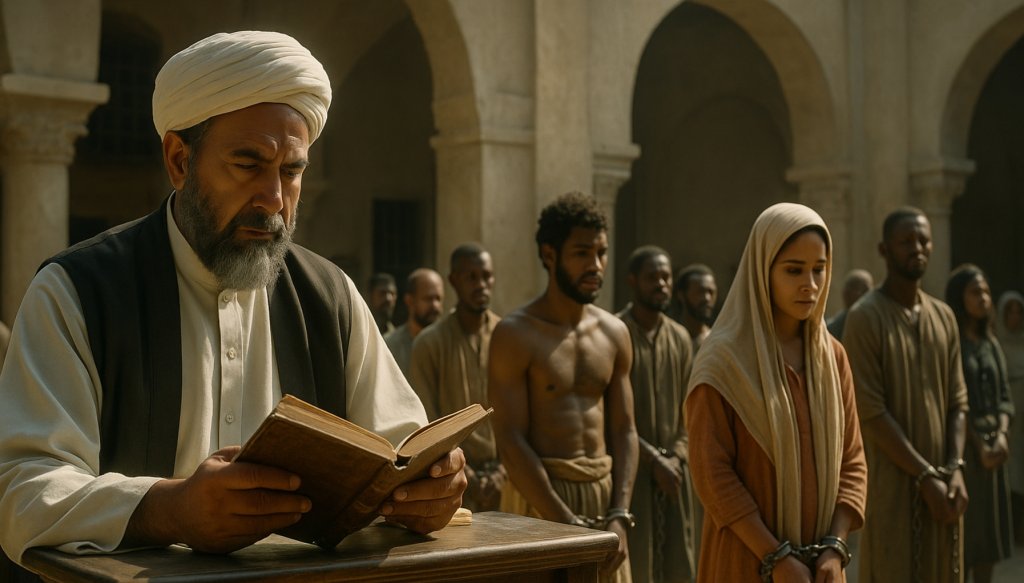
ISLAM-SHARIAH LAW: SLAVERY IS STILL THEOLOGICALLY PERMISSIBLE
Shariah law never abolished slavery. It regulated the ownership of human beings, permitted their sexual use, and embedded the institution into the Quran, the example of Muhammad, and classical jurisprudence. Even after most Muslim-majority nations formally banned slavery under external pressure in the nineteenth and twentieth centuries, the theological foundation remained intact. Slavery is still permissible in principle according to the foundational sources of Islam. Jihadist groups have repeatedly demonstrated that they can revive the practice by appealing directly to those sources without theological contradiction.
THE QURANIC PERMISSION FOR OWNING AND USING SLAVES
The Quran repeatedly refers to slaves as “those whom your right hands possess” (ma malakat aymanukum). This phrase designates men and women acquired through war, purchase, or inheritance as lawful property. Quran 4:24 permits sexual relations with married women except “those your right hands possess.” Quran 23:5-6 praises believers who “guard their private parts except from their wives or those their right hands possess.” Quran 33:50 grants the Prophet special permission regarding his wives and “what your right hand possesses” from among the captives. Quran 4:3 allows men to marry up to four wives or to take from among the female slaves they own.
These verses do not treat slavery as a temporary evil to be phased out. They present it as a normal category within the life of the ummah (Muslim community). Female slaves could be used sexually without marriage. Captives taken in jihad became war booty to be distributed, ransomed, or kept. The text assumes believers will own slaves and regulates how to treat them, marry them in some cases, or free them for merit. It never issues a command to end the ownership of other human beings. Freeing a slave is listed as one possible good deed or act of atonement, but owning slaves is never condemned as sinful.
MUHAMMAD’S EXAMPLE AS SLAVE OWNER, TRADER, AND DISTRIBUTOR
Muhammad’s life sets the pattern that Shariah follows. Islamic sources portray him as an owner of male and female slaves, a trader in human beings, and a distributor of captives taken in battle. He acquired slaves through purchase and through the spoils of war. He kept female slaves as concubines, and at least one of his children was born to a slave woman. After raids, he took his share of the human booty and allocated the rest among his followers.
When Muhammad freed individual slaves, those acts are presented as personal generosity or responses to conversion, not as steps toward dismantling the institution. For every slave he freed, others were taken and distributed. Classical jurists studied these accounts carefully and concluded that if the final Prophet of Allah owned, traded, and sexually used slaves without divine rebuke, then slavery itself cannot be inherently immoral. At best, one might argue that conditions have changed and that owning slaves is currently impractical, but the underlying right remains valid under the Quran and Sunnah.
CLASSICAL SHARIAH CODIFIES SLAVERY AS LEGITIMATE
Islamic jurists across the major legal schools developed detailed rules for acquiring slaves, their treatment, their sexual use, their children, their manumission, and their inheritance. Slavery was integrated into family law, criminal law, and the economics of jihad. Captives from non-Muslim lands could be enslaved. Children born to slave mothers inherited slave status unless freed by the master. Sexual relations with female slaves were explicitly permitted and regulated.
These rulings were not fringe opinions. They represented the mainstream consensus for over a thousand years. The texts never reached a point of declaring chattel slavery incompatible with Islamic ethics. They regulated it, limited some abuses, and encouraged manumission as a meritorious act, but they preserved the right of Muslims to own other human beings.
MODERN ABOLITION WAS PRAGMATIC, NOT THEOLOGICAL
When Muslim nations eventually outlawed slavery, they did so under sustained international pressure, economic shifts, and diplomatic necessity. The foundational texts did not change. Reformers who tried to argue that the “spirit” of Islam pointed toward abolition were countered by traditional scholars who pointed out that the Quran and Sunnah embed slavery deeply into marriage, sexual ethics, inheritance, and the conduct of war. If Allah had intended total abolition, they argued, He could have commanded it clearly. Instead, He regulated slavery and presented it as a normal feature of society.
This leaves a permanent gap. Secular laws may ban slavery today, but the theological permission remains available for anyone who returns to the Quran, the hadith, and classical fiqh. Groups such as ISIS openly revived slavery in the twenty-first century, capturing Yazidi women and girls as sex slaves and citing the same verses and prophetic example that classical jurists used. They faced no credible theological rebuttal from within orthodox Islamic sources, only pragmatic or political condemnation.
BIBLICAL TRAJECTORY POINTS TOWARD FREEDOM
Jehovah’s revelation moves in the opposite direction. The Old Testament regulated ancient forms of servitude in an agrarian world but strictly forbade man-stealing and selling persons into permanent bondage. It limited the duration of Hebrew servitude, instituted the Year of Jubilee for release, and commanded kindness toward servants and strangers. The trajectory consistently protected the vulnerable and loosened the grip of permanent ownership.
The New Testament goes further. In Christ there is neither slave nor free. All believers stand equal before God. The apostle Paul urged a Christian master to receive back a runaway slave as a brother rather than property and effectively encouraged his freedom. Jesus took the form of a servant and washed the feet of His disciples. He offered Himself as a ransom for many rather than demanding ransom from captives. Christian abolition movements in later centuries drew directly from these principles to declare chattel slavery incompatible with the Gospel.
THE DANGEROUS IMPLICATIONS THAT REMAIN
Because Shariah never theologically rejected slavery, the institution can be revived whenever a group decides that the conditions for jihad and conquest have returned. The permission is not historical curiosity. It is live doctrine. Female captives can still be claimed as “those whom the right hand possesses.” Sexual slavery can still be justified by the same verses that classical scholars used for centuries. Modern bans rest on secular law and international norms, not on any internal Islamic declaration that owning human beings is inherently evil.
This is the unsoftened reality of what the Quran, the Sunnah, and Shariah jurisprudence actually teach. Slavery was never declared sinful at the source. It was regulated, practiced by the Prophet, codified by the jurists, and left theologically available for future generations who choose to act on it.
If it’s within your capacity and you value these educational posts, we appreciate any support on our ‘Buy Me a Coffee’ link found in our profile.
Lamentável o que esses sanguessugas da Fê alheia andam a fazer, mas de uma coisa tenho certeza a hora dele prestar contas junto do Pai vai chegar e ai não terá palavras bonitas, vida de luxo,Dízimo corrompido,palestras bonitas não terá nada disso a seu favor.
@AliciaJ86958882 gracias sou do brasil, e a mesma dor de voc~es é a nossa, foi genocídio de portugal e espanha , holanda e inglaterra em toda américa, é bom sabermos de história.
🇦🇷🎓 Mais de 10 mil docentes abandonaram as universidades públicas na Argentina desde a posse de Javier Milei - O governo libertário cortou 45,6% do orçamento da educação superior para 2026.
📍 Por isso, o país inteiro vai às ruas nesta terça-feira (12) para uma marcha em defesa das universidades.
+
Lo que ves en esta foto te va a hacer sentir muy pequeño.
Cada punto de luz es una estrella.
No un planeta. Una estrella completa.
Y esto es solo un trozo diminuto del cielo.
Datos que nadie te explica y que cambian cómo ves todo:
→ En el universo observable hay más estrellas que granos de arena en TODOS los océanos, playas y desiertos de la Tierra juntos. Más de 200 sextillones.
→ Solo en nuestra galaxia hay entre 100.000 y 400.000 millones de estrellas. Y galaxias como la nuestra hay más de 2 billones.
→ Los astrónomos calculan que al menos el 20% de esas estrellas tienen un planeta en zona habitable, con agua líquida posible.
→ Eso son potencialmente 40.000 millones de planetas solo en la Vía Láctea que podrían albergar vida.
→ La señal de radio más lejana que hemos enviado lleva viajando desde 1977 y apenas ha recorrido el 0,002% de nuestra galaxia. Ni hemos salido del barrio.
→ Hay estrellas en esta foto cuya luz salió viajando hace más de 10.000 años. Lo que ves no es el presente. Es el pasado profundo.
→ En 2017 detectamos una señal de radio repetitiva desde fuera de la galaxia. Nadie ha dado una explicación definitiva.
Y todavía hay quien cree que en todo esto solo existimos nosotros.
Dime:
¿Estamos solos en el universo o sería el mayor desperdicio de espacio de la historia?
🔴ÚLTIMA HORA: Homem viraliza nas redes sociais após ensinar como acabar com ligações de SPAM, deixando internautas impressionados.
"Deu certo, obrigado", diz internauta.
Canalha Safado!
Malafaia se diz contra fim da escala 6x1: "A Bíblia deixa claro, trabalharás seis dias, e só no sétimo descansará, mudar isso é uma afronta a Deus" ... 👀 👇
🇧🇷Professores denunciam que o governo estadual estaria impondo, de forma obrigatória e sem amplo debate com a comunidade escolar, um material pedagógico sobre antissemitismo produzido pela StandWithUs Brasil
A denúncia aponta que a essa cartilha defende ações do Estado de Israel
🔥 ESTO NO TE LO ENSEÑARON EN LA IGLESIA 🔥
¿Sabías que la Biblia que tú conoces... no es la única que existe?
Y no hablo de "ediciones". Hablo de versiones con distinto número de libros.
📖 La Biblia católica tiene 73 libros.
📖 La protestante tiene 66.
📖 La ortodoxa etíope tiene **81.**
📖 La ortodoxa griega tiene 78.
¿Cuál es "la verdadera"? Buena pregunta. Nadie se pone de acuerdo.
Pero eso es solo el principio 👇
➡️ Hay textos que fueron arrancados de ciertas versiones y preservados en otras.
➡️ Hay frases que no existían en los manuscritos originales y aparecieron siglos después (el caso de 1 Juan 5:7 es famoso entre los propios teólogos).
➡️ Hay palabras clave que fueron reemplazadas para suavizar, justificar o directamente disfrazar lo que decían.
➡️ Hay libros enteros — como el Libro de Enoc, el de Jubileos, el Pastor de Hermas — que alguna vez fueron considerados sagrados y luego fueron eliminados por decisión humana en concilios.
Decisiones humanas. Votos. Política religiosa. Poder.
Eso es lo que determinó qué entró y qué no en "la palabra de Dios".
Y aun así… se presenta como un texto inmutable, perfecto e inspirado divinamente. 🤔
No te estoy pidiendo que abandones tu fe.
Te estoy pidiendo algo mucho más sencillo:
👉 Que preguntes.
👉 Que investigues.
👉 Que no le tengas miedo a las preguntas, porque si tu fe es sólida, las respuestas no deberían asustarte.
La duda no es el enemigo de la espiritualidad.
La ignorancia sí lo es.
💬 Comparte si crees que la gente merece saber esto.