People ask why I'm so obsessed with alpacas. I've looked into it, and the mystery is how the rest of you stay so calm.
The alpaca was bred out of the wild vicuña about 6,000 years ago, at 4,000 metres in the Andes, where the air is thin, it freezes every month of the year and the grass is mostly a rumour. It thrives there. Its blood grabs oxygen better than almost any mammal's, and its stomach wrings a living out of forage a sheep would write to its MP about.
It is polite to the ground. It walks on soft pads, so it never cuts the turf. It nips the grass off instead of tearing out the root. And the whole herd uses one agreed dung pile, like a village with a by-law. Herders above the treeline have burned that pile as fuel for thousands of years, because there is nothing else up there to burn.
Then the fleece. Finer than wool, warmer for its weight, 22 natural colours and no grease. The Inca ran an empire on it. Their best cloth was worth more than gold, soldiers were paid in it, the state kept warehouses of it stacked to the rafters, and they burned it as an offering because nothing more valuable was to hand. The Spanish walked straight past the cloth to get to the metal.
In the 1990s an archaeologist in Peru examined alpacas that had been buried under house floors a thousand years earlier and dried by the desert down to the eyelashes. She put the fleece under a microscope. It was finer and more even than anything alive today. The herders of the year 1000 had better animals than we do.
Because within a century of the conquest about nine in ten were dead, along with the people who knew how to breed them, whose records were kept on knotted strings nobody can now read. The survivors were driven up to the highest, worst pasture with the families who refused to give them up. Every alpaca alive descends from the ones those people hid in the sky.
In 1836 a Bradford wool man called Titus Salt found bales of it lying unwanted in a Liverpool warehouse, worked out how to spin it, and made enough to build an entire town.
They hum, constantly, mothers to young and each to each. They give birth in the morning, so the newborn is dry and standing before the night freezes. Put two in a field of lambs and they will see off a fox. They do spit, but almost entirely at each other, over food, which is more than most families can claim.
The word jerky is theirs. It comes from ch'arki, the dried alpaca and llama meat of the high Andes. And their blood makes a kind of antibody a tenth the size of ours, which drug companies now raise them for.
Meanwhile "fleece" in a British shop means a jacket knitted out of oil.
Six thousand years of turning frozen grass into cloth, fuel, meat and medicine, and we know it as the one with the haircut at the petting farm.
So no. If anything I've been underdoing it.
Every superfood in the shop got its halo from a single nutrient, and most of them can't even deliver that one.
Spinach is sold on iron. You absorb about 2% of it.
The carrot is sold on vitamin A. It contains none.
The banana is sold on potassium. A 300g ribeye carries more than twice as much, without the three teaspoons of sugar.
Kale is sold on vitamin K. It is K1, the clotting kind. The K2 that sends calcium to your bones lives in cheese, butter and yolk.
The walnut is sold on omega-3. It is the plant kind your body barely converts, with four times as much omega-6 along for the ride.
The avocado is sold on oleic acid, the fat that made olive oil respectable. Beef fat is about 40% oleic, and you were told to cut it off.
The lentil is sold on protein. It carries twice as much carbohydrate, and runs so short of methionine that the vegetarian cookbooks tell you to pair it with rice.
Porridge is sold on beta-glucan, for your cholesterol. The claim was granted on Quaker's own petition in 1997, and the oats are two thirds carbohydrate.
The mushroom is sold on vitamin D. A UV lamp in the packing shed put it there, and it is D2, the weaker kind.
The blueberry is sold on antioxidants. The USDA withdrew its antioxidant scores in 2012, on the grounds that they meant nothing inside a human body.
Brown rice is sold on the minerals in its bran. The bran also carries the phytate that locks them away, and about 80% more arsenic than white.
Almond milk is sold on calcium. It is about 2% almonds, and the calcium is powdered chalk.
Breakfast cereal is sold on iron. It is metal powder mixed in at the factory, and you can pull it out of the bowl with a magnet.
Every halo on that list is one nutrient wide.
An egg yolk hands over the vitamin A, the vitamin D, the K2, the DHA and the oleic acid, finished and ready to use.
In 1968 the American Heart Association rationed it to three a week.
One nutrient buys a plant a halo. Five bought the yolk a ration.
Grace O’Malley-Kumar grabbed a knife attacker to protect her friend. When he turned on her, she held on.
On 13 June 2023, during the Nottingham attacks, Grace was walking back to student accommodation with her friend Barnaby Webber when a man with a large knife attacked Barnaby and brought him to the ground.
Grace grabbed the attacker and tried to hold him back. The man turned the knife on her, but she kept her grip and kicked out even after he had stabbed her several times.
When she fell, she tried more than once to get back up and reach him again.
Grace and Barnaby both died from their injuries, aged 19.
Grace had just finished her first year of medicine at the University of Nottingham, where she played hockey after representing England at under-16 and under-18 level.
In October 2025, Grace was awarded the George Medal for trying to save Barnaby.
That July, her name had already been on a different kind of award, the Grace O’Malley-Kumar Cup.
On 6 March 1351, Edward III created Henry of Grosmont first Duke of Lancaster, granting him palatine powers for life.
These powers gave the Duke extensive royal authority over justice and administration within Lancashire, establishing its distinctive status as a County Palatine.
The ruminant family, and the one job each of them does that nothing else on earth can.
The cow turns a wet hillside into beef and milk, and leaves the soil better than she found it.
The sheep grows a fireproof, waterproof, compostable coat every year, out of grass and rain, and then gives it away for the price of a haircut.
The goat eats the bramble, the scrub and the invasive weed that strangles everything else, and asks only for a weak point in the fence.
The water buffalo makes the milk that becomes real mozzarella, standing in marsh a cow would sink in.
The yak gives milk at an altitude that would kill a lowland animal in a week, and carries your bags up there as well.
The reindeer feeds and clothes entire peoples above the Arctic Circle, on lichen and moss, in the dark, for months.
The bison built the deepest soil on the planet by walking across it and eating.
Seven animals, one gift each, and not one of them can be replaced by a crop, a machine or a sachet.
Every one of them is classed, this decade, as a liability on a spreadsheet by somebody who has never been cold.
Thank you for speaking calmly and quietly, with slow ,measured movements. It really helps the animal to calm down as well. You folks did it up right!
Beautiful. Thank you for helping that precious creature.
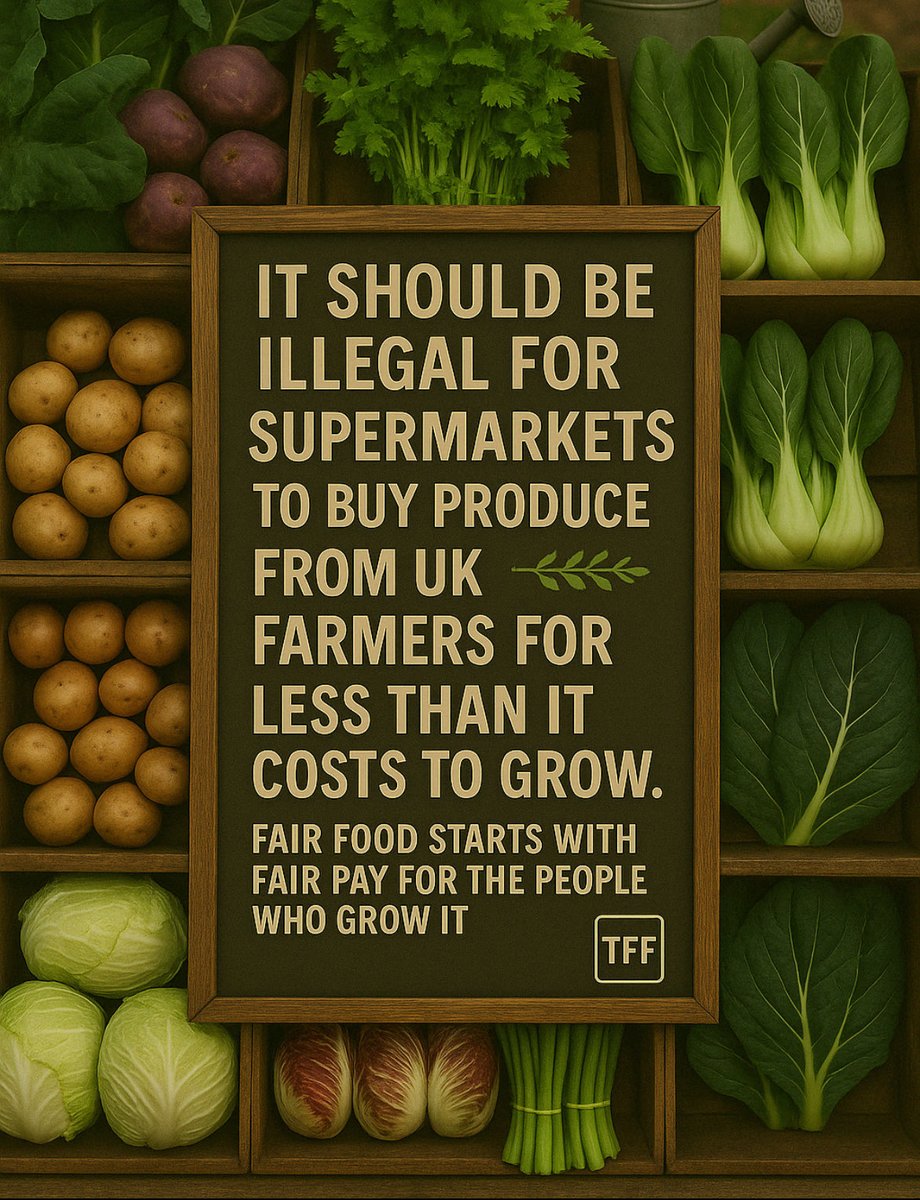
Kaleb Cooper, the farm manager on Clarkson's Farm, worked out his own hourly rate from the farming side of his business and it came to fifty pence. He said so on a podcast. His books pay rather better.
Kaleb is not a television character. He is a working contractor who was farming in the Cotswolds before the cameras came and will be when they go, and he has done the sums that most farmers do in their heads and keep to themselves.
- Hourly rate from farming, by his own count: 50p.
- Hourly rate for the woman who stacks the shelf his wheat ends up on as a loaf: at least £12.71.
- Price of the loaf: about £1.40.
- What the wheat in it earns the farmer: about 10p.
- The farmer's profit on it, measured in 2022: 0.09p.
The whole chain is paid before the man who grew the thing. The supermarket takes its margin, the miller his, the baker his, the haulier his, the fertiliser company its, and what is left when the harvest has been through all of those hands is the farmer's. His share has been shrinking for decades, because he is the only link who cannot pass the cost on. He cannot hold out for a better price for long either. The seed, the fertiliser and the diesel were paid for months before harvest, and grain costs money every week it sits in the shed.
Selling direct is the one place it is different. A farmer who sells off his own farm, through his own shop, to a customer who drove there, keeps far more of the price. That is why Diddly Squat had queues out onto the road, while Clarkson's first year of actually farming the place made him a profit of £144.
Kaleb is in his twenties and has three children and is one of the best farmers in Oxfordshire, and his trade pays him about a 25th of the legal minimum wage. The country wants its food cheap, and it has got exactly that.
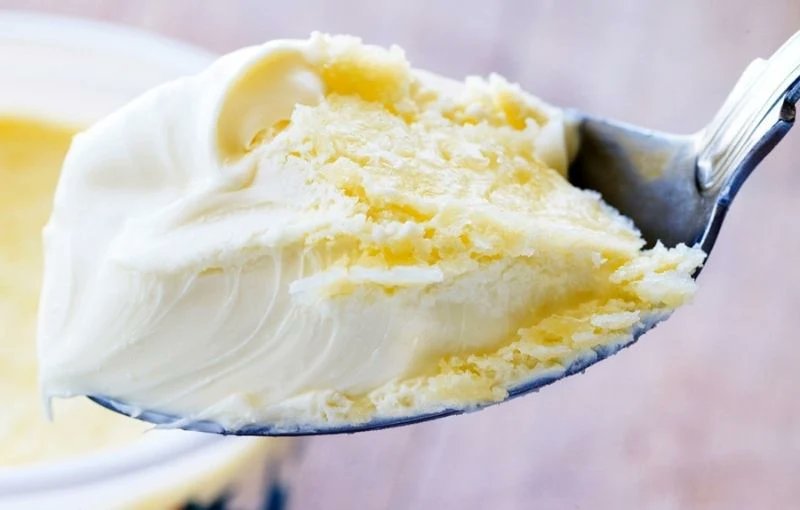
Clotted cream is the richest dairy product in the British kitchen, nearly two thirds fat, and it was invented as a way of keeping milk in a county with no ice.
The method is older than anyone can trace. Fresh milk from the morning is left in a wide pan until the cream rises, then the whole pan is set over a very low fire or in a cooling bread oven for hours, never boiling, until a thick crust forms on top the colour of old gold. It cools overnight and the crust is lifted off with a skimmer. That crust is the cream, and the scalding is what kept it. Heated that way it lasted for days when fresh cream would have turned by teatime.
Devon and Cornwall argued over it for centuries and still do. The Cornish got the legal protection in 1998, on condition that the milk is Cornish and the fat is at least fifty-five per cent, though the good stuff runs higher. The argument about whether the cream or the jam goes on the scone first has split the two counties for as long as there have been scones, and it is the only question in British food that people will genuinely fight over.
If you grew up in the West Country it came in a cardboard tub with a crust you broke through with a knife, and it went on everything: the scone, the apple pie, the porridge, a spoon of it straight off the blade when nobody was looking. A pot sent by post to a relative in London was the standard Christmas present from Cornwall for a hundred years.
It is milk with the water taken out and the fat left in, and it was the ordinary household food of the two poorest counties in England.
The cream tea is now a treat you drive to and photograph. In 1930 it was what a dairy farmer's wife did with Tuesday's milk, and the fat was the whole point of doing it.