"Relational autonomy sees people as interconnected and interdependent, shaped by their culture, communities, and relationships with loved ones". Grateful for the opportunity to write about this topic in NEJM! https://t.co/OtkGLeDYR7
1/ 🚨NEW: Clinician Grief: At the Bedside Segment
What happens to our grief when the work doesn’t stop?
🎧: https://t.co/uNbj47328u
📝: https://t.co/0x9wxTdYNY
1/ 🚨 NEW #AtTheBedside: Moral Distress Part 2: Strategies & Solutions
The FIRST and most important step in addressing moral distress:
❤️🩹Naming it
We must identify what we’re actually feeling
🖥️: https://t.co/tgbPZA8ZjQ
1/ 🚨 NEW #AtTheBedside: Moral Distress Part 1: Definitions, Causes & Consequences
Time to really name, talk about, and hopefully unpack some of the hidden weight we carry in the practice of medicine ⤵️
🖥️: https://t.co/n2OyYICBbx
Sponsor: @Pan_Financial
2 Erics, 1 race 🏁
Both Eric Hedlin and Eric Brown are tapered and ready to go for the 10k open water race as the first 🇨🇦 men to hit the water.
Results: https://t.co/v9jGreU7IA
Unsupervised Semantic Correspondence Using Stable Diffusion
show that, without any training, one can leverage this semantic knowledge within diffusion models to find semantic correspondences -- locations in multiple images that have the same semantic meaning. Specifically, given an image, we optimize the prompt embeddings of these models for maximum attention on the regions of interest. These optimized embeddings capture semantic information about the location, which can then be transferred to another image. By doing so we obtain results on par with the strongly supervised state of the art on the PF-Willow dataset and significantly outperform (20.9% relative for the SPair-71k dataset) any existing weakly or unsupervised method on PF-Willow, CUB-200 and SPair-71k datasets
paper page: https://t.co/V4uPWUE2Fu
Unsupervised Semantic Correspondence Using Stable Diffusion
show that, without any training, one can leverage this semantic knowledge within diffusion models to find semantic correspondences -- locations in multiple images that have the same semantic meaning. Specifically, given an image, we optimize the prompt embeddings of these models for maximum attention on the regions of interest. These optimized embeddings capture semantic information about the location, which can then be transferred to another image. By doing so we obtain results on par with the strongly supervised state of the art on the PF-Willow dataset and significantly outperform (20.9% relative for the SPair-71k dataset) any existing weakly or unsupervised method on PF-Willow, CUB-200 and SPair-71k datasets
paper page: https://t.co/V4uPWUE2Fu
This is a podcast I did with @COREIMpodcast on disputed treatment requests in ICUs (when patients want something physicians think is not needed/appropriate/effective)
I am impressed with the amount of work the @COREIMpodcast puts into these episodes
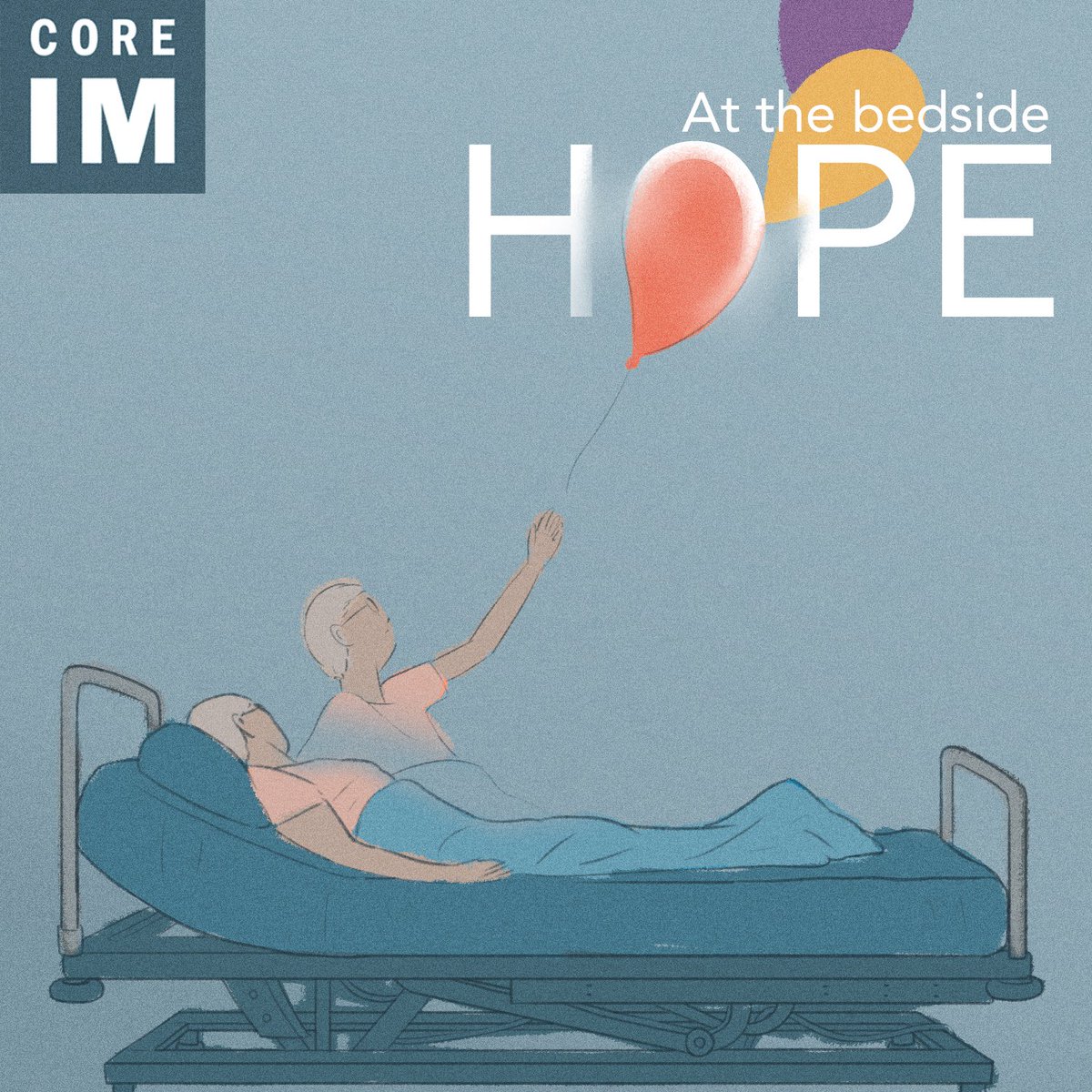
🚨 Hope: At The Bedside Episode 🚨
A powerful episode on practical ways to approach the different types of #hopes patients may have!
🎧 / Show notes: https://t.co/qcQNTrk5Ui
Sponsor: https://t.co/5zGm9Qo6fB
1/ 🚨 New Episode 🚨
Upstanders: Standing Up Against Microaggression
#AttheBedside Segment
Hear powerful personal stories of ways people have been #upstanders and ways others have not 🙏
🎧: https://t.co/CstGdTE2wT
Show notes: https://t.co/QzLrWU8ESf
Sponsor: @Pan_Financial