The Lyme–Long COVID Continuum
A growing number of patients occupy the intersection of chronic tick-borne illness and Long COVID. These are not necessarily distinct syndromes - they often represent overlapping mechanisms producing a remarkably similar clinical phenotype.
This is likely why taking high doses of creatine helps with long COVID brain fog and fatigue.
You gotta help your ATP production any way you can, and 20-30g of creatine a day crosses the blood brain barrier and acts like an extra energy buffer for your neurons
Beetroot may be a more reliable HRV and NO-support strategy than L‑arginine - especially when endothelial NOS is impaired. Arginine feeds polyamine pathways that some viruses can exploit for replication, so I’m cautious with high-dose arginine. Long Covid data for beetroot is still very limited, though.
https://t.co/lQBprJnX8b just got a bit smarter with multiple recursive retrieval and reasoning processes that make it function less like a retrieval system and more like a research assistant with something to prove.
Long COVID-related eye symptoms persisted for 3 months to 3 years in a new study. Specialized tests linked them to altered pupil control, corneal nerve damage and immune activity, suggesting the symptoms may have measurable biological features. Let's break it down.
From an observational study of 227 adults (19–79 y/o) who were previously hospitalized for COVID-19,
"Several neurological symptoms increased in prevalence over 36 months following hospitalization..
Fatigue remained most common (53–65%), followed by memory/concentration difficulties (47–61%) and sleep disturbances (40–48%).
Dizziness had a modest increase (30–49%), while coordination impairment more than doubled (18–41%)..
Symptom co-occurrence strengthened over time, with fatigue frequently clustering with other symptoms (up to 45% at 36 months).
Overall BrainCheck composite scores were not independently associated with neurological symptoms, but significant associations emerged for executive function, memory, and attention, including time-dependent effects..
[In conclusion,] Neurological symptoms can persist or worsen up to 36 months post-COVID-19 hospitalization.."
Let's look at the bright side - you will forget this conclusion in 36 hours.
'Longitudinal trajectories of neurologic symptoms and cognitive associations at 36-months post-hospitalization for COVID-19'
https://t.co/qYJYH4BdIb
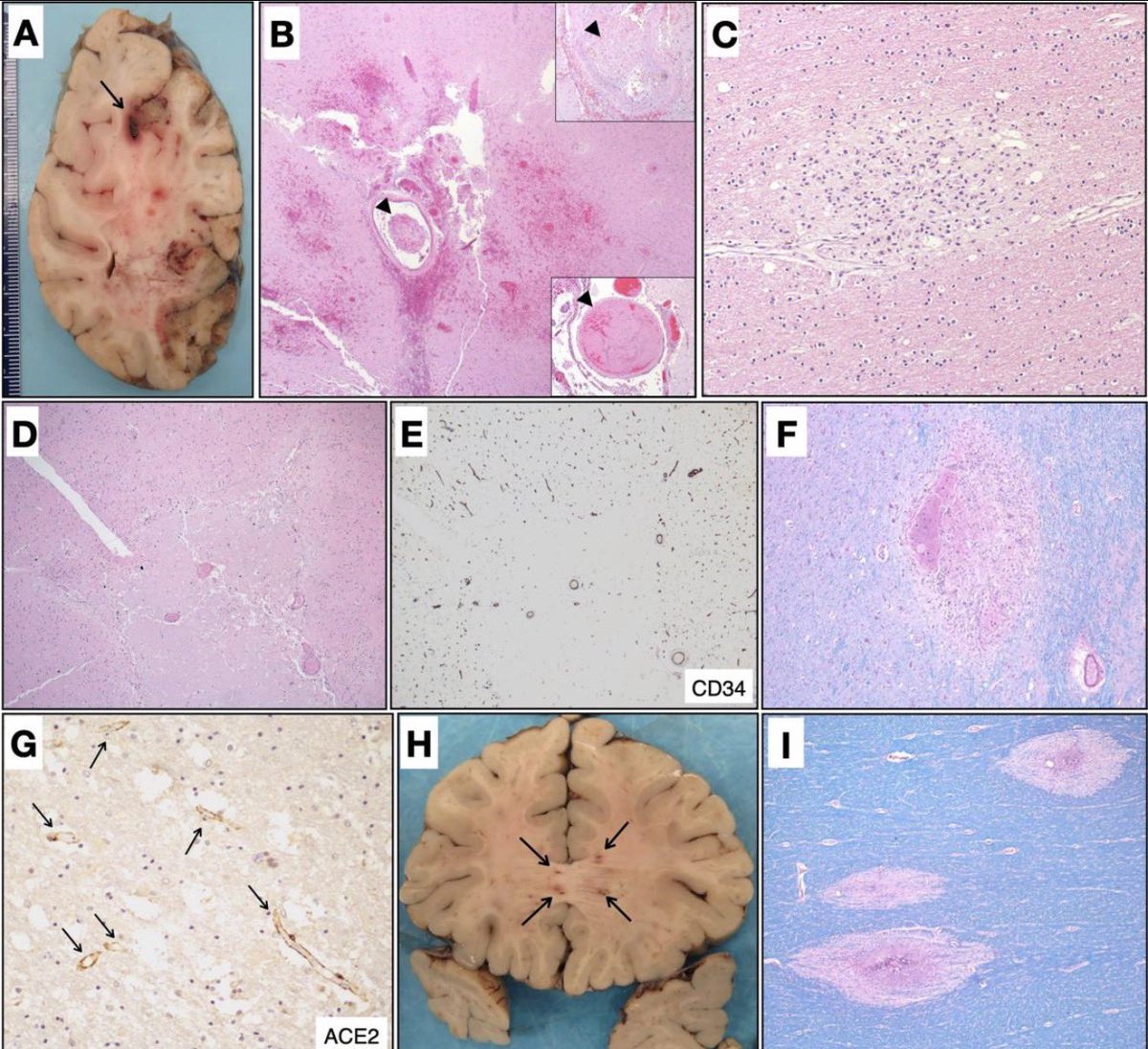
Can mild COVID-19 leave a biological footprint that persists for years?
➡️ In a rare postmortem study of individuals who had only mild COVID-19 and died >250 days later from unrelated causes, researchers detected persistent SARS-CoV-2 nucleocapsid antigen together with organ-specific immune abnormalities.
➡️ The lungs and heart exhibited ongoing, self-sustaining inflammation, while the brain showed vascular dysfunction and disrupted neuroimmune homeostasis. 1/
Huazhong University Union Shenzhen Hospital, 80 patients.
In this nonrandomized pilot, nebulized stem cell vesicles cut post-COVID cough resolution by 6 days.
Plasma cells also fell, hinting at immune modulation.
https://t.co/Zq79FJg5QY
Dr. Sean Miller is leading efforts to identify non-invasive retinal biomarkers for neurological Long COVID. The retina, which shares functional properties with the brain, acts as a window to observe infection-triggered neurodegenerative protein aggregation—which may be implicated in symptoms such as cognitive dysfunction in this patient population.
“We’re finding amyloid-β aggregation within these retinal organoids [derived from Long COVID patients], suggesting that SARS-CoV-2 is perhaps inducing antimicrobial protein aggregation pathways,” said Miller. A similar phenomenon occurred when retinal organoids derived from healthy individuals were exposed to S1 protein, resulting in α-synuclein deposition.
“Then we think about co-pathology that exists between Alzheimer’s and Parkinson’s disease patients—and that’s where these anti-microbial peptide aspects tie in together.”
Severe COVID-19 may awaken viruses that have remained dormant for decades.
➡️ New research shows that severe SARS-CoV-2 infection can trigger the reactivation of latent herpesviruses, including Epstein–Barr virus (EBV), cytomegalovirus (CMV), and HHV-6/7. Rather than being innocent bystanders, these reactivated viruses may amplify inflammation, worsen tissue injury, and contribute to prolonged recovery. 1/
#LongCOVID may be a disease of chronically stressed blood vessels.
➡️ A new study reveals that people with LongCOVID have persistent endothelial injury, accompanied by activation of necroptosis (programmed inflammatory cell death) and autophagy (cellular stress response) in both immune cells and circulating endothelial cells.
➡️ These abnormalities were linked to impaired autonomic function, reduced heart rate variability, endothelial dysfunction, and a prothrombotic state. 1/
The last sentence of the piece. Talk about burying the lede...
"Millions of people in the US are also living with long Covid, a chronic condition with wide-ranging symptoms – including fatigue, difficulty breathing, neurological and digestive issues – that can persist months or years after a Covid-19 infection. Estimates vary, but one recent study suggests that 1 in 6 people who are infected with Covid-19 may develop the condition."
https://t.co/ShuU1pKIyz
🔥"Association of Anelloviridae with long COVID."
You may now need to read this study:👇
"The mysterious anelloviruses: investigating its role in human diseases"
https://t.co/UeLUYPnotS
Brain fog in #LongCOVID may not be one disease—but several distinct brain disorders.
➡️ Using advanced MRI network analysis, researchers identified two neurobiologically distinct subtypes of LongCOVID with cognitive symptoms.
➡️ One subgroup showed objective gray matter loss in the cerebellum and putamen, while the other had no detectable structural abnormalities, highlighting striking biological heterogeneity. 1/
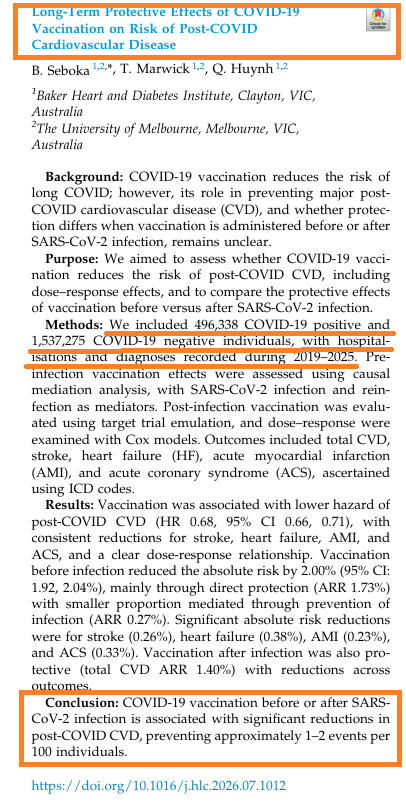
Long-Term Protective Effects of COVID-19 Vaccination on Risk of Post-COVID Cardiovascular Disease.
🚨Interesting Australian paper🤔
"COVID-19 vaccination before or after SARSCoV-2 infection is associated with significant reductions in post-COVID CVD, preventing approximately 1–2 events per 100 individuals."
#AvoidSars2 #AvoidReinfections
https://t.co/NA7c0WzWHh
New @patientled-funded study on haptoglobin after PEM in #LongCovid!
Everyone is born with 1 of 3 types: Hp1-1, Hp2-1, Hp2-2.
The team found that Hp2 groups, esp Hp2-2, were less likely to recover from PEM & had less brain oxygen extraction than Hp1.
https://t.co/3dFnavEceK 1/