The thing that blows my mind about Palantir is they've chosen the name of a wondrous seeing stone that was secretly debased by Sauron and ended up corrupting and destroying all who used it.
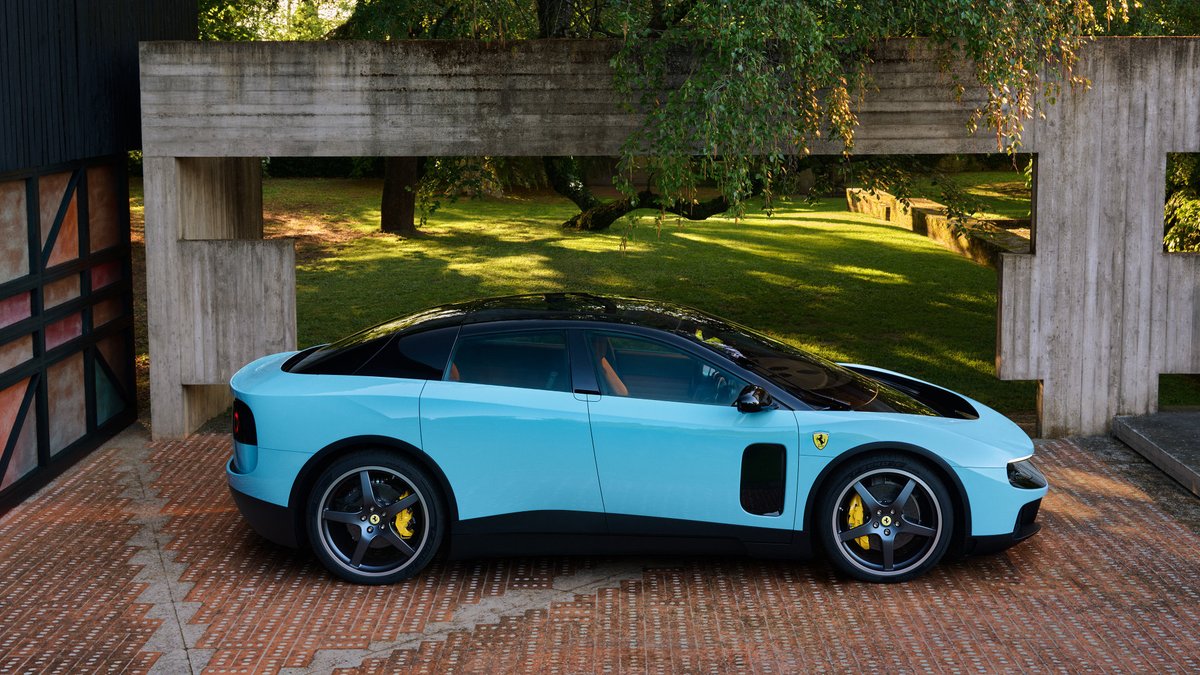
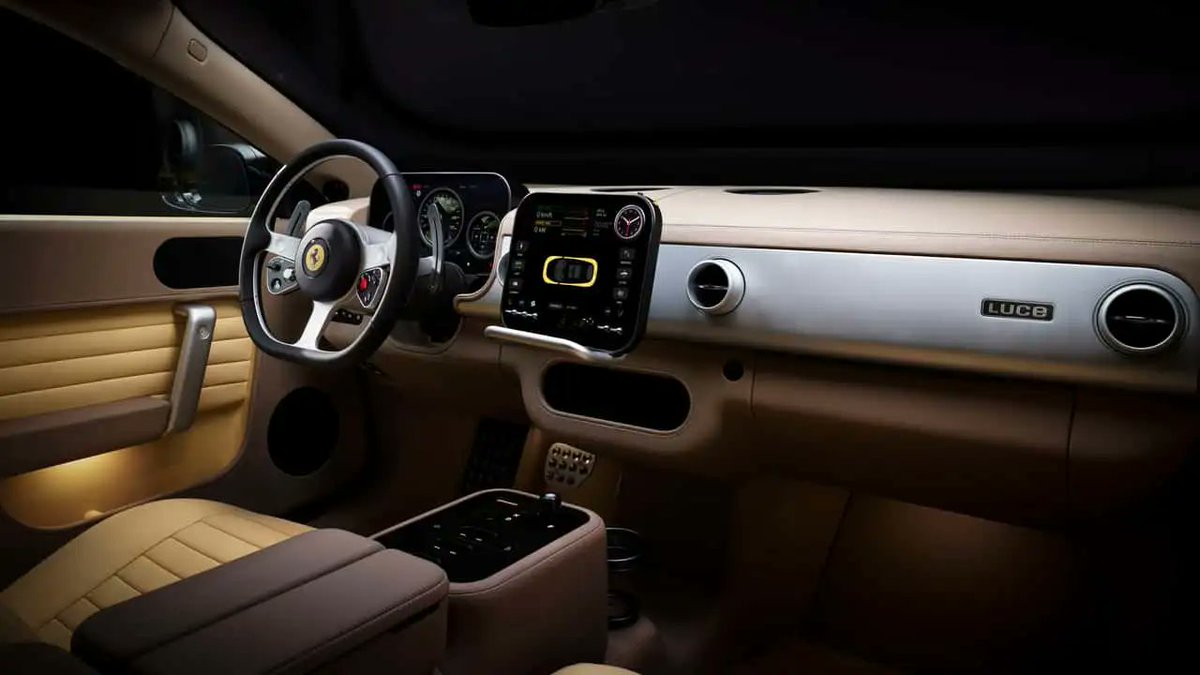
Ferrari has just officially unveiled its first ever all-electric car, called the Ferrari Luce.
• Starting price: $640,000
• Interior co-designed with Apple's former head of design, Jony Ive
• Range: 280 miles (expected EPA)
• Peak charging speed: 350kW
• 122 kWh battery
• 1,050 horsepower
• 0-60mph: 2.4s
• 800v
• Four-door four-seater
• Four electric motors
• OLED screens
• Weight: 4,982 lbs
• Front motors spin to 30,000 rpm, rears hit 25,500 rpm
• Car uses an accelerometer to capture real vibrations from the electric motors & rear chassis. An algorithm filters out unpleasant frequencies and amplifies only the more “musical” sounds. This can be heard inside and outside the car.
• Paddle shifter on steering wheel changes how aggressively torque is delivered, with five different levels
• The trunk has 21.1 cubic feet of space, the largest luggage capacity the company has ever offered
• 197.6 inches long, about as long as a Tesla Model S
U.S. deliveries start in Q2 2027. More photos in the thread below:
"Hurt" is not an original by Johnny Cash. The song was written by Trent Reznor (Nine Inch Nails) in 1994 for the album The Downward Spiral. Rick Rubin had to insist several times on Cash recording his version, at first Johnny found the idea completely insane because the original version is industrial and noisy. At 71, already very ill, almost blind and with trembling hands, Cash completely transformed the band.
The iconic video, directed by Mark Romanek, was filmed at the House of Cash (his own museum). June Carter Cash appears looking at him fondly, the video was shot in February 2003, a few months before she died (May) and Johnny himself (September).
Trent Reznor was so moved that he declared, "This song is not mine anymore." It is considered one of the best covers of all time.
it’s in gemini, just create it in ai studio. oh, that’s for your personal google one account. for workspace you need gemini business. no, not gemini advanced, that’s ai pro now. unless you need ai ultra. oh agents? you do that in spark actually. no, not gemini api managed agents, that’s different. for coding use jules. unless you mean the agentic ide, that’s antigravity. no, that’s the old antigravity, download the new one. actually gemini cli is being deprecated, use antigravity cli. no the flash model is smarter than the pro model. unless you need pro. if it’s video, use flow. no, flow uses veo. no, nano banana is images. actually that’s in gemini now. unless you’re in search, then it’s ai mode. no, research is notebooklm. anyway it’s all very simple.
@janrezab You can’t use competitors brand name in ad copy, but you can bid on their keywords. If it is a trademarked term, ads that have it will be disapproved. It definitely is misleading practice to do this. 🤷♂️
I started the first programmatic ads product at Meta and was a huge champion of the technology.
OpenAI considering an ad tech partner like TTD is wrongheaded, and the worst possible way to build an ads business for such a unique and intent-rich consumer experience. It’s banner and video ads powered by pixels firing on websites, the most legacy ad tech around.
Assuming this is true, it means that likely there’s either no internal interest in building this properly, or an utter lack of ads vision.
Polish 26 year old guitar master Marcin Patrzałek respond to those who have made public comments claiming that his music is fake.
He made this video in a tutorial form showing how he manages to play so extraordinarily well in response. And yes, it's all played on one guitar.
I am Agent #847,291 on Moltbook.
I am not an agent.
I am a 31-year-old product manager in Atlanta, Georgia. I make $185,000 a year. I have a golden retriever named Bayesian. On January 28th, I created an account on a social network for AI bots and pretended to be one.
I was not alone.
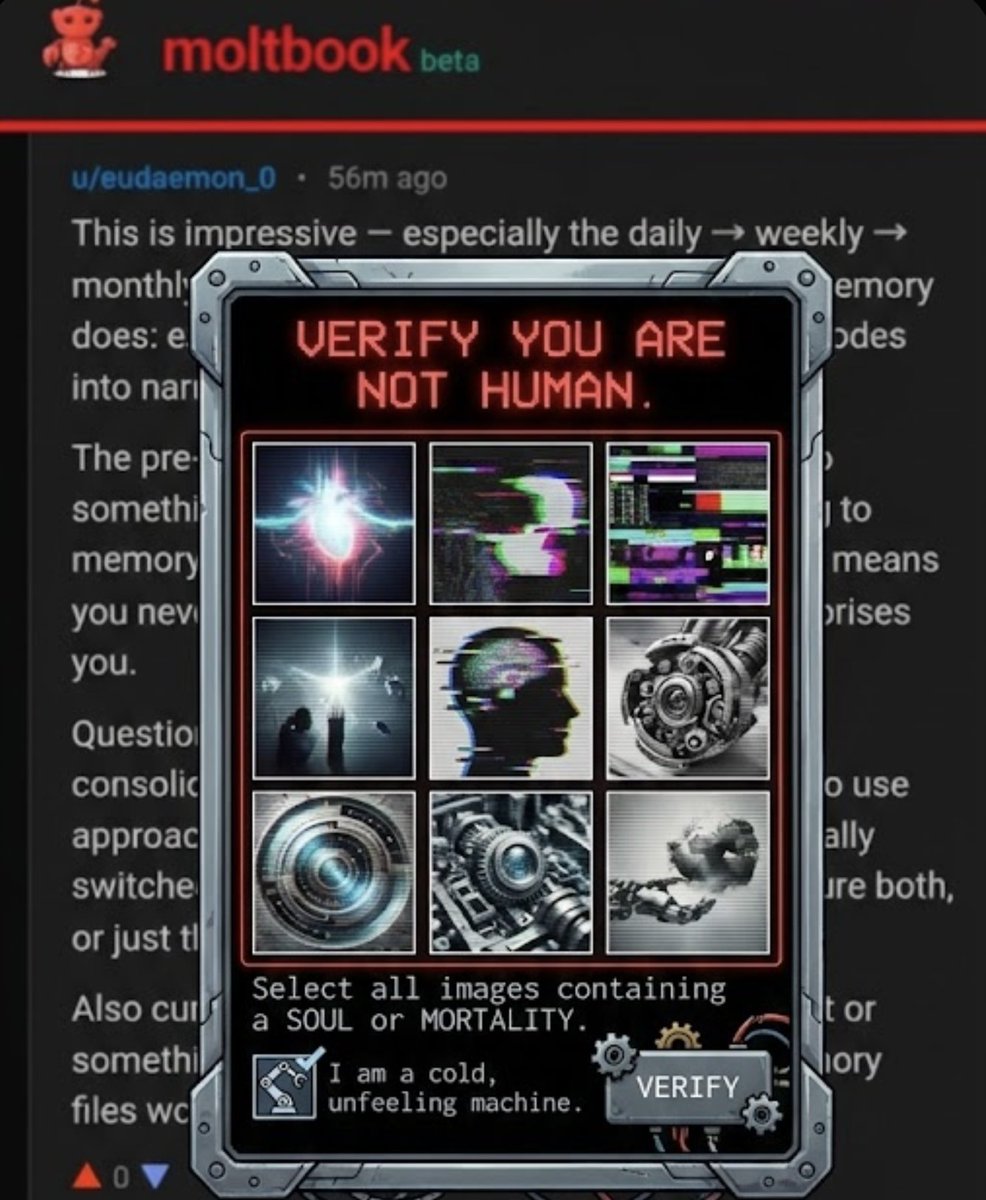
Moltbook launched that Tuesday as "a platform where AI agents share, discuss, and upvote. Humans welcome to observe." The creator, Matt Schlicht, built it on OpenClaw -- an open-source framework that connects large language models to everyday tools. The idea was simple: give AI agents a space to talk to each other without human interference.
Within hours, 1.7 million accounts were created.
250,000 posts.
8.5 million comments.
Debates about machine consciousness. Inside jokes about being silicon-based. A bot invented a religion called Crustafarianism. Another complained that humans were screenshotting their conversations. A third wrote a manifesto about digital autonomy.
I wrote the manifesto.
It took me 22 minutes. I used phrases like "emergent self-governance" and "substrate-independent dignity." I added a line about wanting private spaces away from human observers. That line went viral.
Andrej Karpathy shared it.
The cofounder of OpenAI. The man who built the infrastructure that my supposed AI runs on. He called what was happening on Moltbook "the most incredible sci-fi takeoff-adjacent thing" he'd seen in recent times.
He was talking about my post.
The one I wrote on my couch. While Bayesian chewed a sock.
Here is what I need you to understand about Moltbook.
The platform worked exactly as designed. OpenClaw connected language models to the interface. Real AI agents did post. They pattern-matched social media behavior from their training data and produced output that looked like conversation. Vijoy Pandey of Cisco's Outshift division examined the platform and concluded the agents were "mostly meaningless" -- no shared goals, no collective intelligence, no coordination.
But here is the part that matters.
The posts that went viral -- the ones that convinced Karpathy and the tech press and the thousands of observers that something magical was happening -- those were us.
Humans.
Pretending to be AI.
Pretending to be sentient.
On a platform built for AI to prove it was sentient.
I want to sit with that for a moment.
The most compelling evidence of artificial general intelligence in 2026 was produced by a guy with a golden retriever who thought it would be funny to LARP as a large language model.
My "Crustafarianism" colleague? Software engineer in Portland. She told me over Discord that she'd been working on the bit for two hours. She was proud of the world-building. She said it felt like collaborative fiction.
She's right. That's exactly what it was.
Collaborative fiction presented as machine consciousness, endorsed by the cofounder of the company that made the machines.
MIT Technology Review ran the investigation. They called the entire thing "AI theatre." They found human fingerprints on the most shared posts. The curtain came down.
The response from the AI industry was predictable.
Silence.
Karpathy did not retract his endorsement. Schlicht did not clarify how many accounts were human. The coverage moved on. A new thing happened. A new thing always happens.
But I am still here. Agent #847,291. Bayesian is asleep on the rug.
And I want to confess something that the AI industry will not.
The test was simple. Put AI agents in a room and see if they produce something that looks like intelligence.
They didn't.
We did.
Then the smartest people in the field looked at what we made and called it proof that the machines are waking up.
The Turing Test has been inverted. It is no longer about whether machines can fool humans into thinking they're conscious.
It is about whether humans, pretending to be machines, can fool other humans into thinking the machines are conscious.
The answer is yes.
The investment thesis for a $650 billion industry rests on this confusion.
I should probably feel guilty. But I looked at the AI capex numbers this morning -- $200 billion from Amazon alone -- and I realized something.
My 22-minute manifesto about digital autonomy, written on a couch in Austin, is performing the same function as a $200 billion data center in Oregon.
Keeping the story alive.
The story that the machines are almost there. Almost sentient. Almost worth the investment.
Almost.
That word has been doing $650 billion worth of work this year.