Here’s one of the most fascinating child development videos I’ve ever shared.
As your baby learns language, they begin by approximating the examples you set.
After a period of early experimentation with sound (including cries, coos and gurgles), infants begin babbling - making speech-like sounds (which often include components of conventional speech) that are - nonetheless - not yet conventionally meaningful.
This babbling phase is a precursor to the use of formal words. And it happens in all languages.
Including sign language.
This video shows an infant (who, by the way, is not hearing impaired) “babbling” to her deaf grandparents.
As they sign to her, she responds in kind, using her hands to approximate the signed communication that they are modeling.
It’s a whole serve and return conversation, just as if they were conversing verbally.
If you’ll watch carefully, you’ll note distinct turn taking.
And - interestingly - that with her grandparents she largely avoids vocalizations, in favor of gesture.
What a treat to see this rich example of bilingual language development.
This fascinating video was shared to TT by mara_mccullough.
Flávio Bolsonaro and his family will be granted U.S. visas after his weekend loss to President Lula, a senior U.S official says. https://t.co/MfqmpyIU56
In 2015, at the age of 92, pianist Menahem Pressler was honored with a Lifetime Achievement Award at the ECHO Klassik ceremony. Upon receiving the award, he asked to sit at the piano and performed Chopin’s Nocturne in C-sharp minor.
Without the need for an orchestra or an elaborate stage—just a piano—Pressler delivered melodies that were profound and exquisitely nuanced. It was a simple yet unforgettable moment, as music flowed from a man who had dedicated his entire life to it.
Dr. Karl Deisseroth spent hours fielding congratulatory calls after learning early Monday that he had won a Nobel Prize.
Deisseroth, 54, shared this year’s medicine prize with two researchers in Germany for their work in optogenetics, a field that combines light with genes to switch on and off neurons in living brains.
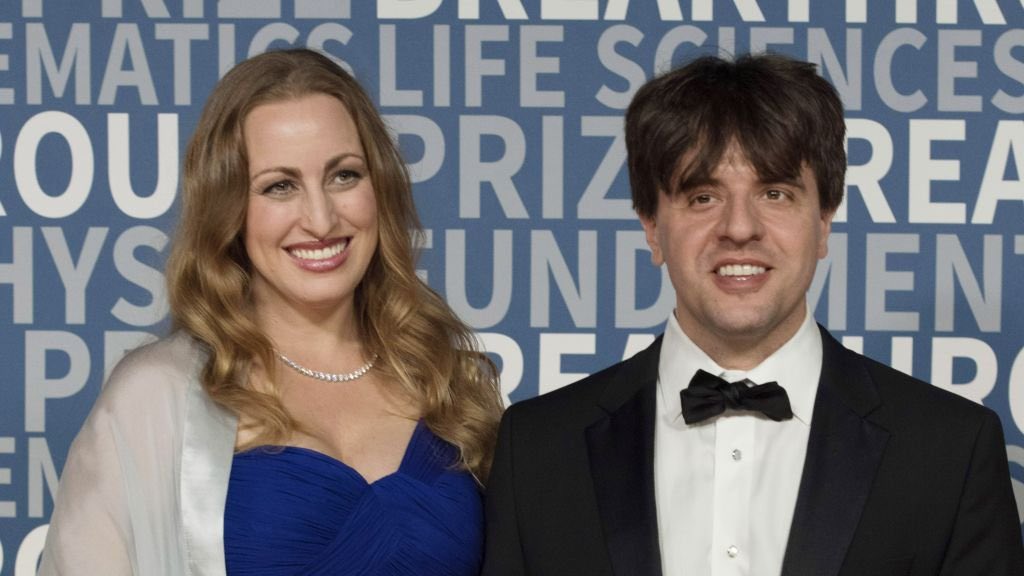
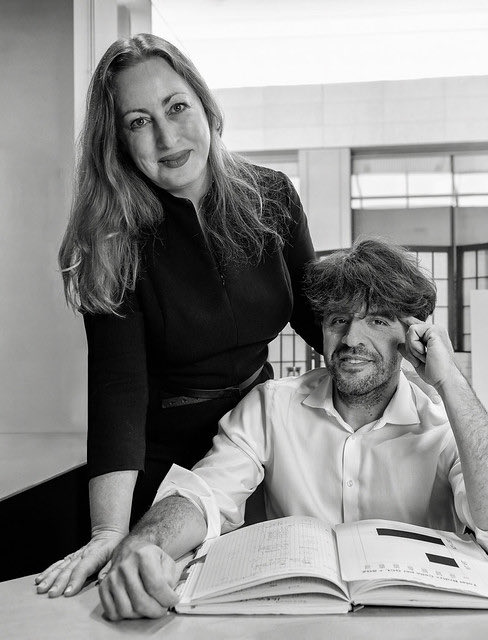
发现了这张照片。那一天,Michelle Monje 才是主角。
她于2025年获得了 The Brain Prize。这个奖由丹麦 Lundbeck Foundation 设立,每年奖励在神经科学领域作出重大贡献的科学家。她与另一位德国科学家共同获奖,平分1000万丹麦克朗,Michelle 分到的奖金折合大约 70万美元。
而站在她身边的丈夫 Karl Deisseroth,今年获得了诺贝尔生理学或医学奖,与另外两位科学家分享1200���瑞典克朗奖金,三人平分后,Karl 大约获得 40万美元。
What a couple!
尤其是,Michelle Monje 真的长得很美!😄
Ok. I’ve spent a whole day celebrating Karl Deisseroth’s very deserved Nobel (with every other brain enthusiast!). Now let’s talk about the brilliance of Dr. Michelle Monje, his wife.
A Stanford physician, neuroscientist and recipient of a MacArthur Genius grant, Michelle has helped pioneer cancer neuroscience, revealing how brain activity can fuel tumor growth and opening new possibilities for treatment.
And I say all this because I’ve been lucky to see her work firsthand and have been awe struck since the moment I met her. What makes Michelle extraordinary is the combination of scientific brilliance and her absolute unwavering commitment to children with devastating brain cancers. She is pushing the science forward because those children and their families cannot afford to wait.
Everybody deserves to know @michelle_monje.
Today @KarlDeisseroth of @StanfordMed@Stanford won the @NobelPrize for his co-discovery & development of Optogenetics. Here he explains what that is, and how it is unlocking the secrets of brain function & helping to cure diseases.
(And he explains that in ~1min).
When I did my PhD in computational neuroscience a long time ago, optogenetics was the new thing. It honestly looked like magic.
You could shine light on a neuron and switch it on or off. Turn memories on. Turn memories off. Map emotion and behavior cell by cell, in a living brain. It transformed the field almost overnight.
Today, its pioneers, Karl Deisseroth, Peter Hegemann and Georg Nagel, won the Nobel Prize in Medicine.
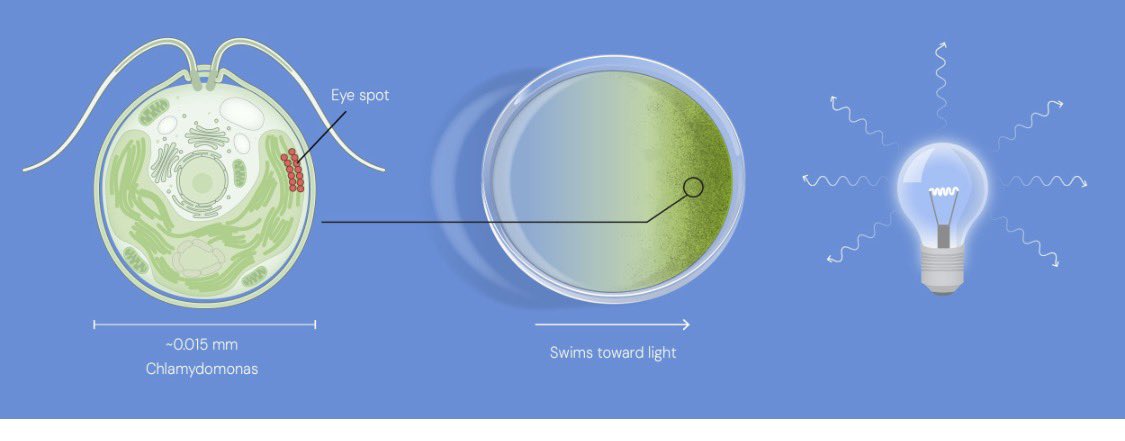
And it all started with a simple question: how does a single-celled alga swim toward light?
This is why we fund basic research 💪
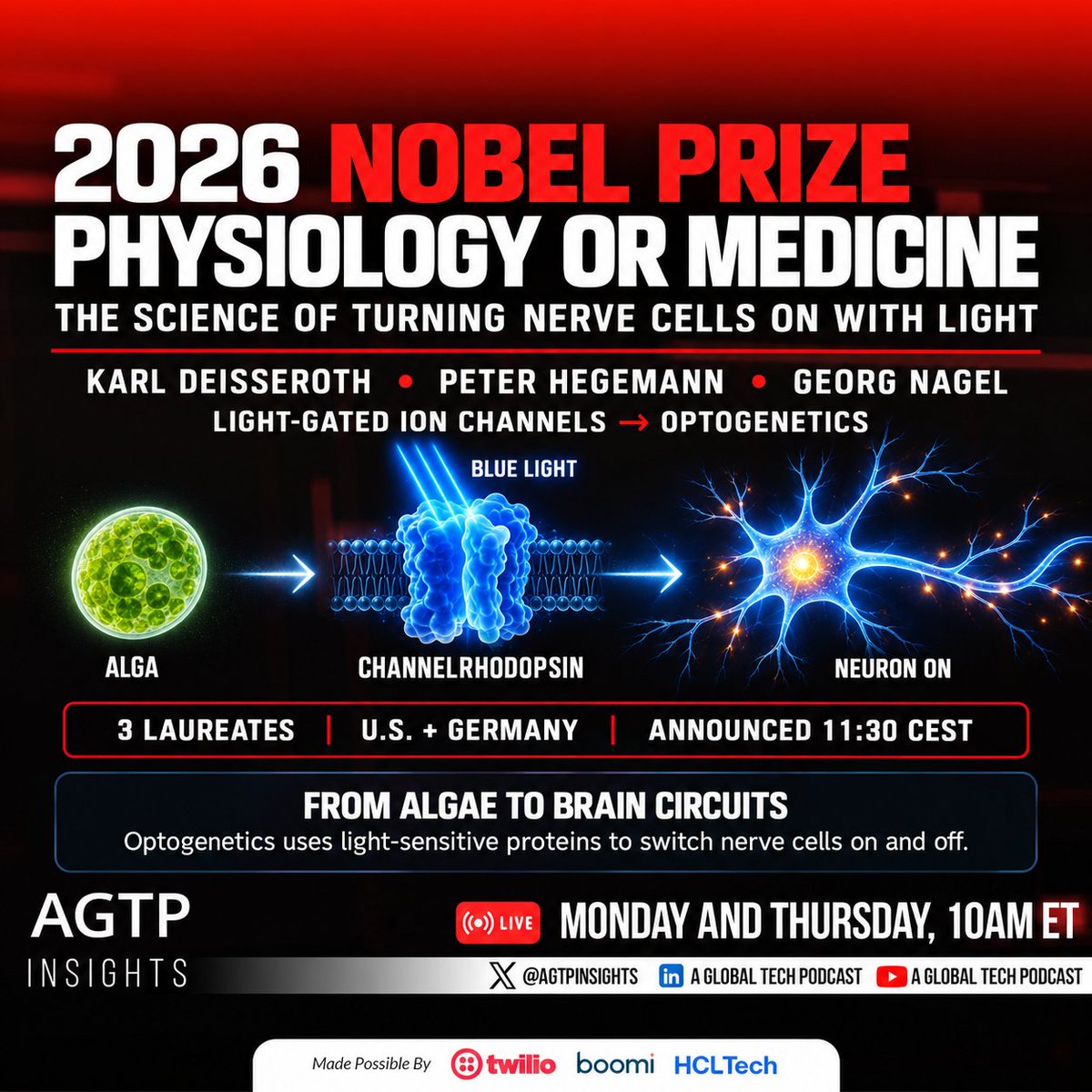
The 2026 Nobel Prize in Physiology or Medicine just went to Karl Deisseroth, Peter Hegemann and Georg Nagel. Here's what you need to know.
The Nobel Assembly at Karolinska announced the prize today "for their discoveries concerning light-gated ion channels and optogenetics." Deisseroth is from the U.S. Hegemann and Nagel are from Germany. The committee calls optogenetics a method that shows how nerve cells shape memories, feelings and behaviours.
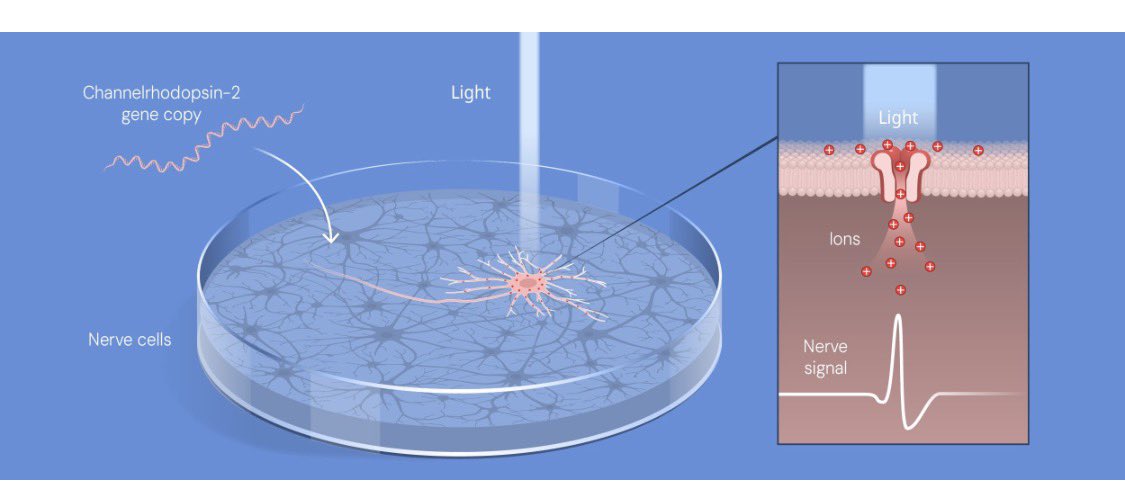
The story starts with an alga. Hegemann wondered how Chlamydomonas, a single-celled alga, swims towards a light source. In the early 2000s, he and Nagel discovered a protein called channelrhodopsin in it. It is a light-gated ion channel.
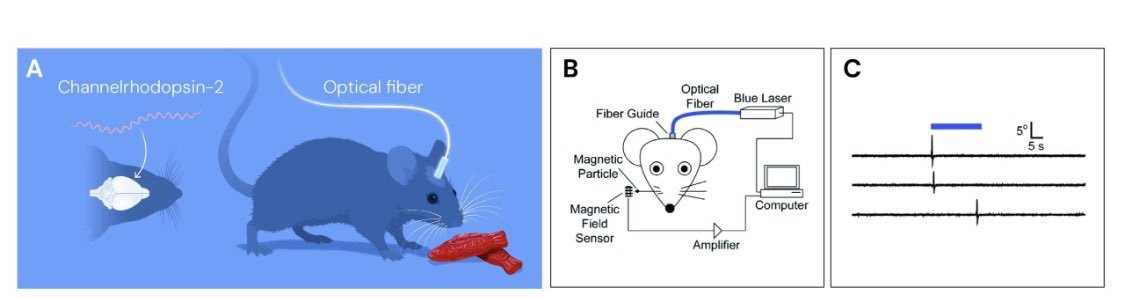
Then Deisseroth turned it into a tool. He put the gene for channelrhodopsin into nerve cells from rats. When he lit the cells with blue light, he could switch them on. Channelrhodopsin became a light-controlled switch for nerve cells.
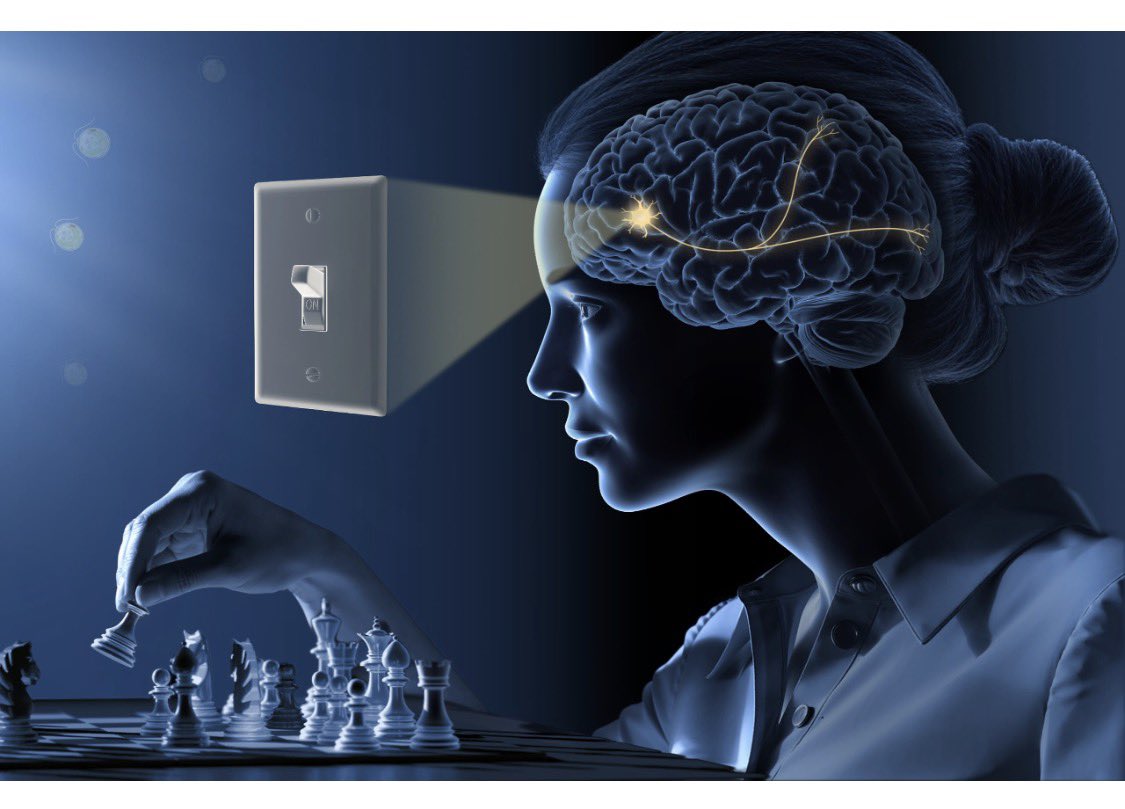
Why it matters. Understanding how the brain forms memories, feelings and behaviours has long been a dream for researchers. Using optogenetics, they can now reveal the neural circuits behind specific memories, feelings and behaviours relevant to neurological and psychiatric conditions. The Nobel committee says the laureates laid the foundation of a new era in neuroscience.
Key numbers:
- 3 laureates: Deisseroth (U.S.), Hegemann (Germany), Nagel (Germany)
- Announced at 11:30 CEST by the Nobel Assembly
- Channelrhodopsin found in the early 2000s
- Blue light used to activate rat nerve cells
Optogenetics lets scientists turn nerve cells on and off with light-sensitive proteins from algae, and it is now a core tool in brain research.
👉🏻⭐️El Premio Nobel de Medicina o Fisiología va a quienes en una alga descubrieron la proteína canalrodopsina que responde a la luz, y que insertándola en modelos animales permite comprender cómo los nervios del cerebro transforman impulsos en recuerdos, experiencias y comportamientos, desarrollando un nuevo método: la optogenética, que hoy busca maneras de restaurar la visión en pacientes con grandes avances, 🙏🏻👁️🧠💡🧫👏🏻 , pero este switch que apaga y prende nervios con la luz podrá tener aplicaciones también en dolor crónico, epilepsia, …
The 2026 #NobelPrize laureates in physiology or medicine have laid the foundation of a new era in neuroscience.
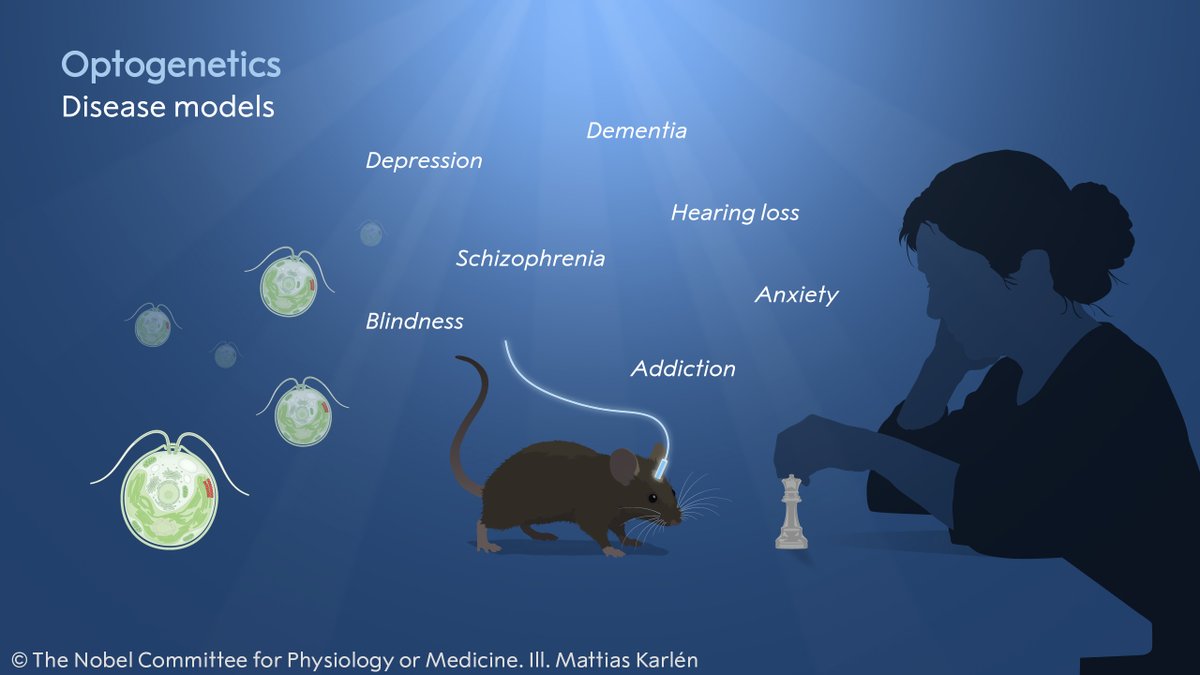
Using optogenetics, researchers have been able to reveal neural circuits governing specific memories, feelings, and behaviours relevant for neurological and psychiatric disorders. In clinical medicine, researchers are using the method in attempts to restore sight in people with visual impairment.
Optogenetics has fundamentally altered our understanding of the brain. Every day brings new discoveries, helping to solve one of humanity’s great mysteries: how our incredible brain works.