A recent discussion about the grim realities unfolding across Britain left me more than usually reflective. The fact is I no longer have any interest in the reactive, superficial churn of political discussion in the media or on X.
Academia offers little new insight either—at best a post-mortem analysis long after the facts are obvious, at worst more posturing dressed in scholarly robes. I’ve long since grasped the trajectory of affairs which are developing as I guessed they would, perhaps faster.
I turned instead to the Bible to help centre my own thoughts and for broader context and grounding. As often happens, I came across something illuminating:
‘For the time will come when people will not put up with sound doctrine. Instead, to suit their own desires, they will gather around them a great number of teachers to say what their itching ears want to hear. They will turn their ears away from the truth and turn aside to myths.’ .(2 Timothy 4:3-4)
I thought this captured the condition of Britain with uncomfortable precision. The grooming gang scandals, now documented across dozens of towns and cities over decades, provide the clearest contemporary example.
The figure of at least 250,000 victims—mostly vulnerable girls subjected to organised, racially motivated group rape—is not a ceiling but a floor.
Every serious inquiry has described its own numbers as conservative. Under-reporting, destroyed records, deliberate institutional reluctance to record ethnicity or pursue patterns, ongoing intimidation of survivors, and the simple passage of time all point in one direction: the true toll is substantially higher. The evidence is not ambiguous.
Yet the deeper problem is structural and psychological. There is no normal political solution available because the system that enabled and then concealed this horror lacks both the capacity and the will to correct itself.
It retains ample institutional inertia and self-preservation instinct to maintain the status quo—managing narratives, suppressing dissent, kicking cans—until the accumulated contradictions make continuation impossible.
At that point it shatters.
Many people sense this in their bones. They register the scale of betrayal, the demographic and cultural fractures, and the hollowing of legitimacy.
At the same time, the drive to shield the psyche from a reality that would demand painful recognition and action is extraordinarily powerful.
What we are witnessing is not ordinary normalcy bias but something more deliberate: a willed incomprehension. It is self-protective cowardice dressed as prudence and not hastening to judge.
History shows the pattern clearly. Civilisations rarely collapse from external pressure alone. They implode because problems that were soluble at one stage were deferred through aversion to discomfort and cost.
The result is rarely gentle adjustment. It is violent over-correction after the window for measured response has closed. Britain is not exempt from this ancient dynamic.
We owe those who serve the UK the kit to do the job and the loyalty to stand by them when it's done. We are failing on both.
I’ve spent my whole time in government making that case. Number 10 will not listen, so I am resigning as Minister for the Armed Forces.
Letter to the PM below.🫡🫡🫡⬇️⬇️
@LeaderofKCC I don’t know how you might do it but now there is a quorum of Reform county councils, could you refuse to be abolished? Or at least challenge the process legally? It’s a Westminster plan to remove alternative centres of power. I know central government holds the purse strings.
@DominicFarrell Sadly same with my Labour MP, served in the same corps as me, and in Iraq as I did. He seems to have deluded himself that he can make a difference with his public service as part of this government. Speaks like the Mind the Gap announcer: “Firm but Fair; Smash the Gangs”. 🥱😞
@CapelLofft Well, that’s certainly true of Deal and Dover, with our experience of the Elphickes as our Tory MPs + 200,000 illegal immigrants in the local waters! Now our accidental Labour MP Mr Tapp. In tennis terms: new balls please 🎾
@JoeSRailTrainP1 Travelled Bournemouth to Deal on Thursday, so nearly 200 miles of 3rd rail bliss, and the Electrostars are the unsung heroes of the network.
@charliecolecc Good analysis. We’ve had this media omertà for 30 years in Kent where the BBC and ITV are both based 50 miles inland (M’stone and T.Wells, closer to London than than the coast and they routinely downplay the issue. The nationals hardly cover the extent at all.
@DominicFarrell While I don’t see Iran have the capability to hit London *yet*, I think it’s certainly true Labour(!) has been (and chosen to be) a sectarian party for at leat 20 years now. Demented really.
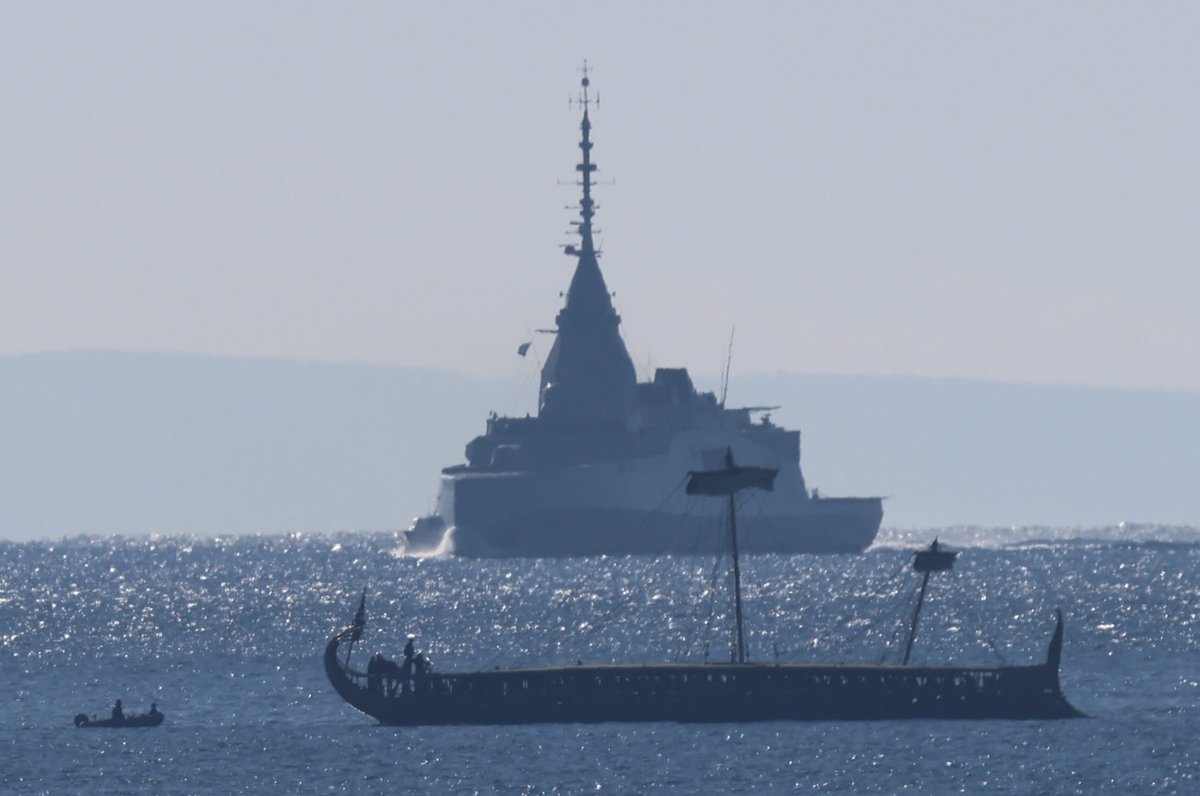
A remarkable repetition of history: HS Kimon, Hellenic Navy's new frigate now sent to Cyprus to protect it from Iranian drones with its missiles, is named after the Athenian general Kimon, son of Miltiades, who sailed to Cyprus in 450 b.C. with 200 triremes to fight the Persians.
My fellow compatriots,
Ali Khamenei, the bloodthirsty despot of our time, the murderer of tens of thousands of Iran’s bravest sons and daughters, has been erased from the face of history. With his death, the Islamic Republic has in effect reached its end and will very soon be consigned to the dustbin of history.
Any attempt by the remnants of the regime to appoint a successor to Khamenei is doomed to fail from the outset. Whoever they place in his stead will have neither legitimacy nor longevity, and will undoubtedly be complicit in the crimes of this regime as well.
To the military, law enforcement, and security forces: any effort to preserve a collapsing regime will fail. This is your final opportunity to join the nation, to help ensure Iran’s stable transition to a free and prosperous future, and to take part in building that future.
The death of the criminal Khamenei, though it does not avenge the blood that has been spilled, may serve as a balm for the wounded hearts of the grieving fathers and mothers, husbands and wives, sons and daughters, and the families of those who gave their lives in Iran’s Lion and Sun National Revolution.
Honorable and courageous people of Iran,
This may be the beginning of our great national celebration, but it is not the end of the road. Remain vigilant and prepared. The time for a widespread and decisive presence in the streets is very near. Together, united and steadfast, we will bring about the final victory, and we will celebrate Iran’s freedom across our beloved homeland.
Long live Iran,
Reza Pahlavi
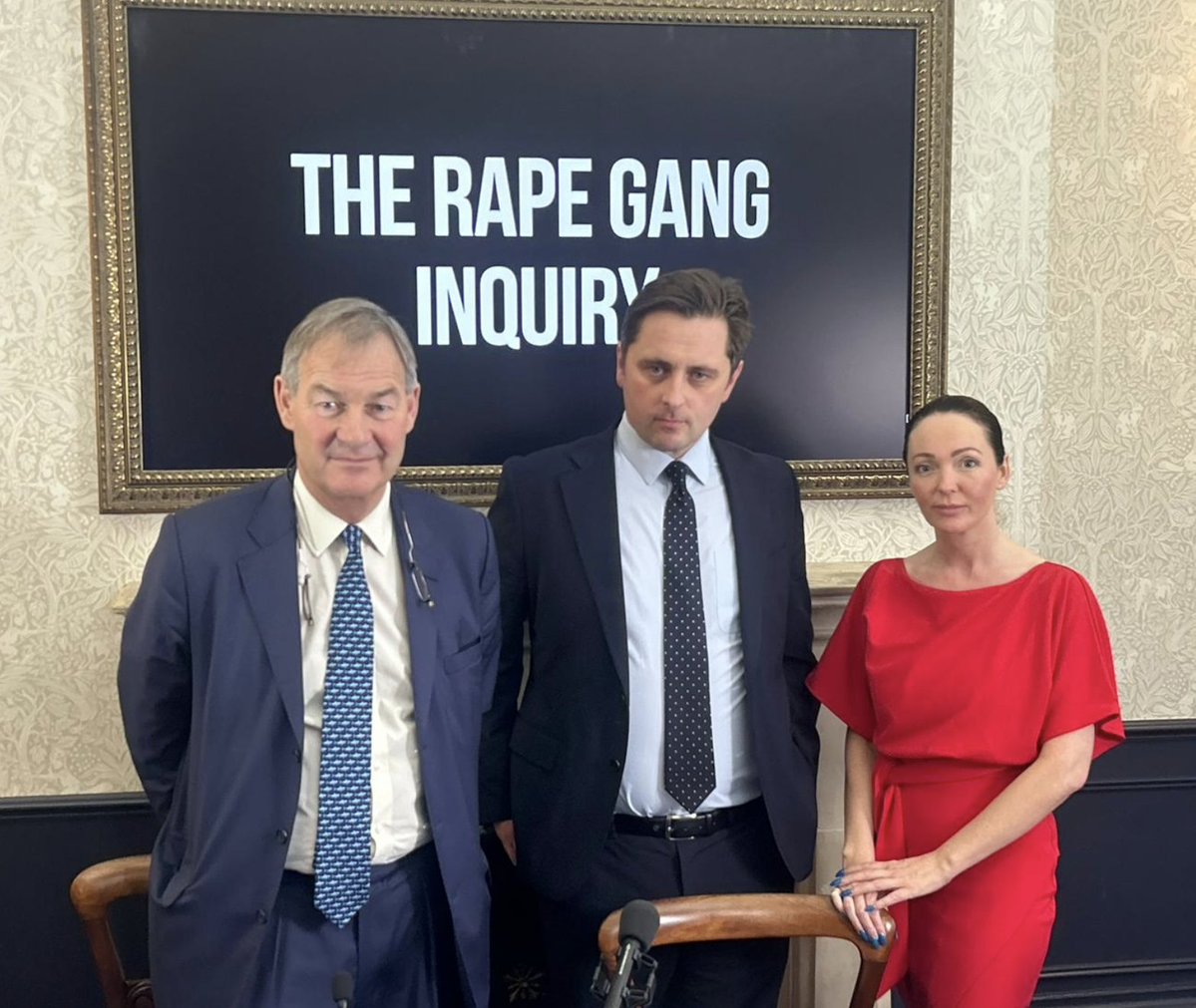
Today marks the end of the survivor participation for our rape gang inquiry hearings. I simply have no words that describe the bravery and courage of these women who have come forward.
No words.
What they have been through is indescribable.
It has been a life-changing experience for me. I never thought such evil was possible. Never. Not here, in Britain. In our towns, in our communities. It is pure evil. These men are so utterly depraved.
If it were up to me, thousands of them would receive the death penalty.
To do what they did, on such an industrial scale, to innocent young girls - many of whom were already in such an incredibly vulnerable place? There is no redemption possible. The world is a better place without them in it.
I started this inquiry because so many others failed.
Speaking honestly, I did not understand how deep this evil is rooted in our society.
Police, politicians, council officials, the NHS, social workers, children’s homes - it is everywhere.
IS everywhere. Not was. IS.
Meeting these women, and men, listening to how severely they were failed by those tasked to protect them? My views have changed forever. I knew it was bad. I never knew how bad it was.
Every single one who has come forward is a hero in my view.
The courage and grace in how they have conducted themselves is unlike anything I have seen in my life. All because they don’t want others to suffer the same fate. That is an extraordinary sacrifice. They could have just moved on with their lives. Tried to forget. But no, they chose to do this. I am in awe of all of them.
Our hearings will finish tomorrow, following the contribution of three more expert witnesses.
Then the next stage begins. We will produce a report, and then we will seek to put people in prison. There are FAR more testimonies and evidence to release - this will keep coming and coming and coming.
Even with a media blackout, we have reached tens of millions. We have made real progress.
And following such immense demand, we will reopen the portal so that more women can tell their stories.
This is just the beginning.
Politicians from all parties have failed these girls, again and again and again.
I do not intend to join that list.
To everyone who donated, thank you. To our team, thank you. And especially to the survivors, thank you.
I believe that together we can start to make Britain understand what is happening, and then finally do something about it.
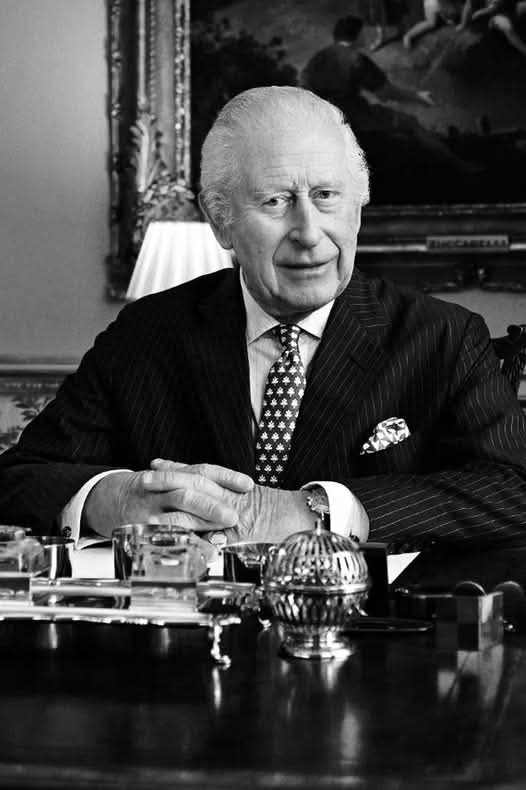
In 2008, Prince Charles did something that left textile historians astonished, he discovered that the last remaining artisans in Britain who could hand-weave the intricate Harris Tweed that had been synonymous with Scottish Highland culture for centuries were elderly and dying without successors and that within years authentic craft knowledge distinguishing real Harris Tweed from industrial imitations would be lost forever, taking with it not just a fabric but centuries of cultural identity, economic livelihood for remote island communities and irreplaceable expertise about creating cloth so durable and weather-resistant that modern synthetics still couldn't match its performance.
What's extraordinary is how comprehensively he intervened: Charles didn't just fund preservation; he revolutionized the entire Harris Tweed economy by personally wearing fabric prominently, convincing high-end fashion designers to feature it in their collections and creating markets where traditional weavers could command prices reflecting their extraordinary skill rather than competing with cheap industrial knockoffs, essentially transforming Harris Tweed from dying craft into luxury good that made traditional production economically viable again. He established apprenticeship programs on the remote Scottish islands where Harris Tweed originated, recruiting young Hebrideans into what their parents considered a dead-end craft and pairing them with master weavers who'd assumed their knowledge would die with them, creating urgent knowledge transfer that preserved not just weaving techniques but cultural traditions, Gaelic language, and community relationships that had always been inseparable from cloth itself.
What's remarkable is how he championed legal protections: Charles supported Harris Tweed's designation as protected geographic indicator, meaning that only cloth hand-woven by islanders in their homes on Outer Hebrides using local wool could legally be called Harris Tweed, essentially preventing corporate appropriation and ensuring that this cultural heritage and economic benefits remained with the communities who'd created and maintained it across generations. His foundation funded modern looms that reduced the brutal physical labor of traditional weaving while maintaining the hand-crafted quality that made Harris Tweed unique, understanding that preservation didn't mean freezing the craft in amber but allowing it to evolve sustainably so weavers could make decent livings without destroying their bodies or compromising fabric's distinctive character.
What's profoundly moving is the cultural revival this enabled: young Hebrideans who'd been leaving their islands for mainland cities discovered they could build dignified careers in their communities, Gaelic language experienced modest revival because weaving knowledge was transmitted in Gaelic, and remote islands found renewed purpose and economic vitality through craft that connected them to their ancestors while creating sustainable futures.
Today, Harris Tweed is thriving with waiting lists for fabric, traditional weavers earning professional wages, and global recognition as luxury sustainable textile, proving that preserving traditional crafts isn't romantic nostalgia but viable economic strategy when you create appropriate market positioning and protect artisans from exploitation. He taught us that cultural heritage and economic development aren't opposing forces but partners when traditional crafts are valued and protected appropriately, that geographic protections ensure communities benefit from their heritage rather than watching corporations steal and profit from it, that some textile production should remain hand-crafted because quality and cultural value justify cost, and that preserving traditional industries in remote communities isn't charity but recognizing that cultural diversity and sustainable livelihoods matter more than maximizing industrial efficiency.
#drthehistories
@DominicFarrell Plus the etymology of check mate is interesting. It sounds nearly identical to ‘Sheikh died’ in Arabic, and that’s what Arab players assume it means. But: https://t.co/EGuXNjxJu2
@DominicFarrell If the story is true, the teacher has a good defence case: chess in Arab countries (called shatranj) has existed for centuries. The Wikipedia entries give a reasonable summary https://t.co/gaCv25khPh