From the client side, onboarding is when trust gets built or lost. When I hired my first family lawyer I filled out the same history on three forms over two weeks, and it made me wonder what else would fall through the cracks. "No re-typing" matters more to clients than firms might think.
@kennyeliason Guilty as charged from the client side. I sent my lawyers dozens of screenshots at midnight because I was scared something would get lost, and I'm sure most of it landed in a pile nobody had time for. Making the sorting happen at upload is a respectful fix for both sides.
@ArizonaLawGroup The fear of court keeps a lot of people stuck longer than they need to be. I spent months dreading a courtroom that, in the end, we mostly avoided. Knowing up front that mediation was a realistic path would have helped me make decisions with a clearer head.
@RRAFamilyLaw Nobody explained the automatic restraining orders to me at the start, so the first time I thought about moving money between accounts I had no idea it could be a problem. A plain-English explainer like this at intake would have spared me a nervous call to my lawyer.
@smithdotai "Fix the process before adding the technology" is the right order. Sitting next to my lawyers, the friction was rarely a missing feature. It was the same client details living in four places that never matched, and another tool on top would only have added a fifth.
@DoubleCheckAI The notetaker piece matters a lot in family law. As a client, some of my calls with my lawyer covered things I'd never want sitting in a third-party transcript. I'd want to be told up front when a call is being recorded and where that record ends up.
@ChooseGoldman This is a topic parents often get wrong in both directions: either assuming any past issue ends custody, or assuming it won't matter at all. From what I saw, courts cared most about the present and the plan, like testing, treatment and a safe schedule for the kids.
@theharrisfirm A lot of parents assume kids automatically mean a fight. If you can agree on the schedule and support, getting it written down in detail is worth the effort. The vague parts of our agreement are the ones we ended up arguing about later.
@CatherineASchwa Keeping it in writing helped me more than I expected as a client. When every schedule change lives in one thread, there's less room for "that's not what you said" and less temptation to send messages through the kids.
Solo or small family-law firm? https://t.co/sQikEAkCrW has a 7-day pilot on approved sample matter data, so you can check the fit before a paid rollout.
Book a 30-minute demo or start that conversation:
https://t.co/zXAFa5s2K3
@clarkelyoung Expectations were the hardest thing for me to recalibrate as a client. Walking in, I thought the court would see the whole story the way I lived it. The lawyers who helped most were honest early about what a judge can and can't do, even when it wasn't what I wanted to hear.
@anujonrecord Agree, and in family law the boring layer is where clients feel it most. Seven years as a client, what hurt wasn't the drafting. It was the missed follow-up, or the document nobody asked for until the week before a hearing. That's the work worth building for.
@radleyfamilylaw Imputed income is one of the hardest ideas to explain to a parent in the middle of a support case. Hearing that the court may look at what you could earn, not just your last pay stub, lands very differently when it's explained plainly and early. Good topic to cover.
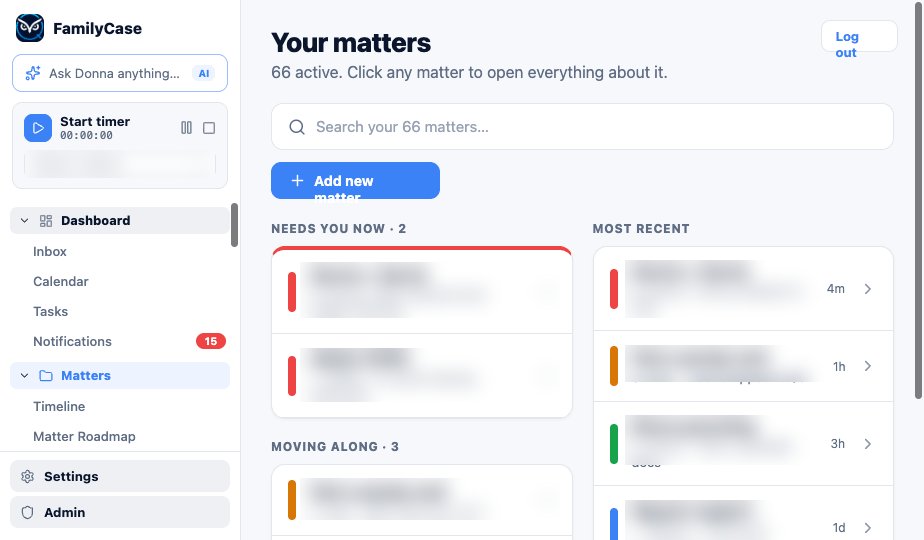
Unlimited clients, client portals, and matters per lawyer. https://t.co/sQikEAkCrW is built to reduce the unbillable admin that comes with running them.
Real matters view, names blurred.
Demo:
https://t.co/HOC0stQnZS
@hamonlaw The title gets it right: clients already bring chatbot answers into the consult. From the client side, what I'd want is a lawyer who says plainly which parts hold up and which don't. Literacy on both sides of the desk is the real work.
@CSHHGLaw That's the part people don't see coming. In my own case, custody, support and the house all landed in the same few months, and each decision changed the math on the others. Having a lawyer who looked at them together instead of one fire at a time made a real difference.
Family-law clients can always see their case information in the https://t.co/sQikEAkCrW portal — what's due, what's next, and what you need from them.
Real product, names blurred.
Book a 30-minute demo:
https://t.co/7MsgiG4r1q
@John_A_Singer@legallyypink@broc_at_TSF Speaking from the client side: what worked best was one person who owned my file, so I always knew who to ask, with tasks shared behind the scenes. Whatever the split, a shared view of where every case stands keeps coverage seamless when someone is out.
@LegalfinaOnX The 30 minutes at the window is the part the parenting schedule never shows. Adults see 5:58 as on time; the kid experienced half an hour of wondering. A quick "leaving now" text costs nothing and gives that time back to her.
@willchen500@gen_legal_inc@MikeOSSTeam Keeping a lawyer approval step before anything goes out is the right default. Intake is where so much unbillable time hides, and meeting requests in channels people already use beats any dashboard. How do the triage rules handle requests that are half legal, half business?