The Netherlands’ systematic approach to road safety—especially on walking and cycling—is a textbook application of the Hierarchy of Controls: an industrial method which identifies a preferred order of actions to best reduce hazard exposure based on their general effectiveness…🧵
When I'm told on social media that heat pumps don't work in old buildings I usually invite people to my 144 Victorian house in Oxford to see it with their own eyes.
So far no one has accepted the invitation so I allow you to virtually step inside my house.
Come on in!
PS: I know I lost some hair and some weight since that video was shot. I would not mind getting back some hair but I don't need the extra weight.
@janrosenow I can confirm that Heat Pumps work fine even in a poorly insulated building. We live in quite a leaky barn conversion and have had a heat pump for more than two years now. Our house is at least as warm as it was before with a dirty, noisy, and unreliable oil-fired boiler.
Yes heat pumps work in poorly insulated buildings. Reposting this information as numerous commentators under my last heat pump post keep peddling the myth that heat pumps require highly insulated buildings.
Heat pumps can work in any building if sized, designed and installed correctly. Many uninsulated homes and buildings are already heated to comfortable temperatures with heat pumps, as shown across multiple case studies, including an uninsulated stone church.
A building loses heat through the walls, the windows and the roof when it is colder outside than inside, as shown by the stylised arrows in the figure below. The upper panels show an outdoor temperature of 10C, coloured purple, and an indoor temperature of 20C, coloured red.
Without insulation, shown in the left-hand panels, heat loss is higher – indicated by the larger arrows – and the heat input must similarly be increased, in order to maintain a steady indoor temperature.
At lower outside temperatures – shown in the lower panels – more heat is being lost, for a given level of home insulation. Yet as long as the heat input from a heating system is equal to the heat loss, the building will still retain its indoor temperature.
This means that for a poorly insulated home, a larger heat pump is needed, just as a larger gas boiler would be needed to reach the required heat input. For any home, the system is usually designed for the coldest day of the year.
Field research from Germany confirms this stylised representation. One of the longest running field studies of heat pumps in renovated properties shows that extensive renovations and insulation upgrades are not necessary to install a heat pump. Good fabric efficiency will keep running costs down, but this is also true for homes heated by gas and oil boilers.
Heat pumps do usually operate at lower “flow temperatures” to maximise efficiency, which means the water pumped to the radiators in a house will have a temperature closer to 50C or below. Although gas boilers also operate more efficiently at lower flow temperatures, they are typically set to provide water at much higher temperatures of 70C or more.
This means the radiators connected to a heat pump system will be cooler, potentially requiring larger radiators or underfloor heating to achieve the same indoor temperature. Research shows, however, that radiators are often oversized to begin with – and that, as a result, not all radiators may need to be replaced.
Moreover, the market already offers high-temperature heat pumps that can reach flow temperatures of 65C and higher. These can be operated with existing radiators.
Furthermore, the UK government’s electrification of heat UK demonstration project showed that the efficiency of high-temperature heat pumps nears that of standard heat pumps, because they only need to run at higher flow temperatures on the coldest days.
The FACT that as researchers at the @UniofExeter showed last week continued investment in carbon-intensive industries will drastically increase the amount of 'stranded assets' & that:
“The longer we wait, the more disorderly the transition will be”
https://t.co/EsYO4fc63f
"Transporting and storing the gas are hidden costs that new research finds will make it uncompetitive as a decarbonization solution." If only someone had pointed that out years ago.
https://t.co/d2CR8uHiCg
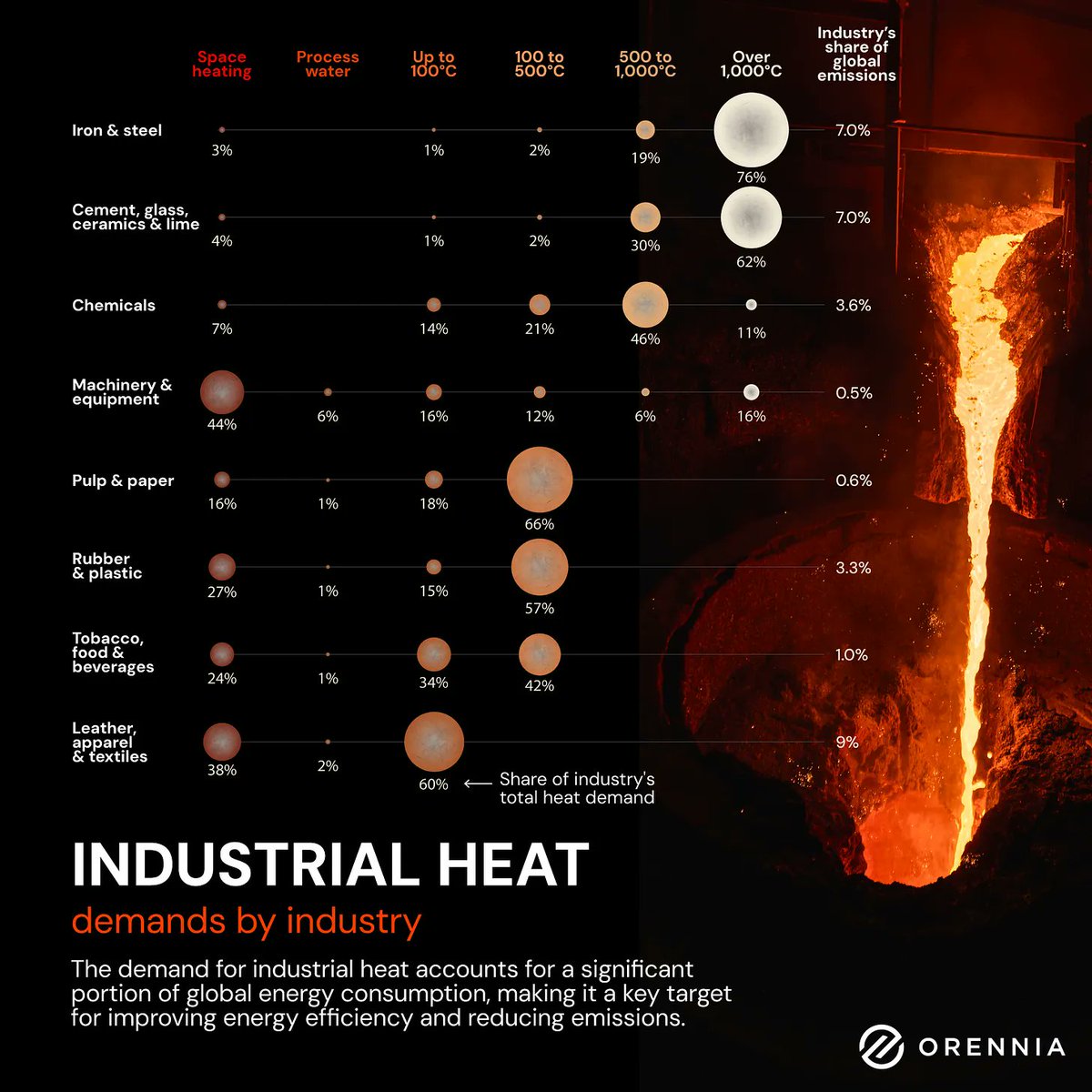
Industries like cement, iron and steel require vast amounts of process heat.
❗️This results in 1/5 of global CO2 emissions.
➡️ The good news: most process heat can be electrified. That is more efficient and enables the use of clean power.
🚨BREAKING: Oil giant BP has DROPPED a target to cut its oil output in the next five years.
Big Oil is prioritising shareholder PROFIT over the future of life on earth.
Pass it on.
If we cant keep warming to 1.5C, we can simply 'overshoot'. 🌍🔥🌡️🏹
The idea goes as follows: we temporarily exceed 1.5C before returning below it at a later stage.
In a new paper @Nature we show how overconfidence in our discussions hides the deep risks of such strategy. /1
@JoeriRogelj We are in a climate emergency and the next 5 years needs to see halving of fossil fuel use. Let's get cracking. This is our last chance. #ClimateActionNow#NetZero2030
@JoeriRogelj Scaling up carbon dioxide removal is a delusional fantasy.There will never be a significant carbon capture achieved compared to current rate of emissions.We need to stop 90% of current emissions by 2030 to keep from dangerous acceleration of climate breakdown.There is no Plan B
The Amazon rainforest is home to over 3 million animal species. It stores 4x as much CO2 as the earth emits in a year. Losing the Amazon means losing to climate change.
We must protect the Amazon and the world's vital forests. #ActOnClimate#climate#biodiversity#SDGs
One last point on this leader is that it is essentially climate scepticism. I wrote this piece back in 2021, and depressingly it still stands. https://t.co/ZRsXQYXqPD
In a competitive field this is one of the worst things I have ever read on climate change and net zero. A complete failure to understand either the pace of the clean tech revolution or the severity of the climate crisis. It is tacit climate denial and defeatism in equal measure.