The Magi knelt before Jesus in worship, while the Roman soldiers knelt before him in mockery. Yet Christ sought no earthly power, but freely embraced the crown of thorns to reveal the Father’s love and bear witness to a kingdom that endures forever.
Listen to Episode 14 of Into the Mysteries of the Rosary with Fr. James Brent, O.P. https://t.co/eWPcXnZUKR
What was the Lord longing for? What was he desiring when he was longing for the world to be set on fire? He was longing for the Holy Spirit to come, to flood hearts, to change hearts, and to turn hearts of stone into natural hearts, and to set hearts on fire with love for God and for neighbor. This is what will really change the world.
Join us in Contemplata Episode 66, The Hunger and Thirst of Jesus, as Fr. James Brent, O.P., invites us to contemplate the righteous heart of Christ. https://t.co/2JHg6AuGja
Earthly kings wear crowns of gold as symbols of power, but Jesus wore a crown of thorns as a testament to love. He came not to claim an earthly throne, but to bear witness to the truth and establish a kingdom founded on divine love.
Listen to Episode 14 of Into the Mysteries of the Rosary with Fr. James Brent, O.P. https://t.co/eWPcXnZUKR
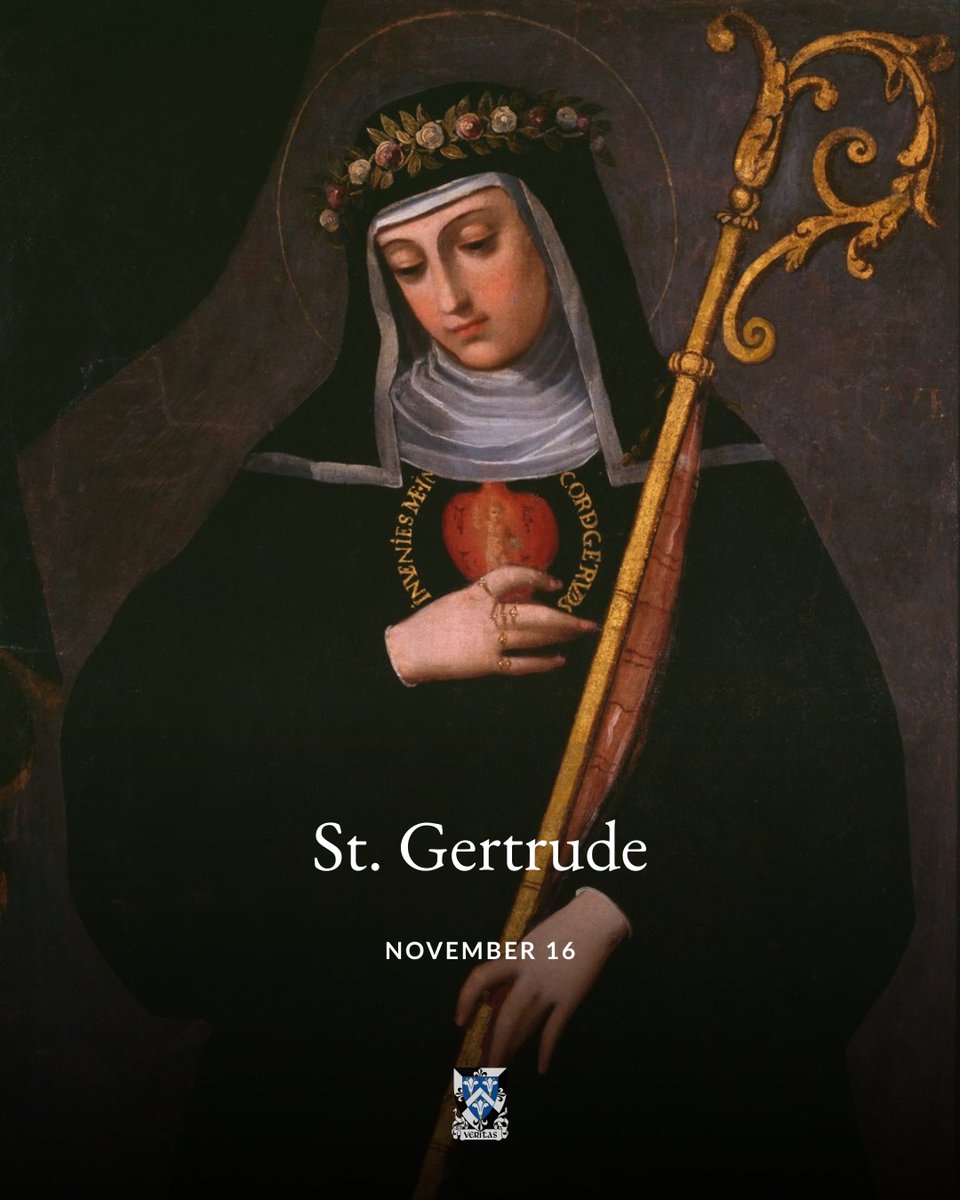
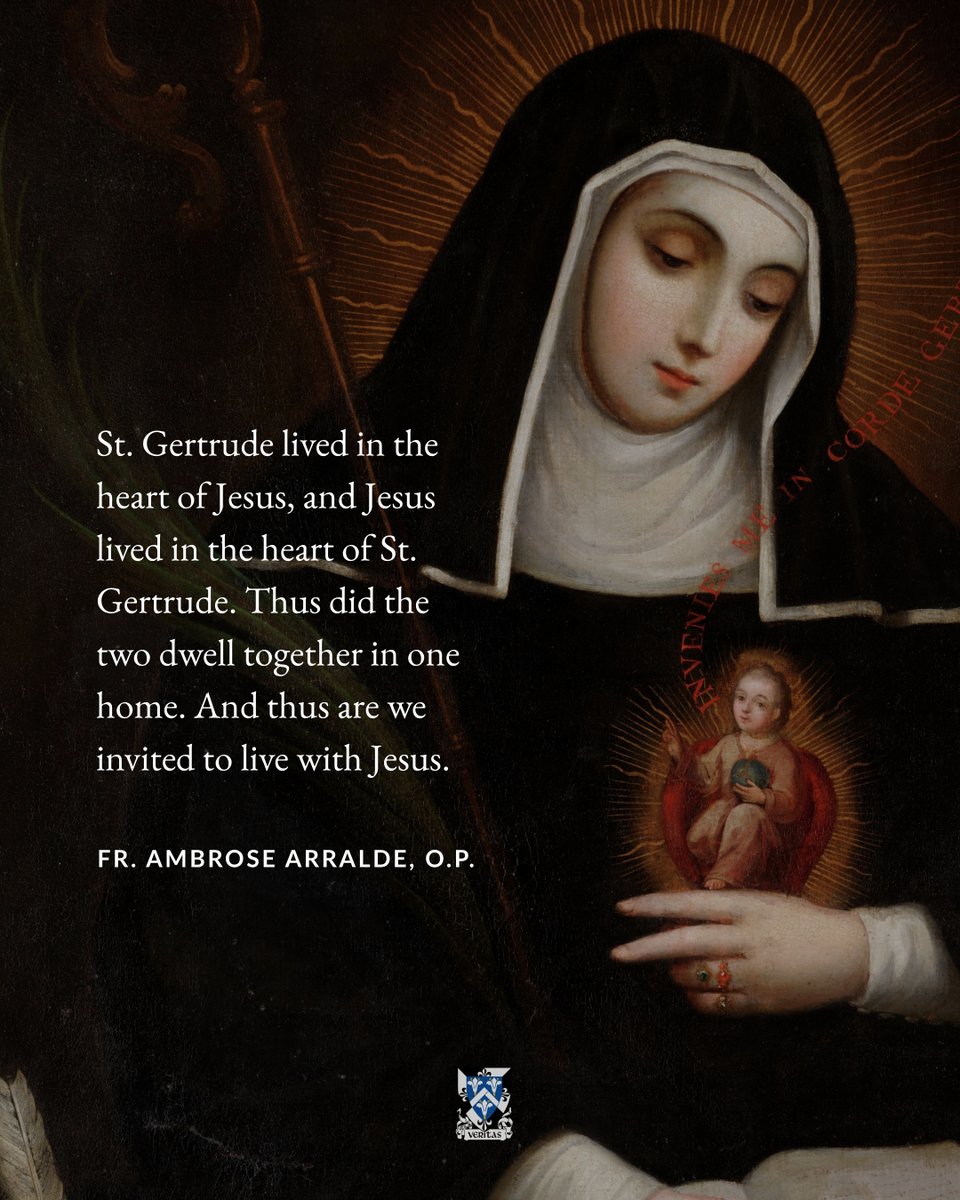
For centuries, the faithful have found rest in the Sacred Heart of Jesus. St. Gertrude (celebrated today in the Church’s liturgy) heard our Lord say in a vision, “Behold My Heart, let it be your temple… for I desire that My Sacred Humanity should henceforth be your cloister” (The Life and Revelations of St. Gertrude the Great, 24). Our Lord’s Sacred Heart is not merely a residence where we come and go at leisure. Our Lord speaks of His Heart as a cloister, outside of which we venture at our own peril. Such was the sweetness St. Gertrude found in the Sacred Heart that outside of it she could find neither rest nor repose. Two alternatives present themselves. Either we rest in the world while suffering a restless heart, or our heart finds such rest in the Lord that we cannot find rest anywhere in the world.
He who invited St. Gertrude into His Sacred Heart does not see any contradiction in saying, “You cannot find Me in any place in which I delight more, or which is more suitable for Me, than in the Sacrament of the Altar, and after that, in the heart and soul of Gertrude, My beloved” (The Life and Revelations of St. Gertrude the Great, 1). Indeed, we need look no further than the passage from Scripture mentioned above, “Abide in me as I abide in you” (John 15:4). St. Gertrude lived in the heart of Jesus, and Jesus lived in the heart of St. Gertrude. Thus did the two dwell together in one home. And thus are we invited to live with Jesus.
—Fr. Ambrose Arralde, O.P.
One of Jesus’ last words is simply, "I thirst." On the one hand, He meant He was thirsting for some water for His parched tongue, but His thirst was also a sign or a revelation of a deeper thirst for your love and for my love. So in this way, the thirst of Jesus is a thirst for love.
Join us in Contemplata Episode 66, The Hunger and Thirst of Jesus, as Fr. James Brent, O.P., invites us to contemplate the righteous heart of Christ. https://t.co/2JHg6AuGja
When Pilate questioned Jesus about his kingship, he understood power only in earthly terms. But Christ came not to establish another kingdom of this world, but to reveal the kingdom of God. His kingship transcends earthly power, revealing a kingdom founded on truth, love, and eternal life.
Listen to Episode 14 of Into the Mysteries of the Rosary with Fr. James Brent, O.P. https://t.co/eWPcXnZUKR
Scripture is full of references to hungering and thirsting for righteousness, especially from Jesus. He Himself says, "My food is to do the will of him who sent me." So Jesus is hungry to do the will of God.
Join us in Contemplata Episode 66, The Hunger and Thirst of Jesus, as Fr. James Brent, O.P., invites us to contemplate the righteous heart of Christ. https://t.co/2JHg6AuGja
For the Christian, Our Lord is always first.
Jesus for the foolish comes at the end. Jesus for the wise is at the beginning.
—@cajetancuddy | @ect_catholic
Watch Fr. Cajetan’s homily for the Thirty-second Sunday in Ordinary Time: https://t.co/AX8SFAlV1x
Does Purgatory exist? And can our prayers really help the souls in Purgatory?
Yes. The Catholic Church teaches that Purgatory really exists and we can assist the Holy Souls through our prayers, sacrifices, works of charity, and, above all, through the Holy Sacrifice of the Mass and Holy Communion.
The souls in Purgatory can no longer merit for themselves. They depend upon the charity of the faithful on earth, who can offer prayers and sacrifices on their behalf.
This is why our prayers for the dead are not merely an expression of remembrance, but an act of supernatural charity.
Do you believe in Purgatory? Let us know in the comments bellow.
Remember the Holy Souls in your prayers today.
#HolySouls #Purgatory #Catholic
Contemplata has launched "Into the Mysteries of the Rosary," a biweekly mini series.
Fr. James Brent, O.P., leads this series with brief, guided meditations on each mystery of the Rosary, drawing you more deeply into the life of Christ.
New episodes arrive every other week, with regular Contemplata episodes continuing on the weeks between. Listen wherever you get your podcasts.