Frozen funding levels for UK students falling behind rising costs for universities remains all you need to understand UK HE at the moment. Timely reminder in @ft today.
University finances are in dangerous territory https://t.co/4RGdKSnkci
UCAS has taken nearly £2M in application fees from the poorest families in UK so far this cycle, according to data from @markcorver 👇🏼 https://t.co/WrCvxLxRyV
Should teenagers who don’t find a #university place have to pay for a second chance? So far this year we’ve charged £800k to try-again teenagers.
But UK demand is weak and if only 1 in 10 are put off by having to pay twice then sector could lose £70M.
https://t.co/eHF4dnC9zG
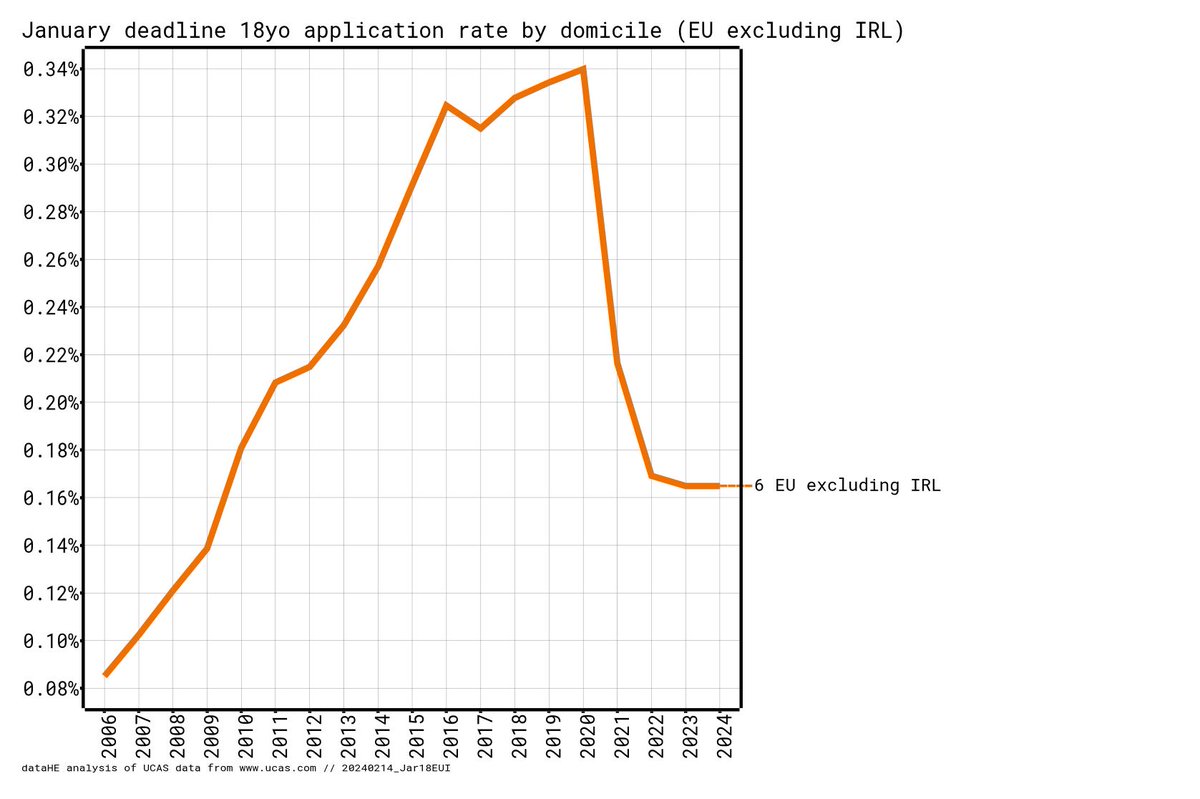
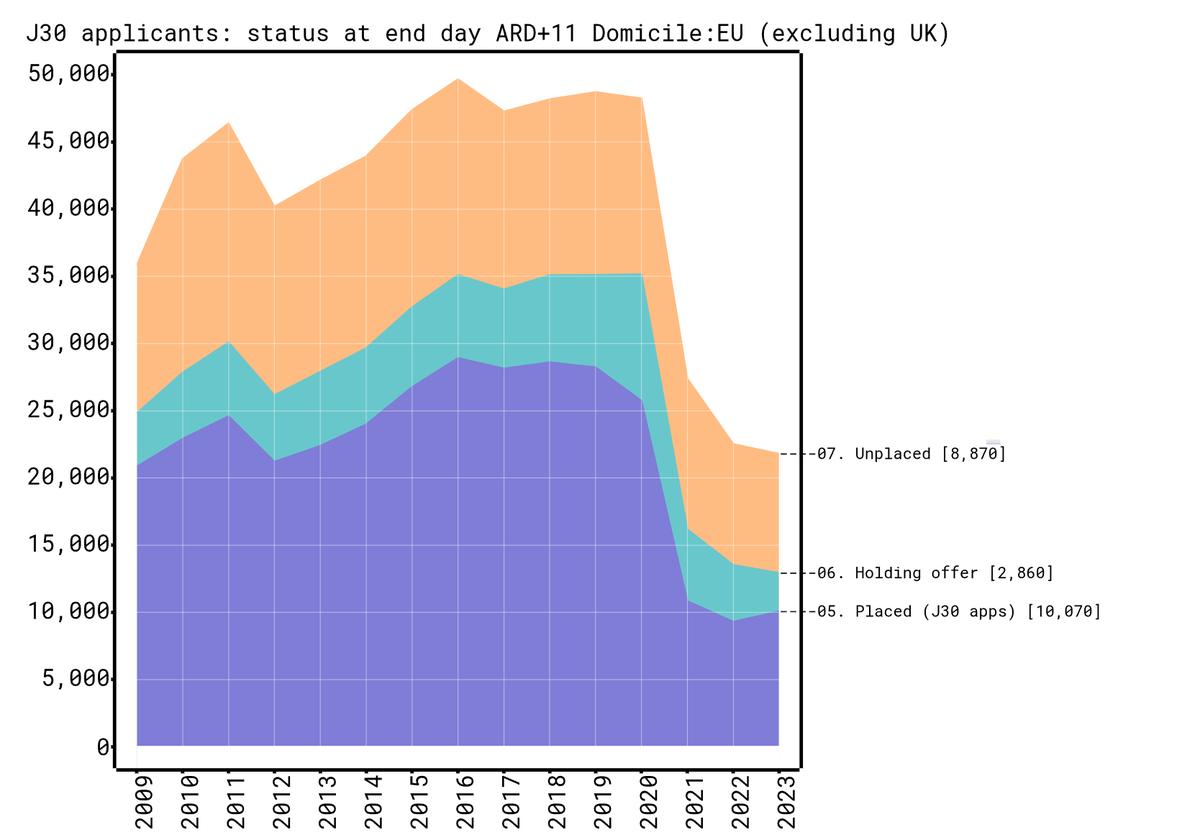
Is the EU making a come back for UK university recruitment. Perhaps. It is certainly outperforming UK 18 year olds this year. More here https://t.co/Tq85TeuQ55
The run of weak data for UK universities continues.
We estimate UK18 application rates for 2024 down again, 41.5% to 40.2%, bit steeper than UCAS as we handle population differently.
Faltering demand is set back for universities, pushing success rates back up likely response.
The university funding system is causing growing pain for students and government. And now inflicting heavy damage on universities too.
We recently shared some new proposals through @HEPI_news and here talk some of these over with @tom_richmond. No painless solutions.
🚨NEW PODCAST EPISODE🚨
Time to radically reform the way that we fund Higher Education?
@markcorver joined us on #insideyoured to set out his vision for how to transform HE funding, but would it work, and is there an appetite for bold reform?
🎧https://t.co/CcF58KooBo
@ProfRoryDuncan Yes, though is flexible for what government of day wants . If you think there is social value in directing more graduates into a region you set a higher social dividend rate for employment there. Attraction to government is it is effective real-time pull incentive for workforce.
@NotoriousCath@nickhillman Yes and no, in that it becomes more of an explicit policy choice to support outcomes that do not cover the cost of providing the teaching - via the social dividend (for good outcomes not measured by income) or other behind the scenes adjustments
@ProfRoryDuncan Thanks @ProfRoryDuncan. The 'social dividend' is the for those types of issues if it is policy (university gets a share of that flow). You can also calculate the deferred flows to provider from adjusted salary - not actual - to account for this, I spared readers details of how!
@Stephen_EvansUK@nickhillman (1) imagined that universities would transparently compete on costs as courses priced in share of future earnings. so students have choice and can steer away from what they see as poor value.
@Stephen_EvansUK@nickhillman (2) The 'social dividend' is intended to be the route to support high social value / lower income outcomes. The universities would get a share of this too. (3) Yes, part of that risk transferred to universities, in part to reassure government on over-production of graduates.
Some genuinely innovative and fundamentally different approaches to funding higher ed here from @markcorver who seeks to balance the interests of students, universities, government and employers
@HEPI_news
https://t.co/onaBhJR429
Today - on possibly the longest ever @HEPI_news blog post - a proposal for UK undergraduate education funding. It scraps fees, debt and interest for students, provides viable funding and freedom for universities, and makes governments relaxed about growing universities again.
Ahead of #LabourPartyConference we are releasing work with @markcorver of dataHE using a unique dataset to analyse trends in access to higher education between 1997 and 2022.
Exclusive in the @FT today: https://t.co/g8srhRoSjq
Readers of the Wall Street Journal will be familiar with the problem of ‘skyrocketing’ university fees crimping access. But their deep look at UK universities today finds home fees falling below cost of teaching seems to be doing much the same.
https://t.co/4z5kizSRPJ via @WSJ
Are EU students coming back to UK universities? Numbers are up for the first time in five years. But..
(1) It isn't EU, only Ireland
(2) It isn't UK HE, just NI universities
(3) Partly a timing change (with ILC)
So not a turning point, yet - more here https://t.co/yZkEM1KNgj
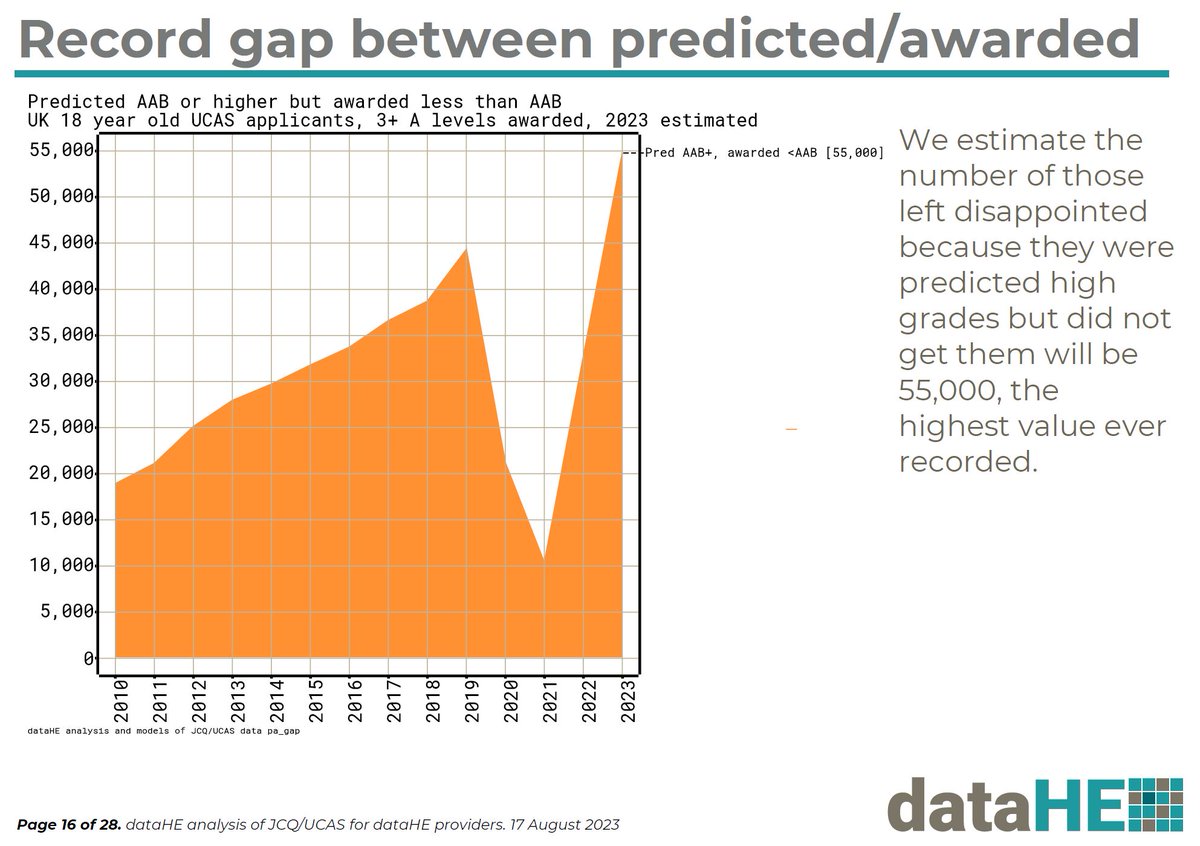
@PaulfrYorkshire@thetimes Predicted grades increasing by more than achieved. Before 2010 awarded grades did increase. After they don not - because of a change of policy.
So it is possible to think the growing pred/achieved gap is due to either teachers or awarded grades becoming increasingly wrong.
The @thetimes surveys a tough environment for English 18 year olds this year drawing on our analysis.
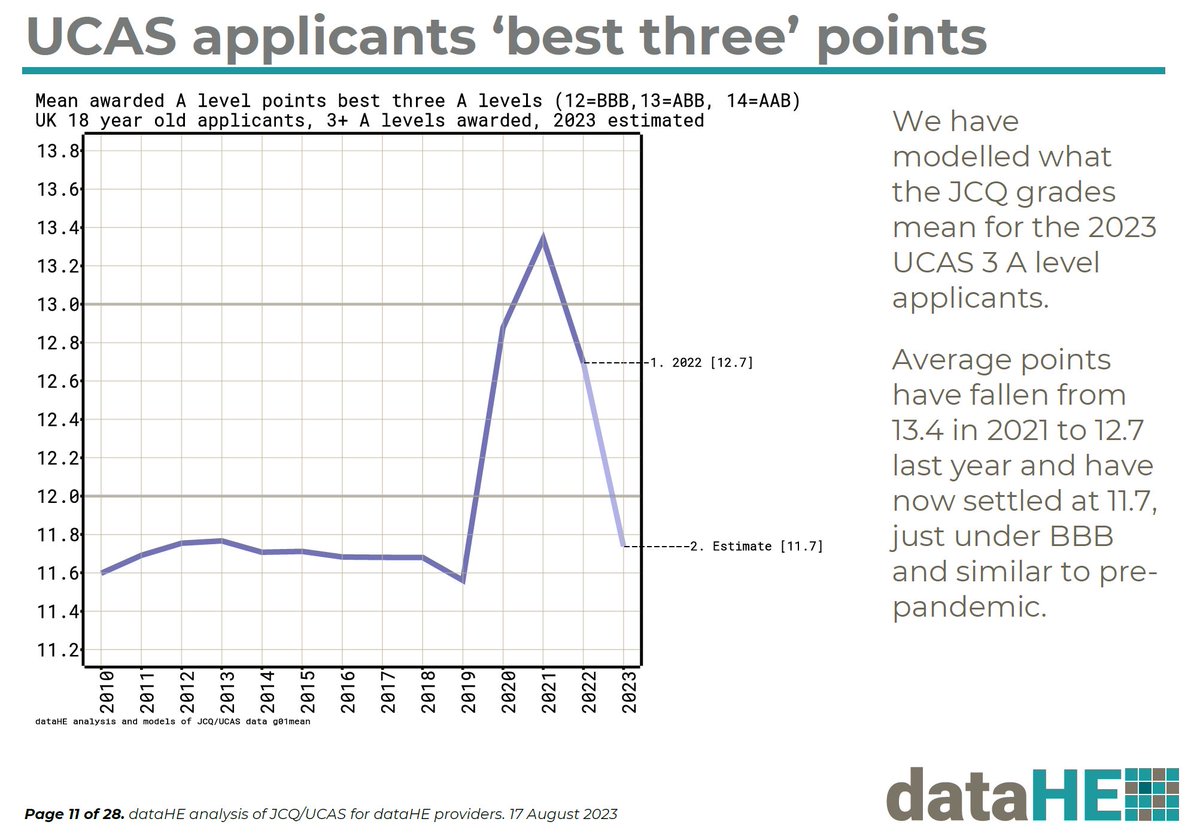
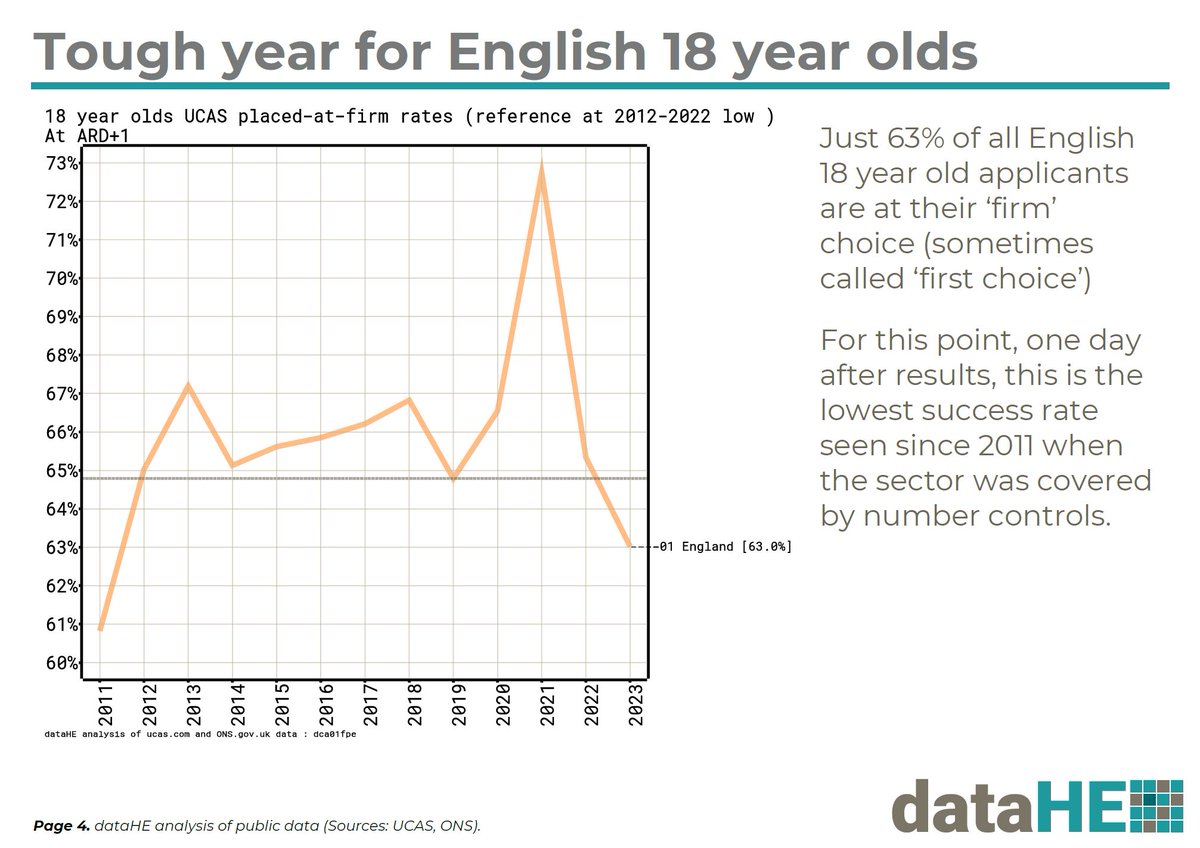
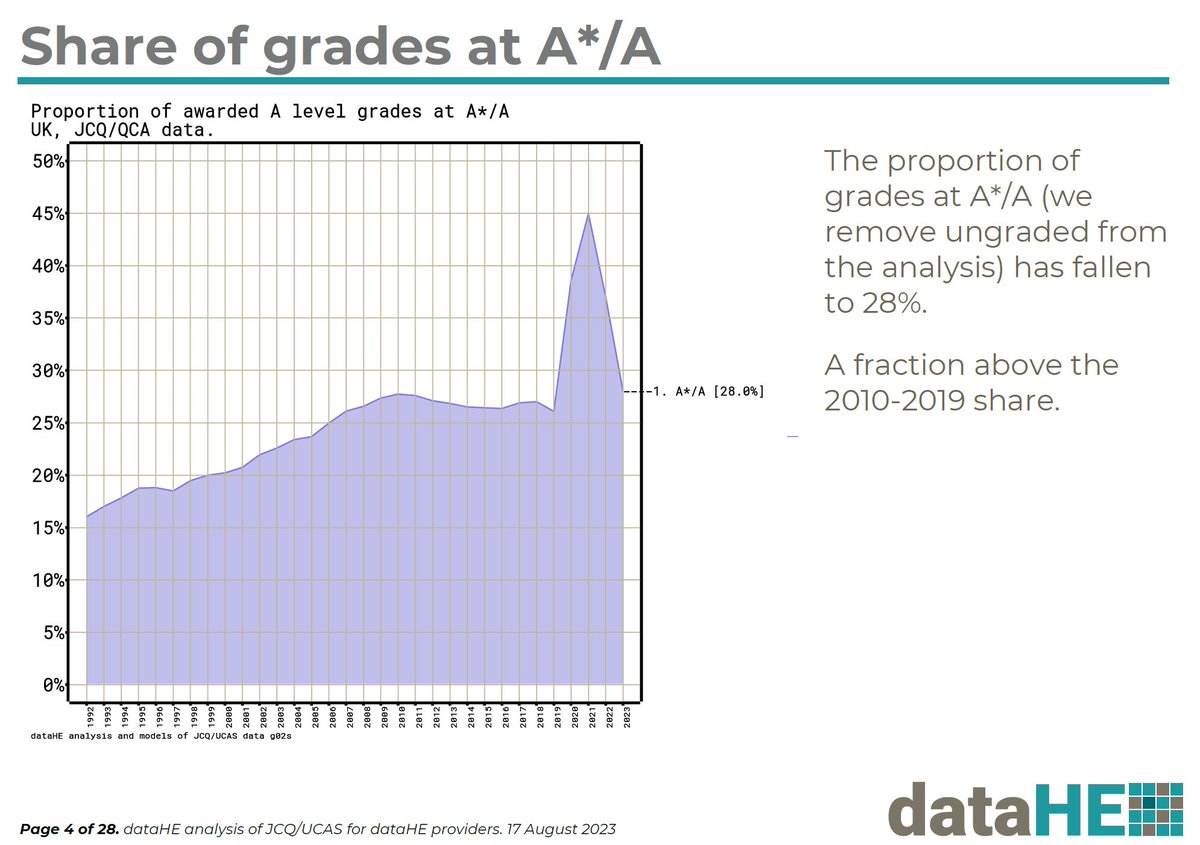
'First choice' rates plunge to post-2012 low (63%), unplaced hit new high (47,590), record fall in grades (12.7 to 11.7 points), and record missing top grades (55,000).
NEW A record number of teenagers in England are without a university place this weekend - 50,000 - after the biggest fall in A level grades ever & despite unis slashing entry grades @markcorver@nickhillman@thetimes https://t.co/sGTrTnxDyO
The @thetimes covering this exceptionally hard year for English 18 year olds getting into university - including our analysis.
Chances of getting 'first choice' plunge to post-2012 low of 63%. - a low for post 2012. 47,590 went into weekend without a place, a record level.
Nearly 50,000 teenagers in England are scrambling this weekend to find a university place after the greatest fall in A-level grades when results were published on Thursday https://t.co/xs0eLFpWxq