822 years ago a solar storm turned Kyoto’s sky blood-red. If it hit today, it would burn out satellites, kill GPS, and crash the digital economy. Trillions in valuations up in smoke. It’s ok. The Sun is quiet for now. But today our world runs on things floating in space with almost no shielding, like a lot of portfolios.
822 years ago a solar storm turned Kyoto’s sky blood-red. If it hit today, it would burn out satellites, kill GPS, and crash the digital economy. Trillions in valuations up in smoke. It’s ok. The Sun is quiet for now. But today our world runs on things floating in space with almost no shielding, like a lot of portfolios.
*BRITISH WRITER PENS THE BEST DESCRIPTION OF TRUMP*
Someone asked "Why do some British people not like Donald Trump?" Nate White, an articulate and witty writer from England wrote the following response:
A few things spring to mind. Trump lacks certain qualities which the British traditionally esteem. For instance, he has no class, no charm, no coolness, no credibility, no compassion, no wit, no warmth, no wisdom, no subtlety, no sensitivity, no self-awareness, no humility, no honour and no grace – all qualities, funnily enough, with which his predecessor Mr. Obama was generously blessed.
So for us, the stark contrast does rather throw Trump's limitations into embarrassingly sharp relief.
Plus, we like a laugh. And while Trump may be laughable, he has never once said anything wry, witty or even faintly amusing – not once, ever.
I don't say that rhetorically, I mean it quite literally: not once, not ever. And that fact is particularly disturbing to the British sensibility – for us, to lack humour is almost inhuman.
But with Trump, it's a fact. He doesn't even seem to understand what a joke is – his idea of a joke is a crass comment, an illiterate insult, a casual act of cruelty. Trump is a troll. And like all trolls, he is never funny and he never laughs; he only crows or jeers.
And scarily, he doesn't just talk in crude, witless insults – he actually thinks in them. His mind is a simple bot-like algorithm of petty prejudices and knee-jerk nastiness. There is never any under-layer of irony, complexity, nuance or depth. It's all surface.
Some Americans might see this as refreshingly upfront. Well, we don't. We see it as having no inner world, no soul. And in Britain we traditionally side with David, not Goliath. All our heroes are plucky underdogs: Robin Hood, Dick Whittington, Oliver Twist. Trump is neither plucky, nor an underdog. He is the exact opposite of that. He's not even a spoiled rich-boy, or a greedy fat-cat. He's more a fat white slug. A Jabba the Hutt of privilege.
And worse, he is that most unforgivable of all things to the British: a bully. That is, except when he is among bullies; then he suddenly transforms into a snivelling sidekick instead.
There are unspoken rules to this stuff – the Queensberry rules of basic decency – and he breaks them all. He punches downwards – which a gentleman should, would, could never do – and every blow he aims is below the belt. He particularly likes to kick the vulnerable or voiceless or female – and he kicks them when they are down. So the fact that a significant minority – perhaps a third – of Americans look at what he does, listen to what he says, and then think 'Yeah, he seems like my kind of guy' is a matter of some confusion and no little distress to British people, given that:
• Americans are supposed to be nicer than us, and most are.
• You don't need a particularly keen eye for detail to spot a few flaws in the man.
This last point is what especially confuses and dismays British people, and many other people too; his faults seem pretty bloody hard to miss.
After all, it's impossible to read a single tweet, or hear him speak a sentence or two, without staring deep into the abyss. He turns being artless into an art form; he is a Picasso of pettiness; a Shakespeare of shit. His faults are fractal: even his flaws have flaws, and so on ad infinitum. God knows there have always been stupid people in the world, and plenty of nasty people too. But rarely has stupidity been so nasty, or nastiness so stupid. He makes Nixon look trustworthy and George W look smart. In fact, if Frankenstein decided to make a monster assembled entirely from human flaws – he would make a Trump.
This sounds amazing, but as usual, checking it with Grok & Community Notes reveals it’s a fabricated claim.
The real question is: why do people make up stories that are so easily debunked? I assume the original poster won’t bother checking, but what’s the point?
I’ve heard X now pays bounties based on engagement. If true, that explains the flood of junk posts. But it makes you wonder. Do people have no integrity left, or is it just about farming likes and cash with easy falsehoods?
The 7-second cold wrist rinse was tested on 3,000 soldiers after combat simulations.
Cortisol dropped 52% within 90 seconds. Heart rate fell an average of 22 beats per minute. The Navy classified the protocol in 2009 and kept it secret until 2023.
The mechanism is radial artery cooling. Your inner wrists have the thinnest skin and the largest surface-to-volume ratio for blood vessels. 7 seconds of cold water cools the blood passing to your brain, which signals your hypothalamus to downregulate stress instantly
You've splashed cold water on your face. You've taken cold showers. Both work, but they're inconvenient.
The SEAL protocol takes 7 seconds, requires no undressing, and can be done at any sink. Soldiers used it before night missions to fall asleep fast.
The military classified this because a free 7-second stress fix would reduce demand for combat stress medication ($400M annually).
The 2023 declassification came after a FOIA lawsuit filed by a veteran.
The fix: run cold tap water over your inner wrists for 7 seconds. Both wrists. Do it when you feel a stress spike.
Within 90 seconds, your heart rate will drop. No shower, no ice.
Just 7 seconds.
All countries hand out corporate subsidies. China takes it more seriously and does it better. It’s called “industrial policy,” really.
“Chinese companies receive up to 8 times more subsidies than OECD peers”
https://t.co/TzAK0Gy0T9
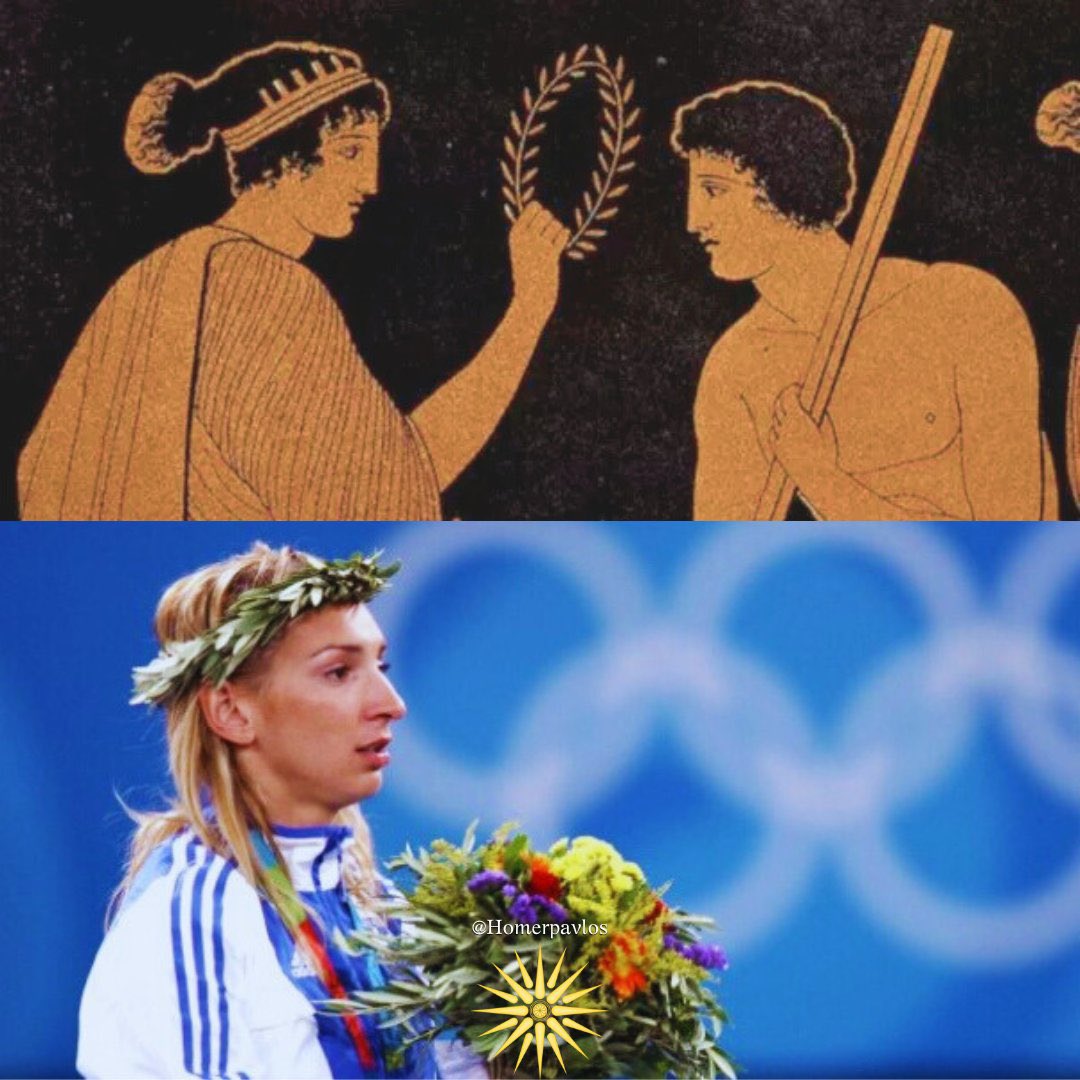
- "What are the Greeks doing now?"
- "They are watching the gymnastic & equestrian games that are now taking place in Olympia"
- "What is the prize for the victors?", Xerxes asks
- "They are given a wreath made of olive branch", the Arcadians reply
Tritantaechmes cries out: "AH! OH! Mardonius, against what kind of men have you brought us to fight, who do not compete for money, but for virtue?"
Herodotus, Histories, 8.26–27
🚨 BREAKING: Gen Keane admits Iran demands total control over the Strait. Tehran brilliantly dictates when and where ships navigate.
The Trump administration is powerless. Washington begs for free navigation, but Iran refuses to surrender its waters to the Zionist alliance.
Aging doesn't guarantee a slow decline.
In fact...
How you function at 60, 70, or 80 is largely determined by a few measurable physical markers.
Miss these signals, and decline happens quietly.
Here are 8 metrics that predict how well you'll age (and how to improve them):👇
The reality is:
Aging poorly rarely comes from one catastrophic event. ❌
It comes from slow losses in:
- Strength
- Metabolism
- Cellular Resilience
...all of which compound over decades.
These 8 tests will help you determine whether you're gaining or losing ground: 👇👇
1️⃣ Metabolic Health Standards
Targets:
- Waist-to-Height Ratio: < 0.5
- Fasting Glucose: < 100 mg/dL
- HbA1c: ≤ 5.6
- FFMI: Men >19, Women >16
Nearly 88% of U.S. adults have at least one marker of metabolic dysfunction.
Waist-to-height ratio is one of the best predictors of metabolic disease.
Simply put:
Your waist should be less than half your height.
Above 0.5 often signals excess visceral fat and systemic inflammation.
Low FFMI suggests insufficient muscle to protect metabolism as you age.
2️⃣ Sit-to-Stand Power Test
The goal is simple:
You want to be able to stand up and sit down 5 times in under 12 seconds (with NO hands).
✅ This measures lower-body power AND mobility.
❌ Not just strength.
Power & mobility decline faster than strength with age.
A slow time indicates declining ability to generate force quickly and move through full-range-of-motion.
Both absolutely KEY for preventing falls.
3️⃣ Loaded Ruck Walk
Your goal:
To be able to walk 1 mile with 20–25% bodyweight in under 20 minutes, breathing through your nose only.
Most people can walk a mile.
Few can walk a mile under load while maintaining aerobic breathing.
This serves as a proxy for:
- Cardiovascular fitness
- Hip and leg strength
- Core stability
- Bone loading
Plus... it mirrors real-world demands.
4️⃣ Push-Up Test
Your goal:
- 20 push-ups (men)
- 10 push-ups (women)
A 2019 Harvard study found men who could do 40 push-ups had dramatically lower cardiovascular risk.
Push-ups measure upper-body endurance AND systemic fitness.
The bonus?
There's no equipment required.
5️⃣ Grip Strength
Your goal:
60-second dead hang
Grip strength is one of the strongest predictors of all-cause mortality.
It reflects total body strength AND neurological health.
If grip declines: 📉
Functional independence often follows.
6️⃣ Cardiovascular Capacity
Targets:
- VO₂max > 40 ml/kg/min
- OR 9–9:30 mile pace
- Resting heart rate < 60 bpm
VO₂max is one of the strongest predictors of longevity.
If climbing 3 flights of stairs leaves you winded...
Your aerobic system needs WORK.
Zone 2 cardio and occasional HIIT improve this rapidly.
7️⃣ Balance
Target:
Single-leg stand, eyes closed, 30 seconds
A 2023 study showed people unable to hold 10 seconds had nearly double the mortality risk over 7 years.
Balance is neurological. 🧠
And if you don’t train it... it declines.
Falls are one of the biggest causes of disability in aging adults.
8️⃣ Mobility (Sit-Rise Test)
Your goal:
Score ≥8 out of 10
Lower yourself to the floor cross-legged and stand back up without hands or knees.
Each support point costs a point.
A long-term study of 4,282 adults found low scorers were 5–6× more likely to die over 12 years.
This test combines:
- Balance
- Mobility
- Strength
- Coordination
⭐ The Bottom Line:
You don’t need perfect scores in these tests.
But you SHOULD know your numbers.
People rarely age poorly from one big mistake or accident.
They stay busy and successful…
…and quietly lose capacity in the systems that matter most when they’re 75 and trying to stay on their feet.
And 4⃣ best rules for improving these markers?
1⃣ Eat real, single ingredient foods
2⃣ Move for 30+ minutes daily
3⃣ Strength train 2-3x / week
4⃣ Sleep 7+ hours per night
That's it.
Simple, not always easy!
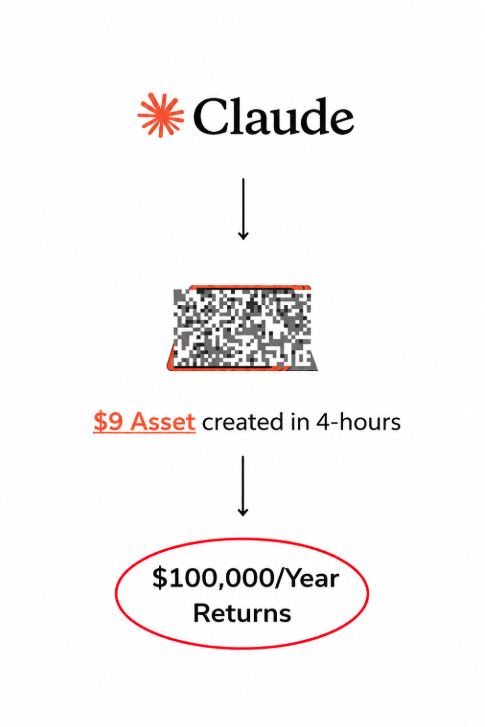
This $9 digital asset makes more than most MBAs and software engineers.
You just need Claude and Ideogram AI to create it.
I shared this with a banker, he's now making $60,000/year.
Comment "Asset" and I'll send you a free course breaking down:
• The asset
• All my prompts
• How to create it with AI
• Additional $199 bonus
Free for the next 48 hours.
What is a lie ?Here is my tweet. “ A healthy republic depends on more than elections. It depends on the ability to argue passionately, lose graciously, win humbly, and remember that political opponents are not enemies.
Lincoln called them “the better angels of our nature.” America is strongest when we listen to them.”
@archeohistories Didn’t realize that Mehmed II asked for tribute in exchange for not conquering the city but was refused by Constantine IX. In hindsight, that was a mistake.
The point feels obvious once you hear it; but it’s profoundly true. AI won’t make software “disappear.” Where software is deeply embedded in systems, processes, compliance, and identity, it will linger, adapt, and evolve. New challengers with crisp, well-defined workflows will adopt AI fastest. Legacy setups will coexist for years. This isn’t a sigh of relief for incumbents. It’s a reality check on the breathless “AI eats everything” forecasts. History rhymes: electricity didn’t kill canals overnight. Railways didn’t erase roads. AI will reshape software layers but not vaporize them. And as we live in a capitalist world, we need to say something about winners and losers. So the winners won’t be the ones predicting total disruption. They’ll be the ones who understand what actually changes and adapt first.
Food for thought.
Marc Andreessen once said
“software is eating the world.” The new fashion is to say AI will now eat software, and with it, companies like Microsoft. That makes for a clean story.
It is also, like most technological prophecies, too neat.
Past revolutions followed the same script. Electricity was meant to wipe out steam; railways were supposed to kill canals. In practice, old systems lingered and adapted while the new technology was slowly woven into existing infrastructure. AI is no different. It is already eroding thin products that are little more than a pretty interface over a general‑purpose model. Those are genuinely at risk.
But deeper layers, identity, collaboration, cloud infrastructure, security, compliance, do not disappear just because the “thinking” engine changes. They are where models run, where data lives and where regulators look. Jevons’ paradox suggests that making code, content and analysis cheaper will expand demand for all three, not eliminate it.
AI will automate narrow, well‑defined tasks and squeeze some business models hard. Yet much software, especially the systems that sit in the middle of critical workflows, with proprietary data, will evolve rather than vanish. The question is not whether AI eats software, but which kinds adapt fastest to the new regime.
The unexpected in science that can surprise. Is it possible that one of the most unexpected and powerful benefits of the much-maligned mRNA COVID vaccines is turning out to be a game-changer against cancer??Retrospective data from MD Anderson showed advanced lung cancer patients on immunotherapy who received mRNA COVID shots had dramatically better outcomes: median survival of 37 months vs 21 months, and 56% alive at 3 years vs just 31% for the unvaccinated group.
The surprising mechanism? The mRNA acts like a non-specific “fire alarm” for the immune system. It wakes up exhausted T-cells in tumors, sends them to the lymph nodes for reprogramming, and gets them back to aggressively attacking the cancer but independent of any specific tumor antigen. Researchers (Dr. Elias Sayour’s team at University of Florida) are now turning this insight into a universal mRNA cancer vaccine. Early mouse data looks extremely promising across multiple cancer types, and human trials are starting.
We have real-world retrospective evidence, but we still need proper double-blind, placebo-controlled trials to confirm this beyond doubt.
If it holds up, it would be an incredible silver lining. This could be one “magic purpose” nobody saw coming.
Cancer patients who happened to get a regular COVID shot kept outliving the ones who didn't. The lung cancer patients who got it lived about 37 months. The ones who skipped it lived 21. A flu shot did nothing, only the COVID kind, and nobody planned it.
Doctors at MD Anderson, one of the top cancer hospitals in the US, dug through more than a thousand patient records. Everyone in the group had advanced cancer and was on the same kind of treatment, called immunotherapy, which turns your own immune system loose on the tumor. The only difference was whether they'd also gotten a Pfizer or Moderna shot within about three months of starting. The ones who had lived far longer. Three years in, 56 out of 100 vaccinated lung cancer patients were still alive, against 31 out of 100 who weren't.
The shot doesn't teach your body what the tumor looks like. It just trips an alarm. Your immune system sends cells into a tumor, and a lot of them go quiet and stop fighting. The mRNA in the vaccine, the same stuff in the COVID jab, acts like a fire alarm. It wakes those cells up, pulls them back to the lymph nodes where the immune system regroups, and sends them out hunting. The cancer gets caught in the sweep.
That accident is the seed of what people now call a universal cancer vaccine. The goal is one shot that works against any cancer, precisely because it isn't aimed at a specific one. It wakes the body up and lets the body do the rest.
A University of Florida team led by Dr. Elias Sayour has been after this for more than eight years. In 2018 they found that even random genetic instructions, nothing to do with any tumor, could stir the immune system in mice. In 2024 they ran their first human test, a custom-built version, on four patients with one of the deadliest brain cancers, and watched it switch the immune system on within days. Last year they built a one-size-fits-all version that erased tumors completely in some mice with skin, bone, and brain cancer.
It's early, and a little caution is fair. The tumor-erasing results are still in mice. The human survival numbers come from digging through old records, not a clean head-to-head trial. That trial is being set up now.
The detail that stuck with the researchers: the people who gained the most were the ones whose cancer the immune system usually walks right past. In that group, a plain COVID shot lined up with being nearly five times as likely to be alive three years later.
Sophia Loren wasn’t just timeless beauty and ageless elegance. She had real integrity too. Used her very first acting paycheck to pay her father so he would legally recognize her sister and give her the family name.
Class act. Kudos.
At nineteen, she spent the first money she earned on something most people never consider: giving her little sister a last name.
The year was 1953, and this young woman with striking eyes and unstoppable determination was finally about to receive her first major paycheck. Most girls in her position would have dreamed of buying expensive dresses, glamorous jewelry, or a beautiful apartment in Rome.
But Sophia Loren, had a completely different priority. She did not spend that hard-earned money on herself.
To understand why a teenager would do something so unusual, we have to look at the strict and often cruel reality of post-war Italy. Sophia and her younger sister, Maria, were born out of wedlock.
Their father, Riccardo Scicolone, was a man of noble descent who initially gave Sophia his prestigious last name.
However, when their mother became pregnant again with Maria, he abandoned the family entirely and refused to acknowledge the new baby as his own.
In those days, carrying the label of an illegitimate child was a heavy social burden. Maria was officially registered with her mother’s maiden name, Villani.
Because the two sisters had different last names, the public quickly realized the painful truth about their family. Worse, Maria faced constant discrimination at school and in everyday life. She felt like an outcast, carrying a stigma that she did nothing to deserve.
Sophia loved her sister fiercely and watched her suffer for years. The pain of seeing Maria cry because of their father’s rejection burned deeply inside her.
When Sophia started getting her first significant acting roles and finally saw a substantial amount of cash in her hands, she did not hesitate for a second.
She tracked down her biological father and offered him a massive sum of money in exchange for a legal signature.
Her father, who was facing financial difficulties, agreed to the deal. He accepted the money, signed the official papers, and legally recognized Maria as his daughter.
"I bought my sister her right to be a Scicolone," Sophia later stated when reflecting on that turning point in their lives.
With that single, selfless act, Maria Villani instantly became Maria Scicolone. She finally shared the exact same last name as her older sister. It was not about status or pride; it was about protecting a vulnerable young girl from the cruel judgment of society.
Sophia used her very first taste of success not to elevate her own lifestyle, but to give her sister dignity, equality, and a sense of belonging.
This incredible sacrifice created an unbreakable bond between the two women that lasted a lifetime.
While Sophia went on to conquer Hollywood and become a global icon, Maria stood by her side as her closest confidante, biggest supporter, and best friend through every high and low.
Decades later, when the bright lights of Hollywood faded and the red carpets were rolled away, it was this quiet act of sisterly devotion that remained the true masterpiece of Sophia's life.
True love does not look for applause; it rolls up its sleeves and changes someone's destiny in the dark, proving that the greatest gift we can ever give is the one that mends a broken heart.
Terence Tao is already showing what the real promise of AI looks like. Not drafting emails, but accelerating discovery.
When one of the world’s greatest mathematicians can explore thousands of possibilities that were previously too time-consuming or resource-intensive to test, experimentation explodes. A brave new world is appearing on the horizon; one where human ingenuity is amplified by unprecedented capacity to explore, test, and discover.
The greatest living mathematician just said something that reframes the entire AI debate (Save this).
Terence Tao, Fields Medal winner, UCLA professor, and by most measures the most accomplished pure mathematician alive speaking at an OpenAI Forum event in March 2026, and the observation he made is deceptively simple but profound in its implications.
"We lived in a world with cognitive friction until very recently, where every task required us to use our brain. So we didn't really think about it, we just thought this was the cost of doing something intellectual. But now we have AI and the other technologies that can bring these frictions down to zero."
To understand why this matters so much, you have to understand what most research time actually looks like.
Most research time is spent checking cases, chasing references, translating intuition into computation, testing a path, finding it false, and deciding whether the failure taught you anything useful.
As Tao puts it the lower cost of exploration that AI enables means he can now try crazier things and that makes all the difference.
The reason unconventional ideas in science are often abandoned is because the bookkeeping, coding, or literature search needed to even test them is too expensive for what is ultimately just a hunch.
This is where cognitive friction becomes scientific friction, and lowering it does not make taste, judgment, or proof disappear, it makes more weak signals cheap enough to inspect before they are abandoned.
AI is making hesitation less expensive, and that is often where discovery begins.
Tao now uses AI to search literature, write code, make plots and figures, run calculations, and test whether a possible approach is even worth chasing and he declared AI ready for primetime in March 2026 after confirming that in math and theoretical physics, it now saves more time than it wastes.
He had previously called early AI models mediocre but not entirely inept graduate students and then watched as they passed the threshold where the value of acceleration exceeded the cost of correction.
Years ago, Tao predicted that 2026-level AI, when used properly, will be a trustworthy co-author in mathematical research and by his own assessment this year, that prediction came in on schedule.
A 23-year-old used ChatGPT to solve Erdős Problem #1196 , a problem that had gone unsolved for 60 years in just over 80 minutes.
OpenAI's GPT-5.2 Pro resolved another open Erdős problem, with OpenAI President Greg Brockman posting about it in January 2026.
And OpenAI's Chief Research Officer Mark Chen articulated the institutional goal in terms that every investor should internalize, "We care less about winning a Nobel Prize or a Fields Medal, and more about enabling 100 mathematicians out there to do that for themselves."
If AI is genuinely collapsing the cost of scientific exploration not just in mathematics but in drug discovery, materials science, climate modeling, and theoretical physics then the companies building the compute infrastructure that makes that acceleration possible are not just selling chips and cloud capacity.
They are selling the raw material of compounding human discovery, and that is a demand curve with no visible ceiling
It always makes me laugh when naive US leftists talk about Sweden or Norway as examples of “democratic socialism.”
Guess what? Sweden has higher inequality than the US.
Sweden abolished inheritance, gift, wealth, and aviation climate taxes.
Sweden is smart, not socialist.
Agatha Christie, 40 freshly divorced amid scandal, met 26-year-old archaeologist Max Mallowan in Iraq in 1930. Society clutched pearls over the age gap. They married anyway, excavated together, and she wrote some of her greatest novels inspired by their adventures. 46 happy years.
Love finds a way or society’s hang-ups will swallow you.
Today? Those constraints barely exist anymore. The world has changed. We’re getting crazier by the day. Anyway, stop waiting for permission.
In 1930, Agatha Christie was 40 years old, divorced, and emotionally shattered.
Then she met a 26-year-old archaeologist in the Iraqi desert.
And the relationship everyone said would fail lasted 46 years.
Four years earlier, Agatha’s first marriage had collapsed publicly and painfully.
The scandal became front-page news after she disappeared for 11 days under mysterious circumstances before eventually being found in a hotel under an assumed name.
By 1930, she was exhausted by fame, heartbreak, and public scrutiny.
So she traveled alone to Iraq, hoping distance might help her heal.
At an archaeological dig in the ancient city of Ur, she met Max Mallowan.
Young.
Intelligent.
Passionate about history.
He was assigned to guide visitors around the excavation site.
Instead, he ended up changing her life.
They talked for hours about literature, archaeology, history, and travel.
Agatha was captivated by his curiosity.
Max was captivated by her mind.
When the excavation season ended, Max visited Agatha at her home in Devon.
On the second night, during a rainy walk across the moors, he proposed.
Agatha immediately said no.
Not because she didn’t love him.
Because she was afraid.
She was 40.
He was 26.
In 1930, that age gap was considered scandalous.
She worried society would mock them.
She worried he’d regret it.
She worried she was “too old.”
They argued for two hours.
And somewhere during that conversation, Agatha made a choice:
She chose happiness over fear.
They married just six months after meeting.
People whispered constantly.
“It won’t last.”
“She’s too old.”
“He’ll leave eventually.”
They stayed married for the next 46 years.
And together, they built one of the most remarkable creative partnerships of the 20th century.
Every year they traveled together across the Middle East on archaeological expeditions.
Agatha photographed artifacts, restored ancient pottery, and even cleaned priceless ivories with her face cream.
Meanwhile, she wrote some of her greatest novels inspired by those travels:
Murder on the Orient Express.
Death on the Nile.
Murder in Mesopotamia.
Their marriage wasn’t built on appearances.
It was built on shared curiosity, respect, humor, and friendship.
During World War II, when they were separated, they wrote each other letters constantly.
Max later wrote:
“Few men know what it is to live beside an imaginative, creative mind which inspires life with zest.”
Agatha once described their relationship as two railway tracks running side by side:
Separate, but essential to each other.
By the end of their lives, Max had become one of the world’s leading archaeologists.
Agatha Christie became the best-selling novelist in history.
Sir Max Mallowan.
Dame Agatha Christie.
Not bad for a relationship everyone said would never work.
And maybe that’s the real lesson in their story.
Love doesn’t care much about public opinion.
Or age.
Or expectations.
Or timing.
Sometimes happiness arrives after heartbreak.
Sometimes the bravest thing a person can do is say yes after life has already hurt them once.
Agatha Christie did.
And she spent the next 46 years proving the world wrong.