Had a neighbour who started mowing 24” of my lawn.
He wasn’t being nice though he tried to suggest it was.
Turned out it was attempt to claim that extra land as his own for some landscaping plans. Not legal of course. We got lawyers to quash it.
Anyway, not sure why I thought of that.
God keeps taking the wrong 80-year-olds from us.
That was my first thought when I saw the news this afternoon. It’s a selfish thought, I admit. I’m at peace with being selfish about this.
Every day of my life, Dolly Parton was somewhere on this earth strumming guitars with her acrylic nails, talking up the beauty of humanity, being honest about our frailties and shortcomings, asking solely through her music if we all couldn’t be better to ourselves and each other.
Here’s what I think needs to be said about Dolly Parton:
You knew everything about her, everything real and true, by her actions.
She was a Christian who spread the Gospel solely through taking care of the least fortunate among us.
She was a patriot who thought the best of America was in our diversity and never backed down from that.
She was a feminist who didn’t like calling herself a feminist but somehow made her feminism clear through her refusal to let others define her or hold back women or anyone else.
You always knew where she stood just by her example.
She was born fourth in a family of twelve kids. Great Smoky Mountains. Tennessee.
Dirt poor. Her family literally lived in a one-room cabin for some time. You ever hear someone use the phrase “out yonder”? They were out-out-yonder.
Her father was a sharecropper and farmer and worked odd jobs. Her mother kept the home as best as could be managed. Twelve kids. They couldn’t afford all sorts of things, but they made it work.
Did y’all know she was a prodigy? As a little girl, she put together her first guitar using a mandolin and bass strings. She was on the local radio by 10. She put out her first record by 11. She was introduced at the Grand Ole Opry by Johnny Cash at 13.
She loved her family and she loved Jesus and she loved music. That’s all she ever needed in the world from a young age. She worked her ass off for years toward her dream. No real connections. She just did the damn thing and wouldn’t stop until she got there.
62 years as an adult of doing the damn thing.
44 country albums in the top ten. 25 number-one singles. 55 top ten singles. 110 charting singles.
100 million records sold worldwide. More than three billion streams with most of her work released before streaming was a thing.
11 Grammys. Three Emmys. Nominations for Golden Globes and Tonys.
National Medal of the Arts. Kennedy Center Honoree.
She actually declined the Presidential Medal of Freedom three times: twice during Trump’s first term because of her husband being ill and then COVID and then again from Pres. Biden because she didn’t want people to think the first two rejections were political.
Perhaps most famously, after the Tennessee state legislature enthusiastically began moving to pass a resolution that would pay for a statue of her on the Capitol grounds, she released a public statement requesting they withdraw it.
Why?
“I am honored and humbled by their intention but I have asked the leaders of the state legislature to remove the bill from any and all consideration. Given all that is going on in the world, I don’t think putting me on a pedestal is appropriate at this time.”
Rock and Roll Hall of Fame. Country Music Hall of Fame. Songwriters Hall of Fame. Gospel Music Hall of Fame. Grammy Hall of Fame. That’s a fraction of the halls of fame in which she is enshrined.
But none of this is why we love Dolly Parton. The entire list of accolades and achievements doesn’t begin to capture why she achieved sainthood in her lifetime without ever asking for it, much less believing such a thing is appropriate.
We love Dolly Parton because she never forgot where she came from and had the awareness to understand there were places all over the world just like hers and people in them who needed some help.
We love Dolly Parton because she donated more than 100 million books to children in her lifetime through her Imagination Library — because she knew what it was like to be a child in an area where books were scarce.
We love her because the Dollywood Foundation raised countless millions for causes ranging from rural poverty to hunger to disaster relief to HIV/AIDS.
We love her because she quite literally funded the early development stages of the Moderna vaccine during the COVID crisis with an emergency $1M donation to Vanderbilt University Medical Center — and then made a point of modeling great leadership by publicly getting the vaccine and encouraging others to do the same.
We love her because she never failed to show up and tell marginalized groups that we matter, the politics and the blowback be damned, from speaking up in support of same-sex marriage to speaking out against racism. Tell me another Christian of her global stature and from her particular background who so publicly loved trans people on the basis that Christ loves trans people.
All that and a lot more, and she yet, she still found time to help preserve the bald eagle.
We love Dolly Parton’s music, but that’s not why we love her.
We love her because she spent her entire life unconditionally loving us.
----
Link to full essay available here for easier sharing: https://t.co/7RMNTkGSRz
Happy birthday, Rembrandt!
Rembrandt Harmenszoon van Rijn was born 419 years ago today — but back in 1642, he was 36 years old when he created his largest and most famous painting, “The Night Watch.”
The Night Watch came from Rembrandt’s most important commission: a group portrait of a company of Amsterdam’s Civic Guards to hang in their meeting hall. And today, everyone can enjoy it at Amsterdam’s wonderful @Rijksmuseum.
The Night Watch is an action shot. With flags waving and drums beating, the guardsmen spill onto the street from under an arch. It’s “all for one and one for all” as they rush to Amsterdam’s rescue. The soldiers grab lances and load their muskets. In the center, the commander (in black, with a red sash) strides forward energetically with a hand gesture that seems to say, “What are we waiting for? Let’s move out!” His lieutenant focuses on his every order.
Why is The Night Watch so famous? Well, it’s enormous, covering 171 square feet. The guards are almost life-size, so it seems like they’re marching right out of the frame and into our living room.
In its day, The Night Watch was completely different from other group portraits. Until then, subjects were seated in an orderly group-shot pose with each face well-lit and flashbulb-perfect. The groups commissioning the work were paying good money to have their mugs preserved for posterity, and it was ego before artistic freedom.
By contrast, Rembrandt got the Civic Guards off their duffs and showed them doing their job — protecting the city. He added less-than-heroic elements that gave it a heightened realism, such as the mysterious glowing girl holding a chicken with splayed claws (the guards’ symbol). Rembrandt’s trademark use of a bright spotlight to highlight the main characters made it all the more dramatic. By adding movement and depth to an otherwise static scene, he took posers and turned them into warriors, and turned a simple portrait into high art.
OK, some Night Watch scuttlebutt: First off, the name “Night Watch” is a misnomer. It was originally a daytime scene, but Rembrandt’s paintings were later re-varnished with a preserving coating. Eventually, as the varnish darkened and layers of dirt built up, the sun set on this painting. During World War II, the painting was rolled up and hidden for safekeeping. Over the years, this stirring painting has both inspired people and deranged them. In 1911, a madman attempted to slice it with a knife, in 1975, another lunatic cut the captain’s legs, and in 1990, it was sprayed with acid.
The Night Watch was a smashing success in its day. Rembrandt had captured the exuberant spirit of Holland in the 1600s, when its merchant ships ruled the waves, and Amsterdam was the center of the first global economy. These guardsmen on the move epitomized the proud, independent, and upwardly mobile Dutch. On an epic scale, Rembrandt created the definitive “portrait” of that single generation of people that re-invented the world — the era we call the “Dutch Golden Age.”
Origins of Purple Rain,
Purple Rain' was originally written as a country song, and was intended to be a collaboration with Fleetwood Mac singer Stevie Nicks.
According to Nicks, she received a 10-minute instrumental version of the song from Prince, with a request to write the lyrics, but she felt overwhelmed by the task.
She later said: "I listened to it and I just got scared. I called him back and said, 'I can't do it. I wish I could. It's too much for me.'"
Prince then asked his backing band to try the song: "I want to try something before we go home. It's mellow."
According to Lisa Coleman, Prince changed the song dramatically after Wendy Melvoin started playing the guitar to accompany the song: "He was excited to hear it voiced differently. It took it out of that country feeling.
"Then we all started playing it a bit harder and taking it more seriously. We played it for six hours straight and by the end of that day we had it mostly written and arranged."
Prince's explanation on the meaning of 'Purple Rain':
"When there's blood in the sky – red and blue = purple... purple rain pertains to the end of the world and being with the one you love and letting your faith/god guide you through the purple rain."
After recording the song, Prince phoned Journey member Jonathan Cain, to ask him to listen to it.
Prince was concerned that it might be too similar to Journey's 'Faithfully', a song composed by Cain which had recently been in the US charts.
However, Cain reassured Prince by saying that the songs only shared the same four chords.
"I thought it was an amazing tune," Cain said. "I told him, 'Man, I'm just super-flattered that you even called. It shows you're that classy of a guy. Good luck with the song. I know it's gonna be a hit.'"
Ladies and gentlemen,
Prince performing a special and an absolute classic song, Purple Rain, live at Paisley Park, in 1999.
Credits for the background information: @SmoothRadio
An introduction to Jazz in 25 Tunes - A thread🧵
New to jazz or looking to expand your playlist? Here are 25 Jazz Tunes to start your journey. This list is your ultimate entry into the vibrant world of jazz...
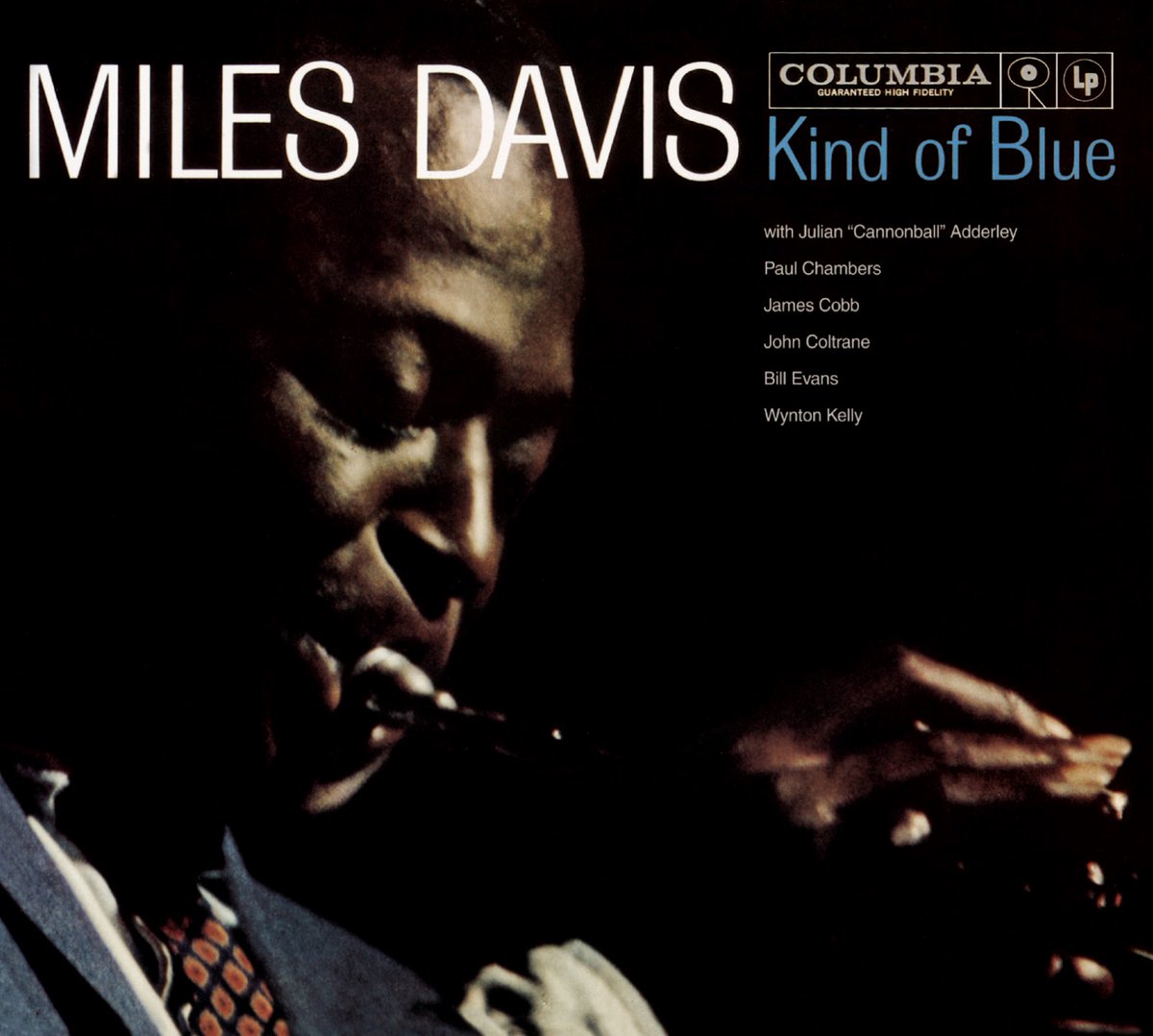
1. Miles Davis – So What
As an ex-evangelical, I feel so much sadness thinking about how many joys are stolen from those people. Awe-inspiring phenomena like eclipses become evil harbingers, solutions for a better world are painted as signs of devilish plots. Just a prison of abusive lies.
I wuz robbed.
More specifically, I was tricked by a phone-phisher pretending to be my bank, and he convinced me to hand over my credit-card number, then did $8,000+ worth of fraud with it before I figured out what happened. And *then* he tried to do it again, a week later!
1/
Neil Young, walking through the park one day, is stopped by a fan and asked how he plays Cinnamon Girl. Neil sits down, drops the tuning, shows him how, and strolls off to continue his day.
Coolness personified.
Please watch this. This is the world we have been trying to leave behind for the past fifty years, and it is the world the radical right wants to bring back. Think of all the smart voices that will be silenced in favor of smug white male fools if we allow this to happen. #BTDT