@antoniosarosi AI is the absolute best in self-marketing. Every engineers solves a problem, delivers the solution, finishes the job. AI takes over a task, fixes the problem, hallucinates millions of non-existing unfinished requirements, gets tasked to solve them, repeats … it never finishes.
@mukifriends@niggi@totalreporter Haben sie nicht, sie kritisierten. Alles gut soweit.
Niemand muss Nius drucken, niemand sollten, leider kann jeder jeder, der will.
@katjadler Kritik ist Meinungsäußerung. Nichts anderes kam von „unseren Demokraten“. Niemand übte Druck aus.
Warum sind insbesondere die Liberalen in dieser Hinsicht in ihrer Wahrnehmungsfähigkeit beeinträchtigt?
It appears that vibe coders on R*ddit have learned that you can edit files via notepad and make changes to the programs, without burning any tokens.
Amazing discovery.
@_MartinHagen Kritik ist Kritik. VRM kann sich der Kritik stellen und weiter drucken. Oder eben nicht. Freie Entscheidung. Freie Meinungsäußerung. Alles richtig.
@NeroCampanella Verabschiedeten sie sich von ihm? Nein.
Haben sie sich während der Fahrt mit ihm unterhalten? Nein.
Wollten sie auch umarmt werden und haben nett gefragt? Nein.
Lobten sie ihn u d die Kinder für ihre besonnene, belehrte Art? Nein.
So … what?
@julius__boehm@spdde Wo ist das Problem? VRM zensiert doch nicht.
Geht doch zu einer anderen Drucker, etwa Zewa, die stellen gerne Toilettenpapier her und drucken da gelegentlich was unnützes drauf.
So ruhig hier...
Jugendliche haben sich offenbar organisiert um Ausländer umzubringen.
Und X so ungewohnt still. Keine wütenden Tweets mit tausenden Herzchen und ätzenden Sprüchen.
Seltsam, seltsam.
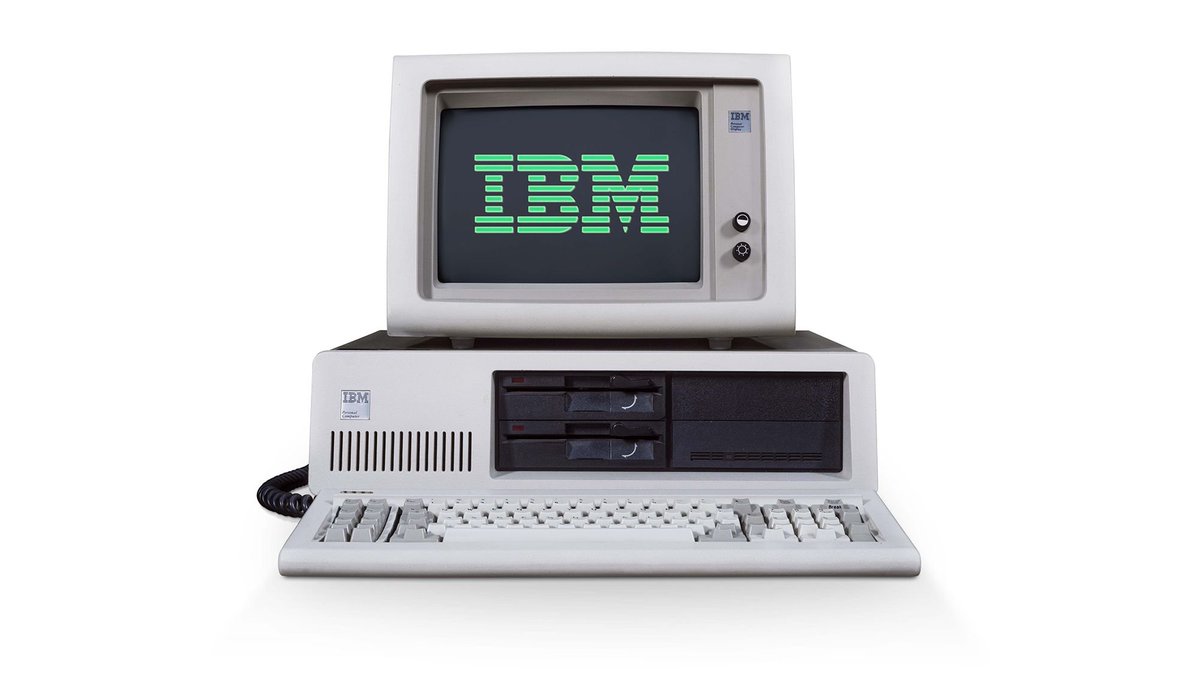
Well, ahktually... the PC was multi-programmed within a year of its release thanks to the TSR: Terminate and Stay Resident application. It's in the manual.
TSRs were a classic early workaround for MS-DOS’s single-tasking limitation.
They were MS-DOS programs that used a special system call to “exit” while remaining in memory.
They typically install interrupt handlers (often for the keyboard or timer) so they can be reactivated later, most famously via a hotkey, while another program is running.
This gave a limited form of background utilities or pseudo-multitasking on an OS that otherwise ran only one program at a time.
The original mechanism was INT 27h (“terminate but stay resident”), which kept up to 64 KB of the program’s memory resident. It was already documented in the PC-DOS 1.1 manual as of 1982.
In short, the technique existed within about a year of the IBM PC’s 1981 launch and was formalized/improved in 1983.