After 1918, #Croatia’s ancient nobility — who saw Serbia’s ruling Karađorđevićs as inferior nobodies without pedigree — had much of their mighty estates seized. Croatia was subjected to brutal dictatorship, heavy taxation & economic exploitation in the new South Slavic union.
#Zagreb, the capital of #Croatia—the Mediterranean gateway to Central Europe, is best placed to be the seat of the #EU Customs Authority #EUCA. 🇭🇷🇪🇺
https://t.co/zizHErXMv2 via @YouTube
World Vice-Champion #Croatia takes bronze medal🥉also at the #European Men’s Handball Championship!
Congratulations to our team and coach, confirming once again that Croatia consistently ranks among the top five #handball nations globally. 🇭🇷#ehfeuro2026
#Vukovar was the first city in #Europe after WWII to be completely destroyed. In 1991, thousands were killed while the city heroically resisted the aggressor. Vukovar & its #Eltz palace have risen from the ashes, but #Croatia shall never forget the sacrifices made for freedom. 🇭🇷
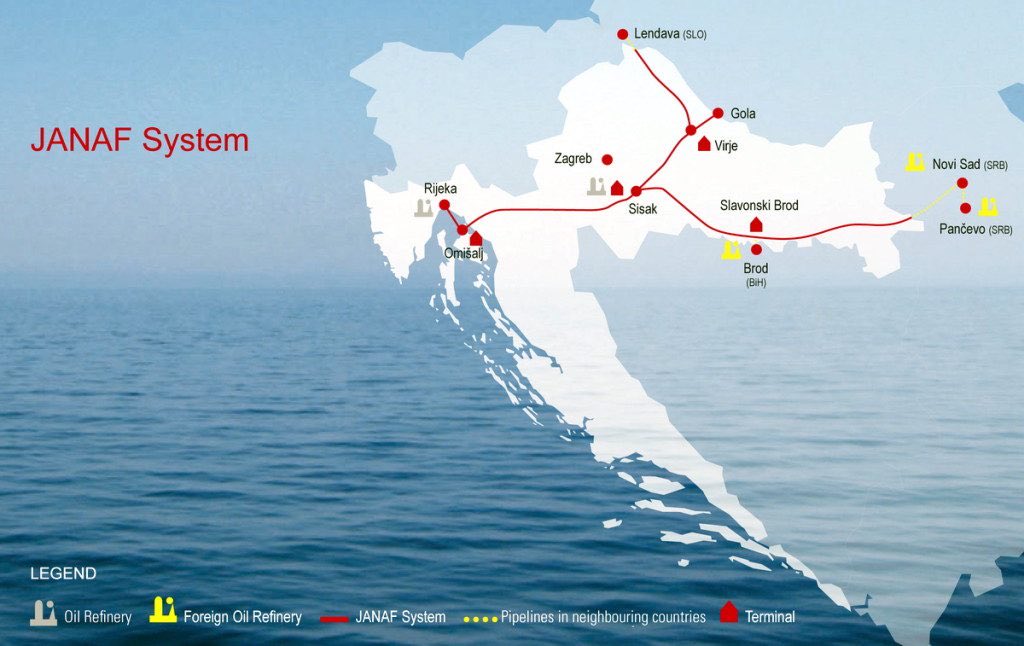
The JANAF oil pipeline through Croatia is crucial for Serbia’s energy security as the country receives much of its oil through it.
The United States recently imposed sanctions on Serbia’s largest oil company, Naftna Industrija Srbije (NIS), which is majority-owned by the Russia gas and oil giant Gazprom.
These sanctions, enacted on October 9 after eight delays since January, aim to disrupt Russia’s ability to fund its ongoing war in Ukraine by targeting its energy revenues.
NIS, Serbia’s only oil refinery and a critical supplier of fuel, is now caught in the crosshairs of this geopolitical struggle, leaving the country grappling with significant challenges to its energy security.
Due to the sanctions, Croatia’s JANAF pipeline has stopped delivering crude oil, which accounted for roughly 30% of NIS’s revenue.
With current crude oil stocks expected to last until November 1 and fuel reserves potentially holding until December, Serbia faces the looming threat of shortages as winter approaches.
The financial toll is already mounting, with NIS projecting losses of €18 million by year-end, potentially escalating to €30 million if the crisis persists.
NIS is a cornerstone of Serbia’s energy sector, supplying over 80% of the nation’s diesel and gasoline, as well as nearly all of its jet fuel and heavy fuel oil.
The sanctions have severed NIS’s access to international banking systems, forcing its 350+ gas stations to accept only cash or Serbia’s domestic Dina card.
Serbian President Aleksandar Vučić has described the situation as “extremely dire,” emphasizing that the sanctions affect every citizen.
One solution to avoid the sanctions would be to nationalize NIS.
There are also discussions suggesting that reducing Russian ownership below 50% to avoid the “majority-owned” designation could be enough to remove the sanctions.
Croatia has expressed interest in acquiring shares through its ties to the JANAF pipeline, and companies like Azerbaijan’s SOCAR and Shell are reportedly eyeing opportunities.
Vučić’s primary goal is clear: secure a stable crude oil supply to prevent a full-blown energy crisis. He has vowed that Serbia will avoid fuel shortages and an energy blackout, prioritizing the nation’s stability.
The sanctions expose Serbia’s heavy dependence on Russian energy. More than 90% of its gas and a significant portion of its oil come from Russia.
This reliance now threatens the country’s energy security, with potential fuel price spikes driving up transportation costs and inflation.
The government faces a potential budget shortfall of 7-13% due to lost NIS revenues, and the company’s 13,000 jobs are in jeopardy.
The building of today’s Presidency of #BosniaHerzegovina & natl. monument in #Sarajevo was designed by #Croat architect Josip #Vancaš in 1886 for the governor’s administration, which until 1918 included #Croatian barons Marijan #Varešanin & last governor Stjepan #Sarkotić. 🇭🇷🇧🇦
@SebastianRogac "Jelačićevo ime je toliko veliko da se mjesec, uplašen sjajem njegove sablje, skriva u oblacima“, govorili su o Jelačiću u Europi u 19. stoljeću.
The Viceroy of #Croatia, Josip Count #Jelačić, was born on 16 October 1801. As statesman & general during #European revolutions of 1848, he unified Croatia under his authority, abolished serfdom, helped modern parliamentarism & was a key figure of the #Croatian national revival.
On 8 October 1075, King Demetrius #Zvonimir of #Croatia was crowned in #Solin with a 👑 sent by #Pope St. #GregoryVII. One of Croatia’s greatest kings & the Saint were close. Gregory intervened to protect Croatia from incursions from the neighbouring Germanic #HolyRomanEmpire.
Landlocked Hungary’s Mediterranean neighbor #Croatia can supply 15 million tonnes of non-Russian #oil annually via its #Adriatic pipeline #JANAF —covering the entire need of #Hungary and #Slovakia, plus natural #gas from the #US via Croatia’s #LNG terminal on the island of Krk.
U.S.-Adriatic Charter #A5 meeting at #UNGA80: Highlighted #Croatia’s defense investments & robust cooperation with our ally #US. 🇭🇷 is an #energy security hub for Europe w/ the LNG terminal & #Adriatic pipeline. Zagreb will keep neighbouring #WesternBalkans on #NATO & #EU agenda.
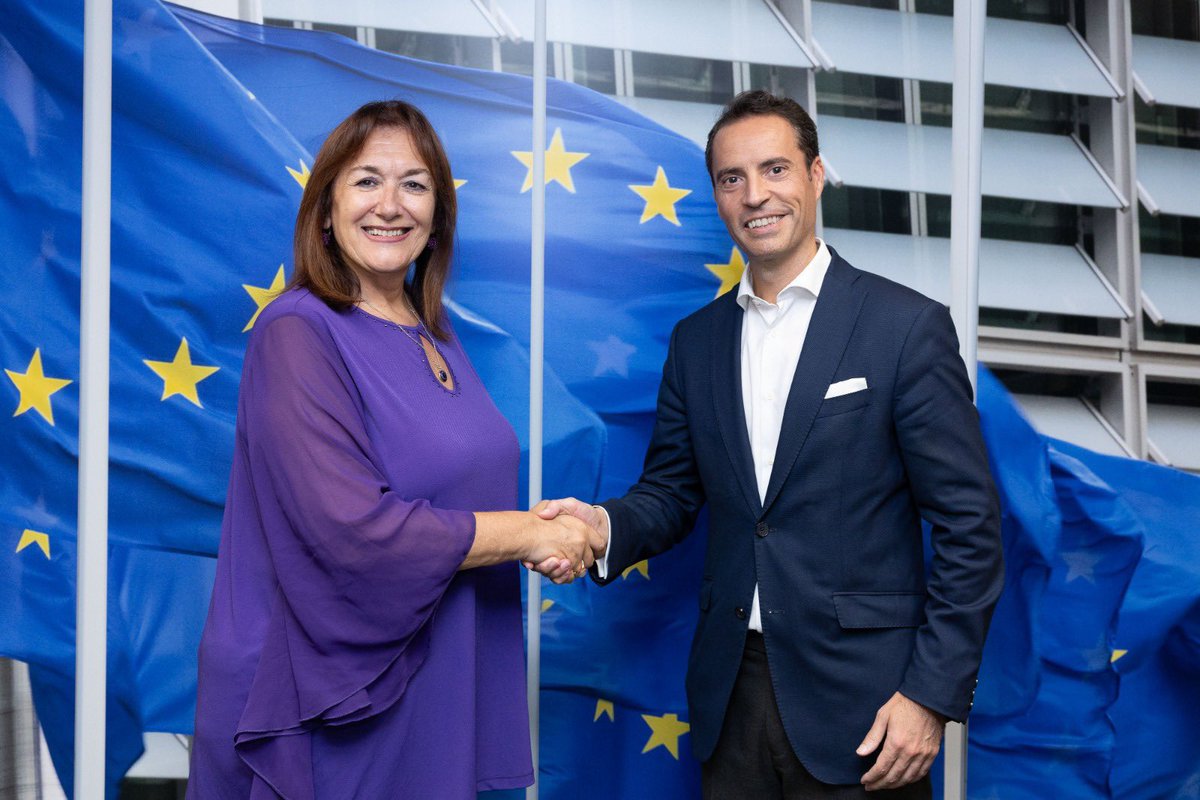
Great to meet with @dubravkasuica, #EU commissioner for the #Mediterranean. Security and stability in the MENA region is a shared priority. We discussed how to strengthen #NATO-EU synergies in the southern neighbourhood, which has strategic importance for @NATO
Allies & partners from #NATO’s Southern Neighbourhood at @JFC_Naples. #Croatia’s priorities: maritime safety, irreg. migration, EU-NATO cooperation. 🇪🇺Commissioner for the #Mediterranean@dubravkasuica leads also by example on the EU side. Excellent stewardship, @JavierColominaP!
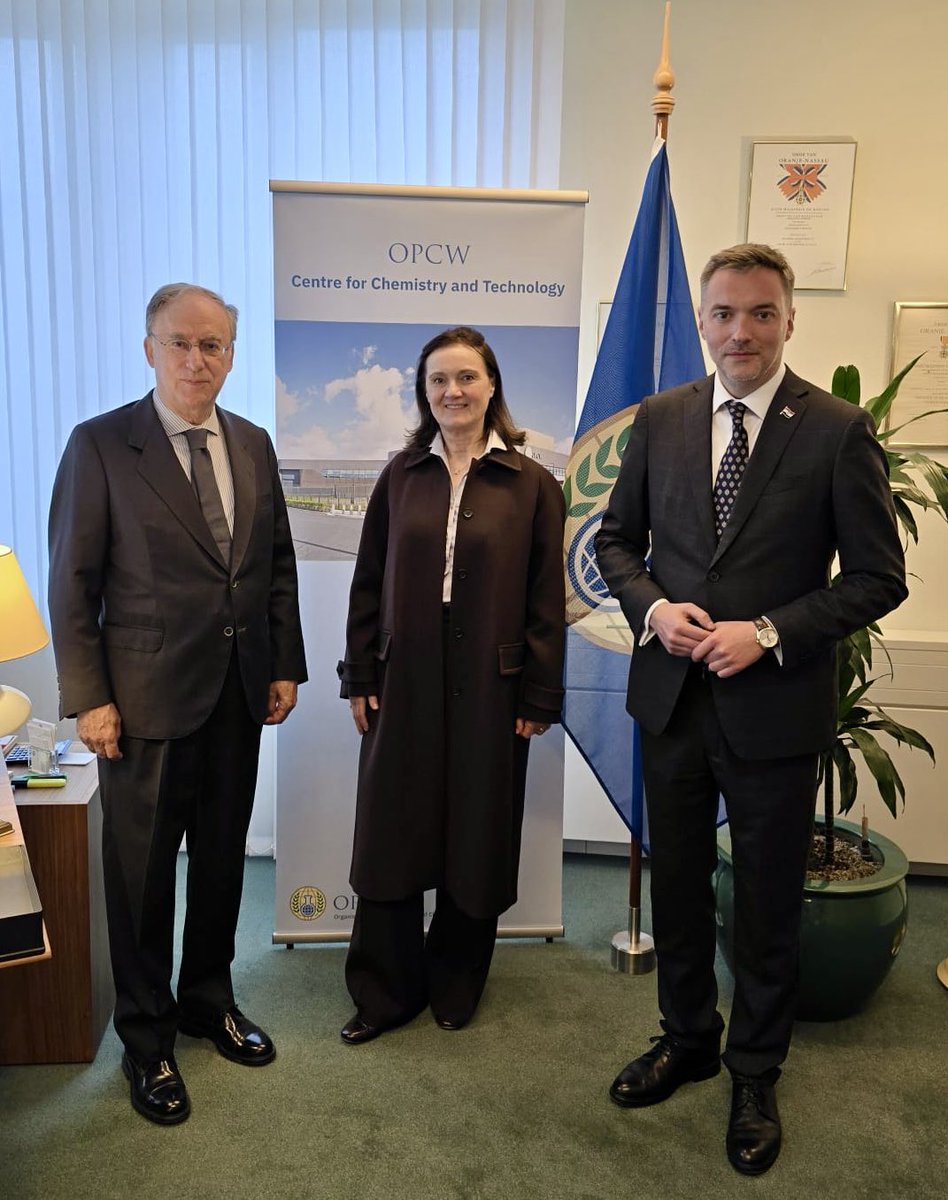
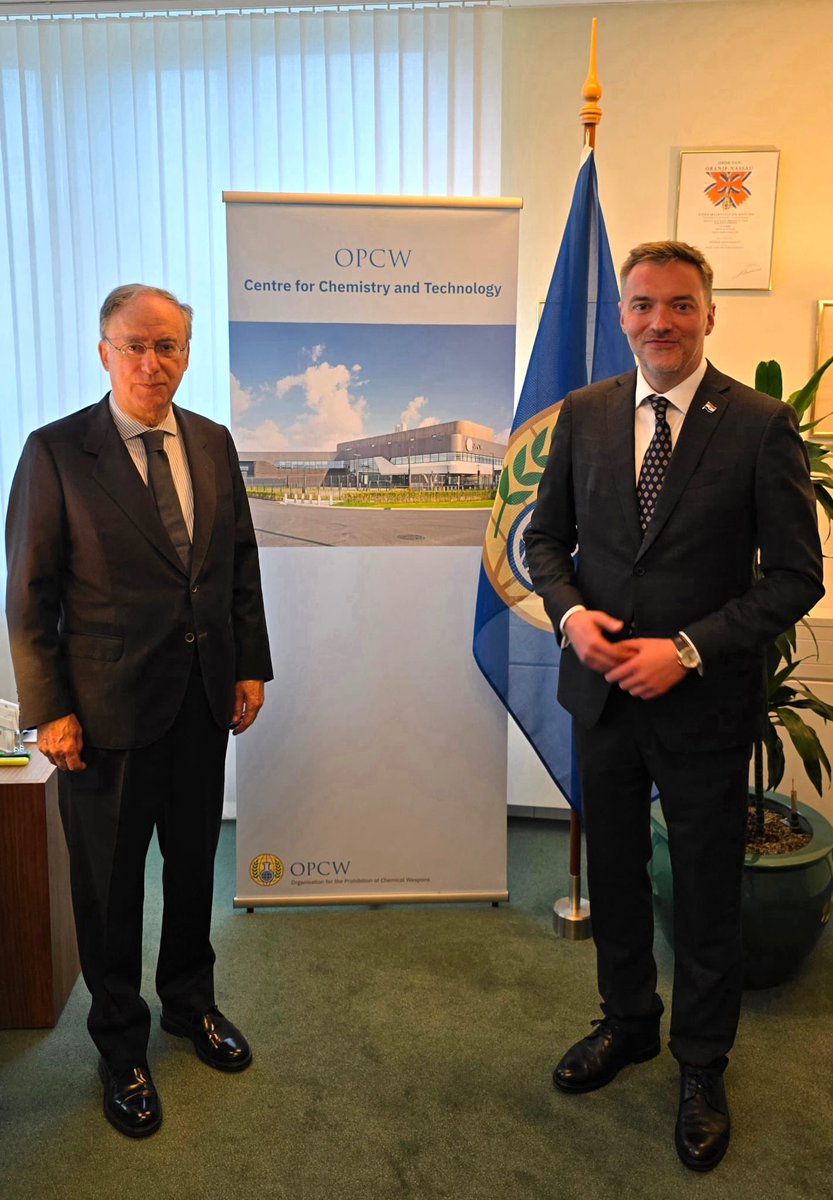
Fruitful discussion with the Director-General of the @OPCW, Ambassador Fernando Arias, on current major challenges to international security and multilateralism. #Croatia supports the pivotal work of the OPCW in advancing global chemical weapons disarmament and non-proliferation.
Excellent exchange ahead of the NATO summit with Director-General @MarceldeVink in The Hague on European defence, transatlantic and regional security challenges. #Croatia and the #Netherlands remain close and like-minded partners in the #EU and allies in #NATO. 🇭🇷🇳🇱
Great discussion w/ Jakub Wiśniewski, Undersecretary of State @PolandMFA, on multilateral & global issues, stronger cooperation of #Croatia & #Poland as like-minded partners and allies. The bust of #Piłsudski in 🇵🇱 MFA by famous 🇭🇷 Ivan #Meštrović is but one symbol of our bonds.
Excellent exchange with Secretary of State Wojciech Kolarski on strong #Croatian-#Polish ties, 🇪🇺 security, #NATO & transatlantic relations, #3SI and international challenges. Thank you, dear @wkolarski, for your hospitality at @prezydentpl in #Warsaw. 🇭🇷🇵🇱
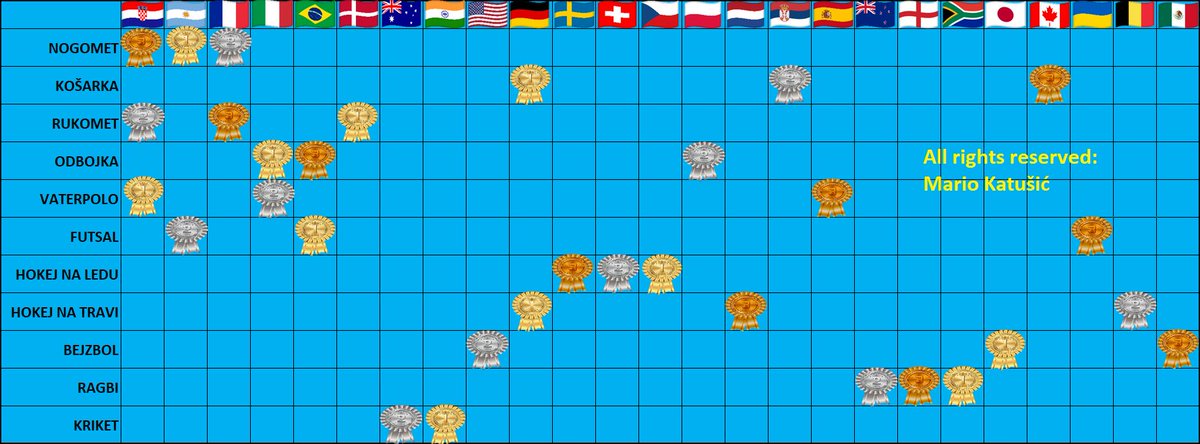
Danas se maksimalno šerala objava o tome kako je Hrvatska jedina država koja ima aktualne svjetske medalje u nogometu, rukometu i vaterpolu.
Sjajno, ali sigurno je bilo onih skeptika koji su pomislili "baš, pa mogao je i netko drugi naći tri sporta u kojima ima medalju i kurčiti se..."
Hm, paaaa, baš i ne!
Naime, izdvojio sam svjetska prvenstva u muškoj konkuenciji u 11 najpopularnijih timskih sportova (zapravo 11 od 12, ali football nema pravo profesionalno SP reprezentacija).
I znate što, 32 medalje u 11 sportova (u kriketu nema bronce), osvojilo je 25 različitih država.
I znate što još? HRVATSKA JE I DALJE JEDINA S TRI!
S dvije ih ima samo pet. Brazil, Argentina, Italija, Francuska i Njemačka, koja ima dva zlata. Ostalih 19 medalja osvojilo je 19 različitih država.
Dokaz je u slici. Dijelite svijetom :)