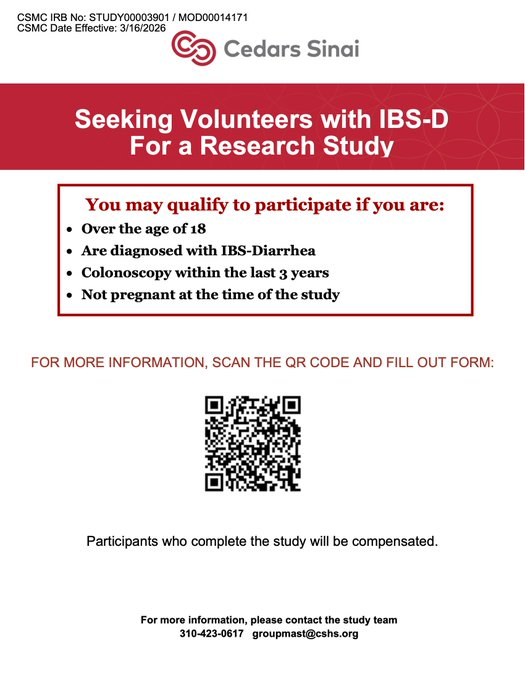
We are enrolling people from the LA area for a new #IBS-D #microbiome drug trial. Breath testing is included. Even if you don't live close, retweeting can spread the word on this important study. Clicking the QR code gets you to eligibility questions and contact info.
Pet peeve of travel for me. So checkout for a hotel is 11 am. Why is someone tapping on my door (always with a pen-tap, tap, tap). "Are you checking out?" It's microaggression.
Great session this morning. Dr. Ayah Matar did a great presentation. Bile acid diarrhea (#BAD) and #SIBO are interrelated. Bacteria deconjugate bile acids and produce secondary bile acids.
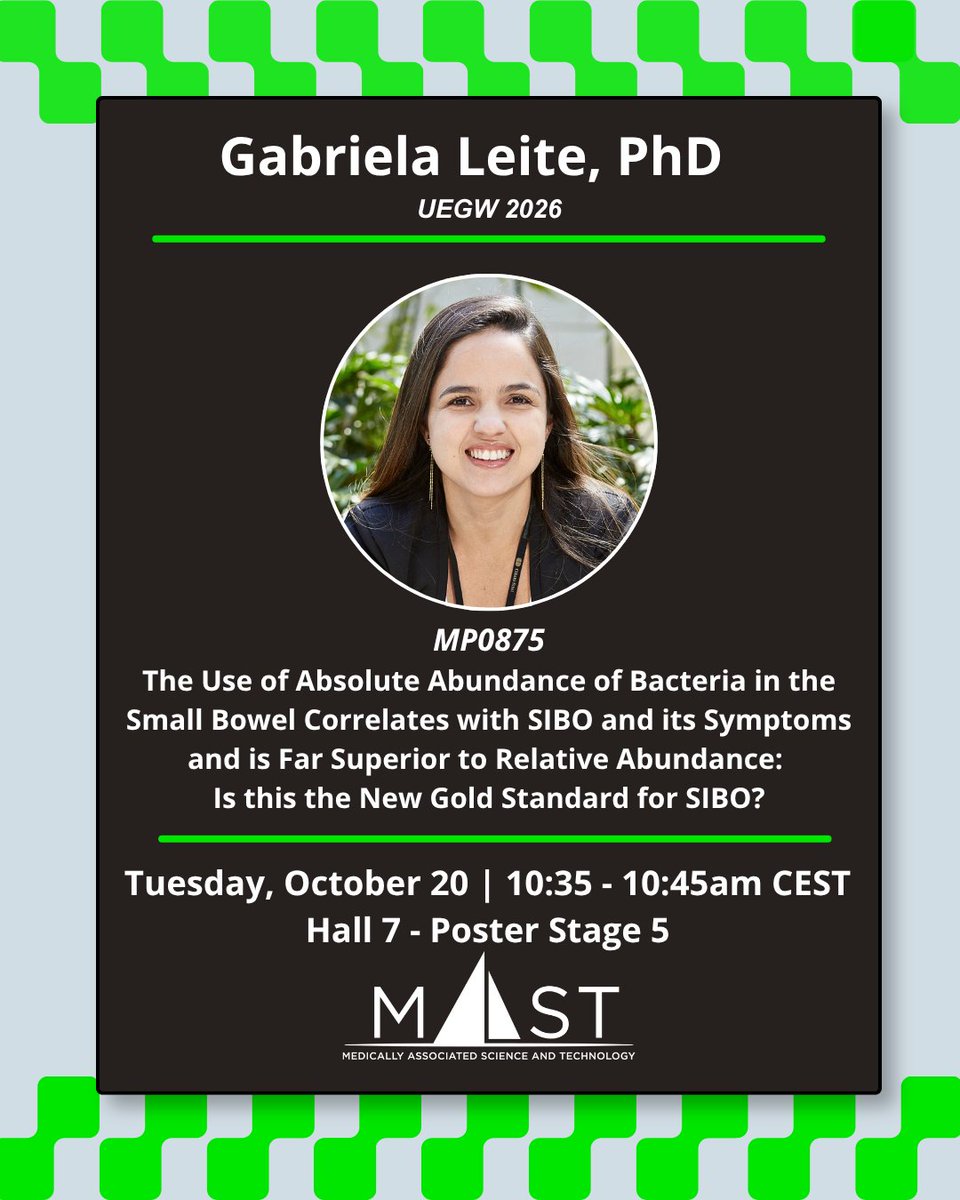
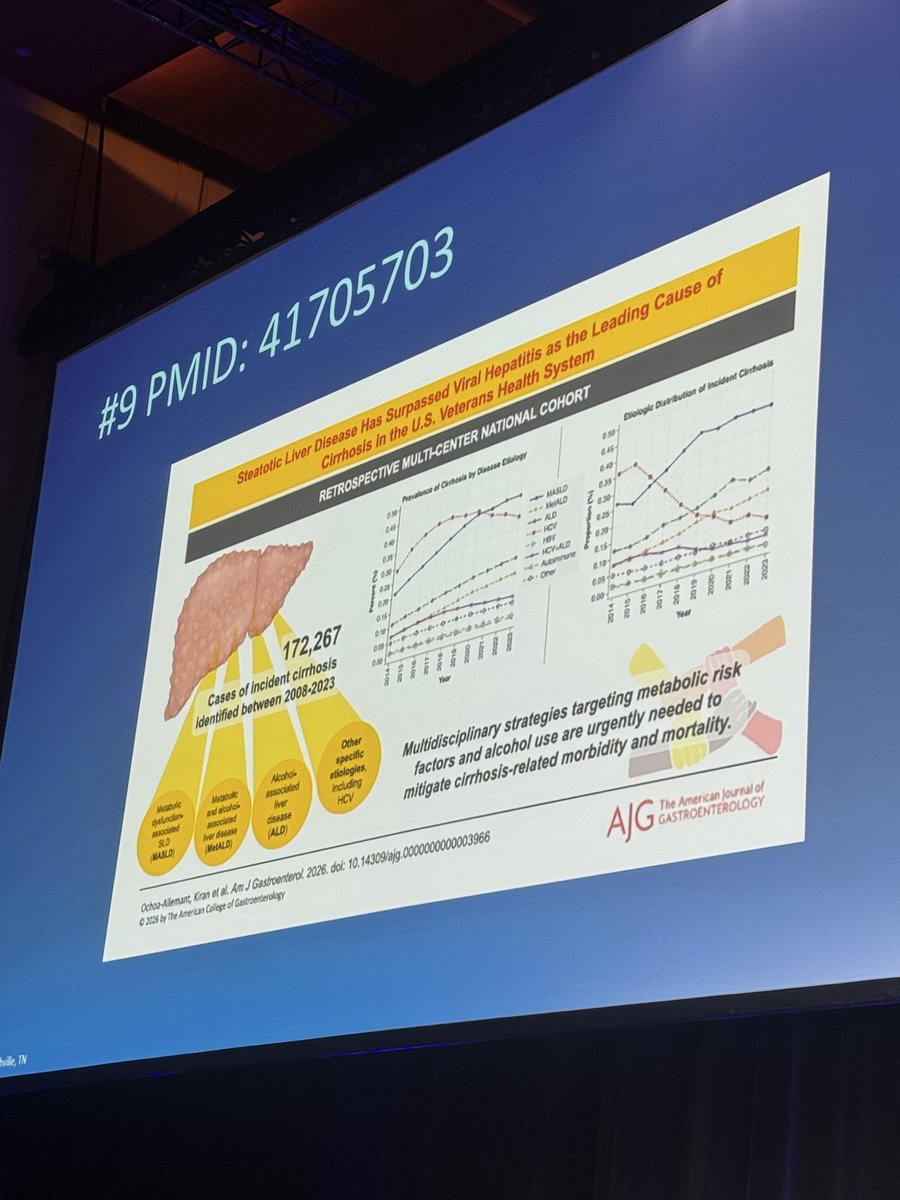
📍 We’re at #ACG2026 today!
Check out the latest research from the MAST team as we share new findings advancing our understanding of the gut microbiome and digestive health. 🧬
Can’t catch a presentation? Watch our short video summaries on the MAST YouTube channel!
#Gastroenterology #GutHealth #DigestiveHealth #MicrobiomeResearch #MASTProgram
Digestive disease doesn’t always look like illness.
You can look healthy, go to work, travel, exercise, and still be dealing with symptoms that affect nearly every part of your life.
On Episode 5 of Eating, Interrupted, Cynthia McFadden and I talk about something we don’t discuss enough: the social and emotional impact of digestive disease.
For many patients, the hardest part isn’t just the physical symptoms. It’s the embarrassment, isolation, uncertainty, and feeling that you have to keep it all to yourself.
We’re also joined by professional pickleball player Rob Nunnery, who shares his incredibly candid story of living with Crohn’s disease and how opening up about his experience changed the way he navigated it.
These are conversations worth having.
Listen to the episode of Eating, Interrupted here or wherever you get your podcasts: https://t.co/jyvpQLYg6v
#EatingInterrupted #MASTprogram #DigestiveHealth #GutHealth #CrohnsDisease #IBD #Gastroenterology
🔬 The story of microbial overgrowth is getting more complex and much deeper.
For years, understanding microbial overgrowth has largely centered on a simple question: How many microbes are there?
But the science is moving beyond that.
In a new review, MAST researchers explore how emerging technologies are helping us build a much more detailed picture of microbial overgrowth syndromes.
🧬 Which microbes are there?
🔬 What are they doing?
🧪 How are they interacting with the host?
💡 And how might these differences help explain symptoms and treatment response?
The review looks at the growing role of breath testing, small-bowel sampling, metagenomics, transcriptomics, metatranscriptomics, and proteomics in studying conditions including SIBO, IMO, and ISO.
Each layer of research is revealing something new—and together, they are helping researchers move from simply identifying microbial overgrowth toward understanding its biology, mechanisms, and clinical significance.
The deeper we look, the more complex the story becomes. And that's exactly what makes it so important to keep looking.
📖 Read the new open-access review from the MAST team: “Do Multi-Omics Approaches Improve the Diagnosis of Microbial Overgrowth Syndromes?”
🔗 Link in the comments below.
#MASTProgram #MicrobiomeResearch #SIBO #IMO #ISO #GutHealth #DigestiveHealth #MultiOmics #Microbiome #Gastroenterology #GutScience #MedicalResearch #CedarsSinai
Today I am happy to share with you a paper beginning the debate of how to integrate omics into a future assessment of small bowel microbial overgrowth. Thanks to @GabrielaGSLeite and Dr. Juliana Germano from @MASTprogram@CedarsSinai for their collaborative paper.
https://t.co/EJBkVestwq
Episode 4 is so interesting!
You can train your muscles. You can train your endurance. But did you know you can also train your gut?
For athletes, GI symptoms like bloating, cramping, nausea, and diarrhea can be more than an inconvenience. They can completely derail a race.
The gut has to keep up with the demands of exercise: absorbing carbohydrates, handling fluids, and functioning while blood flow is being directed toward working muscles.
This episode of Eating, Interrupted with Cynthia McFadden, she and I talk about the science behind the “athlete’s gut," from fueling and hydration to why GI problems happen during intense exercise.
We also hear from ultramarathoner Dean Karnazes, whose stories from the trail are incredible and show what can happen when your gut and your training plan aren’t on the same page.
It was a great conversation and a reminder that performance isn’t just about how hard you can push your body. It’s also about understanding how your body responds when you do.
🎙️ Listen to “The Athlete’s Gut: Fueling Performance Without the GI Drama” on Eating, Interrupted.
#GutHealth #SportsNutrition #AthleteHealth #Gastroenterology #MASTProgram #GutMicrobiome
Link: https://t.co/Ph5cOdvh06
📷
I'm excited to share Episode 3 with you:
"What happens when your immune system gets it wrong?"
Your immune system is designed to protect you. But in autoimmune disease, that defense system can mistakenly turn against the body it’s supposed to protect.
The gut plays a particularly interesting role in this process. It’s constantly exposed to food, bacteria, and other outside signals, yet it has to maintain a careful balance between responding to potential threats and tolerating what belongs there.
On this episode of Eating, Interrupted with Cynthia McFadden, I help break down how the immune system works, what happens when it begins attacking the body’s own tissues, and the important relationship between the gut, food, and immunity.
We also hear from Mickey Trescott, who shares her experience living with three autoimmune conditions. Her story adds an important perspective to the science.
The more we understand about the gut and immune system, the more questions we can ask—and hopefully, the better equipped we’ll be to answer them.
🎧 Listen to “Inside the Immune System: How It Works and When It Goes Wrong” on Eating, Interrupted.
#ImmuneSystem #GutMicrobiome #AutoimmuneDisease #GutHealth #MASTProgram #MicrobiomeResearch
Link: https://t.co/sIOLRI3RoL
📷
🎥 New Video Abstract | Sex Differences in the Small Bowel Microbiome
What if understanding the differences between the male and female microbiome could unlock more personalized approaches to digestive health?
In our latest iScience publication, the MAST team leveraged samples from the REIMAGINE study to investigate how the duodenal microbiome differs between males and females. Unlike many microbiome studies that rely on stool samples, this research examines the small intestine directly.
Our findings identified distinct sex-specific microbial signatures, highlighting the importance of considering biological sex in microbiome research. These differences may help explain why certain gastrointestinal and metabolic disorders present differently in men and women, while advancing the development of more precise, personalized diagnostics and therapies.
▶️ Watch our latest video abstract on the MAST YouTube channel (link below) for a quick overview of the study and its key findings.
📖 Read the full publication through the comments below.
#iScience #VideoAbstract #Microbiome #SmallBowel #GutHealth #DigestiveHealth #PrecisionMedicine #REIMAGINE #ScientificResearch #CedarsSinai #MASTProgram