@EasternAirways @NewquayAirport_@Gatwick_Airport So why does the board say 12:50?
Please can you let me know the real ETD as this is looking like a 5 hour delay, to compound a 4 hour delay taking off Wednesday morning. Proving to be a very frustrating trip now.
@BBCNews I know you create your own version of reality, but your weather app is being just a little over-dramatic this morning. Check those winds at 16,218km/h.
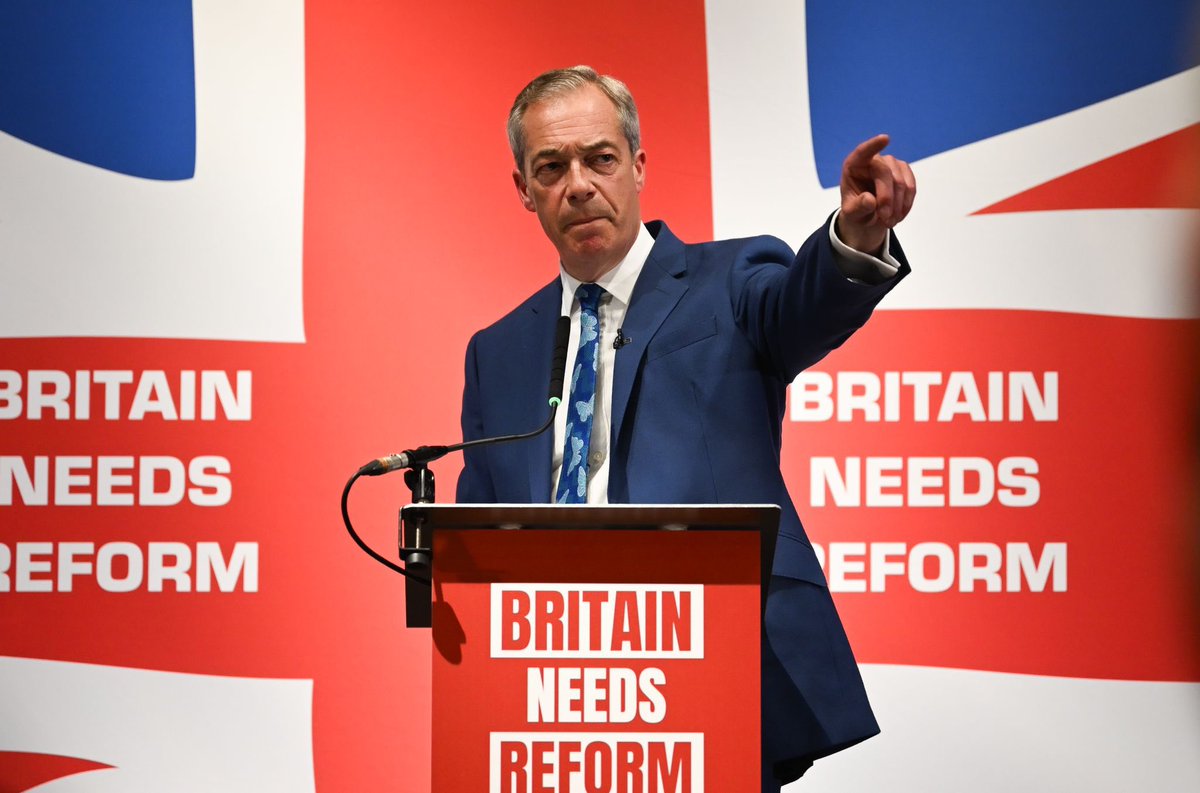
@Nigel_Farage Fabulous news-as we said to you a few years ago in Torquay-you are our future Prime Minister. Common sense policies. We are so pleased & so are many people we know.
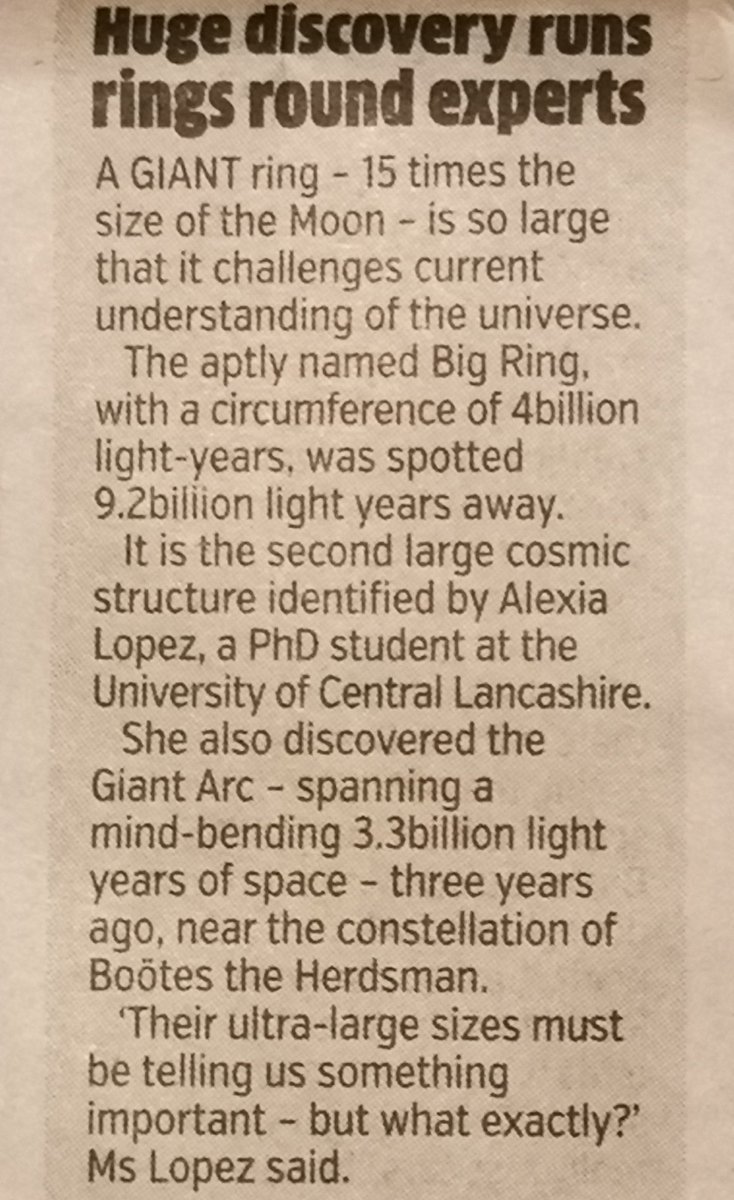
@metrouk your article today makes the moon's circumference 1.5 million million million billion miles, give or take the odd several million actual moon sizes. Perhaps someone with a modicum of common sense, let alone a grasp of science or maths, should review your articles.
@Pedalperspectiv So what's your problem? The cyclists are not holding you up. The speed limit is. So maybe a bit less prejudice against cyclists wouldn't go amiss.
@TalkTV@JuliaHB1 Absolutely not. Rates are back to normal, not high. Did the government intervene to help those earning no interest on their savings for 15 years? Money they may have needed to live?
So he had mental health problems did he?
Yet he'd the acuity to wear a balclava to hide his ID. Suggesting he knew he was doing wrong.
Straightforward hateful, evil behaviour.
In an age of 'MH awareness', stop *adding* to the stigma by labelling these monsters with it.
Please
So I wrote this post on a well-known newsletter platform earlier. But Twitter Blue permits 4,000 characters now. So here it is...my first long-form post on Twitter. It's about @elonmusk and @JamesClayton5
When Clayton ‘interviewed’ Musk
Shiny new BBC people
Until this morning I hadn’t heard of James Clayton. In my previous life (prior to March 2020) he’s the type of person I may have met on my visits to San Francisco. We’re in the same line of work, so to speak. I used to talk with journalists in the Bay Area when I was running Comms for technology start-ups and their wannabe media star CEOs. Although, James’ role as “North America Tech Reporter” for the BBC is a relatively new one. It used to be that Rory Cellan-Jones ruled that particular roost and would jaunt over from the UK to California to report from the Consumer Electronics Show and other corporate shindigs - and would studiously avoid jobbing comms types like me. He followed me on Twitter for a while but quickly unfollowed me when he realised I was pro-Brexit. And I reciprocated the unfollow when I got bored with his tweeting the results of his experiments making sourdough bread in plant-pots. Rory’s output on technology matters never really amounted to much.
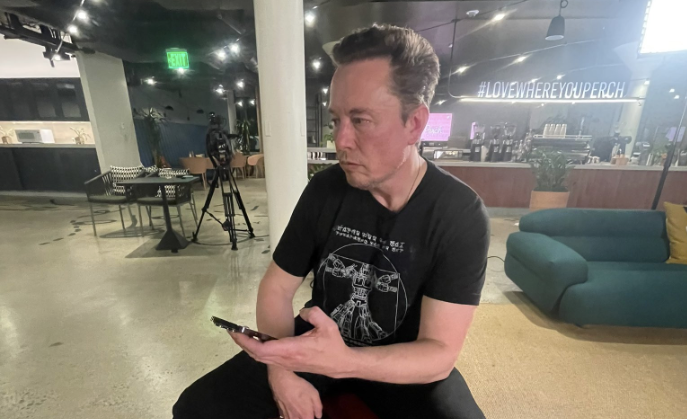
This morning I found out who James Clayton was because of what had unfolded on Twitter - when I was asleep during the night (San Francisco is currently 8 hours behind BST). Apparently Clayton had offered to ‘interview’ Elon Musk on a Twitter ‘Space’ (these are like live streamed radio shows where Twitter users can connect to the spaces to listen to nominated speakers debate various topics). For this one James had offered to interview Elon Musk. And, astonishingly, Musk had agreed. Some 3 million people ‘tuned in’.
Part of the reason Musk might have agreed was that just a few weeks ago, Marianna Spring - the BBC's first specialist disinformation and social media correspondent - had put together a hatchet-job on Twitter under Musk’s management. Spring, like Clayton, has a job title befitting of the BBC’s new role in international broadcasting and global class woke moralising. Where, previously, journalists uncovered conspiracies, corruption, shady dealings or corporate malfeasance, the BBC’s new shiny role is to uncover opinions that don’t match its editorial lines and ensure they don’t get reported.
The BBC’s editorial lines are, typically, these days, defined by the UK government (and its governmental partners in the United States) and corporate partners in the World Economic Forum. Tim Weber, formerly of BBC Business, and one of Rory Cellan-Jones’ colleagues, was a regular at Davos. Now that he’s moved on to Edelman - the uber-woke PR firm that typically launches its corporate “trust” barometer at the annual Davos shindig - he must have amassed lots of Schwab brownie-points.
But the BBC, and the establishment PR machines, have never met the likes of Elon Musk. Where, in the past, the BBC could get away with atrocious, patronising behaviour and globalist schmoozing, now it has to deal with a new era that’s calling it out. And Musk, I have to say, is leading the charge.
Just a few days ago Musk adorned the @BBC twitter account with a “Government funded media” label. And, at yesterday’s lamb-to-the-slaughter Twitter-Space match, Musk supremely, and effortlessly, intellectually eviscerated James Clayton. Indeed I’d go as far as to say that it was the moment when the BBC’s brand was shredded with the same degree of hubristic-precision as when Bud Light decided to put Dylan Mulvaney’s visage on its beer cans. If James Clayton, and the entire BBC Board, aren’t asking what exactly they stand for after this car-crash, then we can expect more of the same: a humiliating descent to that place where ageing media elephants go to die.
So I wrote this post on a well-known newsletter platform earlier. But Twitter Blue permits 4,000 characters now. So here it is...my first long-form post on Twitter. It's about @elonmusk and @JamesClayton5
When Clayton ‘interviewed’ Musk
Shiny new BBC people
Until this morning I hadn’t heard of James Clayton. In my previous life (prior to March 2020) he’s the type of person I may have met on my visits to San Francisco. We’re in the same line of work, so to speak. I used to talk with journalists in the Bay Area when I was running Comms for technology start-ups and their wannabe media star CEOs. Although, James’ role as “North America Tech Reporter” for the BBC is a relatively new one. It used to be that Rory Cellan-Jones ruled that particular roost and would jaunt over from the UK to California to report from the Consumer Electronics Show and other corporate shindigs - and would studiously avoid jobbing comms types like me. He followed me on Twitter for a while but quickly unfollowed me when he realised I was pro-Brexit. And I reciprocated the unfollow when I got bored with his tweeting the results of his experiments making sourdough bread in plant-pots. Rory’s output on technology matters never really amounted to much.
This morning I found out who James Clayton was because of what had unfolded on Twitter - when I was asleep during the night (San Francisco is currently 8 hours behind BST). Apparently Clayton had offered to ‘interview’ Elon Musk on a Twitter ‘Space’ (these are like live streamed radio shows where Twitter users can connect to the spaces to listen to nominated speakers debate various topics). For this one James had offered to interview Elon Musk. And, astonishingly, Musk had agreed. Some 3 million people ‘tuned in’.
Part of the reason Musk might have agreed was that just a few weeks ago, Marianna Spring - the BBC's first specialist disinformation and social media correspondent - had put together a hatchet-job on Twitter under Musk’s management. Spring, like Clayton, has a job title befitting of the BBC’s new role in international broadcasting and global class woke moralising. Where, previously, journalists uncovered conspiracies, corruption, shady dealings or corporate malfeasance, the BBC’s new shiny role is to uncover opinions that don’t match its editorial lines and ensure they don’t get reported.
The BBC’s editorial lines are, typically, these days, defined by the UK government (and its governmental partners in the United States) and corporate partners in the World Economic Forum. Tim Weber, formerly of BBC Business, and one of Rory Cellan-Jones’ colleagues, was a regular at Davos. Now that he’s moved on to Edelman - the uber-woke PR firm that typically launches its corporate “trust” barometer at the annual Davos shindig - he must have amassed lots of Schwab brownie-points.
But the BBC, and the establishment PR machines, have never met the likes of Elon Musk. Where, in the past, the BBC could get away with atrocious, patronising behaviour and globalist schmoozing, now it has to deal with a new era that’s calling it out. And Musk, I have to say, is leading the charge.
Just a few days ago Musk adorned the @BBC twitter account with a “Government funded media” label. And, at yesterday’s lamb-to-the-slaughter Twitter-Space match, Musk supremely, and effortlessly, intellectually eviscerated James Clayton. Indeed I’d go as far as to say that it was the moment when the BBC’s brand was shredded with the same degree of hubristic-precision as when Bud Light decided to put Dylan Mulvaney’s visage on its beer cans. If James Clayton, and the entire BBC Board, aren’t asking what exactly they stand for after this car-crash, then we can expect more of the same: a humiliating descent to that place where ageing media elephants go to die.