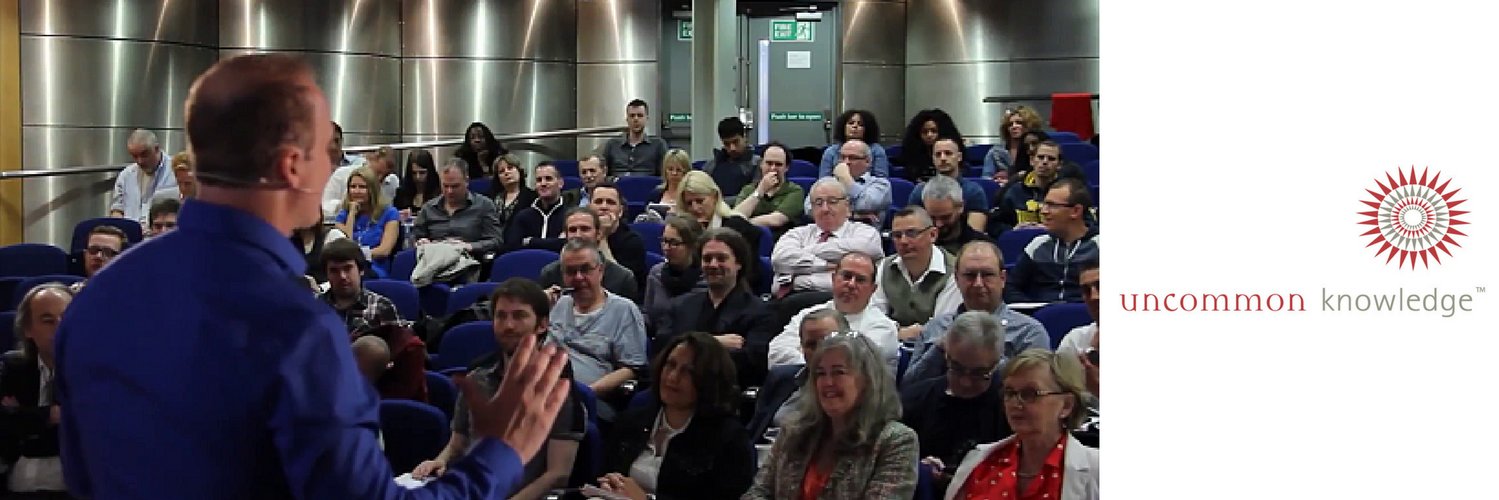
Therapist & trainer since 1995.
Brief, solution focused therapy.
What actually works in the therapy room.
Co-founder Uncommon Knowledge & Hypnosis Downloads
We expect 'experts' to have answers. But of course, no expert is required to give an immediate and absolute answer. Truth isn't always hurried, and sometimes we need to watch it emerge in its own time.
Read the full article: https://t.co/DWwa8WBeo7
Attempts to encourage speech are usually counterproductive in a child with selective mutism. Instead, progress begins when the child feels understood rather than pushed, safe rather than watched, and accepted whether they speak or not. https://t.co/jsvoxjUuV0
"Metaphors have a way of holding the most truth in the least space." - Orson Scott Card
All clients talk in metaphors, and sometimes the metaphors they use help us understand what they might need – if we are careful enough to notice them. New blog:
https://t.co/aEMhKXMBX1
Stories have a way of being delightfully respectful while containing layers of meaning. They don't tell a client they are wrong to feel the way they do but they can open up doors of possibility for feeling more hopeful. https://t.co/gG4CWBqyvc
While empathy is a strength, it can become a liability when it enables abuse. Therapists can help clients separate explanation from justification. This clarity prevents clients from colluding in their own mistreatment.
Read my latest article on my blog: https://t.co/yi3MyW8dMm
Kindness in health care begins with listening, because when providers truly hear patients and one another, it leads to better decisions, stronger relationships, and more humane care.
https://t.co/RvfAWLGGym
In healthy dynamics, love and protection equip someone to leave and face the world, but in the devouring mother pattern, they unintentionally become tools to prevent them from doing so.
I've included a video version of this week's article here:
https://t.co/ffMwb0ETwf
When working with people who've had terrible childhoods, we need to locate their personal strengths and resources. We can ask how, despite what happened to them, they still managed to find success and some fulfilment in the world.
👇 Video case review https://t.co/UHskboNvVg
We have to let others take responsibility for themselves, even young people. To greedily take more of our fair share of the 'blame pie' is to deny others a chance to grow and thrive. https://t.co/ihaYl4wawb
If you get too hung up on wanting 'a relationship' as a general idea, you may fall into the trap of flinging yourself at the first vaguely available (or not!) creature to enter the room. https://t.co/wA6E1oClAc
In this week's Clear Thinking I give you 5 actionable tips to help you help your low confidence clients overcome the anguish of chronic self doubt.
https://t.co/7vsysTVtVy
Sometimes FOMO is a question of missing out not so much on things we care about, but on things we feel we are supposed to care about. Instead of asking 'What am I missing?', ask 'What truly matters to me?'
Click here to read more: https://t.co/wzz9VDBsuX
In the same way that ultra-processed food offers the illusion of nourishment while quietly eroding the body and mind, modern life often serves up a highly engineered version of human experience: convenient, addictive, and hollow.
https://t.co/IrFPefl5Bx
Truly confident people aren't the ones who know for sure they'll succeed; they're the ones who know they'll handle failure if it happens.
https://t.co/fnvXBzY5wD
Wanting something from someone who doesn’t have it within their capacity to GIVE you what you want from them is, of course, a losing game.
https://t.co/1a9UizWIgz
Tall poppy syndrome may not be an official diagnosis, but its emotional impact is real. As therapists, we have the opportunity to challenge the cultural scripts that tell our clients to shrink, apologize, or hide away.
https://t.co/Sxzi2cXytw
Chronic people-pleasing, often a manifestation of low self-esteem, blocks honest and open conversation, and that can be a serious problem in therapy. Therapy becomes another performance rather than an authentic endeavour.
https://t.co/4SAaUjLGKJ
If, by the time we go to bed, we haven't 'used up' our physical and mental energy, we may feel restless and seek out activities (such as scrolling online, watching TV, or even just worrying) that stimulate us even more.
https://t.co/1YtIl08xpf
Strong in-person social networks are associated with lower rates of depression, anxiety, and even dementia, while online 'socializing' without actually meeting up with people may increase loneliness and depression.
https://t.co/Y9VaD7Gcwa
Moderate adversity in middle childhood (ages 6-12) and adolescence may actually promote resilience to anxiety, while too little adversity during some stages of childhood may be associated with long-term anxiety conditions.
https://t.co/9vxRm7GPlE
#blog#research#psychology